
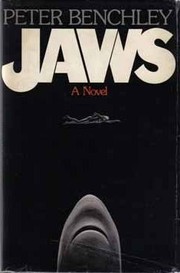
Jaws
3,000-word summary 13 min read 311 pages in the book
- First published
- 1974
- Publisher
- Doubleday
- Pages
- 311
- ISBN
- 9780385047715
- Series
- Jaws (#1)
Reading options
What's inside (9 sections)
I picked up Jaws because I wanted to see if the book could scare me after the movie already had. I have seen Spielberg's film so many times I can hear the two-note theme on command. What I found in Peter Benchley's 1974 novel, published by Doubleday at 311 pages in the first hardcover, was stranger and meaner and more interested in people than I expected. The shark is in it plenty. But so are bad mortgages, town meetings, adultery over long lunches, and a police chief who is trying to hold a resort town together with spit and overtime.
Benchley was a freelance journalist when Doubleday commissioned the book in 1971. He had read about Montauk shark fisherman Frank Mundus and spent time with researchers, and he wrote fast. You can feel the speed. The opening moves like a reporter on deadline. The middle gets bogged down in Amity living rooms. Then the last hundred pages turn into something close to Moby Dick with outboard motors.
If you only know the film, the bones will feel familiar. A great white takes up residence off Amity, a fictional resort town on Long Island, just before the July 4th crowds arrive. Chief Martin Brody wants to close the beaches. The town fights him. A scientist and a fisherman get pulled in. Men go out on a boat. Not everyone comes back. The details around those bones are where the novel differs, sometimes in ways that improve the story and sometimes in ways that made me glad Spielberg changed them.
The night swim
The book opens at night with Christine Watkins, called Chrissie in most editions, going skinny dipping after her date passes out drunk on the beach. Benchley writes the shark first as movement and pressure rather than teeth. The fish comes up under her, bumps her, grabs her, shakes her. It is ugly and confusing and over quickly from the fish's point of view, which makes it worse to read.
Her remains wash up the next morning. Crabs get to them before the police do. The officer who finds her throws up on the sand. The coroner says shark attack. Brody, who moved from New York City to Amity for a quieter life with his wife Ellen and their boys, wants to act on that. He is new enough that he still checks himself before giving orders, and scared enough of the water himself that the ocean already feels personal to him.
This is one of the best stretches in the novel. Benchley keeps the chapters short. He cuts between the fish cruising offshore and the town waking up and deciding what kind of summer it wants. You learn Amity fast: rental houses, beach badges, ferry lines, restaurants that make their year in ten weeks. The shark is still mostly a shape. The town fills in around it.
My only complaint about the opening is that Benchley loves to explain shark biology right when the tension peaks. A paragraph on serrated teeth lands just as Chrissie starts swimming. I found it interrupted the dread, though it fits the book's point that the animal is doing what it evolved to do while people misread it.
A town that needs the summer
Amity lives or dies on July and August. Mayor Larry Vaughan knows it down to the dollar. So do the selectmen, the hotel owners, the real estate men, and Harry Meadows, who runs the local paper and acts as a kind of town explainer for Brody and for us.
Vaughan leans on Brody to file Chrissie's death as a boating accident. Brody goes along at first, which is important. In the movie Brody reads as a decent man steamrolled by politicians. In the book he is more compromised. He wants to belong. He tells himself the evidence is thin, that closing the beaches over one death would panic people for nothing, that he can watch the water and be careful. He is wrong, and he knows he might be wrong, and he signs the paper anyway.
Then the shark kills a boy, Alex Kintner, in daylight in front of a crowded beach, and shortly after takes an older swimmer too. Alex's death is the scene everyone remembers from the film, and the book version is just as hard to read. One minute the boy is on a raft. Then there is blood and screaming and his mother standing in the surf. Mrs. Kintner never forgives Brody. She should not. Brody does not forgive himself either, and his guilt drives the rest of his choices.
The town meeting after Alex dies is pure Benchley. Fishermen shout, summer people threaten to leave, and Vaughan steers everything toward keeping Amity open. A bounty goes up. Amateurs pour in with rods and powerboats, including Ben Gardner, a local fisherman who thinks he can handle the shark alone.
There is a darker thread here that the movie drops. Vaughan is tied to developers with mob connections who have money sunk into Amity real estate. If the beaches close and property values dip, Vaughan is in trouble beyond losing an election. It stays in the background as phone calls and favors. It explains why Vaughan keeps pushing even after bodies pile up.
Fair criticism belongs here. The town politics chapters repeat themselves. Vaughan warns Brody, Brody argues, Meadows mediates, everyone agrees to wait, someone dies, they meet again. After the second cycle I started skimming the meeting scenes to get back to the water. Benchley wants to show how money warps judgment, and he does, but he takes longer than the point needs.
Brody is new here, and everyone knows it
Martin Brody is the heart of the book, and he is less heroic than Roy Scheider's version. He is a former city cop who took the Amity job thinking small towns meant small problems. He does not swim if he can avoid it. He worries about his kids in the water. He worries about Ellen being bored. He worries about looking weak in front of men who have lived in Amity all their lives.
His deputy Leonard Hendricks helps carry the police work. Hendricks is young, dry, often reading cheap paperbacks at the station when the phone rings. I liked their working relationship because it feels like a real small department: two men, one radio, too much shoreline.
Ellen Brody gets a harsher portrait than in the film. In the movie she is a warm partner. In the novel she is restless, a woman from a wealthier family who married a cop and feels underused in Amity. She drinks at lunch and replays old boyfriends. Benchley writes her with a mix of sympathy and condescension that feels very early 1970s, and some passages about her appearance landed badly for me.
Still, her boredom matters to the plot. Brody works long hours after the attacks. Ellen is left alone with the boys and the heat and her thoughts. She starts noticing Matt Hooper, the young oceanographer who comes to town, in a way she does not notice anyone else. That attention curdles into the subplot most readers argue about, and the movie wisely left most of it out.
One thing Benchley does well with Brody is fear. Brody checks the water constantly. He imagines what is under the surface when he is on a boat, when his kids wade out, when he has to dive or reach over the side. His fear never reads as cowardice. It reads as imagination plus responsibility. He is the only town official who keeps picturing the worst case while everyone else talks about averages and odds.
Hooper arrives, and Ellen drifts
Matt Hooper comes from Woods Hole, young, tall, tanned, rich, trained to study exactly this animal. In the film he is nerdy and likable. In the book he is confident to the point of rudeness. He wears expensive casual clothes like a uniform. He talks about money without thinking about it. He corrects people about sharks in a way that makes them want to punch him, even when he is right.
Brody hires him to confirm what killed Chrissie and Alex. Hooper examines remains, measures bite radius, looks at tissue. He tells Brody the town has a very large white shark, probably over twenty feet, and that it is staying in the area because food is plentiful. Later, after local fishermen catch a smaller tiger shark and celebrate, Hooper cuts it open with Brody watching and shows the stomach contents do not match. Wrong shark. The real one is still out there.
The science scenes hold up better than I expected. Hooper explains how whites hunt, how they test unfamiliar objects with a bump, why a single shark might return to a productive area. Some specifics are dated now. But the general picture, a large predator working a coastline, is sound enough that the hunt feels grounded.
Then comes the affair. Ellen knew Hooper's older brother David slightly years earlier, which gives her an excuse to invite Matt to dinner and then to meet him for lunch. The lunches turn into afternoons at a motel. Benchley writes these scenes in a flat, physical style that is neither erotic nor romantic. Ellen feels desired and young again. Hooper feels flattered and a little bored. Brody senses something is off and starts watching them, and at one point nearly attacks Hooper in a jealous rage.
I will be blunt: this subplot stalls the book. It takes up many pages in the middle, it makes two main characters harder to root for, and it resolves only because the shark intervenes. Ellen is never really confronted. Hooper never has to answer for it. Brody files it away. Modern readers will also notice the double standard. Ellen gets judged for vanity and appetite while Hooper gets treated as a young man sowing oats. Benchley seems half aware of this and half stuck in it.
Why keep it at all? I think Benchley wanted Amity to feel rotten from the inside, not just threatened from the sea. That theme works intellectually. On the page, though, the affair reads like a different novel spliced into a thriller. Spielberg cut it to a few glances at a dinner table, and the film is tighter for it.
Quint and the Orca
Quint shows up late and steals the book the way he steals the movie, though he is a different man on the page. Film Quint is a working class philosopher with a famous speech about the USS Indianapolis. Book Quint has no Indianapolis speech. That was invented for the film. Book Quint is harder and stranger: a taciturn commercial fisherman who hunts sharks for money and sport, uses gear other fishermen consider cruel or illegal, and talks to almost no one unless he has to.
His boat is the Orca, scarred and functional, set up for heavy fishing. After Ben Gardner disappears and his broken boat is found with bite marks and a large tooth stuck in the hull, Brody has proof no one can wave away. Gardner's death is one of the grimmest set pieces. He goes out alone, confident. The shark takes him and wrecks his skiff. When Brody and Hooper find the empty boat, the tooth in the wood tells them the size they are dealing with better than any witness could.
Brody hires Quint because no one else will go after a fish this big on purpose. Quint names a price that makes Vaughan choke and demands payment whether he succeeds or not. He does not like Hooper. Hooper does not like him. Quint calls Hooper's electronic tags and cages and poison darts toys. Hooper calls Quint's methods wasteful and needlessly cruel. Brody stands between them, paying the bills and trying to keep both men pointed at the shark.
The chapters where the three men start working together are my favorite part of the middle. They argue about chum, about barrels, about where whites feed and how deep they run. Quint runs the boat. Hooper watches the fish finder and takes notes. Brody learns to tie knots and gaff and stay out of the way. Class friction crackles without becoming cartoonish. Quint thinks Hooper has never killed anything bigger than a grant proposal. Hooper thinks Quint enjoys killing too much. Both are partly right.
Benchley later became a shark conservationist and said he regretted making sharks into villains. Knowing that changed how I read Quint. In 1974 he reads as the expert who will save the town. Now he reads as a man treating the ocean as a place to prove himself. That unease gives the last act extra weight.
The last day on the water
The final hunt takes up the last stretch and barely pauses. Quint, Hooper, and Brody go out on the Orca with barrels, flying gaffs, harpoons, and Hooper's shark cage. The plan is to find the fish, plant barrels in it to tire it and keep it near the surface, then kill it with harpoons or a poison dart.
Benchley stages the search well. Long empty hours. Gulls. Slick water. Then a dorsal fin or a shadow that is too big and too fast. The first harpoon strike lands and the shark does not slow. It tows barrels under like they are bath toys. It circles the Orca, bumps the hull, disappears, returns. Brody, who has been brave in an administrative way all book, has to be brave in a physical way now, hauling rope and holding on while the deck pitches.
Do not read the next two paragraphs if you want the ending untouched, though this is a summary and the book is fifty years old. Hooper goes down in the cage with a poison-tipped spear, expecting the bars to protect him. The shark smashes the cage apart and kills him. It is sudden and total. No last words. Brody watches from above and understands, in a sickening rush, that no equipment guarantees anything.
Quint keeps fighting after Hooper dies. He plants more harpoons. The shark surges and throws itself partly onto the stern, stoving in the transom. The Orca starts taking water and going down by the stern. Quint drives another harpoon into the shark's belly as it slides back, and his foot catches in the rope. The fish goes down and drags him with it. He drowns tangled in his own line, very much like Ahab in Moby Dick, which Benchley clearly intended. The shark, mortally wounded by the repeated harpoon strikes, spirals down dead with Quint's body still attached to it. Brody, left alone, paddles toward shore on a makeshift float.
I found this ending bleaker and more satisfying than the film's explosion. There is no scuba tank, no rifle shot, no quip. The men do not beat the shark with cleverness. They wear it down by hurting it over and over until it dies, and it takes two of them in the process. Brody survives not because he conquers his fear of water but because he endures in it. He floats and paddles and does not quit. After all the shouting in Amity, the last pages are quiet: one tired man, empty ocean, shore a long way off.
What the movie kept, cut, and blew up
Spielberg kept the structure and the three men and the town versus the beach. He cut almost everything that slowed that engine. The Ellen and Hooper affair is gone except for a flirty dinner moment. Vaughan's mob ties are gone; in the film he is just a mayor terrified of a ruined season, which makes him more human. Hooper lives in the film, climbing out of the water after hiding on the bottom, while Quint is eaten on the surface in one of cinema's most famous death scenes. In the book it is reversed in spirit: Hooper dies in the cage, Quint drowns by rope, and the shark dies of wounds rather than gunfire.
The film also softened people. Movie Brody is warmer. Movie Hooper is kinder. Movie Ellen is loyal. Movie Quint gets the Indianapolis monologue that explains his hatred of sharks, a scene with no equivalent in the novel. Some of those changes are improvements. The Indianapolis speech gives film Quint a wound to match his swagger. Letting Hooper live gives the ending someone for Brody to paddle home with instead of leaving him alone. Blowing up the shark gives a summer audience a release the book refuses.
But the book keeps things the film cannot. The novel spends more time inside Brody's head as a manager of risk, not just a hero with a gun. It shows how a resort economy processes danger through meetings and press releases. It lingers on the physical work of fishing: rope burn, engine noise, the weight of a barrel going over. And it leaves you with a conservation question Benchley himself came to feel strongly, since he later argued sharks needed protection after Jaws made shark killing fashionable.
The great fish moved silently through the night water, propelled by short sweeps of its crescent tail.
That first sentence, which the book opens with, still works. It promises an animal, not a villain. The rest of the novel sometimes forgets the distinction, especially when Quint is rigging gear or the town is cheering a dead tiger shark. Yet the best moments remember it. The shark does not hate Amity. It feeds where feeding is good. Amity invited it with swimmers and seals and runoff and summer noise, then blamed Brody for noticing.
Should you read it if you love the film? Yes, with expectations adjusted. Expect more town hall than open water for a while, plus an affair subplot that will annoy you. Then expect a final sea hunt that earns its reputation, grimmer and less clean than the movie, ending with a man alone on the water trying to get home.
FAQ
When was Jaws published?
Doubleday published Jaws in February 1974 in the United States. The first hardcover runs 311 pages and the ISBN is 9780385047715.
Is Jaws part of a series?
Yes. It is listed as Jaws #1, followed by later sequels and novelizations tied to the films, including Jaws 2.
How is the book different from the Spielberg movie?
In the book Hooper dies in the shark cage and Quint drowns tangled in a harpoon rope, while the film lets Hooper live and kills Quint outright. The novel also has an Ellen and Hooper affair, mob pressure on the mayor, and no exploding scuba tank.
Similar books
More from Jaws first, then related titles.

Under the Dome
Chester's Mill is sealed under an invisible dome as cook Barbie and editor Julia face Big Jim Rennie's rule.
2,731-word summary · 12 min read
Cujo
A rabid St. Bernard traps a mother and her young son in a broken-down car at a lonely Maine garage.
2,910-word summary · 13 min read
The Troop
A Boy Scout troop on a Canadian island takes in a stranger who cannot stop eating, and the worm inside him turns a camping trip into a war.
2,457-word summary · 11 min read
The Dark Half
A Maine novelist buries his violent pen name George Stark, then faces murders that carry his own fingerprints.
2,956-word summary · 13 min read
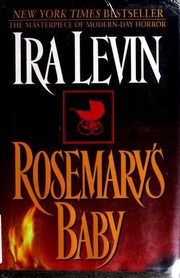
Rosemary's Baby
A young couple's dream apartment in the Bramford turns dark when helpful neighbors and a trusted doctor take over Rosemary's pregnancy.
2,665-word summary · 12 min read
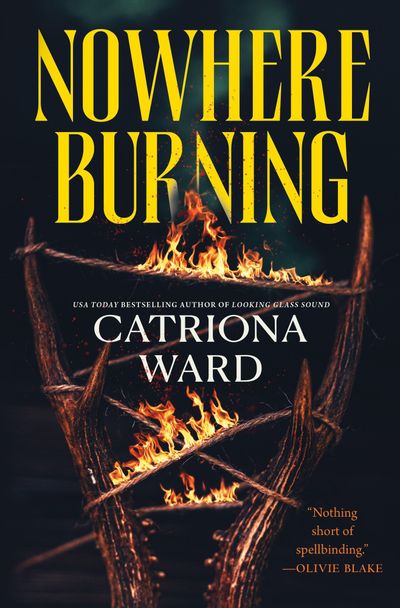
Nowhere Burning
Siblings flee to a burnt ranch commune in the Rockies where old fires still smolder.
2,232-word summary · 10 min read

The Lost World
Malcolm lives after all and returns to Site B where engineered herds eat themselves and Dodgson steals eggs.
2,075-word summary · 9 min read

Bird Box
A mother and two small children risk a blindfolded river trip after sight itself turns deadly.
3,229-word summary · 14 min read
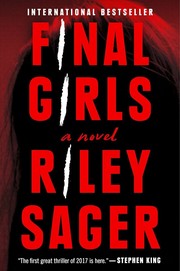
Final Girls
A survivor of a cabin massacre tries to live normally until another Final Girl dies and a second one shows up at her door.
2,176-word summary · 10 min read
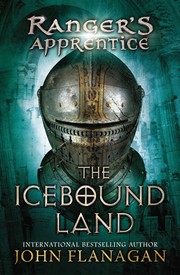
The Icebound Land
Captured and enslaved in Skandia, Will fights a drug that erases him while Halt and Horace cut a bloody road through Gallica to bring him home.
2,088-word summary · 9 min read

The Beach
A young backpacker follows a dead man's map to a hidden island community, then discovers what the people there are willing to do to keep it secret.
2,067-word summary · 9 min read

Wilder Girls
At a quarantined boarding school off Maine, three girls with strange mutations search for a missing friend and learn what the adults have hidden.
2,594-word summary · 12 min read
The Valley of Horses
Exiled from the Clan, Ayla survives alone in a hidden valley, tames a horse and a cave lion, and nurses a wounded stranger back to life.
2,311-word summary · 10 min read

Night Film
A disgraced journalist investigates the death of a reclusive horror director's daughter, following a red coat through hospitals, secret clubs, and a family…
2,690-word summary · 12 min read

Still Missing
A realtor is abducted at a Vancouver Island open house and held for more than a year. Told through therapy sessions, the novel follows her escape and the hunt…
2,466-word summary · 11 min read

Worth Dying For
Reacher stops for one night in rural Nebraska and finds a family that runs the county, a missing girl and a shipment worth killing for.
2,021-word summary · 9 min read

Say You're Sorry
A widowed prosecutor defends the teenager accused of killing her babysitter, uncovering a small town's secrets and a killer hiding in plain sight.
2,116-word summary · 9 min read
The Survivors
Kieran Elliott returns to Evelyn Bay twelve years after a storm killed his brother, and a young woman's murder forces the town to face what it has concealed.
2,571-word summary · 11 min read

Never Fade
Ruby, now a leader in the Children's League, must track down the boy whose memories she erased, because he holds the only proof of what caused the disease that…
2,188-word summary · 10 min read
Lullaby
A reporter discovers that a poem in a children's book kills anyone who hears it, and his attempt to destroy every copy turns into a road trip through grief,…
2,147-word summary · 10 min read
Nemesis Games
The Rocinante crew scatters across the solar system just as Marco Inaros and the Free Navy bombard Earth. The Expanse reaches its turning point.
2,506-word summary · 11 min read
Fable
Abandoned on a lawless island at fourteen, Fable spends four years diving for gems to buy passage off it, straight into the cutthroat trade of the Narrows.
2,320-word summary · 10 min read
The Zombie Survival Guide: Complete Protection from the Living Dead
Max Brooks's deadpan survival manual explains the Solanum virus, the only ways to destroy the living dead, fortifying a home, and the outbreaks history quietly…
2,650-word summary · 12 min read
The Twelve
The middle volume of the Passage trilogy braids the year America died, a picnic massacre decades earlier, and the survivors' war against the twelve master…
2,089-word summary · 9 min read
The Affair
In 1997, Reacher goes undercover in a Mississippi town where a murder near an army base collides with a senator's power. The case that ends his military career.
2,039-word summary · 9 min read
Stormbreaker
A fourteen-year-old boy loses his uncle, then his ordinary life, when MI6 sends him undercover to a Cornish computer plant where the giveaway machines hide a…
2,822-word summary · 13 min read
La Belle Sauvage
Philip Pullman's prequel to His Dark Materials follows eleven-year-old Malcolm Polstead as a secret message, a hunted baby, and the flood of the century carry…
2,530-word summary · 11 min read
Everything's Eventual: 14 Dark Tales
Fourteen Stephen King stories shuffled by the deal of a card deck, from the haunted room of 1408 to quiet tales of grief that sting as much as the monsters.
2,000-word summary · 9 min read
This Present Darkness
A pastor and reporter face demons over Ashton while angels answer prayer.
2,384-word summary · 11 min read

The Swiss Family Robinson
Shipwrecked Robinsons build treehouses and tame island beasts.
2,400-word summary · 11 min read