
Reading options
What's inside (12 sections)
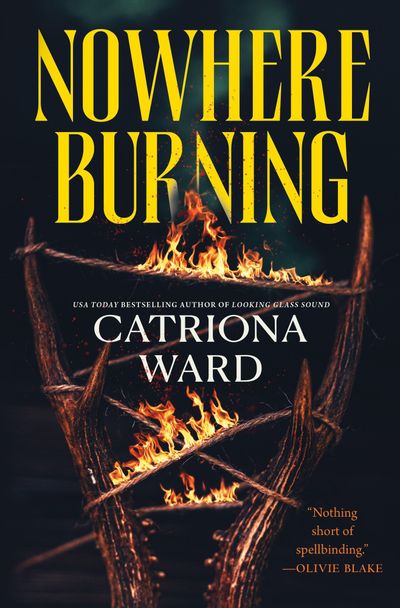
I came to Nowhere Burning because Ward keeps writing books that critics compare to fairy tales and then watching those tales curdle. This one starts with two kids running through the night and ends somewhere much stranger than a rescue story. It took me a while to settle into its rhythm. Three voices, three times, one burnt ranch in Colorado. Once the shape locked in, I stopped checking the page count.
The place itself does half the work. Nowhere sits in a valley above Ault, Colorado. It used to be an orchard farm, then the private compound of Leaf Winham, a strange old movie star with a pet cemetery and habits nobody wants to examine. By the time our story opens, the big house is a charred shell. People in town still talk about the fire. Nobody agrees on what caused it.
Riley and Oliver run
Riley is fourteen and convinced that death follows her around like weather. She parents her little brother Oliver more than anyone else does. Their home life under their guardian has turned mean and unsafe, so one night she wakes Oliver and they leave on foot with almost nothing.
Ward writes Riley as practical rather than brave. She counts food. She watches the road. She keeps Oliver moving with games and small lies about how close they are. Oliver trusts her completely, which makes every risk feel heavier. I liked how little the book romanticizes this. Running away is cold and boring and frightening in turns.
Their destination is Nowhere. Riley heard about it from Noon, another runaway teenager living out there already. The ranch has a reputation in certain circles: a place with no adults asking questions, where kids who left bad homes can sleep in peace. Riley has no better plan, so Nowhere it is.
The Nowhere Children
What Riley finds is a loose tribe of teenagers and twenty-somethings camping in and around the burnt house. They share food and chores and stories. Noon is there, sharp and watchful, the one who decides who stays. There are rules, though nobody wrote them down. Contribute. Do not bring outsiders. Do not ask about the fire.
Leaf Winham hangs over everything. He bought the valley land years ago and built his weird little kingdom: the big house, the pet cemetery with its neat rows, the parties people still whisper about. He is dead by the time Riley arrives, but his history keeps surfacing. Ward feeds us his story in pieces. Eccentric actor. Collector of odd things. A man with appetites the town chose not to see.
The longer Riley stays, the more she notices what the Nowhere Children do not say. Some of them were there the night of the fire. Some of them lie about small things in ways that suggest bigger lies underneath. Oliver, meanwhile, blooms. He eats, he plays, he stops flinching. That contrast drives the whole middle of the book. Safety for Oliver might cost Riley the truth.
Marc and Kimble chase the story
A second thread follows Marc, a freelance journalist, and Kimble, the camera operator working with him. They want a documentary about the Nowhere Children. Marc tells himself it is concern. Kimble suspects it is ambition. Both things can be true, and Ward lets them sit side by side without resolving them too fast.
Marc has a personal hook in the material that emerges slowly. He is not just a neutral observer pointing a lens at feral kids. His interest in Nowhere connects to his own past, and Kimble starts to realize her partner may be shaping the story rather than finding it. Their chapters add a queasy media layer. Every interview changes the thing being filmed.
I found these sections the most uncomfortable in a good way. The question of who gets to tell runaway kids' stories, and what the telling costs them, runs under everything Marc does. Ward never lectures about it. She just shows the camera changing the room.
Adam and the staircase
The third thread goes backward. Adam is a carpenter, hired by Leaf Winham years earlier to build something secret inside Nowhere House: a hidden staircase for purposes nobody will explain. Adam needs the money. He tells himself rich men want odd things. Then the job turns strange in ways that have nothing to do with woodwork.
Through Adam we finally see Leaf alive, and he is worse than the rumors. Charming in daylight, wrong underneath. The pet cemetery gets its explanation, and it is uglier than the town gossip version. Adam understands, too late, what he helped build and what it was for. His chapters carry the book's real horror, which is mostly human cruelty with money behind it.
The fire itself arrives as payoff rather than twist. By the time Ward shows it, we know the house, the people, and the staircase, so the sequence lands with weight instead of spectacle. I will not spoil who sets it or who gets out. The aftermath explains why the present-day kids flinch at certain names.
What the fire hid
Everything converges in the last third. Riley works out what happened the night of the fire and what it means for Oliver's safety. Marc's footage forces confrontations he did not plan. Adam's past catches the present in ways I did not expect but should have, given how carefully Ward planted the details.
The book's answer to its own mystery is sadder than shocking. Nobody in Nowhere is clean, including people we like. The children protected each other the only way they knew, and adults failed them before and after. Riley has to decide whether staying means accepting the group's version of events or breaking it open and losing the only safe place Oliver has known.
Ward leaves the supernatural question open on purpose. There are moments that read as genuinely uncanny and others with plain explanations. Readers who need every ghost nailed down may feel shortchanged. I thought the ambiguity served the theme. When adults will not name what happened, kids grow up half-haunted whatever the truth is.
A few honest complaints
The pace tests patience. Ward spends a long time establishing the ranch routine before the plot tightens, and Marc's thread repeats its dilemma a few times too many. A couple of reveals depend on characters withholding obvious information from each other for longer than feels natural.
Still, the voice work is excellent. Riley sounds fourteen without sounding written-down-to, Oliver breaks your heart in about six lines total, and even Leaf gets one scene of such specific awfulness that the whole town's silence makes sense. The Colorado setting feels observed rather than googled. Cold nights, thin air, distances that punish bad planning.
Read it for Ward at her most controlled. Fans of her twist-heavy earlier books should know this one plays fairer and slower. The scares come from neglect and money and fame, which linger longer than any single shock.
Ward's usual tricks, refined
Readers who know The Last House on Needless Street and Sundial will recognize the toolkit. Unreliable viewpoints, houses that behave like characters, past crimes surfacing through present-tense dread. Nowhere Burning uses all of it with more discipline than before. The earlier books sometimes stacked twists until the structure groaned. Here the reveals arrive in an order that feels inevitable once you see it.
The three-timeline structure deserves specific praise. Past, present, and recent past interleave without the date stamps feeling like homework. Each timeline has its own texture. Adam's past is tactile and workmanlike, full of wood shavings and bad decisions. Riley's present is spare and watchful. Marc's thread is talky and self-justifying. You always know where you are within a paragraph.
Ward also trusts silence more than she used to. Whole pages pass with little dialogue, just Riley watching weather or Adam measuring twice. For a writer famous for plot pyrotechnics, the restraint reads as growth. The scariest moments involve no violence at all: a look between adults, a door left open, a name nobody says.
The Peter Pan thread
The publisher comparison to Peter Pan and Lord of the Flies is marketing, but it points at something real. Nowhere is a Neverland for kids failed by grown-ups, and like Neverland it runs on rules that make sense only to insiders. The lost-children myth gives the commune instant resonance. We know this story. Ward knows we know it, and uses our expectations against us.
Noon functions as a Peter figure, charismatic and ageless in manner if not years. Riley makes an unwilling Wendy, mothering Oliver while barely parented herself. Leaf Winham's shadow over everything echoes the absent fathers of both sources. The differences matter more than the parallels, though. Barrie's lost boys chose adventure. Ward's children chose survival, which is a different genre entirely.
The Lord of the Flies echo lands in the group's internal politics. Who decides, who eats first, what happens to rule-breakers: the commune has answers for all of it, and none of them would satisfy an outsider. Riley's slow discovery of the enforcement mechanisms behind the friendly surface provides some of the book's tensest chapters. Civilization here is a thin coat of paint over fear.
What lifts the book above homage is Oliver. He is too young for myth. He just wants dinner and a blanket and his sister nearby. Every literary parallel collapses against his plain needs, and that collapse is the point. Stories about lost children are fun until a real child shivers in front of you.
Who should brave Nowhere
This is horror for readers who like dread over gore. There is violence in the backstory and some on the page, but the book's true subject is what neglect does to developing minds. Readers who want fast monsters should look elsewhere. Readers who liked the slow rot of Sundial will feel at home.
Content notes matter with Ward. Child endangerment throughout, animal death in the backstory, abusive guardians, addiction in the margins. None of it feels gratuitous, but none of it looks away either. The fire chapters in particular may disturb fire-sensitive readers. The book treats trauma as consequential rather than decorative, which helps, but the material stays heavy.
For book clubs, the media-ethics thread gives plenty to argue about. Does Marc's documentary help or exploit? When does filming become participation? The book refuses clean answers, which should fuel good discussion. Pair it with conversations about true-crime entertainment and who profits from other people's worst days.
I finished admiring Ward more than when I started, which is saying something. She took a ranch, a fire, and three broken timelines and made them sing in harmony. The song is sad and strange. It is worth hearing.
The fire, and what came after
The fire itself deserves a closer look because Ward stages it as the book's dark center of gravity. We approach it three ways across the timelines: as rumor in Riley's present, as investigation in Marc's footage, as lived catastrophe in Adam's past. Each approach reveals a different layer. Rumor gives fear. Investigation gives facts. Adam gives heat, smoke, and the specific sound of old timber going up.
What caused it matters less than what it exposed. Before the fire, Nowhere ran on willed blindness. Kids told themselves the commune worked. Adults told themselves the kids were fine. Leaf told himself his appetites were harmless. The blaze burned the buildings and the excuses in one night. What survived had to stand without cover, and some of it could not stand at all.
The aftermath chapters show a town performing concern while dodging blame. Officials ask narrow questions. Neighbors remember selectively. Parents who failed their children reframe themselves as victims of circumstance. Ward captures small-town self-protection with anthropological precision. Nobody lies outright. Everyone edits.
For Riley, the fire's meaning keeps shifting. First it is the reason Nowhere exists as ruins rather than refuge. Then it becomes the reason the group's rules exist. Finally it becomes personal in a way I will not detail. Her changing understanding of one night tracks her whole growth from runaway to someone who can judge what safety actually costs.
Oliver's relationship to the fire stays blessedly simple. He was not there, or too young to carry it. His freedom from that night is exactly what Riley wants to preserve, and exactly what the truth threatens. The book's central tension lives in that gap between what he needs to know and what she needs to tell. Sibling love has rarely been rendered this carefully in horror.
Adam's guilt forms the moral backbone. He built the thing that made the worst possible outcome achievable, for money he needed, with warnings he chose not to hear. His chapters ask the hardest question in the book: how much responsibility travels with a paycheck? Ward offers no absolution, only the sight of a man living inside his answer. It is devastating and fair.
The town's pet cemetery detail, which could have been grotesque set dressing, turns out to matter structurally. How a community buries animals reveals how it buries everything else. Leaf's neat rows of small graves prefigure the larger burials, literal and otherwise, that the town performs after the fire. Nothing in this book is only atmosphere. Everything connects, usually unpleasantly.
FAQ
When was Nowhere Burning published?
Tor Nightfire published it on February 24, 2026. The hardcover runs 304 pages with ISBN 9781250860057.
Is it part of a series?
No. It is a standalone horror thriller, though fans of The Last House on Needless Street will recognize Ward's love of unreliable voices and hidden pasts.
Who are the main characters?
Riley, her little brother Oliver, journalist Marc, camerawoman Kimble, carpenter Adam in the past, and the ranch's dead owner Leaf Winham.
Similar books
Final Girls
A survivor of a cabin massacre tries to live normally until another Final Girl dies and a second one shows up at her door.
2,176-word summary · 10 min read
The Last House on Needless Street
A lonely man, a cat and a mysterious neighbor pull you into a house full of buried trauma.
2,627-word summary · 12 min read
Night Film
A disgraced journalist investigates the death of a reclusive horror director's daughter, following a red coat through hospitals, secret clubs, and a family…
2,690-word summary · 12 min read
The Troop
A Boy Scout troop on a Canadian island takes in a stranger who cannot stop eating, and the worm inside him turns a camping trip into a war.
2,457-word summary · 11 min read

Still Missing
A realtor is abducted at a Vancouver Island open house and held for more than a year. Told through therapy sessions, the novel follows her escape and the hunt…
2,466-word summary · 11 min read
The Chalk Man
Childhood chalk codes lead to a murder that follows friends thirty years later.
2,350-word summary · 10 min read
Relic
A museum beast kills during an exhibition while an agent investigates.
2,066-word summary · 9 min read
The Broken Girls
A journalist revisits her sister's murder while a restored boarding school gives up a girl missing since 1950.
2,579-word summary · 11 min read
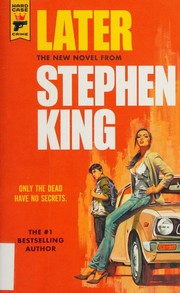
Later
Boy Jamie Conklin sees dead people who must answer truthfully, pulling him into NYPD cases and a drug crew's greed.
2,009-word summary · 9 min read
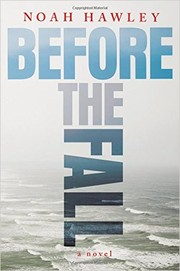
Before the Fall
A private jet falls off Martha's Vineyard. A painter and a small boy survive, then face grief and the news cycle.
2,185-word summary · 10 min read
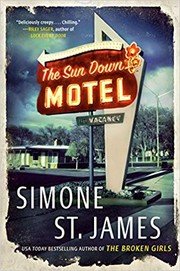
The Sun Down Motel
In 1982 Viv vanishes from a Fell motel desk; in 2017 niece Carly takes the same shift to find her.
2,150-word summary · 10 min read
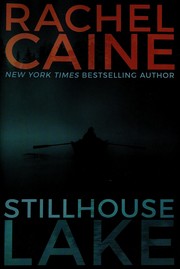
Stillhouse Lake
Acquitted wife of a serial killer becomes armed Gwen Proctor, but trolls and followers find her lake refuge.
2,086-word summary · 9 min read
Five Survive
Six teens on spring break get a flat tire, a red dot sight, and one ultimatum in an RV.
2,867-word summary · 13 min read
One by One
Shareholders snowed into a French chalet for a buyout vote start dying, and two outsiders piece together the truth.
2,173-word summary · 10 min read
Bird Box
A mother and two small children risk a blindfolded river trip after sight itself turns deadly.
3,229-word summary · 14 min read
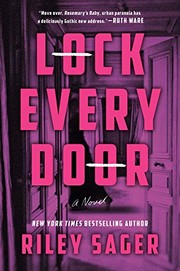
Lock Every Door
Broke Jules apartment sits at the Bartholomew where another sitter vanished.
2,224-word summary · 10 min read
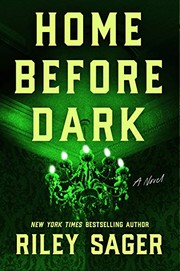
Home Before Dark
Maggie renovates haunted Baneberry Hall her father made famous.
2,017-word summary · 9 min read
Under the Dome
Chester's Mill is sealed under an invisible dome as cook Barbie and editor Julia face Big Jim Rennie's rule.
2,731-word summary · 12 min read
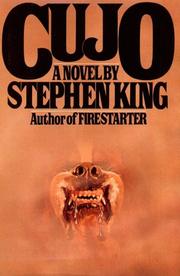
Cujo
A rabid St. Bernard traps a mother and her young son in a broken-down car at a lonely Maine garage.
2,910-word summary · 13 min read
The Outsider
Coach Terry Maitland's DNA and witnesses point to an impossible murder, until Ralph Anderson and Holly Gibney trace it to El Cuco.
2,586-word summary · 11 min read
Hidden Pictures
Nanny Mallory sees Teddy drawings predict a murder in New Jersey.
2,332-word summary · 10 min read

What She Knew
Rachel lets her eight-year-old son run ahead in a Bristol park, and the nine-day search turns her into a suspect in the public eye.
2,952-word summary · 13 min read
What Moves the Dead
Alex Easton arrives at the Usher house to find Madeline dying, the tarn full of fungus, and the local hares refusing to stay dead.
2,586-word summary · 11 min read

The Beach House
A young valet is beaten to death at a Hamptons party, and his law-student brother spends a year building a case against the family that covered it up.
2,049-word summary · 9 min read

Six Years
A professor who promised to forget the woman he loved sees her husband's obituary and discovers that the wedding, the marriage, and the woman herself may never…
2,076-word summary · 9 min read

The Trespasser
A Dublin Murder Squad detective investigates a staged dinner-party killing and finds a cover-up that reaches into her own department.
2,051-word summary · 9 min read

Rules of Prey
Minneapolis detective Lucas Davenport hunts a killer who leaves a new rule at every scene and treats murder as a game of wits.
1,914-word summary · 9 min read
Authority
The new director of the Southern Reach takes over an agency that is hiding the truth about Area X, and the building starts to change around him.
2,029-word summary · 9 min read
Ace of Spades
Two Black seniors at an elite academy are celebrated by day and hunted by an anonymous texter in this YA thriller about institutional racism.
2,066-word summary · 9 min read