
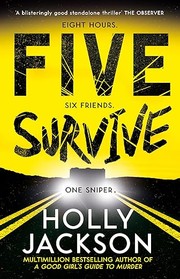
Five Survive
2,867-word summary 13 min read 400 pages in the book
- First published
- 2022
- Publisher
- Delacorte Press
- Pages
- 400
- ISBN
- 9780593704899
Reading options
What's inside (7 sections)
I picked up Five Survive because I needed something I could finish fast. Holly Jackson published it on November 29, 2022 with Delacorte Press in the US and Electric Monkey in the UK, 400 pages in hardcover, as her first standalone after the A Good Girl's Guide to Murder books. A friend told me it all happens in one night in an RV, and I thought, perfect, a road trip thriller. I started it after dinner and stayed up too late because the clock in the story kept ticking and I could feel it.
The setup is simple, which is why it works. Red Kenny, eighteen, is riding from Philadelphia toward the Gulf Coast with five other teens for spring break. Her mom died not long ago, and Red is still raw with it. She is quiet, funny in a dry way, and she notices more than she says. With her are Maddy, her best friend, sharp and loyal, Oliver, the older brother type who likes to be in charge, Reyna, Oliver's younger sister, Simon, the goofy one who tries to keep things light, and Arthur, the quieter kid who stays near the edges of the group. They have an RV, snacks, playlists, the usual plans.
I liked Red right away. She is grieving but not written as fragile. She jokes with Maddy. She gets carsick. She texts her dad. She carries guilt about her mom that she has not told anyone in the RV. Jackson writes her thoughts in short bursts, and I found that easy to sit inside. If you loved Pip's voice in the earlier books, Red is different, less sure, more watchful, but just as stubborn when it counts.
A wrong turn off the highway
The trouble starts with a wrong turn, and that felt too real to me. They are cutting through South Carolina late, trying to make time, following a GPS that keeps rerouting. Oliver is driving, or telling whoever drives how to drive. They bicker about gas and bathrooms and who ate the chips. Then they take an exit they should not have taken, down a narrow road with no lights and no signal bars.
The RV starts thumping. At first they think it is a rough road. Then it gets worse, and Oliver pulls over. One tire is flat, torn in a way that looks wrong. Not worn out wrong. Cut wrong. Simon jokes about it. No one laughs for long. It is dark, it is late, and they are miles from help. Arthur gets out with a phone flashlight. Maddy tries her phone. No service, or one bar that vanishes when you need it.
They argue about what to do. Oliver wants to change the tire fast and go. Reyna wants to call for help. Red walks a little way to look for a mile marker and feels how quiet it is out there. No cars pass. Trees press close. I felt that specific road trip fear, the one where you realize you have no idea where you are and your phone is a brick.
Then they see the red dot.
It lands on Maddy's forehead first, small and steady. Then it slides to Oliver's chest. Someone out in the dark has a rifle with a sight, aimed at them, and does not want them to leave. That image kept me from putting the book down. An RV with bright windows in a black field is a lit stage. They are visible. The shooter is not.
The walkie talkie crackles
What makes this book different from a standard stranded story is the walkie talkie. One of the kids has a pair, brought for fun, and it crackles to life. A voice, altered, calm, tells them the rules. Stay inside. Hand over phones. Do not call police. One of you is hiding a secret, and when that person tells the truth, the rest can go.
At first they think it is a prank. Simon thinks some local is messing with them. Oliver gets loud, which becomes a pattern. Then the sniper fires to prove the threat is real, shattering a mirror and putting a hole through the RV wall. After that no one jokes.
Jackson keeps the timeline tight. Almost the whole book covers about eight hours in real time, through the night into early morning. Chapters are marked by time, which I loved and hated. Loved because the pressure builds. Hated because I kept checking my own clock. The RV feels smaller with each hour. The bathroom tank smells. The lights dim when the battery runs low. People need water. People need to pee. Fear makes everyone need to talk.
Oliver takes charge fast. He is the oldest, he has the loudest voice, and he decides who sits where and who speaks. He tells them to stay away from windows. He collects phones in a bag. He tries to reason with the voice. Part of me was grateful someone acted. Part of me bristled, because Oliver leads by shutting others down, especially Red. He talks over her. He frames her caution as panic. I did not like him, and I think Jackson knows many readers will not.
Red watches him. She watches everyone. Maddy squeezes her hand when the shots ring out. Reyna cries quietly and then gets angry at herself for crying. Simon paces the narrow aisle. Arthur goes very still, the way people do when they are doing math in their heads. The sniper can see the red dot through the windows, so they crouch below the sills and whisper. Every creak of the RV sounds loud.
The voice gives them pieces but not the whole. The shooter says they are not there to kill teens for fun. They want the one who knows something. If that person confesses, the night ends. If they lie, someone gets hurt. It is a cruel setup, because now everyone looks at each other and wonders what friend they never really knew.
Everyone has something, no one wants to go first
The middle of the book is mostly talk, and you should know that going in. This is not a chase through woods. It is six people in a box, trading secrets while a gun points at them. If you need constant action, you may get restless. I did in one stretch, then got pulled back when a secret landed harder than I expected.
Oliver forces the order. He says they will each share to clear themselves. He starts with small stuff to show how it is done, school cheating, fake IDs, that kind of thing. It does not work. Fear makes small confessions sound like lies and big ones sound impossible.
What comes out, in messy order, is this. Oliver once beat a kid badly at a party and the story was buried because of who his family is. He frames it as protecting his sister, but the details sound worse when Reyna fills gaps. Reyna had an affair with an older guy who had power over her grades and her plans, and she has carried shame about it alone. Simon once stole a van on a dare and left it wrecked, a story he told as funny until he has to say it with a gun on them. Maddy has her own hurts about loyalty and money and who pays for trips like this. Each reveal shifts the air. Someone cries. Someone swears. Oliver tries to rank which secret is big enough to satisfy a sniper, which is gross and very human.
Red holds back longest. She has a secret about her mom's death, and about what she told police after. She keeps starting to speak and stopping. Maddy covers for her twice, which made me ache because you can see the friendship strain. Arthur also holds back, watching Red more than the others. I noticed that on first read and filed it away. On reflection, Jackson plants small flags about Arthur early, how little he says about home, how he knows too much about rifles, how he looks at the tree line like he is placing someone.
The talk heavy stretch works when the secrets change how you see a person, and it drags when Oliver lectures. There is a long patch where he repeats his rules and accuses each person in turn, and I wanted to shake him. He is written as unlikable on purpose, I think, the golden boy who cannot stand not being the hero. Still, pages of him shouting while others whisper tested my patience.
One detail I appreciated: Jackson shows how class and connections shape these kids. Oliver and Reyna come from a family with a lawyer mother and polish. Red comes from less money and more loss. Simon coasts on charm. Those gaps matter when they argue about calling police or trusting the voice. Who expects help to come? Who expects to be blamed? It never turns into a speech. It sits in small lines about who pays for gas and who knows a DA's office number by heart.
Catherine, Frank Gotti, and the night Red lost her mom
The turn toward the real secret starts with names from the adult world. Catherine, Oliver and Reyna's mother, is a district attorney back home. Frank Gotti is a local crime figure whose organization she has pursued. Mo Frazer, a name some readers will recognize from Jackson's podcast style extras, circles the case in background coverage. The teens know these names from news and dinner talk, not from life, until the sniper makes them matter.
Red finally says her piece, and it reframes her whole ride. After her mom died, Red told police she saw something that night, a car, a face, a detail that pointed toward Gotti's people. She was grieving and pressured and wanted an answer. Her statement was treated as an eyewitness account. It was false, or at least not true the way she said it. She has carried that lie since the funeral, scared to pull it back because it felt like betraying her mom to admit she made it up.
That confession lands hard in the RV. Maddy knew part of it. The others did not. Oliver, predictably, seizes on it. He says this must be the secret the sniper wants, a witness against Gotti. For a few chapters I believed him, because it fits the shape: sniper wants the witness silenced or exposed. Red believes it too, and her shame fills the RV. She offers to walk out and trade herself. Maddy physically holds her back. I had to put the book down for a minute there. The grief logic felt too true, that Red would rather be shot than keep lying.
But Jackson is careful. Red's lie matters, yet it is not the center. The center is Catherine. Through pressed questions and a terrible phone call they should not have been able to make, the kids piece together that Catherine was driving the night Red's mom died. It was a crash, not a hit, and Catherine left or covered it up to protect her career and her family while Red's family buried their loss. Catherine built cases against men like Gotti while hiding her own guilt. Red's false eyewitness claim, aimed at Gotti's crew, accidentally pointed near a truth Catherine needed buried.
I found this reveal upsetting in a good way. It makes the adult crime plot personal without turning the teens into detectives. They are not solving with boards and strings. They are remembering who drove whom home, who called whom that night, what Catherine said at breakfast that never made sense. Oliver and Reyna have to face that their mother is not the shield they thought. Reyna breaks first. Oliver denies, then goes quiet in a way that scared me more than his shouting.
And Arthur? Arthur's quiet starts to make sense. He and his brother are tied to Gotti's family, sons of Frank in blood if not in name as the kids know it, placed to watch and to act. The sniper in the trees is his brother, following orders to get the witness and to protect the hold the organization has on Catherine. Arthur is inside the RV, armed with knowledge and fear, caught between his brother outside and the kids he has spent days laughing with. Once you see it, earlier scenes click: why Arthur knew the rifle sounds, why he tried to steer talk away from Catherine, why he kept Red in sight.
Is that a stretch? A little, yes. That six random teens on spring break would include the DA's kids, a false witness against the mob, and the mob sons in one RV takes coincidence. Jackson knows it. She has Simon say something like this cannot be random, and she uses the spring break planning chain to explain how Arthur got on the trip. I bought it enough to keep going, but I will admit the web is neat. Real life is messier. Thrillers need knots, though, and this knot pulls tight.
The long wait for sirens
The last quarter is the best written stretch, in my view. The RV battery fades. The air goes stale. The sniper grows impatient and the voice on the walkie talkie stops playing games. Shots come closer. Glass breaks. Someone is grazed and the smell of blood fills the small space. First aid with paper towels and shaking hands felt more real than any shootout.
Red changes here. She stops apologizing for existing. She starts thinking like someone who has nothing left to lose but her friends. She and Maddy work as a pair, one talking to keep the voice busy, one moving where the red dot cannot follow. Reyna finds steel she did not know she had, standing up to Oliver when he tries to trade Red to save himself. Simon stops joking and does a brave, stupid thing that costs him. Arthur breaks open, torn between brothers, between the brother outside with the gun and the makeshift siblings inside who shared chips with him.
I will not map every shot, because the order matters and you should feel it. What I will say is Jackson uses sound well. The walkie talkie static. The ping of the RV skin. The engine that will not turn over. The far sirens that may or may not be real. At one point they kill the interior lights to blind the dot, and the pages go dark with them. I read holding my breath.
The police arrival, when it comes, does not feel like a rescue so much as an interruption. Lights, shouting, conflicting orders. The sniper melts back. The kids stumble out with hands up, crying, furious, alive. Five survive. The title tells you the count but not the cost, and Jackson honors that. Someone does not walk out. The loss lands because it is not the person the sniper wanted most. It is the person who stepped where the bullet was going.
Afterward Jackson closes with paper, not action. A newsletter-style rundown, a transcript of calls, a letter Red writes but may not send. I liked this choice. After hours of shouting in a box, the flat tone of reports feels cold. We learn what charges stick to Catherine, what happens to Gotti's crew, how the false statement is corrected, where Arthur and his brother land in the system. Red's letter to her mom broke me a little. She stops trying to make the death mean something grand and lets it be sad and unfinished.
Fair criticism time, because this book is not perfect. The talk heavy center will lose some readers. Oliver is hard to spend hours with, and since he dominates talk, his voice can drown Red's quieter one. The coincidence of the passenger list strains belief if you poke it. A few thriller beats rely on phones dying and signals vanishing at just the right time. And if you came from Pip's detective books wanting another investigation, this is different. It is a pressure cooker, not a puzzle box.
Still, I finished it shaken in the way I like from Jackson. She is good at teens under pressure who make bad choices for understandable reasons. Red lying to police out of grief, Catherine hiding a crash out of ambition, Oliver hitting and hiding behind family name, Arthur staying silent to protect a brother, these are not cartoon sins. They are the kind people carry. The RV forces them out into the open where a red dot moves across chests while they speak.
Who should read it? If you like single night thrillers with a ticking clock, try it. If you liked the moral knots in A Good Girl's Guide to Murder but want a faster, scarier setup, this fits. If you hate confined settings or unlikeable characters with big voices, borrow before you buy. If you need every coincidence explained to the inch, you may grumble. Keep the lights on for the last hour. I did, even though most of the danger is talk and a small red light moving in the dark.
FAQ
When was Five Survive published?
It was published November 29, 2022 by Delacorte Press in the US and Electric Monkey in the UK. It runs 400 pages with ISBN 9780593704899.
Is it part of a series?
No. It is her first standalone after the A Good Girl's Guide to Murder series, with new characters and one night in an RV.
Who is trapped in the RV?
Red Kenny, Maddy, Oliver, Reyna, Simon and Arthur, held at rifle point on a dark South Carolina road.
Similar books
The Reappearance of Rachel Price
Bel films a doc when her missing mother walks back after years.
2,254-word summary · 10 min read

Kill Joy
Pip hosts a 1920s murder mystery party with her friends, solves the fake case, and feels a real scare that points toward A Good Girl's Guide to Murder.
2,537-word summary · 11 min read
As Good As Dead
Pip faces online threats and a stalker as she investigates a serial case in the trilogy finale.
2,962-word summary · 13 min read

Good Girl, Bad Blood
Pip swears off sleuthing, then podcasts a missing friend case that tests fame and cost.
2,011-word summary · 9 min read
A Good Girl's Guide to Murder
Pip reopens a closed murder case for a school project and finds the town wanted it shut.
2,621-word summary · 12 min read

Ace of Spades
Two Black seniors at an elite academy are celebrated by day and hunted by an anonymous texter in this YA thriller about institutional racism.
2,066-word summary · 9 min read

Still Missing
A realtor is abducted at a Vancouver Island open house and held for more than a year. Told through therapy sessions, the novel follows her escape and the hunt…
2,466-word summary · 11 min read
The Vanishing Stair
Stevie Bell returns to Ellingham Academy under a secret bargain, chasing the truth about a 1936 kidnapping while a new death makes the school feel smaller and…
2,026-word summary · 9 min read
Killer Instinct
Teen profiler Cassie Hobbes rejoins the FBI Naturals to stop a copycat repeating Dean Redding father murders.
2,600-word summary · 12 min read
The Cousins
Three cousins work at their rich grandmother island resort while digging into why their parents were cut off.
2,565-word summary · 11 min read
Sadie
Sadie hunts sister killer while podcast chases her in split narrative thriller.
2,091-word summary · 9 min read
Reconstructing Amelia
A grieving lawyer mother reopens her teen daughter's alleged suicide at an elite Brooklyn school, uncovering bullying and secrets.
2,032-word summary · 9 min read
Before the Fall
A private jet falls off Martha's Vineyard. A painter and a small boy survive, then face grief and the news cycle.
2,185-word summary · 10 min read
Survive the Night
Film student Charlie rides with possible Campus Killer Josh in 1991.
2,612-word summary · 12 min read
Nowhere Burning
Siblings flee to a burnt ranch commune in the Rockies where old fires still smolder.
2,232-word summary · 10 min read
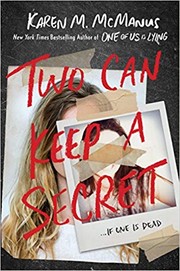
Two Can Keep a Secret
Twins new to Echo Ridge dig into aunt's murder as homecoming threats return.
2,078-word summary · 9 min read
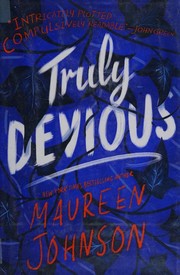
Truly Devious
True crime buff Stevie Bell arrives at Ellingham to solve its 1936 kidnapping as present murder strikes.
2,072-word summary · 9 min read
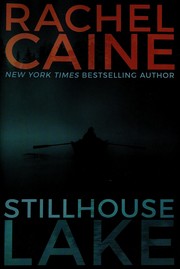
Stillhouse Lake
Acquitted wife of a serial killer becomes armed Gwen Proctor, but trolls and followers find her lake refuge.
2,086-word summary · 9 min read
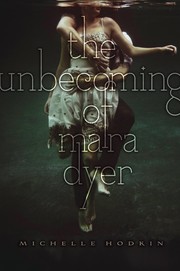
The Unbecoming of Mara Dyer
Sole survivor of a collapse that killed her friends, Mara Dyer moves to Miami, where visions that come true suggest her grief hides something darker.
2,152-word summary · 10 min read
The Naturals
Teen profiler Cassie Hobbes joins an FBI program for gifted teens and hunts a killer tied to her past.
2,401-word summary · 11 min read
One by One
Shareholders snowed into a French chalet for a buyout vote start dying, and two outsiders piece together the truth.
2,173-word summary · 10 min read

Pretty Little Liars
Four girls get texts from dead Alison a year after she vanished, and secrets start leaking.
1,922-word summary · 9 min read

Final Girls
A survivor of a cabin massacre tries to live normally until another Final Girl dies and a second one shows up at her door.
2,176-word summary · 10 min read
One of Us Is Next
A year after Simon's death, a copycat texter drags Maeve, Knox and Phoebe into a cruel Truth or Dare game in Bayview.
2,348-word summary · 10 min read
We Were Liars
Cadence Sinclair returns to Beechwood Island after an accident she cannot recall, chasing summers with Johnny, Mirren and Gat toward the truth.
1,923-word summary · 9 min read
One of Us Is Lying
Five Bayview teens enter detention and Simon dies, leaving Bronwyn Nate Addy and Cooper suspects.
3,158-word summary · 14 min read
The Maze Runner
Maze Runner retold: Thomas wakes in Glade, walls move, Grievers sting, Teresa triggers end.
1,907-word summary · 8 min read

Paper Towns
Quentin chases clues after Margo vanishes, learning the girl he imagined was never the whole story.
2,198-word summary · 10 min read

What She Knew
Rachel lets her eight-year-old son run ahead in a Bristol park, and the nine-day search turns her into a suspect in the public eye.
2,952-word summary · 13 min read

The Beach House
A young valet is beaten to death at a Hamptons party, and his law-student brother spends a year building a case against the family that covered it up.
2,049-word summary · 9 min read