
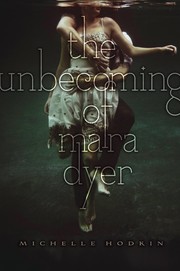
The Unbecoming of Mara Dyer
2,152-word summary 10 min read 464 pages in the book
- First published
- 2011
- Publisher
- Simon & Schuster
- Pages
- 464
- ISBN
- 9781442421769
- Series
- Mara Dyer (#1)
Reading options
What's inside (8 sections)
I picked up The Unbecoming of Mara Dyer because I kept seeing it described as a book that refuses to sit still in one genre. Psychological thriller, ghost story, romance, mystery: readers could not agree on what it was, which made me curious. It was first published in 2011 by Simon and Schuster, and the hardcover runs 464 pages. It is the first book in the Mara Dyer series, and it ends on a cliffhanger that clearly expects you to reach for the next volume.
The premise is stark. Mara Dyer wakes up in a hospital with no memory of how she got there. She learns that an old building collapsed with her inside it, along with her best friend, her boyfriend, and his sister. Everyone else died. Mara survived without physical injury, which frightens her almost as much as the loss itself. She cannot remember why they were in the building that night or what brought it down.
Her family decides a fresh start will help. They leave Rhode Island for Miami, enrolling Mara in an exclusive private school where the students are wealthy and polished. Mara hopes to pass as normal. She wants routine, sunlight, ordinary homework. What she gets instead is stranger and darker than what she left behind.
Waking up without the night before
The early chapters move between the present and Mara's broken memories of Laurelton, Rhode Island. Before the accident, she was sixteen and cautious, close to her best friend Rachel since early childhood. Rachel was the bolder of the two. Through Rachel, Mara knew Claire and Claire's brother Jude, with whom Mara had a complicated crush that had started turning into something more.
The night of the accident involved an abandoned asylum, a place teenagers dared each other to enter. Mara remembers fragments: candlelight, an Ouija board at Rachel's birthday, jokes about how they would die, the kind of talk that feels harmless until it is not. Then nothing solid. Officially it was a structural collapse. Mara was pulled out alive. Rachel, Claire, and Jude were not.
Hodkin writes Mara's confusion well. Mara is not a cool, detached narrator. She second guesses herself constantly. She apologizes too much. She watches her parents watching her. Her mother is warm but frightened. Her father, a defense lawyer, tries to be steady. Her brothers react in their own ways, one protective, one younger and less able to name what happened. The family grief feels real because nobody processes it the same way.
Mara is told she has post traumatic stress disorder, which makes sense given what she survived. The diagnosis gives everyone a frame: flashbacks, dissociation, survivor guilt. Mara accepts it at first because she wants an explanation that does not frighten her. But small things keep not fitting, and she notices them even when she wishes she would not.
Miami and the new school
The move to Florida is supposed to help, and in some ways it does. The house is bright. The weather is warm. Mara's parents hope distance from Laurelton will loosen the memories. For a few days, Mara lets herself believe a new school might mean a new version of herself.
The private school dashes that hope quickly. The popular crowd singles Mara out almost at once. A girl named Anna and her boyfriend take a particular dislike to her, mocking her clothes, her background, her confusion in class. Their cruelty is petty and persistent rather than dramatic, which makes it believable. Mara has survived something terrible, and instead of sympathy she gets gossip and staring.
One teacher dislikes her too, for reasons that never feel fully explained. Mara's Spanish class becomes a source of dread. She feels watched and judged, and her grades and confidence slip. I found this thread the least satisfying in the book. A teacher carrying unexplained hostility toward a new traumatized student needs either a motive or less page time, and here it gets a lot of attention without enough payoff.
Mara does make one real friend in her brother's circle and finds small kindnesses where she does not expect them. But mostly school is a lonely place until Noah Shaw starts paying attention to her, and Noah changes the temperature of every scene he enters.
Noah Shaw
Noah is the wealthy British boy every girl at school talks about. He has the reputation of a player, the kind who dates briefly and moves on. He is handsome, funny in a mocking way, and clearly used to getting what he wants. When he focuses on Mara, she assumes it is a game. Part of her enjoys the attention anyway.
Their relationship builds slowly enough to feel earned in places. Noah teases her, then listens. He shows up when she is in trouble. He has his own losses, including a complicated family history, and he carries himself like someone performing confidence he does not fully feel. Mara asks him once what he fears, and his answer, about forgeries and being an imposter in his own life, tells her more than his jokes do.
I have mixed feelings about Noah, and I think the book wants that. On one hand, he is patient with Mara in ways nobody else is. He believes her when she says strange things are happening. He does not flinch when she describes seeing dead faces in mirrors. On the other hand, he withholds a great deal about himself for most of the book. He knows more about Mara's condition than he admits early on, and his secrecy puts her in danger more than once.
The romance takes up a large share of the middle. Long conversations, late night drives, a school trip, small gifts of attention. Readers who enjoy slow burn attraction will find a lot to like. Readers who came for horror may grow impatient. I landed somewhere between: the chemistry is strong, but there are stretches where the investigation into Mara's past stalls so the couple can have another charged conversation.
What kept me reading was not the question of whether they would get together, but what Noah was hiding. Every time he deflected, I marked it. The book trains you to do that with everyone.
Visions that come true
The strangest part of Mara's new life starts quietly. In class one day, she sees the room collapsing around her, plaster falling, students screaming. Nobody else reacts. It passes, leaving her shaking. Then she starts seeing Rachel, Claire, and Jude in mirrors and reflective surfaces. She hears things others do not hear.
At first she treats these as symptoms. Her mother cries when Mara describes them. Doctors adjust explanations. Mara tries to be a good patient. Then people start dying in ways that match what she pictured.
A cruel man who mistreats his dog dies after Mara, in a flash of anger, pictures harm coming to him. Her Spanish teacher dies after Mara imagines her choking. Each time, Mara tells herself it must be coincidence layered over grief. Each time, the match is too close to dismiss. She begins keeping track privately, testing whether her thoughts precede the deaths or follow them.
This is the strongest section of the book for me. Hodkin paces the incidents well, spacing them so Mara has time to rationalize before the next one lands. The doubt feels honest. Mara does not jump to supernatural conclusions. She resists them. She looks for ordinary causes, asks whether stress could explain what she saw, wonders if she heard about the deaths first and imagined the visions afterward. Her resistance makes the pattern harder to ignore when it continues.
The school bullying ties into this dread. When Anna torments Mara, Mara's anger spikes, and she fears what her anger might do. That fear isolates her further. She pulls back from classmates, skips events, lies to her parents about how bad things are. The book captures how guilt can look like withdrawal, and how withdrawal can look like guilt to outsiders.
Remembering Laurelton
About two thirds in, Mara decides she has to stop avoiding the night of the collapse. With Noah's help, she seeks out someone who might help her recover the memory: a Santeria priest with a reputation for working with people others cannot help. The scenes around this visit are among the most atmospheric in the novel, full of candles, ritual objects, and careful negotiation about what Mara is willing to face.
What surfaces is terrible. Mara begins to recall that her own mind played a role in the deaths at the asylum. She has an ability she never asked for and cannot control: when she pictures harm vividly enough, harm happens. The building collapse, the deaths of her friends, the later deaths in Miami: all connect to this capacity. Remembering does not bring relief. It brings a heavier question about responsibility.
Noah then tells her his own secret. He can heal. Where Mara brings harm without meaning to, Noah can repair injury, including injuries Mara causes. He believes his ability might balance hers, and he offers to help her learn control so she does not hurt people she loves. This reveal reframes much of his earlier behavior, including his watchfulness and his reluctance to leave her alone for long.
I found this mythology interesting but thin in this first volume. The book gestures toward explanations without providing them. Why do these teenagers have such capacities. Are there others. Who taught Noah what he knows. The answers are clearly saved for later books, which is fair for a trilogy opener, but it means the last act leans on rules the reader only half understands.
Mara experiments cautiously once she accepts what she can do. There is a disturbing scene at a zoo exhibit where she tests her reach on insects, trying to learn limits without hurting a person. It is one of the few places where she treats the ability like something to study rather than something to fear, and I wished there were more of it. Curiosity suits her. Most of the time she is too frightened or too lovesick to investigate systematically.
Joseph, the courtroom and the police station
The final stretch piles on plot. Mara's father, as a defense lawyer, takes a high profile case, and the stress bleeds into home life. Mara's younger brother Joseph is kidnapped, which pulls Mara and Noah into a frantic search. Noah experiences a vision of the kidnapping that guides them, suggesting his capacities go beyond healing into something like sight.
The rescue attempt goes badly. Mara uses her ability again, this time deliberately, believing she is striking at the person responsible for Joseph's disappearance and for another girl's murder. In the chaos, her father is hurt. Noah manages to save him, but the cost is visible. Mara has now caused harm on purpose, not in a flash of anger but by choice, and she has to live with the difference.
Overwhelmed, Mara decides to turn herself in. She goes to the police station intending to confess to the officer who knows her best, ready to say aloud what she believes she has done. Before she can speak, she sees someone who cannot be there. Jude, her boyfriend from Laurelton, the boy who supposedly died in the asylum collapse, is standing in the station, alive.
The book stops there. No explanation, no reunion scene, just the shock of recognition and the closing line's implication that everything Mara thinks she knows is incomplete.
That cliffhanger works, even if it frustrates. It forces a reread of earlier chapters in your head: the mirror sightings, the recovered memories, the assumption that all three friends died. If Jude survived, what else was wrong. Was Mara's memory of causing his death false, implanted, or partial. Is Jude the same person, or something else wearing his face. Hodkin withholds enough that theories multiply, which is exactly what a first in trilogy should do.
My fair criticisms cluster around length and balance. At 464 pages, the book carries subplots it does not need. The mean girl thread repeats without deepening. The disliked teacher thread never earns its weight. The courtroom case involving Mara's father feels imported from a different novel. Some descriptive passages run long, restating Mara's confusion after the reader already understands it. A tighter middle would have made the horror land harder.
Still, the core holds. Mara herself is a sympathetic narrator, funny in small asides, loyal to her family, honest about fear. Her voice carries the book through its baggy stretches. Noah is appealing even when secretive. The central idea, that grief and guilt might mask something real and dangerous, gives the familiar new girl story an edge. And the closing image, of a dead boy alive in a police station, is genuinely chilling. I went to bed thinking about it, which is more than most openers manage.
FAQ
When was The Unbecoming of Mara Dyer published?
It was first published in 2011 by Simon & Schuster. The hardcover runs 464 pages and the ISBN is 9781442421769.
Is The Unbecoming of Mara Dyer the first Mara Dyer book?
Yes, it is book 1 in the Mara Dyer series and ends on a cliffhanger, with Mara spotting Jude alive at a police station after believing he died.
Who is Noah Shaw in The Unbecoming of Mara Dyer?
Noah Shaw, the wealthy British student who believes Mara, hides a healing ability of his own and knows more about her condition than he first admits.
Similar books
More from Mara Dyer first, then related titles.
The Evolution of Mara Dyer
Back in Miami after the asylum collapse, Mara Dyer is treated at Horizons while Jude, who should be dead, stalks her. Noah stays close as the experiments…
2,577-word summary · 11 min read
Paranormalcy
A teenage agent who can see through glamour falls for a shape-shifter and learns the agency she works for is hiding her true nature.
2,041-word summary · 9 min read

Silence
Nora wakes in a cemetery with five months missing and a stranger called Jev who feels familiar.
3,615-word summary · 16 min read

Crescendo
Nora and Patch survived book one, but distance, Marcie Millar, and a letter about her father's killer pull them apart.
2,980-word summary · 13 min read
Hush, Hush
Nora Grey's new biology partner Patch is gorgeous, infuriating, and hiding wings he was never meant to keep.
2,137-word summary · 9 min read

First Grave on the Right
Charley Davidson is a private investigator in Albuquerque and the grim reaper. When three murdered lawyers come back as ghosts, her two jobs collide.
2,770-word summary · 12 min read

Anatomy: A Love Story
In 1817 Edinburgh, a noblewoman who wants to be a surgeon disguises herself to study anatomy and falls for the grave robber who supplies her with bodies.
2,031-word summary · 9 min read

Ace of Spades
Two Black seniors at an elite academy are celebrated by day and hunted by an anonymous texter in this YA thriller about institutional racism.
2,066-word summary · 9 min read

Masquerade
After Cordelia's death, Schuyler flies to Venice to find her exiled grandfather, then returns to the Blue Bloods as they prepare for a masked ball and a hidden…
2,543-word summary · 11 min read
Cross My Heart and Hope to Spy
Cammie Morgan returns to Gallagher Academy for a second year of spy training, only to fall for a boy from a rival spy school and hunt a mole in her own school.
2,567-word summary · 11 min read
I Kissed Shara Wheeler
Shara Wheeler kisses her rival Chloe Green at prom and disappears, leaving a scavenger hunt that forces Chloe to rethink everything she knew about her.
2,083-word summary · 9 min read
Demonglass
Sophie Mercer spends the summer at the Council's English estate, where two new demons, a suspicious host, and Archer's return complicate her plan to remove her…
2,771-word summary · 12 min read
Born at Midnight
Kylie Galen is sent to a camp for troubled teens and discovers it is a haven for vampires, werewolves, and witches, and that she may be something stranger…
2,310-word summary · 10 min read
Last Night at the Telegraph Club
The 2021 National Book Award winner follows Lily Hu, a Chinese American teenager in 1954 San Francisco, as she falls for Kath and learns what it costs to be…
2,336-word summary · 10 min read
The Vanishing Stair
Stevie Bell returns to Ellingham Academy under a secret bargain, chasing the truth about a 1936 kidnapping while a new death makes the school feel smaller and…
2,026-word summary · 9 min read
The Diviners
In 1920s New York, Evie O'Neill's ability to read objects pulls her into an occult investigation that awakens something far older and more dangerous.
2,045-word summary · 9 min read

Say You're Sorry
A widowed prosecutor defends the teenager accused of killing her babysitter, uncovering a small town's secrets and a killer hiding in plain sight.
2,116-word summary · 9 min read
House of Salt and Sorrows
Annaleigh Thaumas investigates her sister's death in a cursed island manor where the balls are illusions and the sea god is always listening.
2,025-word summary · 9 min read
Cemetery Boys
A trans brujo in East Los Angeles summons the ghost of a boy who refuses to move on, and together they uncover a murder hidden beneath Día de los Muertos.
1,997-word summary · 9 min read
Switched
A Minnesota teenager who can make people obey her discovers she is a changeling troll princess, and the hidden kingdom she came from wants her back.
2,131-word summary · 9 min read

The Indigo Spell
Sydney Sage hunts an aging witch, learns forbidden magic, and finally admits she loves Adrian, while the Alchemist tattoo on her cheek may be controlling her.
2,604-word summary · 12 min read
The Brothers Hawthorne
Jameson infiltrates an underground London gambling club for the father he never knew while Grayson protects his half-sisters in Phoenix from a dead man's…
2,019-word summary · 9 min read
This Savage Song
Monster hunter Kate meets August, a monster who plays violin.
2,574-word summary · 11 min read
The Reappearance of Rachel Price
Bel films a doc when her missing mother walks back after years.
2,254-word summary · 10 min read
Half-Blood
Half-blood Alex trains at the Covenant while gods stir and rules close in.
2,601-word summary · 12 min read
Dreams of Gods & Monsters
Karou and Akiva unite chimera and seraphim against empires invading Earth.
2,179-word summary · 10 min read
Killer Instinct
Teen profiler Cassie Hobbes rejoins the FBI Naturals to stop a copycat repeating Dean Redding father murders.
2,600-word summary · 12 min read

The Reckoning
Necromancer Chloe Saunders and her gifted friends raid Edison labs in the Darkest Powers finale, chasing rescue and freedom together as hidden powers break…
2,955-word summary · 13 min read

The Golden Lily
Sydney Sage guards Jill at Amberwood Prep in Palm Springs, studies forbidden magic, favors Adrian over Brayden, and faces Alchemist custody in this second…
2,988-word summary · 13 min read