

Reading options
What's inside (8 sections)
I picked up The Girl Who Loved Tom Gordon because I wanted something short from Stephen King. Most of his books on my shelf are thick enough to stop a door. This one is different. Scribner published it in 1999 and the first hardcover runs 224 pages. You can read it in a weekend. I read it in two sittings, and the second sitting went late because I did not want to leave a nine year old alone in the woods.
The set up is plain, which is part of why it works. Trisha McFarland is nine. She lives in Sanford, Maine. Her parents, Larry McFarland and Quilla Anderson, divorced about a year before the story starts. Quilla has moved the kids, and the move has not settled anything. Pete, her brother, is almost fourteen and angry in the way only a fourteen year old can be. Quilla is trying hard to make weekends mean something. She plans outings from brochures. This Saturday it is a six mile walk on the Maine New Hampshire branch of the Appalachian Trail, from a dirt parking area on Route 68 toward Route 302 near North Conway. One stretch in the middle is marked moderate to difficult.
It is not quiet. Pete does not want to be there. He starts in on the ride up. Why walk in the woods in bug season. Why waste a Saturday. Why study for finals, which Trisha knows he would never do on a Saturday. Quilla answers in clipped tones. Trisha sits in the back of the Dodge Caravan with her knapsack and her doll Mona, who her dad calls Moanie Balogna, and tries her bright voice. She points out barns and horses and graveyards. It does not work. By the time they park, her mother is gripping the wheel and Pete is in full sulk.
Trisha is wearing jeans and a blue Red Sox batting practice jersey with 36 GORDON on the back. She has her Red Sox cap with Tom Gordon's signature across the brim in thick black marker. Pete likes Mo Vaughn. Quilla likes Nomar Garciaparra. Trisha and her dad share Tom Gordon. He is the Boston closer, the guy who comes on late when the Sox are ahead and tries to get the save. What Trisha loves, what her dad taught her to love, is that Gordon looks calm when it counts. He throws a curve when other pitchers would play it safe. After a save he points one finger at the sky. For Trisha that gesture means someone is watching and giving credit where it belongs.
On the trail the fighting keeps going. Mom and Pete argue about the divorce and about Pete wanting to live with their dad in Malden. Trisha falls back a little to get away from it. She needs to pee, though later she admits to herself she did not need to go that badly. She just needed a minute without the noise. She steps off the trail behind some bushes without telling them. No announcement. She figures they will notice she is gone and worry for half a second, which might even feel good after being ignored all morning.
That small decision is the whole book. When she steps back out, she cannot find them. She calls. Nothing. She tries to cut through to catch up, leaves the path, slips down an embankment, gets turned around. Within half an hour she is lost. Within an hour she understands she is seriously lost. King writes that early panic well. Trisha tries not to say the word serious to herself. She knows kids who get lost in the woods sometimes get hurt. Sometimes they die. She is nine and she knows this and she tries to push it away.
The wrong turn off Route 68
What I like about the first thirty pages is how believable the mistake feels. King does not make Trisha stupid. He makes her a kid who is tired of her family fighting and who makes a normal kid choice at the wrong place.
She expects the trail to be right there. It is not. She expects voices. There are none. The woods in western Maine are not a park. They are thick, buggy, uneven, full of deadfall and mud and streams that look like paths and paths that turn into nothing. Trisha tries to be logical. She remembers things from school and from a book she loves, Little House on the Prairie, about following water downhill toward people. It sounds smart. In practice the creek she picks turns swampy and wide and takes her farther in.
Her family, meanwhile, does what families do. They walk on, still arguing, and do not notice for a while that she is gone. When they do, they call and double back and then go to the car and call the police. Searchers come. Dogs. Helicopters later. But they search near the trail. Trisha has already wandered far past that circle. That gap, between where they look and where she is, is the ache of the book. Everyone is trying. No one is close.
King cuts between Trisha and the search in short bits. He does not overdo the parents. Quilla is frantic and guilty. Larry drives up. Pete shuts down. You get enough to feel the weight at home without leaving Trisha alone too long. The focus stays where it should. A girl in the woods, getting hungrier, getting wetter, talking to herself to stay steady.
What she has in her pack
Trisha does not have much, and King makes you count every item with her. A bottle of water. Two Twinkies. A boiled egg. Celery sticks. A tuna sandwich. A bottle of Surge soda. A poncho. A Game Boy with no signal in the woods, which becomes useless weight. And a Walkman with a Sox game on.
She rations like a kid first, then like someone learning. She eats a little, saves a little, tells herself she will eat more later. She drinks too fast at first and then learns. She finds checkerberries because her mother once showed her. She remembers beechnuts from science class. She tries fiddleheads. Some of it helps. Some of it makes her stomach turn. She boils nothing because she cannot. She drinks from streams and pays for it with cramps and vomiting.
The Walkman matters more than the food for a while. As long as the batteries hold, she can catch Red Sox broadcasts. The voices keep her company. The rhythm of a game gives shape to hours that would otherwise blur. When the signal fades in the hollows, she holds the Walkman up and turns to catch more. King gets the physicality right. The static. The way a voice swims up and then drops.
There is a thunderstorm early that scared me more than anything with teeth in this book. Lightning close, rain hard enough to soak through, cold settling in. Trisha pulls on the poncho and huddles under a tree and then under deadfall. Wasps find her. Mosquitoes find her. Her feet blister. She falls. She gets up. She keeps talking to Mona for a bit, then stops because even at nine that feels babyish when you are trying to survive, then starts again because no one is there to judge.
By day three or four, hunger has changed how she thinks. She hallucinates a little, then more. She replays the divorce in loops. She wonders if Pete will get his wish now and live with Dad because she got lost and ruined everything.
A fair point here. If you want constant action, the middle will test you. A lot of pages are walking, eating berries, getting sick, sleeping badly, walking again. The fever comes on and the thinking gets loopy and some readers will skim. I did not skim, but I felt the drag around the fourth night. King is trying to show how time breaks down when you are alone and ill. He succeeds, which means some stretches feel long on purpose. That choice will not suit everyone.
Tom Gordon in her head
Tom Gordon is not really in the book, and he is all over it. Trisha imagines him walking with her, talking ball, telling her to keep her arm up, to focus on the next pitch. At first it is daydream stuff. She pictures meeting him in Sanford Park by the hotdog wagon. She pictures him smiling, asking directions to North Berwick, buying her a hotdog. It is sweet and a little embarrassing in the way kid crushes are. She told her friend Pepsi Robichaud that Gordon was pretty good looking. To Mona she admitted more. Number 36 was the handsomest man alive. If he touched her hand she would faint.
As days pass the fantasy gets more functional. She asks herself what Gordon would do on the mound with men on base and the crowd loud. He would breathe. He would take the sign. He would throw his pitch. She borrows that. When fear spikes, she tells herself to throw strikes. Get one out at a time. Do not think about the whole game.
Her dad is tangled up in this too. Larry McFarland taught her to love Gordon. They watched games together before the split. Gordon pointing to the sky after saves gave them something to share that was not arguing about custody. Now, lost, Trisha points up sometimes without thinking. It steadies her. It connects her to her dad when she cannot hear his voice.
If you do not care about baseball, you might sigh here. King gives a lot of play by play. Innings as chapter titles. Pregame, then each inning, then bottom of the ninth. For me it worked because Trisha cares, so I cared. But I can see a reader who has never watched nine innings thinking, okay, I get it, he throws a curve.
What saves it is that King lets the fantasy fray. The batteries weaken. The signal thins. Imagined Tom flickers. Sometimes he sounds like her dad. Sometimes he sounds like herself doing a grown man voice. She knows he is not there. She keeps him there anyway because the alternative is talking to nothing. That feels honest about loneliness. You keep the voice going as long as you can.
The woods start pushing back
The book has something in the trees besides weather and hunger. Trisha finds a deer carcass, torn up, half eaten, wrong looking. She finds trees with bark ripped. She hears things at night that could be animals and could be something else. She starts calling it the God of the Lost.
King is careful here, and I mean that as praise and as warning. He never gives you a clean look for a long time. You get sounds, smells, a sense of being watched. Trisha is feverish, dehydrated, sleep deprived, nine, alone. She could be wrong about everything. She also could be right. The woods at night do that to clear heads too. Every snap sounds close. Every shadow moves.
She gets sicker. Coughing that will not quit. Chills under damp clothes. Her legs shake going downhill. She falls more. She prays in fits. She gets mad at God. She bargains.
One night she shelters in an old abandoned truck and it is the best and worst sleep she has had. Metal roof. Less rain. But also rust and mice and the smell of old oil. She wakes convinced something walked around the truck and decided to wait. That scene got under my skin. Nothing jumps out. The fear is in what does not happen yet.
People who want King to pick a side, real monster or fever dream, may get annoyed. He keeps both doors open for most of the book. I liked that. It felt closer to how fear works when you are sick and alone. You tell yourself a story to explain the noise. The story gets a face. The face gets wasps.
Three gods in a clearing
Late in the book, sick and very thin, Trisha has a long strange stretch where she meets three figures. I will describe them plainly so you know what you are getting into.
First comes a man who says he is from the god of Tom Gordon, the one Gordon points to after saves. He is kind but distant. Busy. Not much help to a lost girl.
Second is a figure who looks like her dad and calls himself the Subaudible. That is a word her dad uses for the quiet force that keeps drunk teenagers from crashing and keeps planes up when they should go down. Not all of them. Just most. This dad figure admits he is weak. He cannot do much for her. Sorry.
Third is the one she fears. He says he is from the God of the Lost. Wasp faced. Patient. He tells her the skin of the world is woven of stingers and under that is bone. He has been letting her ripen with fear because fear sweetens the flesh. He is every kid nightmare about the dark under stairs and the thing in the closet grown up and gone out to the woods.
You can read this as a fever dream, as a religious vision, as King playing with faith. Trisha was raised with some church but not a lot. Her family points at the sky in different ways. Gordon points after saves. Her mother prays when guilty. Her dad talks about the Subaudible when he wants the world to feel less random. Now Trisha has to pick what will hold when she is empty.
I found these pages moving and a little slow. Moving because a nine year old trying to sort out God while coughing and starving is heartbreaking. Slow because the talk goes in circles. If you bounce off religious debate in fiction, this section will try you.
What I kept thinking about is how alone she is for this. No adult steps in to explain. She has to decide what she believes with no help except a dying Walkman and a baseball fantasy and her own memory of berries her mother showed her. That feels right for the book. No one is coming over the hill with answers. She has to walk out with whatever faith she can carry.
Bottom of the ninth
She finds a road. After days of green and mud and water going the wrong way, there is gravel and ruts and the smell of dust. Civilization is close. She can hear an engine far off at one point. She starts to hope, which is scarier than despair because hope can be taken away.
Then the bear steps out.
It is big, sick looking, wrong around the eyes. Maggots. Matted fur. A smell like rot. Trisha reads it as the God of the Lost in its true shape. You can read it as a diseased bear drawn by smell and noise. King lets both be true. It blocks the road. It looks at her like it means to kill her.
Trisha does what she has been practicing in her head for a week. She decides it is the bottom of the ninth. Save situation. She takes a pitcher's stance in the road, muddy sneakers and torn poncho and all. She rips the Walkman off and throws it like a ball, hard, at the bear's face. Batteries pop out on impact. The bear flinches back. At that exact moment a hunter fires and scares it off. The man, out poaching deer, gets her to safety.
Some readers hate this rescue. I get it. A hunter appearing at the perfect second can feel easy after all that walking. For me it worked because Trisha does not wait to be saved. She throws first. She closes. The shot helps, but she acted. King makes a point of that. She earned it by standing in, not by being found curled up. And the detail of the batteries falling onto the road hit me. Her link to the world breaks open and saves her by becoming a pitch.
She wakes in a hospital with pneumonia, IVs, lights too bright. Her parents and Pete are there. Quilla will not leave the chair. Larry holds her Red Sox cap, the one with Gordon's signature. A nurse shoos them out so she can rest because her numbers are up. Before her dad goes, Trisha asks for the cap. She puts it on. She points one finger at the sky, like Gordon after a save. Her dad smiles in a way she has not seen in months. The book ends with her drifting to sleep.
I cried a little. Not because it is sad. Because after eight days of rain and wasps and hunger, someone pointing up feels earned.
Is it perfect. No. The hunter timing is convenient. The middle repeats. Pete and Quilla are thin compared to Trisha, more functions than people. The baseball frame will either carry you or wear you down. And if you need King to say whether the wasp god was real, he will not. He leaves the face in the trees.
But Trisha herself is one of his best kids. Resourceful without being a genius. Brave without being fearless. She counts Twinkies. She scolds herself. She keeps walking when walking is stupid and also the only choice.
If you are new to King and do not want 800 pages of apocalypse, start here. It is slim, strange, tender, and scary in the way being lost is scary. Bring a poncho. Keep your batteries dry. Point up if you get out.
FAQ
When was The Girl Who Loved Tom Gordon published?
Scribner published it on April 6, 1999. The first hardcover runs 224 pages and the ISBN is 9780684867625.
Who is Trisha McFarland?
She is the nine year old at the center of the book. She gets lost hiking with her mother and brother in western Maine and survives on what she carried plus what she remembers about edible plants.
Is the God of the Lost real?
King leaves it unclear. Trisha sees a wasp faced presence and later meets a bear on the road, and the book lets you read it as a spirit, a sick bear, or a mix of fever and fear.
Similar books

Skeleton Crew
King's 1985 collection pairs The Mist with The Jaunt, The Raft, and Survivor Type: 22 stories of Maine dread.
3,209-word summary · 14 min read

The Mist
Mist full of creatures traps a Maine supermarket while Mrs. Carmody builds a congregation inside.
2,104-word summary · 9 min read
Gerald's Game
Handcuffed to a bed after her husband dies, Jessie Burlingame faces thirst, a stray dog, and buried memories over 28 hours.
2,940-word summary · 13 min read
The Troop
A Boy Scout troop on a Canadian island takes in a stranger who cannot stop eating, and the worm inside him turns a camping trip into a war.
2,457-word summary · 11 min read

Final Girls
A survivor of a cabin massacre tries to live normally until another Final Girl dies and a second one shows up at her door.
2,176-word summary · 10 min read

Full Dark, No Stars
Four novellas about revenge where ordinary people do terrible things and live with it.
2,646-word summary · 12 min read

Rose Madder
After fourteen years of abuse, Rosie Daniels flees her cop husband and finds a painting that opens into a dangerous mythic world.
2,349-word summary · 10 min read

Duma Key
After losing his arm, Edgar Freemantle paints on a Florida island and learns his pictures can open doors for something hungry.
2,530-word summary · 11 min read
Desperation
Travelers on Highway 50 are hauled into empty Desperation, Nevada, where a possessed deputy serves an old thing in the mine.
2,993-word summary · 13 min read
Song of Susannah
Mia takes Susannah to 1999 New York to bear a chap while Roland meets his author in Maine.
2,051-word summary · 9 min read
Night Shift
King's first story collection moves from haunted mills to killer cornfields, twenty early tales where ordinary places turn evil.
2,488-word summary · 11 min read

Wizard and Glass
Stuck on a deadly train, Roland tells of Susan Delgado and how the tower took his youth.
1,938-word summary · 9 min read

Different Seasons
Four novellas: prison hope, a boy and an old Nazi, kids chasing a body, and a club that grants wishes with teeth.
1,974-word summary · 9 min read

Cell
A cell signal turns callers into violent phoners, and a father walks north through ruins to find his son.
2,103-word summary · 9 min read
Needful Things
A smiling man sells exactly what you want for cash plus one small cruelty to a neighbor.
2,007-word summary · 9 min read

Under the Dome
Chester's Mill is sealed under an invisible dome as cook Barbie and editor Julia face Big Jim Rennie's rule.
2,731-word summary · 12 min read
The Institute
A kidnapped prodigy wakes in a Maine facility where gifted kids earn tokens in Front Half and vanish from Back Half.
3,814-word summary · 17 min read

Fairy Tale
A grieving teen cares for a recluse and his old dog, then finds a shed well leading to Empis, a fading world at war.
3,203-word summary · 14 min read
Cujo
A rabid St. Bernard traps a mother and her young son in a broken-down car at a lonely Maine garage.
2,910-word summary · 13 min read
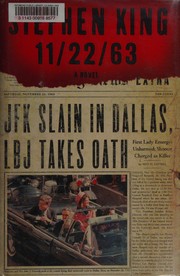
11/22/63
A Maine teacher steps through a diner portal to 1958 to stop the Kennedy assassination, and learns the past resists change while a new life pulls him in.
2,799-word summary · 12 min read
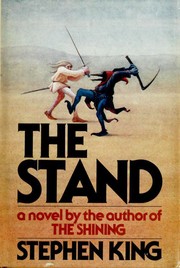
The Stand
A superflu wipes out most people as good and evil gather in two towns.
1,959-word summary · 9 min read
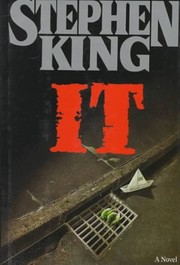
It
Seven friends in Derry face a shape shifting evil as kids in 1958 and again as adults in 1985.
2,229-word summary · 10 min read
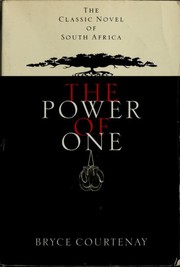
The Power of One
A boy in apartheid South Africa decides to become welterweight champion of the world, and the novel follows every mentor, fight, and loss that gets him there.
2,145-word summary · 10 min read

Wilder Girls
At a quarantined boarding school off Maine, three girls with strange mutations search for a missing friend and learn what the adults have hidden.
2,594-word summary · 12 min read

The House of the Scorpion
A clone raised in a drug lord's poppy fields learns what he was made for and chooses what to do with the life he was given.
2,527-word summary · 11 min read

Still Missing
A realtor is abducted at a Vancouver Island open house and held for more than a year. Told through therapy sessions, the novel follows her escape and the hunt…
2,466-word summary · 11 min read

The Zombie Survival Guide: Complete Protection from the Living Dead
Max Brooks's deadpan survival manual explains the Solanum virus, the only ways to destroy the living dead, fortifying a home, and the outbreaks history quietly…
2,650-word summary · 12 min read
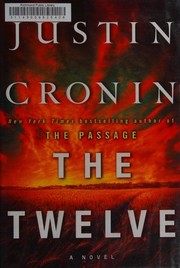
The Twelve
The middle volume of the Passage trilogy braids the year America died, a picnic massacre decades earlier, and the survivors' war against the twelve master…
2,089-word summary · 9 min read
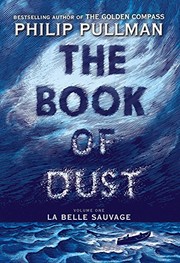
La Belle Sauvage
Philip Pullman's prequel to His Dark Materials follows eleven-year-old Malcolm Polstead as a secret message, a hunted baby, and the flood of the century carry…
2,530-word summary · 11 min read

The Last House on Needless Street
A lonely man, a cat and a mysterious neighbor pull you into a house full of buried trauma.
2,627-word summary · 12 min read