
Reading options
What's inside (8 sections)
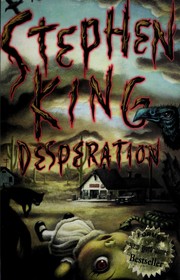
A friend handed me Desperation with a warning that sounded like a joke. He said do not start it before a road trip through empty country. I laughed and then I read the first fifty pages at my kitchen table and kept glancing out the window. Stephen King published it in September 1996 with Viking, a 690 page hardcover that came out the same week as The Regulators, a mirror novel credited to Richard Bachman with many of the same names in a different nightmare. I had heard about the gimmick for years and assumed it was a stunt. It reads more like an experiment that got out of hand in a good way.
The setup is simple enough to tell in a minute. United States Highway 50 runs across Nevada through heat and dust past towns that look closed even when they are open. On that road are the Jacksons, Peter and Mary, driving his sister's car back from a visit with friends. Behind them or ahead of them, depending on the chapter, are the Carvers from Ohio, Ralph and Ellen with their son David and his little sister Kirsten, who answers to Pie. They are headed for Lake Tahoe and a family vacation. Further back is Johnny Marinville, a famous writer in his sixties riding a big Harley and trying to prove he is still wild, with his assistant Steve Ames trailing in a truck at a distance. A young hitchhiker named Cynthia Smith will cross paths with Steve. An old veterinarian named Tom Billingsley is already in town. All of them will meet Collie Entragian.
Entragian is the reason the book grabbed me. He is a huge man in a desert town police uniform, sunburned and wrong in small ways that add up. He stops the Jacksons for a missing license plate and finds a bag of pot in the trunk that Peter did not know was there. He stops the Carvers with a spike strip and a story about a gunman that never existed. He drives them all into Desperation, a mining town in the shadow of a giant open pit called the China Pit, and locks them in a jail with dusty cells and a dead girl on a wall while a dog outside does not bark like a dog should.
The cop on Highway 50
King spends a long time on those traffic stops and I was glad he did. Peter Jackson is an English professor, careful and a little proud of being reasonable, and Mary writes poetry and notices things Peter talks past. They bicker about directions and about the pot, which belongs to Peter's sister, and about whether to argue with a cop in the middle of nowhere. Entragian listens with his head cocked and his smile too wide. He says Tak. He says it the way a man with a fever repeats a word that tastes bad. His skin is breaking. His nose runs with blood that does not seem to bother him. He shoots Peter in the jail almost casually, and Mary understands before anyone says it that appeals and logic will not work here.
The town itself is empty in a way that made my scalp tighten. Houses with doors open. A movie theater with dust on the seats. Corpses in odd places, including Pie Carver, seven years old, laid out where her parents can see her. King does not look away from that image and I wish he had looked away a fraction sooner. It is cruel and it is meant to be cruel, because Tak enjoys cruelty, but as a parent I had to put the book down and walk around the room. Desperation is not a puzzle box. It is a place where something old got loose and ate everyone except the few it kept for play.
The jail chapters move like a bad dream where you keep finding new doors. Mary shares a cell with the Carvers and with Tom Billingsley, who has been drinking to blur what he saw when the town died. Ellen Carver is barely holding together. Ralph tries to be the father who fixes things and learns fast that fixing is not on the menu. David prays. Not performatively. He kneels on concrete and talks to God as if God is in the cell with them, which embarrasses the adults and steadies them at the same time. Johnny Marinville arrives later in cuffs, hungover and furious, a celebrity who expects his name to help and finds that it means nothing to the man with the badge.
The boy who prays
David Carver is the center of the book and the reason it is different from a straight monster chase. He is eleven and serious, the kind of kid who reads his Bible and worries about his best friend Brian Ross, who was hit by a drunk driver back in Ohio and lay in a coma while David bargained with God. David promised to stop swearing and to pray daily and to mean it, and Brian woke up. Doctors called it luck or timing. David called it an answer. King treats that history with unusual respect. He does not wink at the reader over David's head.
That faith gets tested in the cells in ways that hurt to read. Pie is dead. Ellen will be taken by Entragian to serve as Tak's next host when his current body wears out. Ralph wants to protect his remaining child and also wants to deny what David claims to hear. David says God is telling him to act now and to trust what looks like nonsense. The adults argue. Mary, who lost Peter within hours, watches David with a mix of grief and envy that King writes well. She is a poet, so she listens for voice, and David's certainty sounds to her like something real even when she hates what it asks.
The escape is one of those King set pieces that sounds absurd in summary and plays as pure tension on the page. David strips down and covers himself with green liquid soap from the jail dispenser and squeezes between the cell bars while Johnny distracts the coyote outside with his motorcycle jacket. He finds a gun on the body of another dead officer. He shoots the animal guarding them. He frees the others. I read those pages standing up because I had meant to get water and forgot. It should feel silly. Instead it feels like watching someone thread a needle while a fire spreads across the table.
Steve and Cynthia walk into it
While the jail group suffers, King cuts to Steve Ames and Cynthia Smith on the road, and I needed that air. Steve is practical and loyal, a working guy hired to keep Johnny Marinville alive through a cross country motorcycle stunt for a magazine piece. He finds Johnny's bike hidden in brush off Highway 50 and knows at once his boss did not walk away from it willingly. Cynthia is a hitchhiker with a shaved head and a sharp tongue, with a past she does not volunteer all at once. She gets in Steve's truck because he seems safer than the heat, and then they drive toward Desperation because there is nowhere else the tracks lead.
Their chapters are almost a different book for a while, a two person road story with jokes and wary trust. Cynthia teases Steve about his taste in music. Steve tries not to stare and fails and apologizes without making a speech about it. They find the town empty and wrong and they meet the survivors as they come up from the jail, and the relief of that meeting is brief because Tak is already moving to a new body and sending desert animals to watch and herd them. I liked these two more than I expected. They are just decent and stubborn, and in this book that counts for a lot.
Tom Billingsley fills in some town history in the old theater, and those scenes gave me chills despite the dust and the long speeches. He talks about Desperation when it was a working mine town with a company office and a bar. He talks about the pit foreman Cary Ripton and the office man Brad Josephson, ordinary names for men who became Tak's first hosts after miners broke into a deep shaft. He drinks through the telling. Nobody blames him.
What came out of the China Pit
The China Pit is a man made canyon outside town, terraced and rust colored, with a shaft at the bottom that goes down past where it should stop. Years before the main story, Chinese laborers digging for the mining company broke into a crack the old stories called an ini, a well of spirits. Something came up through that crack. King calls it Tak. It is not a devil with a name tag and a plan. It is more like a blind appetite that learned to enjoy malice after wearing human minds. It needs a host to stay in our world. The host body breaks down fast, leaking blood and splitting skin, so Tak jumps from person to person and from person to animal when it must, leaving withered corpses behind.
Cary Ripton was first. Then Brad Josephson. Then Entragian, who was already a violent bully before Tak found him, which makes him a strong vessel. Ellen Carver becomes the next major host after Entragian starts to fail, and King writes that transfer as both physical horror and parental horror. A mother walks away with something else looking out through her eyes. Her husband and son watch it happen and cannot stop it by love or shouting. Tak can also ride coyotes or buzzards when it wants eyes in many places. Once it sends a mountain lion. It leaves a sort of poison in living tissue. Plants near its lairs twist. Meat spoils. People who stay close too long bleed from the nose and hear the word repeated in their sleep.
I am keeping the rules vague on purpose because King keeps them vague. Tak is powerful inside Desperation and weaker the farther it gets from the ini. It can shape dreams and send visions. It cannot simply leave town in a healthy body and conquer the world, or it would have done so already. It needs permission in some crooked sense. It needs the little openings people give it through hate or despair. Johnny Marinville, who saw something like Tak once in Vietnam when a boy blew up a crowded bar and killed dozens, has spent forty years drinking over his failure to warn anyone. Tak remembers him. Or Tak recognizes the shape of his guilt the way a crow recognizes a shiny thing.
Some readers will want a cleaner system with limits spelled out. I did at first. By the last hundred pages I decided the blur was the point. Tak is not a video game boss with hit points. It is what happens when a place is torn open and something without a face moves in. The scenes where it wears Ellen and taunts Ralph by using her voice are among the ugliest King ever wrote, and they work because the rules stay half seen. You understand enough to dread the next jump. You never understand enough to feel safe.
God against Tak
This is where Desperation stops being a standard siege story and becomes something stranger and, for me, more moving. David believes God sent their scattered group to this town for a purpose. Not to survive. To trap Tak back in the ini at a cost. He prays for guidance and gets images and nudges instead of orders. A song lyric. A memory of his sister. A sudden certainty that they must go down into the pit with explosives Steve found and with faith that feels thin in daylight. The adults push back, especially Johnny, who spent a career mocking true believers in print and who sees David's visions as stress and concussion and wishful thinking.
Johnny's arc is the spine of the second half and also the part I argued with most. He is vain and foul mouthed, a lion in winter who tells stories about Vietnam and about books. He drinks. He postures. He hits on Mary at the worst possible moment because he cannot stop performing. Slowly his jokes thin out. He watches David risk himself without hesitation. He watches Ralph die trying to save David from Tak in a passage that left me angry at King for making it so abrupt and grateful that he did not stretch it for effect. Ralph steps between his son and the thing wearing his wife. That is the whole sentence. It happens fast. David screams. Mary holds him. There is no slow motion.
Johnny decides to take David's place in the final run. David believes God wants a sacrifice to close the ini, and David volunteers because he thinks his faith makes him the right vessel. Johnny refuses to let a kid pay that price. He confesses his old guilt about Vietnam, about running from a bar where he sensed wrongness and hearing later about the dead, and he walks into the shaft with explosives while the others pray or curse or both. The blast seals the crack. Tak shrieks through hosts that drop dead one after another, including the thing wearing Ellen. The survivors stagger out past the pit rim into heat that now feels ordinary. Four of the eight Johnny called the Collie Entragian Survivors Society walk out. The others stay in the dirt of Desperation.
I believed Johnny's choice even when the theology around it wobbled for me. King, who has written about addiction and pride for decades, gives Johnny a death that fits his sins without turning him into a symbol. He was a man who ran once and decided not to run again. David lives with the knowledge that someone else paid. Mary lives with Peter gone and a new and terrible clarity about what she can endure. Steve and Cynthia cling to each other in a way that feels earned rather than romantic in the easy sense. The last image of David's photo album, with Johnny and little Pie together in a signed picture Steve recognizes, hit me harder than the explosion. It says the dead remain present without saying it in words.
What held and what slipped
The opening hundred pages are as strong as anything King did in the nineties. Entragian stopping cars on an empty highway plays on a fear most drivers know, the fear of authority with no witnesses. The empty town with bodies posed and a theater full of dust plays on a different fear, the fear that the world ended while you were looking at your map. I read those chapters fast and then slow, because I did not want the next death and I needed to know who would be left. King paces dread well here. He gives you a normal detail, a license plate or a soap dispenser, and then he twists it.
The middle taught my patience. There are long conversations about God and free will and why prayer sometimes gets answered with silence, and characters repeat their positions more than once. David's certainty never wavers, which is true to his age, but it can make the adults sound like a debate panel. Tom Billingsley's history lesson in the theater runs long. Steve and Cynthia's banter, which I enjoyed, sometimes lands at odd moments right after a death. A reader who wants horror without sermons may skim. I did in two spots and then went back, which tells you the story kept its hook in me even when the talk grew thick.
Johnny Marinville tested me too. He is meant to be obnoxious, a stand in for the famous writer ego, and King writes him with obvious self knowledge. Still, his bragging and his come ons toward Mary felt sour in a book where a child has just been murdered. I wondered if King was settling scores with critics through Johnny's rants about reviewers and academics. Peter Jackson, also an academic, dies early, which spares him from those arguments but also removes a thoughtful voice the middle could have used. Mary carries that weight instead, and she does it well, but I missed the balance Peter might have brought to the God talk.
The violence toward children will decide for many readers whether to finish. Pie's death is not shown in lingering detail, yet its aftermath is everywhere, in Ellen's collapse and David's prayers. I found those passages honest rather than cruel for its own sake, but I would not hand this book to someone fresh to King. Start with The Green Mile or 11/22/63 if you want King with less blood on young lives. Come to Desperation when you want to see how far he will go to show what Tak feeds on. The horror here is not sly. It bites.
What finally held me was how straight King plays faith. He does not treat David's prayers as code for courage or love. He treats them as prayers. God answers in small signs. Sometimes God stays quiet while people die. David rages at that quiet and keeps praying, which felt true to belief as I have seen it in others. Johnny's atheism is not mocked either. He is allowed his scorn and his reasons. When he walks into the pit, it reads as a human choice more than a conversion scene, and I preferred that. I closed it near midnight with the house quiet and thought about Highway 50 and about how thin the line can look between an empty town and an evil one. Then I checked the doors, because I am not braver than David and I know it.
FAQ
When was Desperation published?
Viking published it on September 24, 1996. The first edition runs 690 pages and the ISBN is 9780670868360.
What is Tak in Desperation?
Tak is an old entity freed from a shaft called the ini in the China Pit. It wears out human hosts and animals fast, so it jumps bodies and poisons what it touches.
Is Desperation part of a series?
No. It stands alone. The Regulators came out the same week under the Bachman name with many of the same character names in a different story, plus a TV film in 2006.
Similar books

Skeleton Crew
King's 1985 collection pairs The Mist with The Jaunt, The Raft, and Survivor Type: 22 stories of Maine dread.
3,209-word summary · 14 min read
This Present Darkness
A pastor and reporter face demons over Ashton while angels answer prayer.
2,384-word summary · 11 min read

Tokyo Ghoul, Vol. 1
Student Ken Kaneki becomes half-ghoul after Rize attack and hides at Anteiku.
2,438-word summary · 11 min read
The Exorcist
In Georgetown, twelve-year-old Regan suffers a violent possession, and priests Karras and Merrin step in after doctors fail to save her.
2,093-word summary · 9 min read
Lisey's Story
Two years after her novelist husband dies, Lisey Landon follows a trail of clues into his childhood and the other world that made him a writer.
1,998-word summary · 9 min read
Everything's Eventual: 14 Dark Tales
Fourteen Stephen King stories shuffled by the deal of a card deck, from the haunted room of 1408 to quiet tales of grief that sting as much as the monsters.
2,000-word summary · 9 min read

If It Bleeds
Holly Gibney faces an outsider plus three more tales of dread.
2,219-word summary · 10 min read
Four Past Midnight
Four novellas about a plane lost in time, a writer haunted, and horrors small and large.
2,584-word summary · 11 min read
Revival
Jamie Morton shadows preacher Jacobs from boyhood healings to electric cures that open a door best left shut.
2,037-word summary · 9 min read
Later
Boy Jamie Conklin sees dead people who must answer truthfully, pulling him into NYPD cases and a drug crew's greed.
2,009-word summary · 9 min read
Duma Key
After losing his arm, Edgar Freemantle paints on a Florida island and learns his pictures can open doors for something hungry.
2,530-word summary · 11 min read
The Dark Half
A Maine novelist buries his violent pen name George Stark, then faces murders that carry his own fingerprints.
2,956-word summary · 13 min read
The Mist
Mist full of creatures traps a Maine supermarket while Mrs. Carmody builds a congregation inside.
2,104-word summary · 9 min read
Insomnia
Widowed Ralph stops sleeping in Derry and sees small doctors with scissors deciding who lives and dies.
3,605-word summary · 16 min read
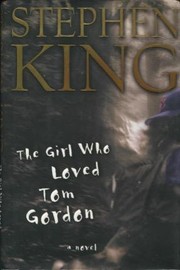
The Girl Who Loved Tom Gordon
Nine-year-old Trisha McFarland strays off the Appalachian Trail and spends days lost in Maine woods with a Walkman and Tom Gordon on her mind.
2,957-word summary · 13 min read
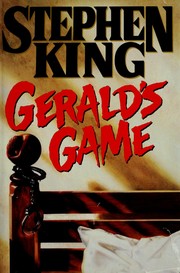
Gerald's Game
Handcuffed to a bed after her husband dies, Jessie Burlingame faces thirst, a stray dog, and buried memories over 28 hours.
2,940-word summary · 13 min read
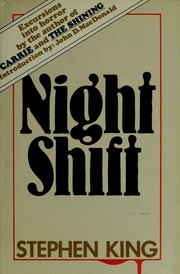
Night Shift
King's first story collection moves from haunted mills to killer cornfields, twenty early tales where ordinary places turn evil.
2,488-word summary · 11 min read

Cell
A cell signal turns callers into violent phoners, and a father walks north through ruins to find his son.
2,103-word summary · 9 min read
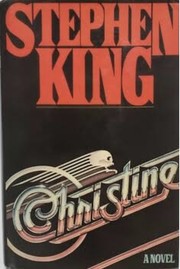
Christine
Misfit Arnie restores a wrecked 1958 Plymouth Fury that takes him over, forcing best friend Dennis and girlfriend Leigh to fight back.
2,106-word summary · 9 min read
Needful Things
A smiling man sells exactly what you want for cash plus one small cruelty to a neighbor.
2,007-word summary · 9 min read

Under the Dome
Chester's Mill is sealed under an invisible dome as cook Barbie and editor Julia face Big Jim Rennie's rule.
2,731-word summary · 12 min read
Doctor Sleep
Grown Dan Torrance gets sober in New Hampshire and helps gifted Abra Stone face the True Knot.
2,841-word summary · 13 min read
Cujo
A rabid St. Bernard traps a mother and her young son in a broken-down car at a lonely Maine garage.
2,910-word summary · 13 min read
The Outsider
Coach Terry Maitland's DNA and witnesses point to an impossible murder, until Ralph Anderson and Holly Gibney trace it to El Cuco.
2,586-word summary · 11 min read
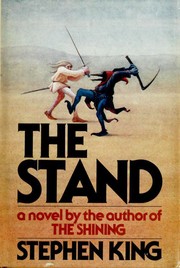
The Stand
A superflu wipes out most people as good and evil gather in two towns.
1,959-word summary · 9 min read
Pet Sematary
Doctor Louis buries Church and then Gage in ground that returns them wrong, learning dead is better.
2,158-word summary · 10 min read
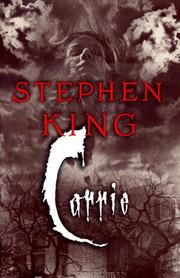
Carrie
Bullied Carrie White discovers telekinetic powers that turn a cruel prom prank into a night of fire.
2,172-word summary · 10 min read
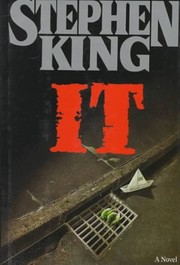
It
Seven friends in Derry face a shape shifting evil as kids in 1958 and again as adults in 1985.
2,229-word summary · 10 min read
The Shining
The Shining retold: Jack winters at Overlook with Wendy and Danny, REDRUM, hedge maze chase.
2,011-word summary · 9 min read

The Tale of the Body Thief
Lestat trades bodies with a psychic thief for one day of mortality and ends up trapped, sick, and hunting his own vampire body.
2,069-word summary · 9 min read