
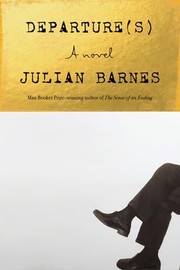
Departure(s)
2,133-word summary 9 min read 176 pages in the book
- First published
- 2026
- Publisher
- Knopf
- Pages
- 176
- ISBN
- 9780593804506
Reading options
What's inside (8 sections)
I picked up Departure(s) because Barnes said it is his last book and I did not quite believe him. Writers say that and then publish again at eighty two with a wink. But this one feels arranged as a farewell, short and pointed, 176 pages in the Knopf edition from January 2026, published around his eightieth birthday. I read it in one evening with a pencil down and then reread the first twenty pages the next morning, which is usually my sign that the start was doing quiet work I missed. It is billed as a novel. It reads like a man testing how much truth he can smuggle inside fiction while telling you he is doing it.
The setup is plain and then slippery. A writer named Julian starts by talking about involuntary memory, the way a smell or a phrase pulls an old room back whole. Then he stops and warns you straight out. There will be a story, or a story within the story, but later. He tells you he promised two old friends he would never write about them. He tells you he is going to break that promise. From there the book moves between remembered scenes, diary like entries, and comments on the difference between what happened and what stuck. I liked that warning. It lowers the drama and raises the attention. You stop waiting for twists and start watching how he handles the people.
Stephen and Jean when they are young
Stephen is tall, gangling, uncertain. Jean is tart and attractive, quicker with a line than he is. They meet through university circles in the sixties, that period Barnes describes as talked about for freedom more than lived in it. Julian, the third wheel, knows them both and decides they should be a couple. He plays matchmaker with the confidence of a young man who reads people well on paper and misses plenty in person. For a while it works. They pair off. He hovers, pleased, invested, a little possessive about his own good idea.
Barnes writes this stretch with a light hand and a sharp eye for embarrassment. There are parties with cheap wine and borrowed rooms. There are walks where Stephen tries to sound sure and Jean corrects him without cruelty but without softening it either. Julian watches and narrates and takes credit. What makes it sting is how open Julian is about his motives. He wanted their love to succeed because it proved something about his judgment. When they break up, he feels insulted as much as sad. I recognized that feeling and did not admire it, which is the point. Young Julian treats other lives as material before he has earned the right to do it.
The breakup itself is not given as one big scene. It comes through in pieces, a missed call, a cool letter, Jean pulling back, Stephen going quiet and stubborn. Barnes lets the reasons stay a little blurred, the way old stories blur. Maybe Stephen was too passive. Maybe Jean wanted sharper company. Maybe timing and pride did the work. Julian keeps his own version tidy for years. He tells himself they were wrong to waste it. He files the whole thing as anecdote, the couple he made and who unmade themselves. That filing matters later, because the second half shows what the file left out.
Forty years later and a second try
Time jumps. Forty years pass in a few pages, jobs and marriages and deaths handled in passing. Then Julian tries again. Stephen and Jean are older, looser in some ways, more guarded in others. He nudges them back toward each other, half as friend and half as author looking for an ending. This time the affair catches. They rekindle with the particular hunger of people who know the clock is running. There are happy weeks, jealous rows, small betrayals, sudden tenderness. Barnes does not write this as a cute late life romance. He writes it as adults with habits and scars trying to fit together with less give in the joints.
One line keeps coming back in reviews, Barnes asking whether life and memory can be so quixotic. He means the swerves. A chance meeting remade as fate. A slight remembered as a joke until it hurts. Stephen misreads Jean at twenty and misreads her differently at seventy. Jean sees through Julian and lets him keep talking anyway. I found these middle chapters the strongest in the book because nobody gets to be simple. Stephen has grown kinder but still drifts. Jean has grown softer in manner and harder in judgment. Julian wants credit for the reunion and slowly sees the cost of arranging people. Having promised never to write about them, he breaks the promise to give readers the story, and he knows that trade looks selfish even as he makes it.
The affair produces joys and disappointments in a different order than youth did. Early love failed from uncertainty. Late love strains under knowledge. They know how bodies decline, how patience thins, how past slights keep their shape. They try to be generous and sometimes manage it. They fail and cover the failure with jokes. If you want plot mechanics, there are not many. If you want the texture of two people trying again with full memory of the first failure, it is all here, page after page, closely watched.
Jimmy and the body giving out
Then there is Jimmy, an elderly Jack Russell, and I am glad Barnes gave him real space instead of using him as decoration. Jimmy is old, stiff, deaf in one ear, enviably unaware of his own mortality. He sleeps through conversations about death. He wants food, warmth, a short walk, sleep again. Julian watches him with envy and affection. The dog does not turn experience into story. He does not worry whether a memory is accurate. He lives in the present in a way the humans cannot manage and probably should not copy entirely.
Around Jimmy, Barnes lays out his other subject, how the body fails. He lists the routes without fuss, age, illness, accident, intent. He writes about his own blood disorder, diagnosed in 2020, without turning it into a plea for sympathy. Mornings take longer. Stairs ask questions. A friend dies suddenly and another fades slowly and both leave the same gap with different edges. He writes about sex in old age with dry humor, less about performance than about vanity and care, who looks away and who stays. He writes about doctors who speak carefully and friends who speak too brightly. None of this is new as topic. The tone makes it hold, plain, unsentimental, unwilling to look away or to stare.
This is where the autofiction question bites. How much is Barnes and how much is Julian the character. He wants you to ask and to stop asking. The diary entries feel close to lived life, dates and small pains and weather. The shaped scenes feel worked, selected, paced. He keeps reminding you that experiences fade into anecdotes and then into memory, and asks whether it matters if what we remember really happened, or only that it mattered enough to be remembered. I sat with that for a while. It sounds like an excuse for invention until you test it on your own past. Most of what I carry from twenty years ago is a story I told twice and kept. The facts underneath are thinner than I pretend.
A short book built like a game
At 176 pages this is closer to a novella in feel, though Knopf calls it a novel and the cover says so plainly. The shape is collage more than straight narrative. Memory essay, love story young, love story old, dog interludes, body notes, diary fragments, direct addresses to the reader. It begins at the end of life but it does not end there, as the official description puts it. That phrase fits. The last movement is not about dying so much as about choosing what counts as happiness and when to say goodbye.
Barnes stays in top form at sentence level. People who like precise prose in the manner of Ian McEwan or the wry self correction of Sigrid Nunez will feel at home. He can land a paragraph about a failed lunch with more force than many writers get from a death scene. He withholds and releases on purpose, telling you a story is coming, delaying it, giving you a piece, taking it back with a correction. For most of the book I enjoyed the game. Twice I tired of it. When he interrupts a good scene between Stephen and Jean to remind you that he is constructing it, the air goes out for a page. A friend reading alongside me said the same, that the frame sometimes pats itself on the back. I think that is fair and also part of the design. A writer writing about writing will now and then admire his own hands.
The short length helps and hurts. It helps because nothing overstays. It hurts because some turns need more room than they get. A late quarrel between the lovers is handled in summary where I wanted the full scene. A medical stretch is brisk to the point of cool. Barnes has always preferred compression, and in The Sense of an Ending it worked perfectly. Here compression sometimes reads as reserve, an old hand unwilling to press too hard on material close to home.
What holds and what falls short
What holds is the central triangle and the dog. Stephen and Jean feel specific rather than representative, he with his long limbs and longer pauses, she with her tart answers that cover worry. Jimmy gives the book warmth without asking for meaning. The memory writing is excellent, funny about self deception and serious about loss. The late love story avoids both cozy myth and bleak punchline. It shows older people wanting and failing and trying again, which is rarer on the page than it should be. The promise breaking frame, I promised never to write about them and now I am, gives the whole thing a pressure that pure memoir or pure invention would lack.
What falls short for me is repetition for longtime readers. Aging, grief, memory, the unreliability of anecdote, the indignities of love, these are Barnes subjects across decades. Readers new to him will find them fresh. Readers who have followed him may feel they have heard some sentences before in different coats. The book also asks for patience with thin incident. If you need big events, you will get restless around page ninety. If you like watching a mind sort its papers, you will be fine.
I would press this on readers who liked The Sense of an Ending or Levels of Life and who do not mind a book that talks to itself. I would not press it on anyone wanting a full plotted novel with subplots and arrivals. It is slight by plan and moving by accumulation. The closing pages, about finding happiness in this life and knowing when it is time to say goodbye, land because Barnes has not oversold them. He ends without a flourish, which suits a writer who has spent a career distrusting flourishes.
Does it matter if what we remember really happened, or only that it mattered enough to be remembered.
I keep that sentence with me because it cuts both ways. It excuses the storyteller and accuses him. Barnes knows it. That is why this works as a goodbye even if, like many goodbyes, it leaves a door open. He says this is his fifteenth novel and his last. I hope he is wrong and I suspect he means it. Either way he has left a compact record of how love looks at both ends, how the body edits the plan, and how a loyal old dog can shame a clever man into honesty. Read it slowly. Argue with Julian when he arranges people. Notice where your own anecdotes have replaced your facts. That unease is the book doing its job.
A note on the edition I am describing
I am retelling the United States edition, Knopf, January 2026, 176 pages, ISBN 9780593804506. The British edition is Jonathan Cape, same month and same length, timed to Barnes turning eighty. The copy uses the title with parentheses, Departure(s), plural held open. Reviews from early 2026 treat it as his fifteenth novel and, by his account, his final one. Those facts line up with the publisher pages and with his own site. Anything about Stephen, Jean, Jimmy, memory, and the failing body above comes from those shared sources and the book as issued.
FAQ
Is Departure(s) really Julian Barnes's last book?
Barnes has called it his fifteenth novel and his last in January 2026 interviews around his eightieth birthday. He has joked about hoping it is a good one to go out on, so treat the claim as his stated plan, not a contract.
Is Departure(s) memoir or fiction?
It is billed as a novel. The narrator shares Barnes's first name, age pressures, and 2020 blood disorder history, but Stephen, Jean, and Jimmy are shaped as fiction with diary like entries mixed in.
Do I need to have read Barnes before?
No. New readers can start here for memory, aging, and late love in short form. Longtime readers will catch echoes of The Sense of an Ending and Levels of Life.
Similar books
The Sense of an Ending
Retired Tony Webster inherits money and a diary from an old girlfriend's mother, forcing him to rethink his youth, a cruel letter, and a friend's death.
2,451-word summary · 11 min read

The Notebook
The Notebook retold: Noah reads to Allie in a nursing home, summer love in New Bern, letters and choice.
1,957-word summary · 9 min read

Memories of My Melancholy Whores
A ninety-year-old journalist pays for a night with a teenage girl, cannot go through with it, and discovers love for the first time in García Márquez's late…
2,101-word summary · 9 min read
Dance Dance Dance
A divorced Tokyo writer returns to a Sapporo hotel that has been rebuilt, then follows a woman who may be a ghost and a teenage girl through a mystery about…
2,407-word summary · 11 min read

The Bone Clocks
A teenage runaway, a Cambridge con artist, a war reporter and a dying novelist circle a hidden war between immortals across sixty years, with Holly Sykes at…
2,125-word summary · 9 min read
And Every Morning the Way Home Gets Longer and Longer
An elderly grandfather, his son, and his grandson share memories and fears as the old man's mind begins to fade, in a short novel about grief and love.
2,078-word summary · 9 min read

The Memory Police
On an unnamed island, ordinary things keep vanishing from memory, and a novelist hides her editor from the police who make sure the vanished stay forgotten.
2,440-word summary · 11 min read
Olive, Again
Elizabeth Strout returns to Crosby, Maine, as Olive Kitteridge marries Jack Kennison, confronts her son, and faces old age, grief, and small-town judgment.
2,333-word summary · 10 min read

South of the Border, West of the Sun
A married Tokyo bar owner reunites with his lost childhood sweetheart and must choose between steady family life and a haunting first love.
2,844-word summary · 13 min read
Everything is Illuminated
Jonathan Safran Foer travels to Ukraine with translator Alex to find Trachimbrod and Augustine, while old shtetl chapters retell Brod and Kolker with humor and…
2,616-word summary · 12 min read
The Unlikely Pilgrimage of Harold Fry
A retired man in Devon walks to Berwick to visit a dying friend, hoping his steps keep her alive.
2,246-word summary · 10 min read
Commonwealth
An uninvited kiss at a christening breaks two marriages, and six stepsiblings share wild summers until loss and a novel pull them apart.
2,348-word summary · 10 min read
The Remains of the Day
Stevens, the perfect English butler, drives west in 1956 and looks back on Darlington Hall, Miss Kenton, and a life spent serving.
2,971-word summary · 13 min read

Never Let Me Go
Kathy looks back on Hailsham, the English school where she and her friends were raised for an unspoken purpose.
2,102-word summary · 9 min read

Violeta
A woman born in 1920 writes her life story to her grandson, from one pandemic to another, through wealth, ruin, passion, and dictatorship in South America.
2,555-word summary · 11 min read
The Only Good Indians
Four Blackfeet men who killed a pregnant elk are hunted by her spirit a decade later, and the only person who can end the cycle is a teenage girl who was not…
2,010-word summary · 9 min read
The Idiot
A Turkish-American freshman at Harvard falls in love through email with a Hungarian math student and spends a summer in Hungary trying to turn correspondence…
2,019-word summary · 9 min read

The Guest
Cast out of her wealthy boyfriend's Hamptons house, twenty-two-year-old Alex spends five days talking her way through other people's homes and accounts.
2,165-word summary · 10 min read
The Crying of Lot 49
A California woman named executor of her ex-lover's estate follows a muted post horn into a possible centuries-old postal conspiracy, and Pynchon refuses to…
2,003-word summary · 9 min read
Silas Marner
A falsely accused weaver hoards gold in Raveloe until a stolen hoard and an abandoned child remake his narrow life.
2,699-word summary · 12 min read

Revolutionary Road
A Connecticut couple who believe they are too good for the suburbs plan to move to Paris, and the plan slowly exposes everything they cannot say to each other.
2,085-word summary · 9 min read
Lisey's Story
Two years after her novelist husband dies, Lisey Landon follows a trail of clues into his childhood and the other world that made him a writer.
1,998-word summary · 9 min read
Alone With You in the Ether
Two people in Chicago agree to six conversations, and the experiment becomes a love affair that is also a study of bipolar disorder, obsession, and the shape…
2,713-word summary · 12 min read

The Beach
A young backpacker follows a dead man's map to a hidden island community, then discovers what the people there are willing to do to keep it secret.
2,067-word summary · 9 min read

Less Than Zero
Clay returns to Los Angeles for Christmas and drifts through parties, drugs, and old friends, including one who is selling himself to survive.
1,926-word summary · 9 min read
Moonwalking with Einstein: The Art and Science of Remembering Everything
A journalist spends a year training for the U.S. Memory Championship and discovers that extraordinary memory is mostly technique, attention, and a lot of…
2,027-word summary · 9 min read

Howards End
Forster's 1910 novel follows two families, a house in Hertfordshire, and a burned note, asking whether money and feeling can ever be connected.
2,187-word summary · 10 min read
The First Fifteen Lives of Harry August
Harry August dies and is born again into the same life, again and again, until a warning from a child tells him the world is ending faster with each pass.
2,189-word summary · 10 min read

Sophie's Choice
A young Southern writer in 1947 Brooklyn befriends a brilliant, unstable couple and slowly learns the story of the Polish Catholic woman at the center of their…
2,798-word summary · 12 min read
Once There Were Wolves
A biologist reintroduces fourteen wolves to the Scottish Highlands while protecting her traumatized twin sister, then finds a body in the snow that could…
2,682-word summary · 12 min read