
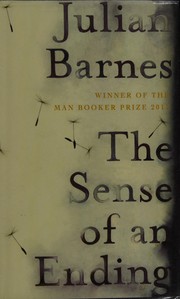
The Sense of an Ending
2,451-word summary 11 min read 163 pages in the book
- First published
- 2011
- Publisher
- Jonathan Cape
- Pages
- 163
- ISBN
- 9780224094153
Reading options
What's inside (8 sections)
I picked up The Sense of an Ending because it is short and it won the Booker, and I am always suspicious of short Booker winners. The copy I am retelling is the Jonathan Cape edition from 2011, about 163 pages. I read it in two sittings on a train and then sat on a platform bench for twenty minutes turning the last pages back over, annoyed and impressed in equal measure. It is a book about memory that lies to you while warning you that memory lies. A retired man tells his life story, revises it badly, and finds out near the end that he was the villain in somebody else's version.
The shape is simple. Tony Webster, sixtyish, divorced, retired from arts administration in London, gets a strange bequest from the mother of an old girlfriend. Chasing it forces him to reopen his youth: school friends, a clever boy who died young, a girlfriend who baffled him, a letter he wrote in spite. The thrill is not action. It is watching Tony realize, page by page, that his tidy memories are self serving. I found Tony irritating company and the book hard to put down, which seems to be exactly the effect Barnes wanted.
Schooldays and the arrival of Adrian Finn
Tony narrates his school years in the early sixties with the confidence of a man who has told these stories at dinners. He and his friends Colin and Alex attend a boys school outside London. They are bright without being brilliant, full of opinions about history and girls and the future. Their history teacher encourages argument and grades them on nerve as much as facts. The three have a clubby shorthand, in jokes, shared contempt for masters. Then Adrian Finn arrives, and the balance shifts.
Adrian is clever in a way that makes the others look like they are acting clever. He reads philosophy for fun. He answers questions with reasons rather than attitude. He quotes Camus and talks about suicide as a philosophical problem before any of them have lived enough to earn the topic. Tony admires him and resents him in the same breath. What I noticed is how Tony keeps insisting they were equals, best mates, a band. The anecdotes he gives suggest otherwise. Adrian led and the rest followed, and Tony followed closest while pretending he was walking beside.
The famous school scene, the one every review mentions, is a classroom debate about Henry VIII or maybe about history itself, where Adrian argues that history is the certainty produced when memory meets bad documentation. I am paraphrasing because Tony himself admits he may be misremembering. That is the trick of the whole novel in miniature. Big claims about the past delivered by someone who warns you his Recall is faulty. Tony also remembers the boys making a pact about life, swearing they will stay true to art or thought or feeling. It reads sweet until you learn what became of each vow.
Veronica Ford enters as Tony's girlfriend in the sixth form. She goes to a girls school nearby. She is sharp, guarded, quicker than Tony, and clearly from a more polished home. Tony likes her status and her looks and tells himself he loves her mind. Their dates are awkward in the period way, dances and cinema and fumbled intimacy. Veronica keeps saying Tony does not get it, a refrain that will follow him for forty years. At the time he hears it as female mystery. Reading it now I heard it as a diagnosis. She sees that he coasts, that he wants credit for depth without doing the work.
The weekend with Veronica's family
The center of Tony's youth, the part he has chewed over most, is a weekend he spends with Veronica's family. Her father is bluff and jokey. Her mother Sarah is warm in a way that unsettles Tony, attentive, physical in the casual parental manner of the time, a hand on his arm, interest in his plans. Veronica is prickly all weekend, picking at Tony, contradicting him at meals. He cannot read the house. He tries too hard with the father, too little with the mother, and fails with the girl.
Two moments from that weekend stick and both get reinterpreted later, which is the point. First, Veronica and Tony attempt to sleep together and it goes badly, with Veronica stopping him and seeming upset in a way he files under mood. Second, Sarah talks to Tony alone, kindly, and warns him in vague terms about Veronica, or maybe about himself, depending on which version of Tony you believe that day. He remembers her being oddly tender. He remembers breakfast the next morning being strained. He remembers the train home feeling like relief. Young Tony concludes the family is strange. Old Tony retelling it still sounds faintly pleased with his younger self for surviving the weekend. I wanted to shake him. The clues are all there and he walks past every one.
The breakup follows soon after, at university or just before, when Veronica moves on to Oxford or Cambridge circles and Tony lands somewhere less grand. Accounts differ because Tony's memory edits. What seems solid is that Veronica ends it or freezes him out, and Tony performs being fine. He dates others lightly. He writes clever letters to Colin and Alex about women being unknowable. He does the sixties male thing of turning a specific failure into a general theory. It is unpleasant and recognizable, and Barnes lets it sit without excusing it. Tony at twenty is not cruel yet. He is shallow and self pleased, which curdles later into something worse.
The cruel letter and Adrian's death
Then comes the turn that poisons everything. Veronica starts dating Adrian Finn. Tony hears by letter, maybe from Adrian himself with awkward honor, maybe from Veronica with a sting attached. Either way the news lands as betrayal double strength, girl and best friend at once. Tony writes back. The exact wording matters enormously and Tony spends decades misquoting himself, but the shape is stable. He wishes them well in words that drip with sarcasm. He warns Adrian off Veronica in crude sexual terms. He invokes banal curses about damage and children and the future. He mails it and feels better for a day.
Weeks or months later Adrian kills himself. He takes his own life with a blade, young and alone, leaving behind a short note heavy with philosophy about thought preceding life or life preceding thought. The coroner or the school frames it as the act of a troubled brilliant boy. Colin and Alex grieve in their ways. Tony grieves too, but his grief has a defensive edge even then. He folds Adrian's death into his own story as tragedy that happened around him rather than something his letter touched. Nobody tells Tony his letter caused it. Nobody needs to. The reader sits with the ugly math while Tony hurries past it.
I should pause here because this is where my admiration and irritation split. Barnes gives you a narrator who did a shabby thing and will not look at it, and the withholding is masterful. You feel the gap where remorse should be. At the same time Tony's flatness can chill the pages. Adrian dies and the book moves on to Tony's mild adventures, as if the cleverest person in the room exited and the room stayed mild. That coldness is deliberate, I think, a portrait of a man who files feeling under philosophy. It still made the middle stretch feel airless to me, clever rather than moving.
A quiet life in London
Tony's middle decades pass in a few brisk chapters, and the briskness is the point. He marries Margaret, a sensible woman who likes him without illusion. They have a daughter, Susie, now grown and expecting her own child as the book opens. The marriage ends without scandal. They divide things fairly and stay friendly in the divorced London way, birthday calls and practical help. Tony works, retires, putters. He keeps a small flat, emails old friends, follows politics from the sidelines. He considers himself content and tells you so more than once.
This is the Tony who receives the lawyer's letter, and Barnes writes his complacency beautifully. Tony sorts mail, assumes a mistake, rings up in mild annoyance. The facts arrive slowly. Sarah Ford, Veronica's mother, has died. She left Tony five hundred pounds and a document, the diary Adrian kept in his last months. The money puzzles him. The diary stuns him. Why would a woman he met once for a weekend leave him money and her dead daughter's boyfriend's diary. He assumes sentiment or confusion. He writes to Veronica, who holds the diary and will not hand it over, and the old dynamic snaps back into place at once. She treats him like an intruder. He acts entitled. She goes cold. He pushes.
Margaret gets some of the best lines here, or rather the best weary judgments. She tells Tony to leave it alone, then watches him disobey, then points out what his curiosity is really about. Their scenes are the warmest in the book because Margaret sees Tony whole and likes him anyway, within limits. Susie's pregnancy runs alongside as a quiet counterweight, new life arriving while Tony digs up old death. Tony notes the symmetry and misses the warning in it. He wants the diary because he wants proof his version of youth was right. What he gets instead is proof it was not.
Emails, evasions and the Wobbly Bridge
The middle of the book becomes a paper chase conducted by email and awkward meetings. Veronica answers Tony's messages with short, furious replies. She calls him cowardly and clueless. She sends him a fragment of Adrian's diary by post, a page about damage and responsibility that reads like philosophy until you learn the context, and then reads like confession. Tony meets her in person, including once on the Millennium Bridge in London, the wobbling footbridge, where wind and tourists press around them and she repeats the old line with new weight. You do not get it. You never did.
Tony being Tony, he treats this as a puzzle to solve rather than a judgment to absorb. He looks up Adrian's movements. He presses Veronica about the diary's missing pages, which she burned or kept back. He badgers a lawyer. He reconstructs dates. Slowly, through hints Veronica drops like stones, the real story surfaces. After Adrian's death, or rather before it, something happened between Adrian and Sarah Ford. Veronica introduced them or failed to stop them, accounts blur, but the outcome steadies into focus. Adrian fathered a child with Sarah, Veronica's own mother. That child, a boy given Adrian's name in some fashion, grew up with severe mental disability and needs full time care. Veronica visits him. Veronica pays for extras. Veronica carries the whole weight.
The reveal lands not as a twist but as a redescription. Scenes Tony told lightly turn dark. Sarah's tenderness that weekend was not maternal comfort, or not only that. Veronica's anger at Tony was never only about a clumsy boyfriend. The cruel letter Tony wrote, with its sneer about damaged children and cursed futures, was read by Adrian while Adrian already knew Sarah was pregnant, and the words must have cut with a literal edge Tony never intended and never imagined. Adrian's suicide, philosophical on the surface, looks from this angle like despair with a date attached. Tony pieces this together over weeks, checking care homes and registries, until he sees the disabled man in person with Veronica and understands who the man's parents were.
You don't get it. You never did. You never will, and now it is too late.
I quote that because the prompt of the whole novel hangs on it, and Veronica says versions of it across forty years. It is not wordplay. It is a verdict on a man who treated other people's inner lives as footnotes to his own. When Tony finally stands in front of the disabled Adrian, watched over by Veronica, the book gives him no catharsis. He feels blood and guilt rising and has nowhere to put either. He writes Margaret a long confessing email. He holds his grandchild's news at arm's length. He ends not with peace but with the knowledge that some damage cannot be undone or even fully known.
What the ending leaves open
Barnes closes short, as he must. Tony accepts that his memories were self protecting fictions. He accepts that his letter was worse than he admitted and that its timing was crueler than he knew. He accepts that Veronica's coldness was earned and that Sarah's bequest was a kind of message, money for trouble caused, diary as evidence. What he cannot do is fix any of it. The disabled man will need care whatever Tony feels. Veronica will not forgive him into comfort. Adrian stays dead. The last pages have Tony watching young mothers or old friends and feeling time pile up, and the famous closing image is of responsibility without remedy. It haunted me more than any courtroom scene could.
My fair criticism stands alongside the praise. This is a cold book by design, and design can only warm you so far. Tony is a thin man to spend a novel inside, observant about others' flaws and blind to his own until forced, and even his final honesty feels procedural, a man completing a form. Veronica never becomes fully human on the page, only a judge with a good coat. Sarah, the most interesting figure, is dead before she can speak except through a will and a diary fragment. The puzzle mechanics, brilliant as they are, can crowd out the heart. I admired the construction more than I felt the people, and for a book about moral damage that feels like both a success and a shortfall.
And yet I keep thinking about it, which counts for plenty. It made me distrust my own college stories, the ones where I was the reasonable one and the girl was mysterious and the clever friend was fine. Barnes takes the memoir impulse most of us carry and shows the editing we do without noticing. The Booker Prize in 2011 recognized exactly that, a small novel doing large work with time and guilt. If you want warmth or redemption, look elsewhere. If you want a short, sharp lesson in how memory protects the rememberer, read it slowly and argue with Tony as you go. Just do not expect him to hear you. He never did.
FAQ
Did The Sense of an Ending win the Booker Prize?
Yes. It won the Booker Prize in 2011, the year Jonathan Cape published the 163 page edition.
Who leaves Tony the diary?
Sarah Ford, Veronica's mother, leaves Tony five hundred pounds and Adrian Finn's diary, which Veronica holds back.
What does Tony learn at the end?
He learns Adrian fathered a child with Sarah, and that his own cruel letter landed with a force he never grasped.
Similar books
Departure(s)
Barnes mixes memoir and invention as old writer Julian revisits Stephen and Jean, lost love, a loyal dog, and last goodbyes.
2,133-word summary · 9 min read

The Notebook
The Notebook retold: Noah reads to Allie in a nursing home, summer love in New Bern, letters and choice.
1,957-word summary · 9 min read

Memories of My Melancholy Whores
A ninety-year-old journalist pays for a night with a teenage girl, cannot go through with it, and discovers love for the first time in García Márquez's late…
2,101-word summary · 9 min read

Dance Dance Dance
A divorced Tokyo writer returns to a Sapporo hotel that has been rebuilt, then follows a woman who may be a ghost and a teenage girl through a mystery about…
2,407-word summary · 11 min read

The Bone Clocks
A teenage runaway, a Cambridge con artist, a war reporter and a dying novelist circle a hidden war between immortals across sixty years, with Holly Sykes at…
2,125-word summary · 9 min read
And Every Morning the Way Home Gets Longer and Longer
An elderly grandfather, his son, and his grandson share memories and fears as the old man's mind begins to fade, in a short novel about grief and love.
2,078-word summary · 9 min read

The Memory Police
On an unnamed island, ordinary things keep vanishing from memory, and a novelist hides her editor from the police who make sure the vanished stay forgotten.
2,440-word summary · 11 min read
Olive, Again
Elizabeth Strout returns to Crosby, Maine, as Olive Kitteridge marries Jack Kennison, confronts her son, and faces old age, grief, and small-town judgment.
2,333-word summary · 10 min read

South of the Border, West of the Sun
A married Tokyo bar owner reunites with his lost childhood sweetheart and must choose between steady family life and a haunting first love.
2,844-word summary · 13 min read

Everything is Illuminated
Jonathan Safran Foer travels to Ukraine with translator Alex to find Trachimbrod and Augustine, while old shtetl chapters retell Brod and Kolker with humor and…
2,616-word summary · 12 min read
The Unlikely Pilgrimage of Harold Fry
A retired man in Devon walks to Berwick to visit a dying friend, hoping his steps keep her alive.
2,246-word summary · 10 min read
Commonwealth
An uninvited kiss at a christening breaks two marriages, and six stepsiblings share wild summers until loss and a novel pull them apart.
2,348-word summary · 10 min read
The Remains of the Day
Stevens, the perfect English butler, drives west in 1956 and looks back on Darlington Hall, Miss Kenton, and a life spent serving.
2,971-word summary · 13 min read

Never Let Me Go
Kathy looks back on Hailsham, the English school where she and her friends were raised for an unspoken purpose.
2,102-word summary · 9 min read

Violeta
A woman born in 1920 writes her life story to her grandson, from one pandemic to another, through wealth, ruin, passion, and dictatorship in South America.
2,555-word summary · 11 min read

The Only Good Indians
Four Blackfeet men who killed a pregnant elk are hunted by her spirit a decade later, and the only person who can end the cycle is a teenage girl who was not…
2,010-word summary · 9 min read

The Idiot
A Turkish-American freshman at Harvard falls in love through email with a Hungarian math student and spends a summer in Hungary trying to turn correspondence…
2,019-word summary · 9 min read

The Guest
Cast out of her wealthy boyfriend's Hamptons house, twenty-two-year-old Alex spends five days talking her way through other people's homes and accounts.
2,165-word summary · 10 min read
The Crying of Lot 49
A California woman named executor of her ex-lover's estate follows a muted post horn into a possible centuries-old postal conspiracy, and Pynchon refuses to…
2,003-word summary · 9 min read
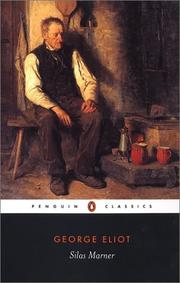
Silas Marner
A falsely accused weaver hoards gold in Raveloe until a stolen hoard and an abandoned child remake his narrow life.
2,699-word summary · 12 min read

Revolutionary Road
A Connecticut couple who believe they are too good for the suburbs plan to move to Paris, and the plan slowly exposes everything they cannot say to each other.
2,085-word summary · 9 min read
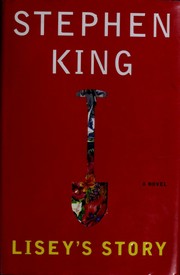
Lisey's Story
Two years after her novelist husband dies, Lisey Landon follows a trail of clues into his childhood and the other world that made him a writer.
1,998-word summary · 9 min read

Alone With You in the Ether
Two people in Chicago agree to six conversations, and the experiment becomes a love affair that is also a study of bipolar disorder, obsession, and the shape…
2,713-word summary · 12 min read

The Beach
A young backpacker follows a dead man's map to a hidden island community, then discovers what the people there are willing to do to keep it secret.
2,067-word summary · 9 min read

Less Than Zero
Clay returns to Los Angeles for Christmas and drifts through parties, drugs, and old friends, including one who is selling himself to survive.
1,926-word summary · 9 min read

Moonwalking with Einstein: The Art and Science of Remembering Everything
A journalist spends a year training for the U.S. Memory Championship and discovers that extraordinary memory is mostly technique, attention, and a lot of…
2,027-word summary · 9 min read

Howards End
Forster's 1910 novel follows two families, a house in Hertfordshire, and a burned note, asking whether money and feeling can ever be connected.
2,187-word summary · 10 min read
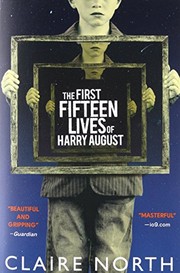
The First Fifteen Lives of Harry August
Harry August dies and is born again into the same life, again and again, until a warning from a child tells him the world is ending faster with each pass.
2,189-word summary · 10 min read

Sophie's Choice
A young Southern writer in 1947 Brooklyn befriends a brilliant, unstable couple and slowly learns the story of the Polish Catholic woman at the center of their…
2,798-word summary · 12 min read
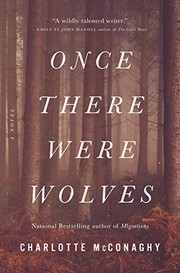
Once There Were Wolves
A biologist reintroduces fourteen wolves to the Scottish Highlands while protecting her traumatized twin sister, then finds a body in the snow that could…
2,682-word summary · 12 min read