
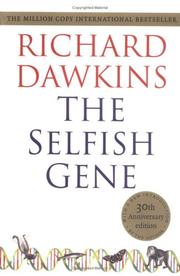
The Selfish Gene
2,439-word summary 11 min read 384 pages in the book
- First published
- 1976
- Publisher
- Oxford University Press
- Pages
- 384
- ISBN
- 9780199291151
Reading options
What's inside (8 sections)
I bought this book after hearing it quoted badly for years. People at parties call babies selfish genes and bosses call office politics natural selection, and I wanted to know what the actual argument was. First published in 1976 by Oxford University Press, The Selfish Gene runs 384 pages in the edition most readers meet today, the thirtieth anniversary printing from 2006 that carries the same ISBN cited here. I expected a cold book about destiny. I found a lively one about strategy, full of birds, ants, bats, and math games.
The core claim is simple to state and strange to sit with. Dawkins argues that the unit which really persists through evolution is the gene, not the individual animal or the group. Bodies are temporary. Genes copy themselves across generations, and the copies that shape bodies in ways that get them copied again become common. From that angle, much of animal behavior, including kindness, looks different. This summary walks through the book's ideas in order, with the examples Dawkins actually uses, and ends with where I think the argument strains.
Nobody needs a biology degree to follow it. Dawkins wrote for curious nonspecialists, and the chapters build step by step. Still, this is a book that rewards slow reading, because several of its words, selfish, altruistic, stable, mean something narrower here than they do at the dinner table.
Replicators and bodies as vehicles
Dawkins starts at the beginning, with a planet of shallow seas and chemistry trying out combinations. Some molecules happened to copy themselves. Copies with fewer errors, or copies made faster, filled the seas, while fragile ones broke down. He calls these early copying molecules replicators. Over time, replicators that built walls and workshops around themselves did better than naked ones. Those walls became cells, and cells joined into bodies.
This leads to the distinction the whole book rests on. Genes are replicators, stretches of code that pass copies down the generations. Bodies, whether human, ant, or cuckoo, are vehicles, the machines genes build to carry them around and get them copied. A vehicle lives once and dies. A successful replicator lives on in thousands of descendants. When Dawkins says a gene is selfish, he means it behaves as if it favors its own copying over rival versions at the same place in the code. He does not mean genes have motives or feelings. The word is shorthand for an outcome, not a state of mind.
I found this framing clarifying and a little chilling. It asks you to look at a parent feeding chicks and see not only love but arithmetic, copies of code protecting copies of itself. Dawkins insists this does not make love unreal. The feelings are real, the care is real, and the young survive because of them. The gene's eye view simply asks why such feelings evolved at all, and answers that they evolved because they worked at getting code copied.
The early chapters also deal with a rival idea popular at the time, that animals restrain themselves for the good of the group or the species. Dawkins argues this rarely holds. A group of self restrained birds would be open to a mutant that laid one more egg and grabbed a little more food. That mutant's genes would spread, and restraint would collapse. Cheats win unless something stops them, so appeals to the good of the species explain very little. What needs explaining is how cooperation survives in a world where cheating pays, and the rest of the book takes up that question.
Family math and helping relatives
If genes favor their own copying, why do animals ever help each other? The first part of the answer comes from family. A gene that prompts you to feed your sister helps copies of itself sitting inside her. The biologist William Hamilton worked out the logic, and Dawkins gives it a full and patient chapter.
The rough idea is easy to grasp. You share about half your genes with a full sibling, about an eighth with a cousin. Helping a close relative at small cost to yourself can still spread your genes, because the relative likely carries the same instructions. Dawkins walks through parent care, sibling loyalty, and the quarrels inside families with this math in mind. Parents favor all their children, while each child favors itself a little extra. A chick that begs louder than its nest mates may grab food meant for siblings, and genes for loud begging can spread even while the family as a whole does worse.
Ants, bees, and wasps get a long treatment because their families are extreme. In many of these species, workers are sterile daughters who raise their mother's new offspring instead of breeding themselves. This looks like the peak of selflessness until you learn how their inheritance works. Because of the way males develop from unfertilized eggs, sisters in these colonies share an unusually large fraction of genes. A worker passes on more of her code by raising sisters than she would by having daughters of her own. What looked like noble sacrifice turns out to be sharp accounting.
Cuckoos show the other side. A cuckoo mother lays her egg in another bird's nest and leaves. The host parents feed the giant impostor chick, sometimes while their own young starve. Dawkins uses this to show that parental care runs on rules of thumb, like feed whatever gapes in my nest, and those rules can be exploited. Genes do not see truth. They follow routines that worked often enough in the past, and parasites evolve to hijack them. I thought of this chapter later when reading about advertising and scams, though Dawkins himself stays with birds and insects, and the examples land harder for it.
None of this says you love your children because of fractions. Dawkins is clear that people act from affection, duty, habit, and all the rest. The claim is that affection toward kin exists in the first place because ancestors who felt it left more copies of their genes. Nature built the feeling, and the feeling does the daily work.
Hawks doves and stable strategies
Family math covers relatives. Strangers are harder, and the book's middle chapters take them on with game theory. Dawkins borrows work from John Maynard Smith on what he calls an evolutionarily stable strategy, a way of behaving that holds its ground once most of the population uses it. If everyone plays it, no newcomer with a different style can break in.
The famous illustration pits hawks against doves. Hawks always fight hard for a prize until injured or victorious. Doves posture and threaten but back down before real damage. In a population of doves, one hawk cleans up, taking every prize. In a population of hawks, everyone bleeds, and a dove that avoids fights can do better by picking up scraps. Dawkins shows, with simple arithmetic and no mystique, that neither pure style wins outright. What holds steady is a mix, or a conditional rule such as fight hard if attacked but display first. Real animals, from stags to spiders, often follow something like these mixed rules, bluffing, sizing up, and quitting before wounds turn fatal.
The hawk and dove game matters because it proves restraint can evolve without group spirit. Animals limit their fights not from kindness but because all out war pays badly when opponents hit back. Dawkins extends the same reasoning to bluff, threats, and long standoffs. A stag that roars through the night may be advertising strength honestly, or bluffing on an empty chest, and listeners evolve to test the claim just enough. Liars prosper until testing catches them, then honesty regains ground, then liars creep back. Nature settles into cycles and balances rather than perfect virtue.
Vampire bats get one of the book's most memorable passages here. These bats must drink blood often or starve, and a bat that fails to feed may beg from a roost mate who has fed well. Donors do share, often with bats that have shared with them before. Dawkins reads this as reciprocation held together by memory and repeated meetings. A bat that never repays gets cut off, so generosity survives by keeping score. He is careful not to claim bats do moral math in their heads. The pattern holds because bats that shared wisely left more descendants than bats that gave everything away or shared nothing at all.
What selfish and altruistic really mean
By this point Dawkins needs to clean up his own vocabulary, and he does so frankly. In this book, selfish means acting in ways that help your genes get copied, even if you suffer or die in the process. Altruistic means acting in ways that cost you copying success while helping another vehicle. A mother bird that feigns a broken wing to lure a fox from her nest is altruistic in this technical sense, whatever tenderness she feels.
That redefinition carries the whole argument. Human generosity, from feeding a neighbor to jumping into a river after a stranger, is real generosity at the level of motives and actions. Dawkins never denies that people feel pity, love, or duty. He argues those feelings are the tools genes use to move vehicles around. We are built to be moved by a crying child, a friend's hunger, a comrade's danger, because ancestors with such responses left more descendants than colder ones. Culture and reason then stretch those feelings far beyond kin, into charity, law, and ideals the original genes never planned.
This is also where the book most invites misreading, and Dawkins spends pages heading it off. Saying genes are selfish does not mean people must be selfish, or should be. He states plainly that understanding our programming can help us fight it, and that humans alone can rebel against the tendencies built into us. A reader who quotes this book to excuse greed has missed its explicit warning. The genes describe where our urges came from, not what we owe each other.
Parent and child conflict returns here in human terms. Dawkins notes that children demand more than parents wish to give, and parents spread care across children in ways each child resents. Siblings compete for attention while also protecting each other against outsiders. Anyone raised with brothers or sisters will recognize the pattern. He treats the battle of the sexes the same way, with males and females pursuing different best moves around mating, care, and desertion. Some of these chapters show their age in the examples chosen, a point I take up below, but the underlying method, asking what strategy would spread given the other side's moves, stays sharp.
Memes and the new replicator
Near the end comes the chapter that escaped the book and entered everyday speech. Dawkins asks what would happen if a new kind of replicator arose, one that copies itself not through chemistry but through imitation. He coins the word meme for it, from a root meaning imitation, trimmed to sound like gene. A tune, a catchphrase, a way of making pots, a style of prayer, anything that passes from mind to mind by copying counts.
The parallel is deliberate and playful. Like genes, memes vary, compete, and get selected. A catchy melody spreads while a dull one dies. A useful craft trick spreads because it works. A religious teaching spreads because it comforts, commands, or promises, and because it often carries instructions to teach it to children and outsiders. Memes ride in books, songs, sermons, and now screens, jumping between vehicles far faster than genes manage. Dawkins suggests that much of culture can be seen as a swarm of such replicators competing for space in minds.
The meme chapter reads differently today than it did in 1976, and Dawkins knew later editions would face this. He added endnotes and a new chapter for the anniversary edition reflecting on what survived and what he would change. The core image still delights me. It gives a name to the way jokes, slogans, and habits seem to have lives of their own, using people as carriers. But the idea is looser than the gene theory around it, more sketch than science, and Dawkins presents it as a proposal rather than a proven system. Readers who treat every viral video as proof of the theory are stretching the chapter further than its author did.
Where the argument strains
No honest summary should end in pure praise, and this book has real limits worth stating. The gene's eye view is a powerful lens, and Dawkins sometimes writes as if it were the only lens that matters. Bodies, brains, environments, and accidents shape evolution too, and later biologists have pressed the case that selection acts at several levels at once. Dawkins answers some of this in the endnotes, and his replies are worth reading, but the main text can leave the impression that genes pull every string while organisms just ride along. That overreach is the book's most common fair criticism.
The chapters on sex, aggression, and human nature also show their decade. Written in the mid seventies, they lean on examples and assumptions about men and women that later research complicated. Dawkins himself revised some claims in notes to the anniversary edition, which speaks well of him, yet a new reader should know that whole fields, from primatology to anthropology, have moved on. Treat those chapters as sharp starting points, not final reports.
Finally, the word selfish has cost the book dearly. Dawkins chose it as a provocation and spent the rest of his career explaining the technical meaning. Too many readers hear genetic determinism, the idea that we are robots built by DNA and unable to change. The book argues the opposite, that foresight and culture let humans defy our replicators, but the title keeps misleading the hurried. I wish he had picked a duller word, since the argument deserves better than its slogan.
Even with those strains, I closed the book glad I had read it rather than merely heard about it. The replicator idea reorganized how I see nests, hives, and nursery quarrels. The hawk and dove game gave me a clean tool for thinking about bluff in animals and people. The meme chapter, loose as it is, named something I had felt for years about how songs and sayings travel. Readers who want a gene centered tour of evolution, written with clarity and nerve, will find few better guides. Just read the endnotes with the chapters, forgive the seventies in places, and remember that selfish here describes copying, not character.
FAQ
When was The Selfish Gene published?
It was first published in 1976 by Oxford University Press. The cited thirtieth anniversary edition from 2006 runs 384 pages with ISBN 9780199291151.
What does selfish mean in the title?
Genes act as if selfish in copying themselves, which can still produce cooperative and caring behavior in animals and people.
What is a meme in this book?
A unit of culture such as a tune or habit that spreads by imitation, offered as a second kind of replicator beside the gene.
Similar books
The God Delusion
Dawkins argues a personal God almost certainly does not exist, then traces religion and morals to evolution.
3,426-word summary · 15 min read

Moonwalking with Einstein: The Art and Science of Remembering Everything
A journalist spends a year training for the U.S. Memory Championship and discovers that extraordinary memory is mostly technique, attention, and a lot of…
2,027-word summary · 9 min read
Breath: The New Science of a Lost Art
Journalist James Nestor investigates how modern humans learned to breathe badly, and what researchers, athletes, and breathwork practitioners have found about…
2,011-word summary · 9 min read
The Elegant Universe: Superstrings, Hidden Dimensions, and the Quest for the Ultimate Theory
Brian Greene explains relativity, quantum mechanics, and the promise of string theory without requiring a physics degree.
2,110-word summary · 9 min read

Attached
A psychiatrist and a psychologist explain adult attachment styles and show how anxious, avoidant, and secure patterns shape dating, conflict, and the search…
2,157-word summary · 10 min read

The Emperor of All Maladies
A biography of cancer from Galen to chemo through one doctor cases.
2,255-word summary · 10 min read
Hidden Figures
Black women computers at Langley launch rockets past Jim Crow.
2,385-word summary · 11 min read
God Is Not Great
Hitchens argues religion poisons life across history and texts.
2,545-word summary · 11 min read
The Hot Zone
Ebola and Marburg move from African outbreaks to a Virginia monkey house and an Army response in suits.
2,291-word summary · 10 min read
On the Origin of Species
Darwin's 1859 case for evolution by natural selection, from Beagle finches and breeding pigeons to fossils and anatomy.
2,589-word summary · 12 min read
In Defense of Food
Pollan argues we stopped eating food and started eating nutrients, and offers a plain way back.
2,320-word summary · 10 min read
Predictably Irrational
Behavioral economist Dan Ariely shows why we overpay, procrastinate, and misjudge through simple experiments.
2,183-word summary · 10 min read
Invisible Women: Data Bias in a World Designed for Men
Data treating men as default harms women in medicine, work, transit, and design, with fixes from studies worldwide.
2,316-word summary · 10 min read
Emotional Intelligence
Goleman argues self awareness and empathy shape success more than IQ alone.
2,026-word summary · 9 min read
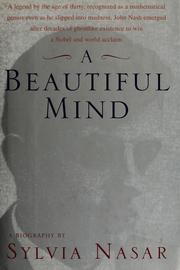
A Beautiful Mind
Mathematician John Nash's brilliant game theory rise, schizophrenia collapse, and Nobel return, with wife Alicia's care.
2,142-word summary · 10 min read
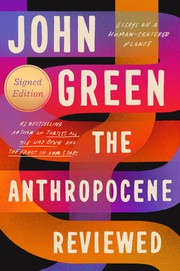
The Anthropocene Reviewed: Essays on a Human-Centered Planet
John Green reviews ordinary parts of human life on a five-star scale, turning geese, keyboards, and sunsets into a warm memoir about attention.
2,982-word summary · 13 min read
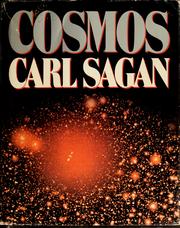
Cosmos
Sagan tours galaxies, evolution, and Alexandria to argue for science.
2,416-word summary · 11 min read
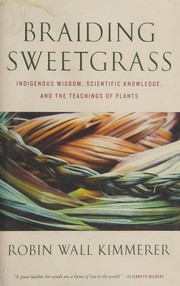
Braiding Sweetgrass
A Potawatomi botanist braids plant science with family stories to argue for gratitude and return gifts to the living world.
2,410-word summary · 11 min read
A World Appears
Pollan traces consciousness from plant sentience to AI feeling and the self, with gardens, labs, trips and hard questions along the way.
3,108-word summary · 14 min read
What If?: Serious Scientific Answers to Absurd Hypothetical Questions
Randall Munroe of xkcd answers absurd science questions with real physics, rough math and stick figures, from relativistic baseball to draining the oceans.…
2,932-word summary · 13 min read
Why We Sleep: Unlocking the Power of Sleep and Dreams
A Berkeley sleep scientist explains how sleep shapes memory, mood, and health, and what happens when we miss it.
2,755-word summary · 12 min read
Factfulness
A doctor shows why we misread global trends and offers ten habits for seeing progress clearly.
2,247-word summary · 10 min read
Einstein: His Life and Universe
Isaacson traces Einstein from patent clerk to world fame using newly opened papers, through 1905, relativity, exile, and the long unified theory search.
2,773-word summary · 12 min read
Astrophysics for People in a Hurry
Tyson condenses the Big Bang, dark matter, and exoplanets into twelve short chapters for busy readers.
2,314-word summary · 10 min read
The Omnivore's Dilemma
Four meals traced from corn fields to foraging show what industrial food costs and what else is possible.
1,918-word summary · 9 min read
Surely You're Joking, Mr. Feynman!
Feynman drums, cracks safes, and learns by doing from Los Alamos to Caltech classrooms.
1,946-word summary · 9 min read
Stiff: The Curious Lives of Human Cadavers
What happens to donated bodies, from crash labs and decay farms to composting and space tests.
2,051-word summary · 9 min read

Guns, Germs, and Steel: The Fates of Human Societies
Diamond argues geography and crops explain why some societies expanded faster than others.
3,432-word summary · 15 min read
A Brief History of Time
Hawking walks from ancient spheres to big bang, black holes, and time arrows without equations.
2,210-word summary · 10 min read
Blink: The Power of Thinking Without Thinking
Fast judgments can beat analysis, and fail hard, in Gladwell's 2005 book on snap thinking.
2,008-word summary · 9 min read