
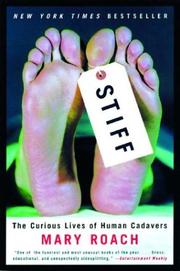
Stiff: The Curious Lives of Human Cadavers
2,051-word summary 9 min read 304 pages in the book
- First published
- 2003
- Publisher
- W. W. Norton & Company
- Pages
- 304
- ISBN
- 9780393324822
Reading options
What's inside (12 sections)
I read Stiff in public and laughed at bad moments, which is exactly what Mary Roach wants. She published it with W. W. Norton and Company in 2003, a 304 page tour of what happens to donated bodies with ISBN 9780393324822. Crash labs. Decay farms. Organ harvests. Compost piles. Roach visits each place with a notebook, a weak stomach she admits, and a curiosity that bulldozes embarrassment. The question underneath is simple. What do we owe our bodies after we are done with them, and what can the dead teach the living if we let them.
Roach opens with a head. A plastic surgery lab where surgeons practice face lifts on donated heads, and Roach must decide where to look while a cheek is lifted. She looks, then looks away, then looks again. That rhythm sets the book. Curiosity, squeamishness, respect, joke to release tension, back to curiosity. She asks the questions you would ask if you were brave enough and not worried about sounding rude. Does it smell. Do they use the whole body. Who cleans up. Can I keep my feet if the rest goes to science. The experts answer plainly because they have heard worse. One tells her the head weighs about as much as a roaster chicken. She never lets you forget the person inside the specimen.
Crash and impact
The crash chapters are famous for good reason. Roach rides along with researchers who drop cadavers to test car seats, helmets, and Army boots. She watches a body in a car struck sideways while cameras record ribs bending. She learns that cadavers taught us seat belts, airbags, and why side impact kills. Live volunteers cannot take the hit. Dummies cannot bleed right. The dead, consented in life, fill the gap. Roach handles consent carefully. She names donor programs, quotes forms, and asks a hard question. Did a 1930s hobo who died unclaimed agree to be a crash dummy. Early anatomy did not ask. Modern programs do, mostly. The history of grave robbing and poorhouses shadows every lab she likes. She does not excuse it. She shows how rules improved because journalists and families demanded it.
Bullets get their own chapter. A lab that shoots donated torsos to test bulletproof vests. Roach watches, flinches, and reports the physics without gore porn. The point is not thrill. It is that a vest that works on clay may fail on a shoulder that moves. She also visits a foot lab where boots are tested against mines, and you will never read a war movie the same way. Feet matter. Boots matter. The dead teach boot makers what live soldiers cannot say until it is too late.
Rot and time
Decay research is where most readers test their limits. Roach goes to a body farm in Tennessee where donated corpses lie in woods, in cars, under leaves while scientists measure insects, heat, and smell to help police date death. She describes maggots with respect and horror in equal measure. She also covers cannibal history, not for shock but to ask why we find eating the dead worse than burning them. Her answer is cultural rather than logical, and she lets it sit. One researcher tells her the smell stays in clothes for days. Roach believes him and keeps taking notes.
Crucifixion gets a surprising detour. A researcher in France tested the Turin Shroud by nailing a donated arm to wood to see blood flow. Roach reports it with dry awe. Science and faith collide in a lab where no one is mocking anyone. That even handedness is typical. She likes believers and skeptics alike when they are honest about methods. Priests who run body donation programs get some of her warmest pages.
Endings
The last third surveys what you can do with remains. Burial. Burning. Compost. Freeze dry. Plastinate for art shows. Shoot into space. Roach tries to be fair to each. Burial wastes land and poisons with fluid, but comforts families. Burning is clean and costly in fuel. Composting, then new, turns a body into soil in weeks and delights environmentalists while unsettling funeral directors. Plastination, the Body Worlds method, preserves poses that teach anatomy but raises consent questions when bodies come from unclear sources. Roach visits a compost pilot, interviews a green burial founder, and asks a mortician what he will do with himself. Most say fire or dirt, simple and cheap.
She also asks about heads in space. NASA tested the idea of sending remains up and found cost and sentiment block it. A company that launches ashes gets a kind chapter. No mockery. If a family wants stars, Roach says, let them have stars, as long as the rocket does not litter. That tolerance is the book ethic. Your corpse, your call, made with information rather than euphemism.
Roach as guide
Roach voice is the reason this works. She is funny without being cruel, curious without being clinical, and honest about fainting. She tells you when she skips lunch. She tells you when a joke fell flat in a morgue. She footnotes with extra jokes and sources, and the footnotes are worth reading. She also corrects herself. Early bravado about seeing everything softens into respect for technicians who do this daily without books to sell. One diener who sews bodies after autopsy gets a full portrait. Tired, kind, underpaid. Roach makes sure you remember him longer than any brain in a bucket.
Criticism is fair on two points. The book is American centered, with brief trips abroad that cannot cover global death practice. And Roach love of the odd anecdote sometimes crowds out system questions. Who profits from body brokers. How poor families are pressed to donate. She touches both but moves on for the next lab. Readers who want policy will need to supplement. Readers who want a humane introduction will be satisfied and then some.
Who it is for
Read it if you like popular science with jokes, or if death talk makes you nervous and you want a friendly guide. Do not read it right after losing someone unless gallows humor helps you. Content notes include graphic descriptions of corpses, autopsy, crash injuries, animal testing mentions, and dark jokes about death that land for most but not all. Suitable for older teens and up with strong stomachs. Keep meals light.
I finished thinking about my own form. Roach ends by saying she will donate, and she means it enough to have signed. I checked my license after closing. Not from pressure, but because the book demystifies the choice. Bodies are useful after death in ways that do not dishonor the person. They can teach a surgeon to lift a face kindly. They can teach a car to hold a child safer. They can become soil for a tree. Stiff makes those options vivid without preaching. For a book about corpses, it is remarkably full of life. Bring air freshener and an open mind. You will laugh, wince, and call your mother.
A note on updates
Body donation rules and green burial options expanded since 2003. Composting is legal in more states. Plastination shows tour less. Crash dummies improved but cadavers still teach. If you act on the book, check current local programs rather than relying on Roach forms. The curiosity holds. The paperwork changed.
The diener and the students
One chapter that stays with me follows anatomy students through first cut. Roach sits in on a lab where nineteen year olds meet their cadavers, learn names and causes of death, and then pick up scalpels with shaking hands. She reports their jokes, their tears, and the toast they drink to the donors at semester end. A diener who prepares bodies explains his routine. Wash. Shave where needed. Warm the room because students are cold with nerves. He remembers donors who taught for years across many classes. Students write thank you letters to families they will never meet. That reciprocity answers the exploitation question better than any policy paragraph. Use is honored by gratitude and by becoming a careful doctor.
Eating, burying, and the trouble with choice
Roach gives burial customs a fair hearing even though she favors utility. She interviews a funeral director who defends embalming as care for the living rather than the dead. Families need time with a face that looks asleep. She interviews a rabbi who explains why quick burial matters. She talks to a Tibetan sky burial advocate by phone. None are mocked. That evenness is why the book persuades. She is not selling compost or drape. She is asking what comfort costs and who pays. A green burial in woods sounds lovely until you learn the woods charges a fee and bans markers families want. A traditional burial sounds respectful until you learn the vault price. Choice, like corpses, has weight. Roach puts both on the scale with jokes that do not tip it.
Heads, hands, and consent
The consent thread needs a straight telling because it is the book moral spine. Early anatomy relied on executed criminals and stolen poor. A chapter on Burke and Hare, who murdered to sell bodies, still chills because the market made murder profitable. Modern donor programs ask for signatures, show films, and let families visit labs. Roach tours a program where donors attend lectures about how they will be used and can restrict uses. One woman allows everything except her face. One man allows crash tests but not photography. Those limits are honored with paperwork and locked doors. That progress came from scandals Roach names. A broker selling parts. A university storing legs in a freezer. Transparency was forced, not gifted. If you sign a donor card after reading, read the fine print about which program gets you. A university lab and a for profit broker are different destinations. Roach wants you to choose with eyes open, the way she learned to look at the head on the table. Directly, then away, then back with respect.
Space, art, and the weird edge
Roach saves the strangest uses for late, when your stomach trusts her. A lab that tests whether spiders spin webs in zero gravity with cadaver nutrients. An artist who plastinates bodies into runner poses for crowds who pay to stare. A company that presses ashes into diamonds for rings. She treats each without sneering. The diamond widow she interviews is not foolish. She wants her husband on her hand while she gardens. The plastination visitor who brings children is not ghoulish. He wants his son to see a real heart after cartoons. Roach asks the question underneath. Does use honor the dead when the living learn or heal. Her answer is usually yes, with consent, with care, and without lying about what is happening. A diamond is carbon, not a soul. A runner pose is skin, not a person. Say that plainly and let families decide. That plainness is why scientists trust her with their labs. She does not flinch and she does not worship. She watches, asks, and writes down.
Roach chapter on crucifixion and the Shroud nerds out in the best way. She interviews believers who welcome testing and skeptics who admit limits. A French pathologist nailed a donated arm to wood to track blood lines and found the Shroud image plausible but unproven. That shrug is typical Roach. Evidence first, wonder intact. She also covers dog labs turned to dummies with care, noting where animals still teach what machines cannot. Readers who skip footnotes miss half the jokes and a third of the sources. Read them. They hold the weirdest facts, like the saint whose relics toured while Roach toured morgues.
Roach chapter on animals deserves a note because readers ask. Early crash and space research used pigs, dogs, and chimps before cadavers were available or allowed. Roach visits that history briefly and with discomfort, quoting researchers who are glad to have moved to willing human donors and dummies where possible. She does not linger on gore. She asks the ethical math plainly. A pig cannot consent. A donor can. That difference is why body programs matter. Choose donation, the book implies, and fewer animals die for seat belts. It is a practical argument inside a funny book, and it lands without preaching.
FAQ
When was Stiff published?
W. W. Norton published it in 2003. The paperback runs 304 pages and the ISBN is 9780393324822.
Who is in Stiff?
No single cast. Surgeons, anatomists, crash test teams, and Roach herself as guide.
Is it part of a series?
No. It stands alone, followed by Spook, Bonk, Packing for Mars, and Grunt.
Similar books
Breath: The New Science of a Lost Art
Journalist James Nestor investigates how modern humans learned to breathe badly, and what researchers, athletes, and breathwork practitioners have found about…
2,011-word summary · 9 min read
Smoke Gets in Your Eyes: And Other Lessons from the Crematory
A young medieval history graduate takes a job at an Oakland crematory and becomes a mortician, confronting the physical reality of death and the funeral…
2,003-word summary · 9 min read
The Emperor of All Maladies
A biography of cancer from Galen to chemo through one doctor cases.
2,255-word summary · 10 min read
The Hot Zone
Ebola and Marburg move from African outbreaks to a Virginia monkey house and an Army response in suits.
2,291-word summary · 10 min read
What If?: Serious Scientific Answers to Absurd Hypothetical Questions
Randall Munroe of xkcd answers absurd science questions with real physics, rough math and stick figures, from relativistic baseball to draining the oceans.…
2,932-word summary · 13 min read
Being Mortal
A surgeon asks what medicine owes the dying: fewer procedures, better conversations, and care shaped by what matters most.
2,362-word summary · 10 min read
Surely You're Joking, Mr. Feynman!
Feynman drums, cracks safes, and learns by doing from Los Alamos to Caltech classrooms.
1,946-word summary · 9 min read
The Immortal Life of Henrietta Lacks
The cells of a poor Black tobacco farmer revolutionized medicine, taken without her knowledge in 1951.
2,139-word summary · 10 min read
Sybil
A 1973 case study of a woman treated for multiple personalities, and the book that made dissociative identity disorder a household phrase.
2,054-word summary · 9 min read
A Long Way Down
Four strangers meet on a London rooftop on New Year's Eve, each planning to jump, and end up making a pact to stay alive until Valentine's Day.
2,145-word summary · 10 min read

Moonwalking with Einstein: The Art and Science of Remembering Everything
A journalist spends a year training for the U.S. Memory Championship and discovers that extraordinary memory is mostly technique, attention, and a lot of…
2,027-word summary · 9 min read
Hogfather
Death fills in for a missing Father Christmas, Susan Sto Helit hunts the Hogfather, and the twentieth Discworld novel turns Santa into a management problem.
2,871-word summary · 13 min read
Dry
A memoir of drinking, rehab and relapse, and the strange business of getting sober one morning at a time.
2,643-word summary · 12 min read

Dear Girls: Intimate Tales, Untold Secrets & Advice for Living Your Best Life
Ali Wong's debut collects fourteen letters to her daughters, covering sex, money, work, marriage, Vietnam, and being a working Asian American mother.
2,266-word summary · 10 min read
At Home: A Short History of Private Life
Bill Bryson tours his own Norfolk rectory room by room to explain how private life and the modern home got built.
2,334-word summary · 10 min read
America (The Book): A Citizen's Guide to Democracy Inaction
Jon Stewart and the Daily Show writers turn a high school civics textbook inside out, with a foreword from beyond the grave.
2,511-word summary · 11 min read
The Elegant Universe: Superstrings, Hidden Dimensions, and the Quest for the Ultimate Theory
Brian Greene explains relativity, quantum mechanics, and the promise of string theory without requiring a physics degree.
2,110-word summary · 9 min read
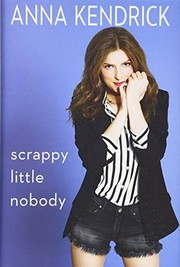
Scrappy Little Nobody
Anna Kendrick's essays trace her path from a Portland childhood and Broadway to Hollywood, with jokes, anxiety, and a refusal to pretend fame fixed her.
2,092-word summary · 9 min read
Attached
A psychiatrist and a psychologist explain adult attachment styles and show how anxious, avoidant, and secure patterns shape dating, conflict, and the search…
2,157-word summary · 10 min read
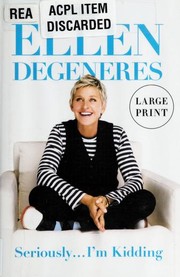
Seriously...I'm Kidding
DeGeneres strings show stories and home jokes into light life advice.
2,292-word summary · 10 min read
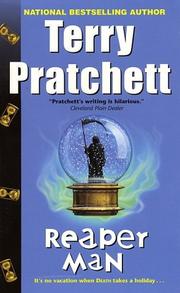
Reaper Man
Death gets fired and farms while Windle Poons refuses to die.
2,579-word summary · 11 min read
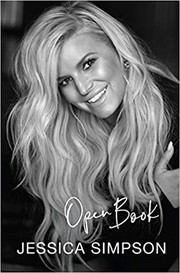
Open Book
Simpson replays pop fame, love and drink through recovery work.
2,552-word summary · 11 min read
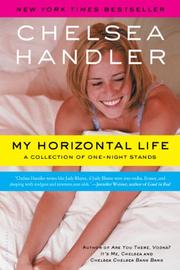
My Horizontal Life: A Collection of One-Night Stands
Handler turns dating disasters and family chaos into brash comic essays about single life in Los Angeles.
2,304-word summary · 10 min read
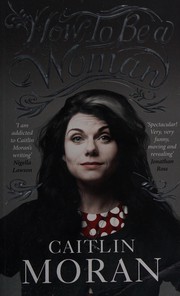
How to Be a Woman
Moran mixes girlhood and work stories into plain feminist advice.
2,600-word summary · 12 min read
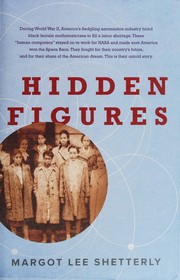
Hidden Figures
Black women computers at Langley launch rockets past Jim Crow.
2,385-word summary · 11 min read
God Is Not Great
Hitchens argues religion poisons life across history and texts.
2,545-word summary · 11 min read
Eats, Shoots & Leaves
Truss defends commas with jokes about pandas and posters.
2,423-word summary · 11 min read
On the Origin of Species
Darwin's 1859 case for evolution by natural selection, from Beagle finches and breeding pigeons to fossils and anatomy.
2,589-word summary · 12 min read
Notes from a Small Island
Bill Bryson's 1995 farewell tour of Britain, funny and fond, from Dover to London, the north, Scotland and Wales.
2,301-word summary · 10 min read
In Defense of Food
Pollan argues we stopped eating food and started eating nutrients, and offers a plain way back.
2,320-word summary · 10 min read