
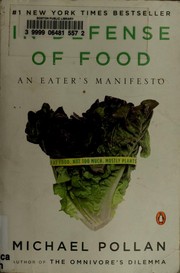
In Defense of Food
2,320-word summary 10 min read 256 pages in the book
- First published
- 2008
- Publisher
- Penguin Books
- Pages
- 256
- ISBN
- 9780143114963
Reading options
What's inside (8 sections)
I picked up In Defense of Food because I was tired of feeling guilty in the grocery store. Every box seemed to shout about what was inside it. Low fat. High fiber. Omega 3 added. Plant sterols. I stood in the cereal aisle and felt like I needed a chemistry degree to buy breakfast. A friend told me Michael Pollan had written a short follow up to The Omnivore's Dilemma that would clear the fog. The book came out in 2008 from Penguin Books, 256 pages, ISBN 9780143114963. I read it in three sittings, mostly at the kitchen table with coffee going cold beside me.
Pollan starts with a question that sounds simple until you try to answer it. What should we eat? His answer fits on a postcard. Eat food. Not too much. Mostly plants. The rest of the book explains why those seven words are harder to follow than they look, and why our confusion about dinner has less to do with our willpower than with the way food is studied, sold, and made.
He is not a doctor and he does not pretend to be one. He is a journalist who spent years tracing meals back to farms and feedlots for his earlier book. Here he turns from where food comes from to how we think about it. He walks supermarket aisles, reads labels out loud, visits farms, plants a garden, and talks with scientists who disagree. You follow him like a smart friend who got obsessed and wants to show you what he found.
The age of nutritionism
The first part of the book gives a name to the fog in the cereal aisle. Pollan calls it nutritionism. It is the habit of talking about food as a delivery system for nutrients rather than as meals and traditions.
He traces how we got here. In the 1800s chemists learned to isolate protein and then vitamins. That work saved lives. It also taught governments, companies, and reporters a new language. Food stopped being carrots and bread. It became protein and fat and vitamins. Once you see food that way, you can tinker with it. Take out the fat. Add back fiber. Sell the fix.
The margarine versus butter story shows the trap. For years advice warned against butter because of saturated fat. Margarine, made from vegetable oils processed to stay solid, looked modern and heart friendly. People spread it thick and felt virtuous. Later research raised doubts about trans fats in early margarines, and butter came back in some kitchens. Pollan is not saying butter is a health food. He is saying the flip flop reveals a pattern. When you judge a food by one nutrient at a time, you miss the whole.
Supermarkets run on this logic. Pollan reads packages that claim to lower cholesterol or support immunity. A sugary cereal can claim whole grain. A processed snack can claim low fat. The claims are often technically true and practically misleading. Shoppers scan numbers instead of asking simpler questions. Is this actual food? Who made it? He argues that nutrition science is useful, but young and noisy. Studies conflict. Headlines swing. One decade fat is the villain, the next it is carbs.
I recognized myself here. I have bought yogurt with added protein that tasted like candy and told myself it was a good choice because the label said so. Pollan made me laugh at that habit, then feel a little annoyed at how easy I am to steer.
Short version of his point. Nutrients matter, but food is more than the sum of its known chemicals. When advice changes every few years, look at what stayed steady. People who cook plain foods and eat at tables have usually done fine without tracking every gram.
The Western diet and its troubles
The second thread is what Pollan calls the Western diet. He does not mean burgers alone. He means a pattern that spread from America after World War II. Lots of refined flour and sugar. Lots of refined oils. Lots of cheap meat. Less greens and home cooking.
Corn sits at the center of this story. Pollan follows corn from Iowa fields into almost everything. Corn feeds cattle in feedlots. Corn becomes oil and syrup that sweeten packaged foods. Corn feeds chickens and pigs. You can eat a fast food meal that looks varied, burger and soda, and still be eating mostly corn in different costumes.
Feedlots get a hard look. He describes cattle built to eat grass standing on bare dirt eating corn, getting sick, getting antibiotics to keep growing. The meat is cheap at the counter. The costs show up elsewhere, in soil loss and manure lagoons and the bland taste of meat raised fast.
Then comes the health side, told carefully. Societies that adopt this pattern tend to see more obesity and diabetes and heart disease. Pollan notes the odd timing. Americans grew fatter during the low fat craze of the 1980s and 1990s, when shelves filled with fat free cookies. He points to the broad link between industrial eating and chronic illness, and to the way French and Japanese and Mexican diets kept people healthier even when those diets included fat or carbs that American guidelines warned against.
His telling detail is the table. The Western diet is not only ingredients. It is habits. Eating fast. Eating alone. Snacking all day. Huge portions. He suggests we sped up meals, and our bodies noticed.
Eat food: what counts as real food
The middle of the book turns practical. Pollan offers rules for telling food apart from what he calls foodlike substances. These are edible products invented in factories that look like food and borrow its names.
His supermarket tour is the best part. He suggests shopping the edges first, where produce and fish and dairy usually sit. Read the ingredient list. If your grandmother would not recognize half the names, think twice. If a product has more than five ingredients, it is probably highly processed. If it makes a loud health claim on the front, check the back.
He returns to margarine versus butter here with a concrete test. Butter has cream and salt. You know both. Early tub margarines listed oils and colorings and flavorings. You could not make them at home. Pollan prefers legible food. Apples. Rice. Beans. Bread with flour, water, salt, and yeast. He likes foods that will rot if you forget them, because rot means something alive was there.
He also warns about the health halo. A box can say whole grain while mostly containing refined flour and sugar. He tells a story about a kids yogurt tube and wonders when yogurt stopped needing a spoon. I checked my fridge after that. I found a tube I had bought for a nephew. It tasted sweet and faintly of strawberry. Real yogurt tastes sour and plain. Kids learn what yogurt is from the tube. That worries him more than any single additive.
There is humor here. He imagines your great grandmother walking into a modern supermarket and freezing in front of the dairy case. She would know the milk. She would stare at the coffee creamer and the cheese singles. She might ask where the food went. Borrow older eyes to see how strange the new normal looks.
A short pause matters here. Pollan is not telling sick people to ignore doctors. He is telling shoppers to stop trusting front of package claims. Cook more. Choose plain items.
Not too much, and mostly plants
The next two rules sound old fashioned because they are. Not too much. Mostly plants.
For not too much, Pollan looks at how other cultures limit quantity without counting. The French eat smaller portions and do not snack much. The Japanese have a saying about eating until 80 percent full. Many traditions use small plates and slow meals and shared dishes. Americans face giant servings and free refills. He cites tests where people given larger bowls eat more soup without noticing. Size steers appetite.
His advice is behavioral, not chemical. Pay more for better food and eat less of it. Sit down. Use a plate. Cook so you see the work behind the meal. Leave a little on the plate at first, to relearn what enough feels like.
Mostly plants is looser than it sounds. He is not ordering everyone to go vegetarian. He is noting that older diets center plants, with meat as flavor or feast rather than the base of every lunch. Think beans and greens with a little pork. Think soups crowded with vegetables. He describes markets heavy with leaves and roots and fruit, and contrasts them with carts heavy with boxed meals.
He gives plants their due without preaching. Leaves carry fiber and water that fill you up. Beans keep well in a pantry. Nuts satisfy in small handfuls. Color often signals helpful compounds, though he warns against reducing a carrot to beta carotene. Eat the carrot.
I tried the plate test after this chapter. Half the plate vegetables for a week. I bought collards and roasted them with garlic. I made lentil soup. I ate smaller pieces of chicken without missing them much. My grocery bill dropped a little. Small changes kept.
From feedlots to the garden
Pollan knows advice about plants and real food raises a fair question. Where does real food come from if feedlots and corn fields fill the middle of the country?
He contrasts two models. One is industrial, even when it wears an organic label. Big organic farms can still ship lettuce thousands of miles and pack it in plastic. That lettuce may be grown without certain pesticides, but it still travels far and tastes tired. The other model is smaller and mixed. Animals and plants on the same farm, manure feeding pasture, rotations that rest soil. He made Polyface Farm in Virginia famous in his earlier work, and he nods to it here. Chickens follow cattle. Grass grows back thicker. It is labor heavy and hard to scale, which he admits.
Corn returns as the test case. A field of corn sprayed and replanted year after year produces a lot of grain and little else. A pasture with clover and grazing animals produces less grain and more life. Prices reward the grain field. Taste and soil tell another story.
Then he comes home to his garden in Connecticut. He grows lettuce and garlic and tomatoes. He describes slugs and weeds and the pride of a salad that traveled twenty feet. The garden is not a plan to feed the world. It is a classroom. You learn seasons. You waste less because you know what thinning carrots costs your back. I have pots on a balcony, not a yard. I grew basil and cherry tomatoes one summer. The harvest was tiny. Store tomatoes tasted watery after that.
He also talks about farmers markets and cooking clubs without pretending they solve everything. They help some shoppers buy fresher food and help some farmers stay in business. They do not help a night shift worker who gets home at midnight to a corner store.
Cooking, and where I push back
If there is a hero in this book, it is the cook. Not the chef. The home cook with a pan and a knife.
Pollan argues that cooking puts you back in charge. When you cook, you decide the fat and salt. You see the sugar. When you reheat, someone else decides. That someone usually chooses cheap starch and salt and sugar to make food survive shipping. He is sharp about microwave meals marketed as home style. They borrow the language of kitchens while removing the kitchen.
He does not demand sourdough every Sunday. He suggests simple moves. Roast vegetables. Boil beans. Fry eggs. Keep a few meals you can make without a recipe. Eat together when you can. Americans say they have no time to cook, yet watch hours of screens. He says cooking is not lost time. It is when food becomes a meal.
Now the pushback, because admiration should not turn off judgment.
First, time and money. Gardens and markets take land and cash and free evenings. A single parent working two jobs may not have a car to reach a farmers market, or a store nearby that sells fresh fish. Telling that person to pay more and eat less can sound cold. The book nods to this, yet keeps aiming at readers with choices. Rent and wages shape diets more than any shopping rule.
Second, science. He criticizes reductionism while sometimes using single studies to support his own points. He favors older food cultures, which makes sense, but those cultures also had hunger and hard labor that burned calories. The past was not a meal plan. Readers should borrow habits without idealizing history.
Third, vagueness. Mostly plants and not too much are wise and slippery. How much meat is mostly? How full is 80 percent? People who need firm guidance will need a clinician, not a mantra. The book says this in passing. It could say it louder.
Those limits did not spoil the book for me. They set its borders. Read it as a corrective to label reading and diet fads, not as medical care. Inside those borders it does strong work. It explains why butter became a villain and then returned. It shows how corn and feedlots made meat cheap and meals dull. It gives usable tests for the supermarket.
What stayed with me a month later is small. I shop slower. I read backs before fronts. I buy plain yogurt and add honey. I roast carrots and onions on Sundays because a full tray makes Monday easier. I planted more basil. None of this feels heroic. It feels like paying attention again. Then go cook something and share it while it is warm.
FAQ
When was In Defense of Food published?
Penguin Books published it in 2008. It runs 256 pages and the paperback ISBN is 9780143114963.
What does Eat food. Not too much. Mostly plants. mean?
Choose plain foods over processed ones, eat smaller seated portions, and center meals on vegetables and beans with less meat.
Is it part of a series?
No. It follows The Omnivore's Dilemma in spirit but stands alone, with no prior book needed.
Similar books
The Omnivore's Dilemma
Four meals traced from corn fields to foraging show what industrial food costs and what else is possible.
1,918-word summary · 9 min read
A World Appears
Pollan traces consciousness from plant sentience to AI feeling and the self, with gardens, labs, trips and hard questions along the way.
3,108-word summary · 14 min read
Breath: The New Science of a Lost Art
Journalist James Nestor investigates how modern humans learned to breathe badly, and what researchers, athletes, and breathwork practitioners have found about…
2,011-word summary · 9 min read
God Is Not Great
Hitchens argues religion poisons life across history and texts.
2,545-word summary · 11 min read
On the Origin of Species
Darwin's 1859 case for evolution by natural selection, from Beagle finches and breeding pigeons to fossils and anatomy.
2,589-word summary · 12 min read
Why We Sleep: Unlocking the Power of Sleep and Dreams
A Berkeley sleep scientist explains how sleep shapes memory, mood, and health, and what happens when we miss it.
2,755-word summary · 12 min read
Fast Food Nation
Fries, burgers, and meatpacking traced from stands to slaughterhouses show cheap food true price.
1,938-word summary · 9 min read
Sapiens: A Brief History of Humankind
Harari's Sapiens from cover to cover: the cognitive revolution, the agricultural bargain, shared fictions like money and nations, and the scientific centuries…
2,145-word summary · 10 min read
The Courage to Be Disliked: The Japanese Phenomenon That Shows You How to Change Your Life and Achieve Real Happiness
A philosopher and an angry young man argue over five nights about Adlerian psychology, trauma, approval, and the freedom to be disliked.
2,054-word summary · 9 min read
Moonwalking with Einstein: The Art and Science of Remembering Everything
A journalist spends a year training for the U.S. Memory Championship and discovers that extraordinary memory is mostly technique, attention, and a lot of…
2,027-word summary · 9 min read
Four Thousand Weeks: Time Management for Mortals
Oliver Burkeman turns the whole productivity project on its head, arguing that a human lifespan of roughly four thousand weeks is not a problem to optimize…
2,447-word summary · 11 min read
Beautiful Boy: A Father's Journey Through His Son's Addiction
David Sheff recounts watching his son Nic slide into meth addiction, and his own desperate, humbling search for how to help without destroying them both.
2,076-word summary · 9 min read
At Home: A Short History of Private Life
Bill Bryson tours his own Norfolk rectory room by room to explain how private life and the modern home got built.
2,334-word summary · 10 min read
The Road Less Traveled: A New Psychology of Love, Traditional Values and Spiritual Growth
M. Scott Peck argues that maturity begins with accepting difficulty, then builds discipline, love, and spiritual growth through honest, often painful work.
2,200-word summary · 10 min read
The Elegant Universe: Superstrings, Hidden Dimensions, and the Quest for the Ultimate Theory
Brian Greene explains relativity, quantum mechanics, and the promise of string theory without requiring a physics degree.
2,110-word summary · 9 min read
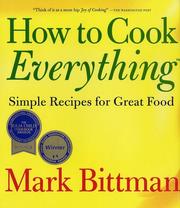
How to Cook Everything: Simple Recipes for Great Food
Bittman's 1998 doorstop taught a generation that dinner is a technique, not a recipe, with master recipes and variations instead of rigid instructions.
2,027-word summary · 9 min read

Attached
A psychiatrist and a psychologist explain adult attachment styles and show how anxious, avoidant, and secure patterns shape dating, conflict, and the search…
2,157-word summary · 10 min read
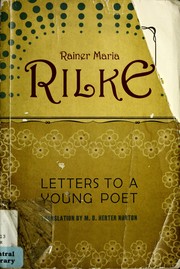
Letters to a Young Poet
Rilke's ten letters to a young officer cadet refuse easy criticism and ask whether he must write, offering patience and solitude as a way of life.
2,530-word summary · 11 min read

Beyond Good and Evil: Prelude to a Philosophy of the Future
A guide to Friedrich Nietzsche's Beyond Good and Evil: its attack on moral prejudice, the will to power, master and slave morality, and the philosopher of the…
2,597-word summary · 12 min read
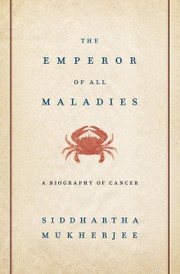
The Emperor of All Maladies
A biography of cancer from Galen to chemo through one doctor cases.
2,255-word summary · 10 min read
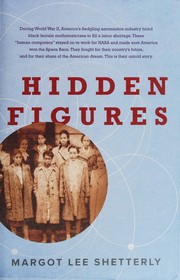
Hidden Figures
Black women computers at Langley launch rockets past Jim Crow.
2,385-word summary · 11 min read
Animal, Vegetable, Miracle: A Year of Food Life
A family eats only local for a year from their Virginia farm.
2,270-word summary · 10 min read
The Hot Zone
Ebola and Marburg move from African outbreaks to a Virginia monkey house and an Army response in suits.
2,291-word summary · 10 min read
The Black Swan
Taleb argues rare shocks shape history more than models admit, and urges safer exposure over prediction.
2,588-word summary · 12 min read

The Untethered Soul
Singer names the noisy inner voice and shows how watching thoughts, loosening old hurt, and keeping the heart open through surrender can ease daily suffering…
2,752-word summary · 12 min read
The Art of Happiness
The Dalai Lama and psychiatrist Howard Cutler link lasting happiness to training the mind, human warmth, compassion, and basic spiritual values for daily life.
3,394-word summary · 15 min read
The Tao of Pooh
Hoff explains Taoism through Pooh, Piglet, and Eeyore in gentle chats.
2,006-word summary · 9 min read
Predictably Irrational
Behavioral economist Dan Ariely shows why we overpay, procrastinate, and misjudge through simple experiments.
2,183-word summary · 10 min read
Invisible Women: Data Bias in a World Designed for Men
Data treating men as default harms women in medicine, work, transit, and design, with fixes from studies worldwide.
2,316-word summary · 10 min read
Emotional Intelligence
Goleman argues self awareness and empathy shape success more than IQ alone.
2,026-word summary · 9 min read