
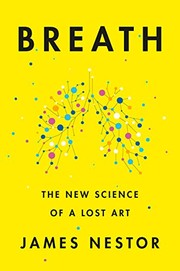
Breath: The New Science of a Lost Art
2,011-word summary 9 min read 304 pages in the book
- First published
- 2020
- Publisher
- Riverhead Books
- Pages
- 304
- ISBN
- 9780735213616
Reading options
What's inside (9 sections)
The premise of Breath is the kind of thing that sounds like a stunt until you sit with it for a second. Nestor, a science journalist who has already written about dolphins and the deep ocean, notices that he has been breathing badly his whole adult life, and that almost everyone he knows has too. So he goes to Stanford, lets researchers seal his nose shut for ten days, and reports on what happens. That is the opening experiment, and it works as a hook precisely because it is extreme. The book's actual claims are quieter, and in some ways more interesting, than the stunt that gets you to open it.
What Nestor is arguing is that modern humans, specifically industrialized humans, have largely forgotten how to breathe. We breathe through our mouths. We breathe fast and shallow, into our chests rather than our diaphragms. We breathe in air that has been filtered, dried, and conditioned to a degree no previous generation experienced. And he is arguing that these changes have consequences for sleep, anxiety, blood pressure, athletic performance, and general longevity that we are only beginning to measure.
I will say up front that Breath is not a rigorous book. It is enthusiastic journalism, and it moves between well-established respiratory physiology and the claims of breathwork teachers and alternative practitioners with a speed that occasionally left me unsure which footing I was on. That is worth knowing before you start. It is also, in its best moments, genuinely useful, because a few of its recommendations are simple, cheap, and supported by decent evidence.
The ten-day experiment
The nose-plugging study is the spine of the first third of the book, and it is a good piece of journalism because Nestor is a participant as well as a reporter. For ten days he breathes only through his mouth, and researchers monitor him. What follows is a catalog of deterioration. Sleep quality collapses. He develops headaches and brain fog. His blood pressure climbs. He becomes anxious and irritable in ways that surprise him, given that the only variable that has changed is where the air enters his body.
The point of the experiment is to isolate the difference between nasal and oral breathing, and the difference turns out to be larger than most people would guess. Nestor then spends much of the book explaining why, and the explanations are the strongest material here. Nasal breathing does several things that mouth breathing does not. It filters and humidifies air. It produces nitric oxide, a molecule that widens blood vessels and helps with oxygen uptake. It slows the flow of air, which changes the pressure dynamics inside the lungs.
The nitric oxide detail is the one that stuck with me. The paranasal sinuses continuously generate nitric oxide, and breathing through the nose carries it down into the lungs, where it helps oxygen bind to hemoglobin. You do not get this when you breathe through your mouth. It is a small physiological fact with, if Nestor is right, outsized consequences, and it reframes the simple advice to close your mouth as something closer to a technical recommendation.
Why we stopped breathing well
Nestor's account of how this happened is part history and part anthropology, and it is the section where the book is most fun. He travels to talk to people from cultures that breathe differently, including a tribe whose members sleep upright, and he makes the case that the shift toward mouth breathing tracks closely with changes in the human skull and jaw.
The argument, drawn largely from the work of anthropologists like Weston Price and later researchers, is that industrialized diets, and specifically soft processed food, changed the development of children's faces. Jaws grew smaller. Teeth crowded. Airways narrowed. The result is a population that is anatomically predisposed to mouth breathing, which then becomes habitual, which then produces the problems Nestor catalogues. He cites studies of children who were mouth breathers and whose facial structure changed after the habit was corrected, which are striking if you trust the sample sizes.
This part of the book is speculative in places, and Nestor is at his most persuasive when he is describing what people in various traditions actually do rather than when he is explaining why. The observation that many traditional cultures held infants and slept differently from modern Western parents is interesting on its own terms, without needing to bear the weight of a theory about jaw development.
The chemistry of it all
One of the recurring subjects in Breath is carbon dioxide, and this is where the book is most likely to surprise a general reader. The common understanding of breathing is that it is about getting oxygen in. Nestor argues, correctly as far as I can tell, that the story is at least as much about carbon dioxide, and that our instinct to purge the body of CO2 is often counterproductive.
The mechanism he describes is worth laying out because it underpins several of the book's practical recommendations. Carbon dioxide is not merely a waste product. It is what signals your tissues to release oxygen. In a person who hyperventilates, or who breathes chronically fast, CO2 levels drop, and paradoxically that makes it harder for hemoglobin to deliver oxygen where it is needed. The result is a person who is getting plenty of air and still feels short of it, which describes a great deal of modern anxiety.
This is also where the book engages with the Buteyko method and similar approaches that train people to tolerate higher CO2 levels. Nestor is sympathetic but not uncritical, and he tries to separate the physiological core of these practices from the more extravagant claims made for them. Whether he succeeds is debatable, but the effort is there.
The practical translation is that slow breathing, and particularly extending the exhale, is doing more than calming you down in some vague psychological sense. It is changing your blood chemistry in measurable ways. That is a more interesting claim than breathe slowly because it is soothing, and it is the reason I have found myself doing the book's exercises more often than I expected to.
The fringe, and how the book handles it
Breath spends real time with people whose claims sit well outside the mainstream. There are breathwork teachers who describe sessions as comparable to psychedelic experiences. There are practitioners who claim to cure serious illness. There are free divers who do things with their bodies that look impossible. Nestor reports all of this with evident fascination, and this is where a careful reader should slow down.
The free diving material is, to my mind, the most interesting of the fringe sections, because free divers do extraordinary things under controlled conditions that can be measured, and their abilities reveal something real about what trained breathing can do to heart rate, oxygen consumption, and the mammalian dive reflex. It is genuinely impressive. But the jump from there to claims about curing asthma or reversing aging is a jump the book makes more readily than the evidence supports.
I do not think Nestor is being irresponsible exactly. He is clear, at various points, that some of what he reports is anecdotal, and he frequently notes when he is describing a practitioner's claim rather than a study's finding. The problem is tonal. The book moves so fluidly between the credible and the speculative that the credible parts inherit some of the speculative glow, and the speculative parts inherit the credibility of the studies. A more careful structure would have separated them more cleanly.
What you can actually do
The most useful part of Breath, and the part I return to, is the simple advice near the end. Nestor distills a lot of the preceding material into recommendations that require no equipment and no money, and that is a real virtue in a health book, which is a genre crowded with supplements and devices.
The core recommendations are these. Breathe through your nose, including during exercise and sleep. Slow your breathing rate, aiming for something like five or six breaths per minute rather than the typical fifteen to twenty. Extend your exhale so that it is longer than your inhale. And if you snore or wake unrefreshed, take seriously the possibility that your breathing at night is compromised, because the consequences of that are larger than most people assume.
There is a separate strand on holding your breath, drawn from the work of Patrick McKeown and the Buteyko tradition, which involves gradually increasing the length of comfortable breath holds as a marker and trainer of CO2 tolerance. Nestor's treatment is gentle and unsensational, and it is one of the more defensible practical sections in the book.
What I appreciated is that none of this is presented as a cure. The claims are modest. Your sleep may improve. Your resting breathing rate may drop. You may feel less anxious in stressful moments. Those are achievable, and they are worth having, and the book does not need to overreach to make the case for them.
The writing
Nestor is a good writer, occasionally a very good one, and the book moves quickly. He has a reporter's instinct for the telling detail and a novelist's instinct for scene, which keeps what could be a dry subject in physiology from ever feeling like a lecture. The chapters are short and each tends to hinge on a single encounter or experiment, which gives the book a rhythm that suits its subject. You can read it in pieces, which is appropriate for a book about breathing.
The weakness of that style is that it privileges the dramatic. A story about a man who breathed through a monastery and achieved things that sound like folklore is more fun to write about than a carefully designed study with a modest effect size, so the dramatic wins, and the reader's sense of what is established gets distorted accordingly. This is a common problem in science journalism and Nestor is not immune to it.
There is also a certain amount of repetition. The claim that we breathe badly recurs, and recurs, and by the final third the book is circling ground it has covered. I did not mind this much because the material is pleasant to spend time in, but a tighter edit would have made the argument land harder.
Reading it with the right expectations
I have recommended Breath to several people and always with the same caveat, which is that it is best treated as a collection of interesting hypotheses and a few genuinely useful practices rather than as a settled account of respiratory science. If you read it that way, you will probably come away with one or two habits that help you, and a new appreciation for a function so automatic you had never thought to examine it.
If you read it expecting a definitive text, you will be frustrated, because the book is more curious than rigorous and it prefers the interesting story to the well-powered study. That is a real limitation and it matters if you are making health decisions on the strength of what you read. But it is also, in its way, the book's strength. Nestor's curiosity is contagious, and he made me pay attention to something I had been doing wrong for thirty years without knowing it.
The measure of the book, for me, is what happened after I put it down. I started breathing through my nose during runs. I started paying attention to how I slept. I found that when I am anxious, the fastest thing I can do is lengthen an exhale rather than try to think my way out of the feeling. None of that required believing every claim in the book. It required only the small, persistent suggestion that the way I had been breathing was not the only way, and that a better one was available at no cost at all.
FAQ
Is Breath based on solid science?
Partly. Nestor cites real peer-reviewed work on respiratory physiology, but he also visits alternative practitioners whose methods have weaker evidence. The book blends rigorous and speculative material without always distinguishing them.
What is the main practical takeaway from Breath?
Breathe through your nose, slow down your breathing rate, and extend your exhale. Nestor argues these simple changes affect sleep, endurance, and stress far more than people expect.
Does Breath require any background in science?
No. It is written as popular science journalism for general readers, with the physiology explained through stories and experiments rather than equations.
Similar books
Moonwalking with Einstein: The Art and Science of Remembering Everything
A journalist spends a year training for the U.S. Memory Championship and discovers that extraordinary memory is mostly technique, attention, and a lot of…
2,027-word summary · 9 min read
Attached
A psychiatrist and a psychologist explain adult attachment styles and show how anxious, avoidant, and secure patterns shape dating, conflict, and the search…
2,157-word summary · 10 min read
The Emperor of All Maladies
A biography of cancer from Galen to chemo through one doctor cases.
2,255-word summary · 10 min read
The Hot Zone
Ebola and Marburg move from African outbreaks to a Virginia monkey house and an Army response in suits.
2,291-word summary · 10 min read
In Defense of Food
Pollan argues we stopped eating food and started eating nutrients, and offers a plain way back.
2,320-word summary · 10 min read
Emotional Intelligence
Goleman argues self awareness and empathy shape success more than IQ alone.
2,026-word summary · 9 min read
Why We Sleep: Unlocking the Power of Sleep and Dreams
A Berkeley sleep scientist explains how sleep shapes memory, mood, and health, and what happens when we miss it.
2,755-word summary · 12 min read
The Omnivore's Dilemma
Four meals traced from corn fields to foraging show what industrial food costs and what else is possible.
1,918-word summary · 9 min read
Stiff: The Curious Lives of Human Cadavers
What happens to donated bodies, from crash labs and decay farms to composting and space tests.
2,051-word summary · 9 min read
The Immortal Life of Henrietta Lacks
The cells of a poor Black tobacco farmer revolutionized medicine, taken without her knowledge in 1951.
2,139-word summary · 10 min read
Sybil
A 1973 case study of a woman treated for multiple personalities, and the book that made dissociative identity disorder a household phrase.
2,054-word summary · 9 min read
What Happened to You?
Oprah Winfrey and psychiatrist Bruce Perry explain how early experience shapes the brain, and why asking what happened to someone works better than asking what…
2,238-word summary · 10 min read
The Courage to Be Disliked: The Japanese Phenomenon That Shows You How to Change Your Life and Achieve Real Happiness
A philosopher and an angry young man argue over five nights about Adlerian psychology, trauma, approval, and the freedom to be disliked.
2,054-word summary · 9 min read
The Total Money Makeover: A Proven Plan for Financial Fitness
Dave Ramsey lays out seven Baby Steps, from a $1,000 starter fund to a paid-off house, with the debt snowball at the center.
2,663-word summary · 12 min read
Year of Yes: How to Dance It Out, Stand in the Sun and Be Your Own Person
Shonda Rhimes takes her sister’s accusation seriously and spends a year saying yes to the things that frighten her, from live television to her own reflection.
2,585-word summary · 11 min read
Don't Sweat the Small Stuff ... and It's All Small Stuff: Simple Ways to Keep the Little Things from Taking Over Your Life
Richard Carlson’s 1997 bestseller offers one hundred short chapters on lowering the volume on daily irritations, and it is more pragmatic than its title…
2,502-word summary · 11 min read
Made to Stick: Why Some Ideas Survive and Others Die
The Heath brothers break down why some ideas vanish on contact while others lodge in memory, tracing six traits that make a message stick.
2,527-word summary · 11 min read
Four Thousand Weeks: Time Management for Mortals
Oliver Burkeman turns the whole productivity project on its head, arguing that a human lifespan of roughly four thousand weeks is not a problem to optimize…
2,447-word summary · 11 min read
Beautiful Boy: A Father's Journey Through His Son's Addiction
David Sheff recounts watching his son Nic slide into meth addiction, and his own desperate, humbling search for how to help without destroying them both.
2,076-word summary · 9 min read
The Magic of Thinking Big
Schwartz's 1959 self-help classic argues that success follows from the size of your thinking, supported by sales anecdotes, vocabulary drills and goal setting.
2,579-word summary · 11 min read

Dear Girls: Intimate Tales, Untold Secrets & Advice for Living Your Best Life
Ali Wong's debut collects fourteen letters to her daughters, covering sex, money, work, marriage, Vietnam, and being a working Asian American mother.
2,266-word summary · 10 min read
The Road Less Traveled: A New Psychology of Love, Traditional Values and Spiritual Growth
M. Scott Peck argues that maturity begins with accepting difficulty, then builds discipline, love, and spiritual growth through honest, often painful work.
2,200-word summary · 10 min read
The Elegant Universe: Superstrings, Hidden Dimensions, and the Quest for the Ultimate Theory
Brian Greene explains relativity, quantum mechanics, and the promise of string theory without requiring a physics degree.
2,110-word summary · 9 min read
Smoke Gets in Your Eyes: And Other Lessons from the Crematory
A young medieval history graduate takes a job at an Oakland crematory and becomes a mortician, confronting the physical reality of death and the funeral…
2,003-word summary · 9 min read
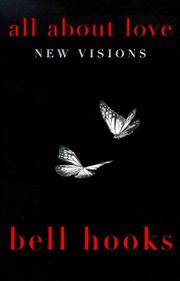
All About Love: New Visions
bell hooks borrows a definition of love as an action rather than a feeling, then spends thirteen chapters showing how hard it is to practice.
2,385-word summary · 11 min read
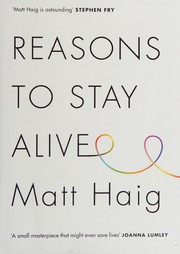
Reasons to Stay Alive
Matt Haig's memoir of the breakdown that nearly killed him at twenty four and the three years of unglamorous recovery that followed.
2,065-word summary · 9 min read
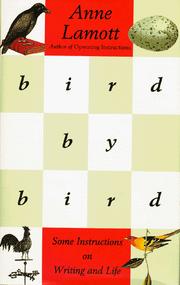
Bird by Bird
Anne Lamott's 1994 book on writing and life: shitty first drafts, the one-inch picture frame, and quieting the inner critic so you can take it bird by bird.
2,592-word summary · 12 min read
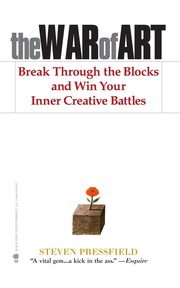
The War of Art
Pressfield names Resistance and urges daily professional work.
2,565-word summary · 11 min read
The Little Book of Hygge
Denmark happiness researcher tours candles, cake and cozy winter light.
2,582-word summary · 11 min read
The Artist's Way: A Spiritual Path to Higher Creativity
A twelve week course with morning pages and artist dates to recover creativity.
2,345-word summary · 10 min read