
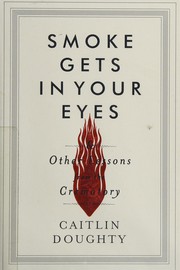
Smoke Gets in Your Eyes: And Other Lessons from the Crematory
2,003-word summary 9 min read 256 pages in the book
- First published
- 2014
- Publisher
- W. W. Norton
- Pages
- 256
- ISBN
- 9780393240238
Reading options
What's inside (9 sections)
I did not expect a book about cremation to make me laugh, and I did not expect it to make me think about my own funeral. Caitlin Doughty's memoir does both. It is a funny, gross, deeply sincere account of the year she spent working at a crematory in Oakland, California, and the years she spent afterward trying to understand why Americans are so afraid of death. The book is not a history and it is not a self-help manual. It is a first-person story about a young woman who took a job that most people would avoid and found a vocation in it.
Doughty had a degree in medieval history when she started. She was interested in death the way some people are interested in dinosaurs. It was distant, dramatic, and safely in the past. Then she applied for a job at Westwind Cremation and Burial. She was hired, and on her first day she was handed a razor and told to shave a dead man. The scene is played for comedy, but it also establishes the book's central method. Doughty does not look away from the physical reality of death. She describes the smell, the weight, the fluids, and the absurdity. The descriptions are graphic, and they are also respectful. The bodies are not props. They are people who have died, and the work of caring for them is ordinary and strange at the same time.
The crematory is a small business with a small staff. There is Mike, the crematory manager, who teaches her how to use the retorts and does not waste words. There is Bruce, the embalmer. There is Chris, the body-transport driver. Doughty is the new person, the one who does not know anything, and the book follows her education. She learns how to load a body into the cremation chamber, how to remove the remains, how to process the bone fragments into ashes, and how to deal with the families who come to pick up their dead. She also learns that the job is not glamorous. It is hot, dirty, and repetitive. The crematory is a factory, and the product is ashes.
The body
The book's early chapters are full of bodies. A man who died alone and was not found for weeks. A woman who had been embalmed and made up so heavily that she looked like a doll. A baby who was brought in from a hospital. Doughty describes the baby with care. She does not use the death for shock value. She uses it to show how unprepared she was for the emotional weight of the work. The physical details are easier to handle than the human ones. A body can be washed, moved, and cremated. The grief of the family cannot be processed so neatly.
Doughty is good at the dark comedy of the funeral business. She describes the salesman who tries to sell caskets, the families who argue over money, and the strange requests that come with the job. She also describes her own reactions, which are not always noble. She is curious, squeamish, and sometimes bored. She makes jokes because the alternative is to be overwhelmed. The humor is not a denial of death. It is a way of staying in the room. That distinction is important. The book is not mocking the dead. It is mocking the living conventions that make death so difficult to talk about.
The memoir is also a coming-of-age story. Doughty is young, single, and trying to figure out what to do with her life. The job gives her a purpose, but it also isolates her. She cannot talk about her work at parties without making people uncomfortable. She starts to see death everywhere, in traffic, in hospitals, in the news. She becomes preoccupied with the question of what happens to a person after they die, not in a religious sense, but in a practical one. What should be done with the body? Who should decide? How can the living say goodbye in a way that is honest?
Mortuary school
Doughty decides to become a licensed mortician. She enrolls in mortuary school, where she learns the science of embalming, the law of death certificates, and the business of funerals. The school sections are less vivid than the crematory sections, but they are useful. They show how the funeral industry trains people to manage grief and to sell services. The emphasis is on presentation. The body must look peaceful. The service must be respectful. The family must be guided through a script. Doughty begins to question the script. She wonders why we embalm bodies, why we put them in expensive caskets, and why we pretend that death is a medical failure rather than a natural event.
The book's critique of the funeral industry is not a rant. Doughty is careful to say that funeral directors are not villains. They do difficult work, and many of them care deeply about the families they serve. The problem is the system. The system encourages distance. It takes the body away, prepares it in a back room, and presents it in a controlled setting. The family is allowed to see the body, but not to touch it, wash it, or sit with it for long. The result is a death that feels sanitized and unreal. Doughty argues that this distance makes grief harder, not easier.
She is also critical of the cost. Funerals are expensive, and the expenses are often presented at a moment when families are too grieving to negotiate. The casket, the vault, the embalming, the service, the plot: the costs add up. Doughty does not say that every family should choose the cheapest option. She says that families should know what the options are, and that they should be able to make a choice that fits their beliefs. That sounds obvious, but the funeral industry has an interest in making the expensive option feel like the only respectable one.
Death around the world
The book widens its scope when Doughty travels. She visits Mexico for Day of the Dead, where families gather in cemeteries and celebrate the dead with food, music, and altars. She visits India, where she watches cremations on the ghats of Varanasi. She describes the smoke, the bones, the ritual, and the matter-of-factness of the attendants. She also discusses Tibetan sky burials, Zoroastrian towers of silence, and other practices that treat the body as part of a cycle rather than a problem to be solved. The travel sections are not tourism. They are a way of showing that the American way of death is not the only way, and that other cultures have found ways to stay close to the dying.
The contrast is sharp. In the United States, death is hidden. In other places, it is public. Doughty does not romanticize the other cultures. She knows that she is an outsider, and she is careful not to turn them into a lesson. But she does take something from them. She takes the idea that death can be a communal event, that the body can be handled by the people who loved it, and that grief can be expressed loudly. Those ideas become the foundation of her own work.
Death positivity
Doughty is often associated with the death positive movement. The phrase can sound like a slogan, but her version of it is practical. She is not saying that death is good. She is saying that talking about death is better than pretending it does not exist. She wants people to plan their funerals, to write down what they want, to talk to their families, and to understand the options. She wants the funeral industry to be more transparent. She wants the living to have more control over what happens to their bodies.
That message is the reason the book has reached so many people. It gives readers permission to be curious about death without being morbid. It also gives them permission to be afraid. Doughty is not fearless. She has nightmares. She worries about her own death. She has a moment in the book where she realizes that she has been treating death as a problem to solve, and that some problems cannot be solved. The honesty is what makes the book work. It is not a lecture from someone who has it all figured out. It is a report from someone who is still figuring it out.
The history behind the industry
Doughty does not write a formal history, but she gives enough context to make the industry legible. Embalming became common in the United States during the Civil War, when bodies needed to be preserved for transport home. The practice was later marketed as a way to make death more presentable, and it became standard in funeral homes. Cremation was slower to catch on. It was associated with secularism and with a lack of respect for the body, and many religious communities opposed it. By the time Doughty started working, cremation was becoming more common, but the funeral industry still made most of its money from traditional burial.
She also references Jessica Mitford's The American Way of Death, the 1963 exposé that criticized the funeral industry for preying on grief. Mitford's book caused a scandal, and some of the practices she described were reformed. But the basic tension remains. Funeral directors provide a service that families need at a vulnerable moment, and the market is not transparent. Doughty inherits Mitford's skepticism without her contempt. She likes the people she works with. She just thinks the system could be more honest.
What the book gets wrong
The book is episodic. It moves from the crematory to mortuary school to travel to her personal life, and the transitions are not always smooth. Some chapters feel like separate essays. That is not a fatal flaw, but it does make the book feel less focused than it could be. The humor can also undercut the serious moments. Doughty is a good comic writer, and she knows how to get a laugh, but there are times when the joke arrives too soon after a difficult scene. The reader is left unsure whether to laugh or sit with the sadness.
The book is also limited by Doughty's perspective. She is a white, college-educated woman who chose this work. She is not representative of the people who are forced into the funeral industry by poverty or family obligation. She does not spend much time on the economics of death for low-income families, or on the racial disparities in healthcare and burial. Those topics are important, and the book touches on them only briefly. That is a limitation, but it is not a reason to dismiss the book. It is a reason to read more.
Who should read it
I would recommend this book to anyone who is curious about death but does not want to read something grim. It is funny, warm, and surprisingly hopeful. It is also a useful introduction to the funeral industry and to the idea of death positivity. If you have ever wondered what happens to a body at a crematory, or why funerals are so expensive, or how other cultures handle death, this book will answer some of those questions. It will also make you think about your own wishes. That is not a bad thing.
What stays with me is the image of Doughty at the crematory, young and unsure, learning to handle bodies with care. The work is physical, repetitive, and often thankless. She does it anyway. The book is a record of that work, and an argument for doing it better. It is not a comfortable read, but it is a generous one. It invites the reader to look at death without flinching, and to see the people behind the bodies. That is a rare invitation, and Doughty makes it easy to accept.
FAQ
What is Smoke Gets in Your Eyes about?
It is a memoir about Doughty's time working in a crematory and mortuary school, and about her argument that Americans should be more open about death.
Is the book graphic?
Yes. It describes bodies, cremation, embalming, and decomposition in direct detail, though it uses humor to make the material bearable.
What is the death positive movement?
It is a movement, associated with Doughty, that encourages open discussion of death, planning for death, and more family control over funerals and body care.
Similar books
Being Mortal
A surgeon asks what medicine owes the dying: fewer procedures, better conversations, and care shaped by what matters most.
2,362-word summary · 10 min read
Sybil
A 1973 case study of a woman treated for multiple personalities, and the book that made dissociative identity disorder a household phrase.
2,054-word summary · 9 min read
Too Much and Never Enough: How My Family Created the World's Most Dangerous Man
Mary L. Trump's 2020 memoir traces how a cold, zero-sum Queens household shaped her uncle, and uses family tax documents to challenge his self-made story.
2,059-word summary · 9 min read
Beautiful Boy: A Father's Journey Through His Son's Addiction
David Sheff recounts watching his son Nic slide into meth addiction, and his own desperate, humbling search for how to help without destroying them both.
2,076-word summary · 9 min read
The Choice
Auschwitz survivor and therapist turns prison into a guide for healing.
2,472-word summary · 11 min read
10% Happier
An ABC newsman panics on air, then finds meditation without losing his edge.
2,590-word summary · 12 min read
Hidden Valley Road: Inside the Mind of an American Family
The Galvin family raises twelve children while six sons develop schizophrenia across decades of shifting science.
2,492-word summary · 11 min read
The Happiness Project
Gretchen Rubin spends a year testing monthly resolutions on energy, marriage, work, parenting, and play, tracking small habits to build a happier ordinary…
3,516-word summary · 16 min read
Stiff: The Curious Lives of Human Cadavers
What happens to donated bodies, from crash labs and decay farms to composting and space tests.
2,051-word summary · 9 min read
Brain on Fire: My Month of Madness
A young reporter loses her mind to a rare brain illness and must rebuild from notes and video she hates to watch.
2,080-word summary · 9 min read
The Man Who Mistook His Wife for a Hat
Twenty four case histories where strange neurology meets full personhood.
1,930-word summary · 9 min read
The Year of Magical Thinking
After sudden loss at dinner, Didion records the year mind keeps expecting return.
2,031-word summary · 9 min read
Spare
Prince Harry recalls Diana's death in 1997, two tours in Afghanistan, and stepping back from royal life with Meghan in this frank 2023 memoir of grief, love…
2,586-word summary · 11 min read
Maybe You Should Talk to Someone
Therapist Lori Gottlieb counsels John, Julie and Rita while seeing her own therapist Wendell after a breakup.
2,234-word summary · 10 min read
Wild: From Lost to Found on the Pacific Crest Trail
At 26 Cheryl Strayed hikes the Pacific Crest Trail alone to grieve and reset.
2,075-word summary · 9 min read
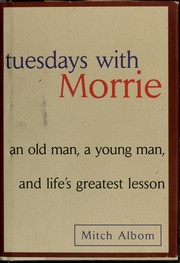
Tuesdays with Morrie
A sportswriter visits his old professor each Tuesday as ALS takes hold, talking through love, work, aging, and death in short lessons that still read clearly.
2,463-word summary · 11 min read
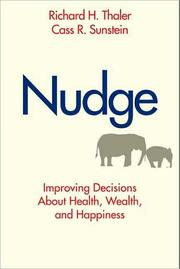
Nudge: Improving Decisions About Health, Wealth, and Happiness
Thaler and Sunstein show how defaults, framing, and social cues steer choices, and argue for choice architecture with an opt-out.
3,146-word summary · 14 min read
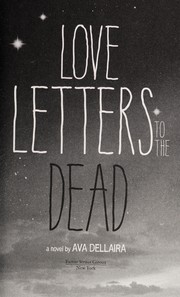
Love Letters to the Dead
A fifteen-year-old writes letters to dead artists because they cannot ask questions, and slowly tells the one story she has been hiding about her sister's…
2,520-word summary · 11 min read

Long Walk to Freedom
Mandela's account of a Thembu childhood, a law practice, a banned movement, twenty-seven years in prison, and the negotiation that ended apartheid.
2,454-word summary · 11 min read
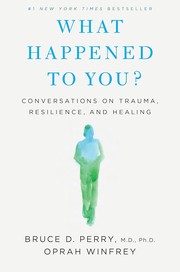
What Happened to You?
Oprah Winfrey and psychiatrist Bruce Perry explain how early experience shapes the brain, and why asking what happened to someone works better than asking what…
2,238-word summary · 10 min read
The Courage to Be Disliked: The Japanese Phenomenon That Shows You How to Change Your Life and Achieve Real Happiness
A philosopher and an angry young man argue over five nights about Adlerian psychology, trauma, approval, and the freedom to be disliked.
2,054-word summary · 9 min read
In Order to Live: A North Korean Girl's Journey to Freedom
A young North Korean girl crosses the Yalu, survives trafficking in China, and rebuilds her life in Seoul in this unsparing memoir.
2,027-word summary · 9 min read
Same Kind of Different as Me
An art dealer and a formerly homeless sharecropper tell the story of the friendship that began at a Fort Worth mission and the woman who insisted on it.
2,023-word summary · 9 min read
Moonwalking with Einstein: The Art and Science of Remembering Everything
A journalist spends a year training for the U.S. Memory Championship and discovers that extraordinary memory is mostly technique, attention, and a lot of…
2,027-word summary · 9 min read

Infidel
Ayaan Hirsi Ali's memoir of a Somali childhood, a forced marriage, a Dutch asylum claim, and the political fight that followed the murder of Theo van Gogh.
2,041-word summary · 9 min read
The Total Money Makeover: A Proven Plan for Financial Fitness
Dave Ramsey lays out seven Baby Steps, from a $1,000 starter fund to a paid-off house, with the debt snowball at the center.
2,663-word summary · 12 min read
Down and Out in Paris and London
Orwell's account of washing dishes in Paris hotels and tramping through London does not ask for pity, only for a clear look at how poverty actually works.
2,282-word summary · 10 min read
Year of Yes: How to Dance It Out, Stand in the Sun and Be Your Own Person
Shonda Rhimes takes her sister’s accusation seriously and spends a year saying yes to the things that frighten her, from live television to her own reflection.
2,585-word summary · 11 min read
The Girl with Seven Names: A North Korean Defector's Story
Hyeonseo Lee crossed the frozen Yalu River at seventeen, spent years hidden in China, escaped to South Korea, and later returned to rescue her family.
2,404-word summary · 11 min read
Love Does
A lawyer and activist tells stories of saying yes, showing up, and loving people through ordinary, often ridiculous actions.
2,411-word summary · 11 min read