
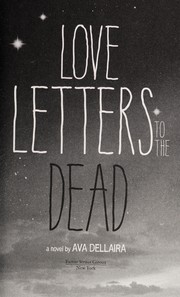
Love Letters to the Dead
2,520-word summary 11 min read 327 pages in the book
- First published
- 2014
- Publisher
- Farrar, Straus and Giroux
- Pages
- 327
- ISBN
- 9780374346676
Reading options
What's inside (10 sections)
I bought this book for a bad reason. The title promised something ghoulish, and I wanted to see whether a debut novel could get away with addressing Kurt Cobain for three hundred pages. It can, mostly. What I did not expect was how quickly the letters stop being a gimmick and start being the only way the narrator can speak at all.
Laurel is fifteen and starting freshman year at West Mesa High in Albuquerque. Her English teacher, Mrs. Buster, gives the class an easy first assignment: write a letter to someone dead. Everyone else probably turns in two paragraphs. Laurel writes to Kurt Cobain, because Kurt was her older sister May's favorite, and then she does not hand it in. She keeps the notebook. Over the school year she adds letters to Elizabeth Bishop, River Phoenix, Amelia Earhart, Amy Winehouse, Judy Garland, Janis Joplin, Rocky Lane, Jim Morrison, John Keats, e.e. cummings, Heath Ledger, and eventually to May herself.
The list is doing two jobs. It shows you what Laurel has absorbed from a house full of music and old movies, and it gives the book a way to change register without changing narrator. Amelia Earhart gets the letters about wanting to disappear. Janis Joplin gets the ones about being too much. I liked the range. What wears thin is that the addressees mostly sound alike after a while. Laurel tells Elizabeth Bishop about a poem and tells Heath Ledger about a boy in nearly the same voice, and the famous dead start to feel like decoration on a structure that would stand without them. The device is better at letting her be indirect than at making each recipient distinct.
A year built around not explaining
May died the previous April. She fell from a railroad bridge into a river, and the book takes its time before it lets you stand on that bridge. Before the fall there was already a fracture: the parents divorced before May started high school. After the death the mother leaves for a ranch in California, which is the kind of detail that sounds peaceful until you notice she is the one who got to go. Laurel splits her weeks between her father's house and her Aunt Amy's, her mother's devout Christian sister. She enrolls at West Mesa instead of May's school, Sandia, specifically so nobody will ask her questions.
That choice tells you what kind of grief this is. Laurel is not mourning in public. She is managing a story. Every new person is a possible interrogation, so she picks the school where her sister is not a name people say. Her father is present but dim, working and reheating dinners his way through the year, and the household runs on the unspoken agreement that nobody will bring up the obvious thing at the table.
The letters are where the obvious thing leaks out. She writes to dead strangers because they cannot interrupt, cannot look at her with pity, cannot ask a follow-up question. There is a real insight in that, and Dellaira gets it without overexplaining it. A teenager who has decided her own history is unmanageable will absolutely choose an audience that is incapable of responding.
There is also a quieter thing happening in the early chapters, which is that Laurel keeps auditioning for May's life. She listens to May's music, wears things May might have worn, and half believes that being at West Mesa instead of Sandia is a betrayal she can make up for by being a good enough version of her sister. The book is smart about how grief turns into imitation, and how imitation keeps you from telling anyone the truth, because the truth would spoil the copy.
The friends who find her
Natalie is in her creative writing class and has two different colored eyes, which the book mentions often enough that you notice Laurel noticing. Natalie is the friend Laurel would not have picked, quieter and stranger. Hannah is Natalie's friend from before, bold, red-haired, living with her grandparents because her home situation is not survivable, and she has an older brother named Jason who is violent. The two of them pull Laurel into a group that already has a shape.
That shape comes from Tristan, a senior covered in band patches, and his girlfriend Kristen, who is quiet in the way that makes other people louder. They adopt the younger girls. There is a lot of driving around, a lot of shows, a lot of sitting on the hoods of cars in parking lots. Dellaira writes these scenes loosely and they are the most persuasive part of the book, because teenage friendship really does look like this: a series of small permissions granted by slightly older people who have a car.
Hannah is the one who makes the group move. She is reckless in a way that reads as courage until it doesn't, and the book is honest that her bravado has a source. Jason is not a vague threat in the background. He is a specific man who hits her, and the household she lives in has arranged itself around him. I expected the novel to keep him offstage. It does not, and the later confrontation is better for it.
Sky
Then there is Sky, a junior who transferred from Sandia, which means he knew May. He is quiet, guarded, and does not tell Laurel what he knows. They bond over Nirvana, which is the obvious move in a book where Kurt Cobain is the first addressee, but the scenes work because the music is a shared vocabulary rather than a soundtrack cue. They dance at homecoming. They become a couple. He carves her a driftwood heart for Christmas, which is the kind of gift that sounds unbearable on paper and reads as sweet in context, because he is a boy with limited money and good hands.
Sky is the book's best structural idea. He is a person who could give Laurel the information she needs and refuses to, and his refusal is not villainous. He is protecting something, maybe May's memory, maybe himself. Laurel reads his silence as romance for a while. The reader knows better, and that gap is where the tension lives. The driftwood heart matters later mostly because of how ordinary it is. It is not a symbol. It is a thing a boy made with a knife and too much time.
The part she cannot write down
Here is what the letters are circling. When May was dating an older man named Paul, she brought Laurel along. Paul's friend Billy took Laurel out to his car and sexually abused her, starting when she was thirteen, over months. She told no one. Her reason is the most believable and worst thing in the book: she was afraid of losing May. May was the person she had, and the abuse was the price of keeping her.
The night May died, Billy had escalated. At the bridge Laurel tried to tell May what had been happening. May was drunk and distraught, and she stood on the metal edge with her arms out, doing a game from their childhood about flying. The wind took her off. Laurel froze. She could not save her.
So Laurel is carrying two things that she has fused into one: the abuse and the death. She believes she caused both, by going along with one and by failing at the other. The novel withholds this for most of its length. You get hints, a letter that stops mid-sentence, a memory that arrives sideways, and then the full account lands late.
That withholding is the book's biggest gamble. Kirkus made the fair point that the delay makes the resolution feel rushed, and I think that is right. Once you know about Billy, the entire year reorganizes, and the novel has to do a lot of work in its last forty pages. The reveal is not unearned, exactly. It is just that the book spends so long being coy that the ending has to carry more weight than any ending should.
The other cost is that Paul and Billy are barely characters. They exist as a van and a set of hands. That is partly the point, since Laurel experienced them as weather rather than as people, but it leaves the middle of the novel without an antagonist it can look at. The result is a book where the villain is a memory and the tension has to come from a boy who will not talk.
New Year's Eve and the letter she gets instead
Kristen has a party on New Year's Eve. Laurel gets drunk, climbs onto a balcony wall, and says she can fly like May. It is the first time the book shows you the death from inside Laurel's body rather than from a distance, and it is genuinely frightening. Sky pulls her down.
Then he says the thing she cannot tolerate: May was not perfect. He is not cruel about it. He is a boy who knew her sister and is tired of the version Laurel is protecting. Laurel cannot accept it, and later he breaks up with her by letter, which is a strange and effective choice in a novel made of letters. The form turns on her. She has been writing to people who cannot answer, and now someone answers her in the same medium, and it is a rejection.
The breakup is where I stopped finding Sky charming and started finding him believable. He is a teenager with bad tools for a hard conversation. The book does not punish him for it, and it does not let him off either. He goes quiet for a stretch, and the silence reads as cowardice because it is.
Spring, and the things that finally get said
At a party in the spring, Evan, a popular freshman, gives Laurel a pill she does not recognize and assaults her in a dark room. She shoves him away. Sky throws him out. The scene is short and it is placed almost casually among other party business, which is part of why it works. The book does not dramatize it into a set piece. It happens, and then the party continues, and Laurel has to figure out what to do with it.
The same party is where Natalie and Hannah are caught kissing. Jason hits Hannah in retaliation. This is the thread that resolves most cleanly. Hannah, with Laurel and Natalie behind her, confronts her brother and moves into Natalie's house. Then she holds Natalie's hand openly at school, which in the economy of this novel is a bigger victory than any speech. Dellaira does not pretend the danger is over. She just lets Hannah choose a smaller, safer life and lets the reader see how much that costs and how much it is worth.
I have seen readers complain that this material sits oddly beside Laurel's story, as if the book has two plots. I think it sits fine. Hannah's arc is the version of the story where someone tells the truth early and gets help. Laurel watches Hannah do in a few weeks what she has been unable to do in a year, and that comparison is the reason the two threads belong in one book.
The bridge, the ashes, and what the book costs
On the anniversary Laurel asks Sky to drive her to the bridge. She tells him everything: Billy, Paul, that night. He holds her and says it was not her fault. She has spent a school year refusing to hear that from anyone, and the scene is short, and it works.
Her mother comes back for the summer. They meet at a diner and Laurel tells her the truth, and her mother apologizes for not protecting her. I found this the least convincing scene, not because the apology is impossible but because the mother has been absent for so long that her return has to do too much work. Aunt Amy gets told as well and is more understanding than Laurel expected, which is a small mercy the book earns. Mrs. Buster learns about the notebook, and Laurel plans to turn it in. Mrs. Buster, who lost her own son, gives her Elizabeth Bishop's poem "The Armadillo," and Laurel starts to think about being a writer. It is a modest ending for a book this heavy, and I mean that as praise.
On the last day of school the friends have a bonfire. Hannah sings in public for the first time while Tristan plays guitar. Laurel scatters May's ashes in the river with both parents there. That image is the one I keep. Not the bridge, not the balcony, but two divorced people standing on a bank with their surviving daughter, doing the thing together.
The reception has been warm in the ways you would expect. The Horn Book praised the characters and the handling of grief. It was a YALSA Teens' Top Ten nominee and an Amazing Audiobooks pick, and a film was optioned with Catherine Hardwicke attached. It gets compared to The Perks of Being a Wallflower and The Fault in Our Stars, which is accurate about audience and a little unfair about the book, since Dellaira is less quotable than either and more interested in the ordinary machinery of a school year.
Where it strains
Three complaints hold up. The dead addressees blur together, so the epistolary premise is more useful as a permission slip than as a device. The reveal is withheld so long that the last act has to sprint. And the adult men in the novel are almost all predators or absent: Paul and Billy and Jason and Evan, and even Laurel's father, who is kindly but barely there. That last point is not a flaw exactly, since the book is about what happens when the adults do not show up. But it does make the world feel thinner than the grief.
The tidiness is the other thing. By the final chapter the mother has apologized, the aunt has come through, the teacher has offered a poem, the boyfriend has said the right sentence, the friend has escaped her brother, and the ashes are in the river. None of these is impossible on its own. Together they arrive in a cluster that the first two hundred pages did not prepare me for. Grief books often end this way because the alternative is unbearable, and I understand the impulse. I just did not believe the speed.
Who it will not work for: readers who want the letters to have distinct voices, readers who dislike being kept in the dark by a narrator, and anyone who needs the ending to earn its turn toward hope. Who it will work for: the teenager who has decided that saying the true thing out loud is impossible, and the adult who remembers being that teenager. I finished it in two sittings and then sat with the driftwood heart for a while.
FAQ
Is Love Letters to the Dead appropriate for younger teens?
It deals directly with sexual abuse, assault, underage drinking, and a death by falling, and it is aimed at the older end of YA. The treatment is not graphic, but the subject matter is heavy.
Who is Laurel writing to, and does she ever send the letters?
She writes to a long list of dead musicians, actors, and writers, starting with Kurt Cobain, and finally to her sister May. She never mails them; the notebook stays private until she tells her teacher about it near the end of the year.
Does the book explain how May died?
Yes, late in the novel. May fell from a railroad bridge while drunk, standing on the metal edge with her arms out during a childhood game about flying, and Laurel was there and froze.
Similar books

The First to Die at the End
On the night Death-Cast launches, a boy with a bad heart meets a model with everything ahead of him, and one of them gets the call.
2,908-word summary · 13 min read

Someone Like You
Halley and her best friend Scarlett face a summer of grief, a surprise pregnancy, and Halley's dangerous first romance in Sarah Dessen's 1998 young adult novel.
2,218-word summary · 10 min read

Clap When You Land
Two half sisters, one in Sosúa and one in Queens, discover each other after their father dies in a plane crash, in Elizabeth Acevedo's novel in verse.
2,890-word summary · 13 min read
Me and Earl and the Dying Girl
A self-protective Pittsburgh senior is pushed to befriend a classmate with leukemia, and a clumsy film with Earl changes all three.
2,773-word summary · 12 min read
Looking for Alaska
Looking for Alaska retold: Miles at Culver Creek, Alaska Young, pranks, loss, before and after.
1,914-word summary · 9 min read

What Happened to Goodbye
Mclean has reinvented herself in four towns since her parents divorced. In Lakeview she uses her real name, and for the first time staying put becomes a choice.
2,796-word summary · 12 min read

Anya's Ghost
A lonely Russian immigrant falls into a well, befriends the ghost trapped there, and discovers that the ghost's help comes with a dangerous price.
2,001-word summary · 9 min read

Dumplin'
Willowdean Dickson enters her town's beauty pageant as a protest and discovers that confidence is harder to keep once she lets someone close.
1,922-word summary · 9 min read

Ms. Marvel, Vol. 1: No Normal
Kamala Khan, a Jersey City teenager and Carol Danvers fan, gains shapeshifting powers and has to decide what kind of hero she wants to be.
2,579-word summary · 11 min read
The House of the Scorpion
A clone raised in a drug lord's poppy fields learns what he was made for and chooses what to do with the life he was given.
2,527-word summary · 11 min read

Sam's Letters to Jennifer
A grieving journalist reads her grandmother's letters and finds a decades-long love affair that changes how she sees her family.
2,310-word summary · 10 min read

Amy & Roger's Epic Detour
Amy Curry has not driven since the crash that killed her father. With Roger at the wheel and a box of maps between them, a cross-country trip becomes a slow…
3,034-word summary · 13 min read

We Are Okay
Marin fled San Francisco after her grandfather vanished and stopped answering anyone. When Mabel visits her college dorm, she has to say what happened.
2,253-word summary · 10 min read

Starsight
Spensa Nightshade goes undercover aboard the Superiority space station Starsight to steal a hyperdrive, and finds a frightened bureaucracy where she expected…
2,568-word summary · 11 min read

The Second Summer of the Sisterhood
Four friends share the traveling pants through a summer of grandmothers, first loves, and mothers who are learning to let go.
2,209-word summary · 10 min read
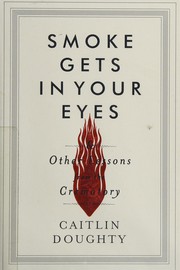
Smoke Gets in Your Eyes: And Other Lessons from the Crematory
A young medieval history graduate takes a job at an Oakland crematory and becomes a mortician, confronting the physical reality of death and the funeral…
2,003-word summary · 9 min read
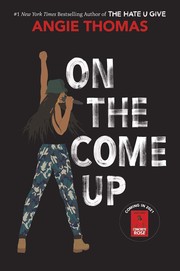
On the Come Up
Bri Jackson, a sixteen-year-old rapper in Garden Heights, chases a record deal while a viral song turns her into a symbol she never wanted to be.
2,034-word summary · 9 min read
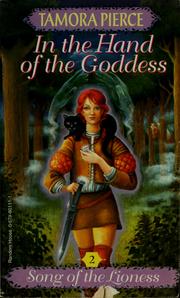
In the Hand of the Goddess
Alanna, still disguised as a boy, survives war, court plots, and a death duel as the Goddess's chosen warrior in the second Song of the Lioness book.
2,018-word summary · 9 min read
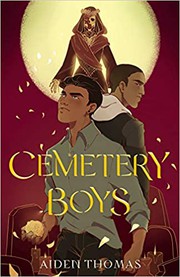
Cemetery Boys
A trans brujo in East Los Angeles summons the ghost of a boy who refuses to move on, and together they uncover a murder hidden beneath Día de los Muertos.
1,997-word summary · 9 min read

Aristotle and Dante Dive into the Waters of the World
Ari and Dante return for senior year in El Paso, navigating first love, AIDS, family grief, and the cost of being openly gay in 1987 Texas.
2,188-word summary · 10 min read
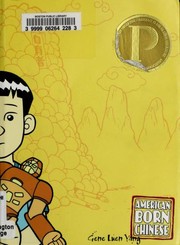
American Born Chinese
Three stories, a monkey king, a Chinese-American boy and a sitcom cousin, converge in a graphic novel about shame, assimilation and learning to accept yourself.
2,107-word summary · 9 min read
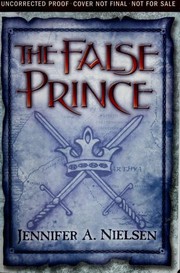
The False Prince
A nobleman buys four orphans and tells them only one will survive to impersonate the missing prince. The narrator, a defiant thief named Sage, has other plans.
2,044-word summary · 9 min read
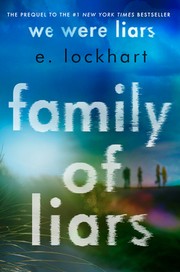
Family of Liars
The prequel to We Were Liars: Carrie Sinclair finally tells the story of the summer of 1987, the boy who died on Beechwood Island, and the lie her family built…
2,072-word summary · 9 min read
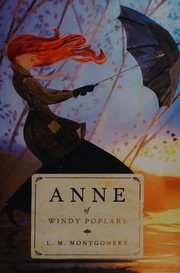
Anne of Windy Poplars
Anne spends three letter-filled years as principal of Summerside High, outlasts the Pringle clan, and warms a lonely vice-principal and a dreaming little girl…
2,599-word summary · 12 min read
Maame
Maddie Wright, 25, has spent years as the responsible one in her Ghanaian British family, and the year she finally tries to live for herself is the year…
2,108-word summary · 9 min read
La Belle Sauvage
Philip Pullman's prequel to His Dark Materials follows eleven-year-old Malcolm Polstead as a secret message, a hunted baby, and the flood of the century carry…
2,530-word summary · 11 min read

The Sky Is Everywhere
Lennie grieves Bailey while torn between Toby and Joe.
2,251-word summary · 10 min read
Loveless
Georgia starts university sure she wants love, then learns she is aro-ace.
2,539-word summary · 11 min read
If Only I Had Told Her
Finn, Jack and Autumn speak after the crash that took one of them.
2,543-word summary · 11 min read
The Upside of Falling
Two teens fake-date for a summer dare and end up facing grief, family secrets, and first love.
2,274-word summary · 10 min read