
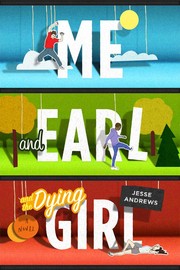
Me and Earl and the Dying Girl
2,773-word summary 12 min read 295 pages in the book
- First published
- 2012
- Publisher
- Amulet Books
- Pages
- 295
- ISBN
- 9781419701764
Reading options
What's inside (8 sections)
I picked up Me and Earl and the Dying Girl because a friend kept saying it was the funny cancer book, which sounded impossible. The first Amulet Books hardcover from 2012 runs 295 pages, and I expected something solemn with a goofy title. What I got instead was a loud, awkward, often crude memoir from a seventeen year old who does not want to be writing a book at all. Jesse Andrews wrote it as his debut, set in Pittsburgh where he grew up, and you can feel that local knowledge in the bus routes, the school cliques, the hospital waiting rooms. I read it in two sittings, laughing in places I felt guilty about, then sitting quiet at the end.
Greg Gaines is a senior at Benson High School and his whole plan for survival is to stay friendly with everyone and close to no one. He maps the school like a trader mapping borders. There are the jocks, the theater kids, the Jewish kids, the stoners, the smart AP crowd, and Greg drifts between tables at lunch just enough to avoid being claimed. He is not popular. He is not bullied either. He is background. At home his parents are odd in a loving way, his dad into obscure foods and offbeat lessons, his mom anxious and chatty and convinced she can fix people by volunteering them.
His one real peer is Earl Jackson. They met as kids when Greg's mom forced playdates, and they have been making movies together for years. Greg insists Earl is not his best friend but his co worker, which tells you more about Greg than about Earl. Earl is Black, poor, living with a rough home life and brothers who cycle in and out of trouble, and he is blunt in a way Greg admires and hides behind. Their films are shot for shot parodies of classics with titles changed by one word. A Sockwork Orange. Senior Citizen Kane. They shoot on cheap cameras, they act badly on purpose, they add fake Criterion style commentary. No one at school knows. The secrecy matters to Greg. If people saw the tapes, he would have to explain why he cares about something.
The setup breaks when Greg's mom corners him after dinner. Rachel Kushner, a girl Greg knew in Hebrew school years ago, has been diagnosed with leukemia. Acute myeloid leukemia, the fast and scary kind. His mom has already decided Greg will be Rachel's friend again, to cheer her up. Greg barely knows Rachel now. He liked her friend Leah Katzenberg more back then, for shallow middle school reasons he admits without pride. He argues, he stalls, he calls because his mom stands there while he dials. That phone call is painful and funny in the way the whole book will be. He has no script for I heard you have cancer so want to hang out.
Rachel is tired and dry and smarter than Greg expects. Chemo has started or is about to start, and she misses school and hates being pitied. Greg visits because he has to, then keeps visiting because the visits go better than school. He brings stories about teachers. He complains about college applications he has not started. She teases him about his hair and his manners. Early on there is an afternoon for ice cream that sticks in my memory. Greg and Earl show up, Earl uninvited in Greg's view, and Earl just talks to Rachel straight. No baby voice. No pep talk. He asks what treatment feels like, he listens, he offers to show her one of their movies even though Greg wants to keep that world sealed. Rachel says yes. Greg panics. That panic tells you how much of Greg's life runs on control.
School keeps moving while Rachel sleeps through mornings. Greg falls behind without quite noticing. He tells Rachel he might want to do something with film, and she tells him to apply to film school. Greg shrugs it off and remembers it later.
Word gets around Benson that Greg knows Rachel. Madison Hartner hears about it. Madison is the pretty, earnest senior Greg has crushed on since forever, the kind of person who runs charity drives and actually means it. She finds Greg in a hallway and asks if he and Earl will make a movie for Rachel. Not a parody. An original film, to lift her spirits. Greg wants to impress Madison so badly he says yes before checking with Earl. Earl agrees too, though for different reasons. Earl likes Rachel. Earl thinks they owe her something real after years of jokes for themselves.
This middle stretch is my favorite part of the book, even though it drags in spots. Greg and Earl try to become serious artists and have no idea how. They brainstorm in Greg's basement. Documentary interviews. Puppet sequences. Stop motion. They shoot, they hate the footage, they argue about tone. Earl pushes for honesty. Greg pushes for something that will play well in front of Madison and teachers. Greg withdraws into lists and screenplay pages inside the narration, which show how Greg thinks in shots when feelings get big.
Rachel gets worse while they fiddle with edits. Hair loss. Nausea. Infections that reset the clock. She stops answering texts quickly. When Greg visits, she is sometimes asleep with the TV on, sometimes alert and cutting through his excuses. He wants the film to matter, and he is scared it will be bad, which it is, in the way first serious efforts often are.
Then the school assembly happens. Madison helps push the tape toward a public screening Greg never wanted, and the result, called Rachel the Film, unspools in front of the whole senior class. Some students laugh at the wrong places. Greg sits there wanting the floor to open. He is sure he has humiliated Rachel. He stops going to school for days. He scratches the DVDs of their old parodies, a scene that hurt to read because those dumb tapes were the one honest record of his friendship with Earl.
Earl reacts badly too. He tells Greg he destroyed his own copies, that he is done making things. It is an ugly fight, full of things both mean and half true. Earl has less cushion if grades slip. Greg hears rejection where Earl means fear. They stop talking. Greg's grades collapse toward failing. His parents move from nagging to real worry.
Rachel dies a few days after the screening. Andrews does not stage it as a big hospital farewell. Greg hears about it sideways, through his mom, and the flatness felt right to me. Grief here is missed calls and homework piles. Greg goes to see Earl because he has no one else who knew both Rachel and the movies. He realizes, too late to use it well, that Rachel liked them without needing them to be brilliant.
The kid who tries to stay invisible
Greg opens the book by warning you he is not likable and you should not expect growth. I did not believe him, which is part of the trick. He is likable in the way self sabotaging teens can be, quick with a line, quick to undercut it. His tour of Benson High takes up the early pages and it is worth slowing down for. He names groups, then explains lunchroom physics, who can sit where for how long before questions start. He describes teachers with nicknames that are mean but observant. He admits he cultivates proportional relationships, his phrase for giving each clique ten percent so no one asks for fifty.
That system works until it does not. When Rachel gets sick, being everywhere lightly means being nowhere solidly. Greg has no practice sitting with discomfort. His humor, which carries the first third, is a shield. He riffs on his dad's cooking experiments, on his mom's emails to the school counselor, on Earl's commentary tracks that are profane and precise. Earl steals these early chapters. His asides about their films, about girls, about teachers who try too hard, are the funniest lines in the book. They are also the most quoted by fans, though I will not lift them here because they land better in context than on a poster.
What I kept noticing on this read was how much Greg narrates like a cameraman. He frames scenes, he calls out close ups, he inserts fake script pages when talk turns emotional. At first that feels like a gag. After a while it reads as avoidance. If he can call a hospital visit Scene 12, he does not have to say he was scared to knock. Andrews, who later wrote screenplays, lets that habit build until Greg cannot hide inside it anymore. During the assembly and after, the script pages stop being playful. They stutter. Stage directions repeat. That shift is subtle and effective.
Forced friendship and hospital afternoons
The friendship with Rachel starts false and becomes the truest thing Greg has. Early visits are awkward. He brings homework she does not need. He talks too much about himself. She calls him out, gently at first, then with more bite as treatment wears her down. I liked that Andrews lets Rachel be prickly. She is not a saintly patient who exists to teach Greg kindness. She is a seventeen year old losing hair, missing parties, fielding texts that say let me know if you need anything from people who vanish. Some days she wants Greg there. Some days she wants sleep.
Chemo details stay general rather than clinical, which fits Greg's point of view. He notices smells, the cold of waiting rooms, the TV always on, the way Rachel's mom refills water glasses to have something to do. He notices his own uselessness. He tries jokes, sometimes they land, sometimes Rachel stares past him. Earl, when he comes, does better by doing less. He sits. He asks plain questions. He does not perform cheer. Greg watches and learns slowly, which irritated me in a good way. How many chapters does it take this kid to stop making her illness about his awkwardness. Too many. That delay feels honest for his age.
Greg and Rachel knew each other from Hebrew school, a shared history Andrews sketches briefly through family meals and Squirrel Hill streets. I wanted one longer scene there, but Greg avoids depth everywhere, so the lightness fits him.
The worst movies you have never seen
The parody films deserve their own mention because they carry the book's heart. Greg and Earl have made dozens. Andrews lists titles and premises with loving stupidity, and the commentary tracks Greg recalls show two boys teaching themselves editing, timing, sound. They are bad in the way passionate teen projects are bad, with bedsheet costumes and borrowed music and inside jokes no one else would get. I found myself rooting for these tapes more than for the serious Rachel project, because joy lives in them.
Madison's request changes the temperature. Suddenly the tapes are not private. Classmates who mocked film kids now say the project is sweet. Teachers offer cameras. Greg likes the attention and hates what it costs. He starts directing for an imagined audience of Madison plus the assembly crowd, not for Rachel. Earl senses that shift before Greg admits it. Their fights about structure are really fights about motive. Should they interview Rachel on camera. Should they use animation to avoid showing her thin face. Should they include jokes about dying. Every choice feels loaded because it is. When you make art for a sick friend, every edit can feel like a verdict on how you see her.
If the middle sags, it sags here. The brainstorm loop repeats. Idea, test shoot, hate it, argue, eat snacks, repeat. A few montages could have been cut by twenty pages without losing meaning. I also tired of Greg's lists of girls ranked by looks, which are meant to show immaturity but read as lazy after the third pass. Andrews knows Greg is callow and says so through Earl, yet the book still lingers on those passages longer than needed. Younger me might have laughed harder. Now I skimmed.
The screening and the fallout
The assembly sequence is the book's hinge and Andrews plays it without mercy. The gym smells, the projector buzzes, kids whisper, Rachel is not there or is barely there depending how you read Greg's fogged memory. The film plays. Reactions split. Some kids laugh, some shift in seats, Madison cries in a way Greg cannot interpret. Is she moved. Is she embarrassed for him. He decides it is the latter and spirals. He leaves school, he hides, he ruins the old DVDs in a fit that is less dramatic than it sounds on paper and more sad. Scratching plastic with keys while his mom knocks and asks what that noise is.
School consequences pile fast. Near failing grades. A meeting with a counselor where Greg cannot explain himself without sounding like he is making excuses. His dad, usually comic relief, admits he does not know how to help a son who will not say what hurts.
Earl and Greg's split follows the same logic. Both boys are grieving and neither has language for it. Their last basement scene is terse, half sentences, props left out. Teen boys who love each other often fight about logistics when feelings flood.
After Rachel and the college letter
Rachel's death is handled off center, which I respected. No long deathbed dialogue. Greg learns, he sits with it badly, he writes. The frame of the whole novel is that Greg is writing this account to explain to the University of Pittsburgh why his senior year grades fell apart.
He decides to apply to film school, after talking with Earl again. Earl pushes back, says Rachel's death should not dictate plans. Greg hears him and still wants to try. Making things with Earl was the one time he paid close attention to the world.
Andrews closes without a neat moral. Greg wonders if he should put Rachel in his next film and worries that question itself is selfish. I liked that he leaves it open.
What holds up and what to skip past
A few facts help place the book. Andrews published it in 2012 with Amulet Books, an imprint of Abrams, and it found readers fast. It picked up starred reviews, spots on best fiction for young adults lists, and steady word of mouth among teens who liked that it mocked cancer story formulas while still caring about a sick girl. The 2015 film, directed by Alfonso Gomez Rejon from Andrews's own script, with Thomas Mann as Greg, RJ Cyler as Earl, and Olivia Cooke as Rachel, won big at Sundance, both the Grand Jury Prize and the Audience Award for drama. That run brought the book back to bestseller lists. In recent years it has also been challenged and removed in some school libraries over profanity and sexual content, which is worth knowing before handing it to a younger teen.
What holds up best is voice. Greg sounds seventeen on every page, for better and worse. Earl is the book's anchor, funnier and wiser than Greg, and Rachel gets enough sharp lines to avoid becoming a symbol.
Fair criticism belongs here too. The crass humor will turn off plenty of readers. Greg repeats himself. His ranking of girls and his use of the word friend as a dodge get old fast. Madison stays thin, more idea than person. Readers who want a careful portrait of leukemia treatment should look elsewhere. This is Greg's memory of that year, not Rachel's medical chart.
Who should read it. If you like coming of age stories that laugh through discomfort, or you want a male friendship story that is not about sports, try it. If you need lyrical grief or tidy growth, skip it. For classrooms, it fits older high school with context about language and content. I would not give it to a twelve year old without a heads up.
I finished thinking about the tapes Greg scratched and the ones Earl saved or did not save. The book never fully answers what survives, which feels right. Some projects you ruin when you are hurting. Some friendships pause and restart in a different shape. Greg writing all this down for Pitt is his next tape, rough cut, too long, jokes in the wrong places, a few true shots he could not have planned. I am glad he kept that one.
FAQ
When was Me and Earl and the Dying Girl published and how long is it?
Amulet Books published the hardcover in 2012. The first edition runs 295 pages and the ISBN is 9781419701764.
Who are the main characters?
Greg Gaines, a senior avoiding cliques, Earl Jackson, his blunt co worker on parody films, and Rachel Kushner, a classmate with leukemia. Madison Hartner pushes the film project.
Is it part of a series and is there a film version?
No, it stands alone. The 2015 film from Andrews's script won the Grand Jury Prize and Audience Award at Sundance.
Similar books

Anya's Ghost
A lonely Russian immigrant falls into a well, befriends the ghost trapped there, and discovers that the ghost's help comes with a dangerous price.
2,001-word summary · 9 min read

Dumplin'
Willowdean Dickson enters her town's beauty pageant as a protest and discovers that confidence is harder to keep once she lets someone close.
1,922-word summary · 9 min read

Someone Like You
Halley and her best friend Scarlett face a summer of grief, a surprise pregnancy, and Halley's dangerous first romance in Sarah Dessen's 1998 young adult novel.
2,218-word summary · 10 min read
Angus, Thongs and Full-Frontal Snogging
Fourteen-year-old Georgia Nicolson journals boys, friends, parents, and Angus the cat in a frank, funny first year of teen chaos.
2,005-word summary · 9 min read
The DUFF
Bianca Piper hates Wesley Rush for calling her the DUFF, until a secret arrangement during her parents' divorce forces both teens to grow up.
2,323-word summary · 10 min read
Looking for Alaska
Looking for Alaska retold: Miles at Culver Creek, Alaska Young, pranks, loss, before and after.
1,914-word summary · 9 min read
Love Letters to the Dead
A fifteen-year-old writes letters to dead artists because they cannot ask questions, and slowly tells the one story she has been hiding about her sister's…
2,520-word summary · 11 min read
Five Point Someone: What Not to Do at IIT
Three friends at IIT drift to a five-point GPA, mock the system, and break into a professor's office for an exam paper.
2,458-word summary · 11 min read
Heist Society
A teenage art thief gets expelled from boarding school, then has two weeks to steal five paintings back from a London museum and clear her father.
2,781-word summary · 12 min read

We Are Okay
Marin fled San Francisco after her grandfather vanished and stopped answering anyone. When Mabel visits her college dorm, she has to say what happened.
2,253-word summary · 10 min read
The First to Die at the End
On the night Death-Cast launches, a boy with a bad heart meets a model with everything ahead of him, and one of them gets the call.
2,908-word summary · 13 min read

The Second Summer of the Sisterhood
Four friends share the traveling pants through a summer of grandmothers, first loves, and mothers who are learning to let go.
2,209-word summary · 10 min read

Aristotle and Dante Dive into the Waters of the World
Ari and Dante return for senior year in El Paso, navigating first love, AIDS, family grief, and the cost of being openly gay in 1987 Texas.
2,188-word summary · 10 min read

Clap When You Land
Two half sisters, one in Sosúa and one in Queens, discover each other after their father dies in a plane crash, in Elizabeth Acevedo's novel in verse.
2,890-word summary · 13 min read
Loveless
Georgia starts university sure she wants love, then learns she is aro-ace.
2,539-word summary · 11 min read
The Upside of Falling
Two teens fake-date for a summer dare and end up facing grief, family secrets, and first love.
2,274-word summary · 10 min read
Since You've Been Gone
Shy Emily spends summer finishing her vanished best friend Sloane list of thirteen dares, finding Frank, Dawn, and courage.
2,566-word summary · 11 min read
You've Reached Sam
After Sam dies, Julie calls his phone to hear his voicemail and he answers, forcing her to face grief and learn how to say goodbye.
2,887-word summary · 13 min read
I Am the Messenger
Nineteen year old Ed stops a robbery, then gets playing cards sending him to help strangers.
2,124-word summary · 9 min read
Are You There God? It's Me, Margaret
Twelve-year-old Margaret navigates puberty in New Jersey while trying to choose a religion on her own.
2,178-word summary · 10 min read
The Absolutely True Diary of a Part-Time Indian
Fourteen-year-old Junior leaves his Spokane reservation school for an all-white farm town, drawing cartoons through grief, basketball, and divided loyalty.
3,224-word summary · 14 min read
Stargirl
Leo Borlock likes blending in until homeschooled Stargirl Caraway arrives at Mica High with a ukulele, a pet rat, and kindness that tests them both.
2,980-word summary · 13 min read
Will Grayson, Will Grayson
Two Chicago teens with one name collide, with Tiny Cooper's musical stealing every scene.
2,742-word summary · 12 min read
Simon vs. the Homo Sapiens Agenda
Closeted Simon Spier trades emails with Blue while Martin blackmails him over Abby and the school musical nears.
2,952-word summary · 13 min read
If He Had Been with Me
Childhood friends Autumn and Finn drift apart in high school until one August night changes everything.
2,785-word summary · 12 min read
Better than the Movies
A rom com obsessed senior hires her annoying next door neighbor to win her crush, then finds real love is messier and kinder than any movie plot.
2,438-word summary · 11 min read
The Sisterhood of the Traveling Pants
Four best friends share one magical pair of jeans through the summer that changes everything.
2,092-word summary · 9 min read
Aristotle and Dante Discover the Secrets of the Universe
Two Mexican American boys in 1987 El Paso become inseparable and learn what love asks of family.
2,093-word summary · 9 min read
The Perks of Being a Wallflower
Chbosky's Perks retold: Charlie's letters, Sam and Patrick, first year of high school in Pittsburgh.
1,951-word summary · 9 min read
The Outsiders
Outsiders retold: Ponyboy and greasers vs Socs, church fire, rumble, stay gold ache.
2,067-word summary · 9 min read