
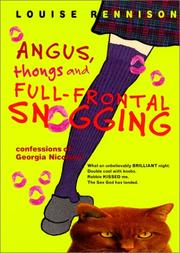
Angus, Thongs and Full-Frontal Snogging
2,005-word summary 9 min read 201 pages in the book
- First published
- 1999
- Publisher
- Piccadilly Press
- Pages
- 201
- ISBN
- 9781853405198
- Series
- Confessions of Georgia Nicolson (#1)
Reading options
What's inside (10 sections)
I laughed out loud on the second page of Angus, Thongs and Full-Frontal Snogging and kept laughing in short bursts all the way through. It is the diary of Georgia Nicolson, fourteen, who lives in England with embarrassing parents, a maddening little sister, a wild cat named Angus, and a head full of boys.
Georgia at fourteen
Georgia opens her diary with vital statistics. Nose too big, breasts too small, legs too wobbly, hair a constant emergency. She wants to be a tortured beauty who boys pine for. She is actually a funny, jealous, big hearted teen who writes exactly how teens talk when no teacher listens.
Home life is chaos. Mum tries to be youthful and buys thongs that Georgia finds horrifying. Dad sings in the car, enforces curfews, and pretends to be strict while caving fast. Little sister Libby dresses Angus in doll clothes and stages weddings for stuffed animals. Angus himself is a Scottish wildcat cross who attacks poodles, postmen, and Georgia's leg when bored.
School is Our Lady's, with nuns, uniform checks, and friends who pass notes about snogging scales. Georgia invents terms for everything. Sex God, Celibate, Red Bottomosity for embarrassment. The slang dates the book to the late nineties in the best way. It feels like found paper from a real desk drawer.
What makes Georgia last beyond gimmick is insecurity paired with observation. She notices when her mum looks tired, when Jas is hurt, when a teacher is kind under sarcasm. Then she ruins the moment with a vain worry about her eyebrows. That mix is true to fourteen.
The Ace Gang
Georgia's friends are the Ace Gang. Jas, her best mate since childhood, earnest and boy mad in a sweeter way. Ellen, Rosie, and Jo who bring gossip, backup, and occasional betrayal. Mabs and the Bummer Twins orbit. They rate boys from one to ten, practice kissing on arms, and swear loyalty pacts that last a week.
Jas matters most. She falls for Tom, Robbie's younger brother, which tangles everything because Georgia wants Robbie. Jas can be annoying, copying Georgia's phrases and crying when plans change. She is also the only person Georgia tells the whole truth to at 1 a.m. Their fights about borrowing clothes and stealing attention feel real because they repair fast and without speeches.
The gang scenes at the youth club, the mall, and sleepovers carry the book's joy. They try makeup, steal sips of Martini, dance badly, and rank teachers. Rennison writes group chat before group chat existed. Everyone talks over everyone, jokes misfire, someone gets upset and is bribed with chips. I recognized my own school circle instantly, even though we grew up in different countries.
A fair note is that the friend group is narrow. Everyone is white, mostly middle class, focused on boys. Queer readers, readers of color, and anyone outside that bubble may feel like guests rather than members. The book reflects its time and place, for better and worse.
Robbie the Sex God and Dave the Laugh
The plot engine is simple. Georgia spots Robbie Jennings at the Stalagmite youth club. Older, in a band, blond, lean, with a smile that causes actual dizziness. He has a girlfriend, Lindsay, who is older, blonde, and skilled at pouting. Georgia decides Robbie is hers by cosmic right.
To get close she accepts a date with his younger brother Tom, then ditches him for Robbie's orbit. It is selfish and she half knows it. Robbie is kind but vague. He calls her kitten, ruffles her hair, and treats her as a cute kid sister. Georgia oscillates between bliss and humiliation on the same page.
Dave the Laugh is the better match and Georgia cannot see it for most of the book. Funny, loyal, in her year, always up for a joke. He fancies her openly, makes her laugh when Robbie ignores her, and never plays games. She keeps him as backup while chasing Robbie, which is unfair and very teen. Rennison lets Dave have dignity. He calls her out gently and waits without groveling.
Lindsay is drawn as a villain at first, all hair flicking and baby voice. Later Georgia admits Lindsay is insecure too. That small grace note keeps the book from turning mean. Boys here are not prizes so much as mirrors. Robbie shows Georgia's longing to be grown. Dave shows her need to be liked as herself.
Angus, parents, and slapstick home
Angus the cat deserves his title credit. He is huge, fierce, and sexually obsessed with next door's pedigree chum, Naomi. He rips curtains, eats a whole chicken, vanishes for days, and returns scarred and proud. Libby adores him. Dad threatens to rehome him weekly and sneaks him ham.
The cat plots are not filler. They give Georgia physical comedy when boy angst gets heavy. Chasing Angus through a neighbor's garden in pajamas, hiding him from the vet, explaining to school why her blazer smells of cat pee. These scenes also show family love without saying it. Dad fixes the cat flap he swore he would nail shut. Mum stays up when Angus is missing because Georgia is crying.
Parents are embarrassing in the classic way. Mum does aerobics in the living room, wears too short skirts, and says things like snogging is normal at your age in front of Jas. Dad pretends to be Conan the Barbarian of discipline, grounds Georgia for a night, then drives her to a party because it rains. Georgia calls them Mutti and Vati to keep distance, but she runs to Mum when truly upset.
Libby at four steals every scene. She speaks in grand pronouncements, marries Angus to a teddy, and offers Georgia advice like kiss him on the bottom. Rennison writes small kids without cuteness overload. Libby is weird, selfish, and loving in the way real siblings are.
School, nuns, and growing pains
School plots balance the boy chase. Miss Stamp and the nuns enforce skirt length, confiscate magazines, and deliver lectures on decorum. Georgia and Jas forge notes, fake illness for PE, and get caught in lies that snowball. Detention leads to more jokes, not lessons.
There is a talent show, a French exchange panic, and a disastrous house party where Georgia tries to look sophisticated by drinking and ends up sick in a bush. Rennison does not moralize. Georgia feels awful, her friends tease her, Mum makes tea without a big speech. Consequences are social and physical, not preachy.
Under the jokes Georgia faces real growing pains. She worries she is unlovable because her nose is big, that Jas will leave her for cooler friends, that her parents will split when they fight about money. She tests boundaries by staying out late, lying about where she is, and pushing teachers. Each test teaches her a little about who she wants to be. She wants to be bold but not cruel, funny but not fake.
The diary form helps here. Entries are short, dated, with time stamps like 7 p.m. and midnight. Mood swings show in handwriting shifts, or in Rennison's case, in caps and lists. A day that starts with I am a woman of the world ends with I am a social leper. That whiplash is adolescence exactly.
What drags and what shines
No book about a fourteen year old chasing an older boy avoids ick entirely. Robbie is sixteen or seventeen to her fourteen, which was played as romantic in 1999 and reads more unevenly now. Rennison keeps physical lines clear. Nothing explicit happens, Robbie keeps distance, and Georgia's fantasies stay in her head. Still, modern readers may wish Georgia liked Dave sooner and left Robbie to Lindsay.
Some jokes punch down by current standards. Fat jokes about classmates, teasing about looks, casual snobbery about other girls. Georgia is the narrator, not the author, and part of the arc is her learning to be less judgmental. Even so, a few lines made me wince. If you hand this to a young teen now, a short chat about that context helps.
What shines is voice and honesty about female teen desire. Georgia wants to kiss, to be wanted, to look good, and she says so without shame or coy euphemism. She also wants respect, laughs, and privacy. Rennison allows all of it at once. That frankness was rare in 1999 and still feels fresh beside more polished contemporary romances.
The ending is right sized. No wedding, no transformation. Georgia gets a real kiss, loses it, learns something about timing, and heads into the next term with Dave still hovering and Robbie less godlike. She writes that she is still a nutter but a slightly wiser one. I believed her. I also immediately wanted book two, which is the best test for a series opener.
Fights, jealousy, and making up
One thread I want to pull out is how Georgia fights with Jas and then repairs. Midway Jas gets tired of playing sidekick and says so in a note that is blunt even for her. You only call when Robbie is busy. Georgia explodes, writes three pages about betrayal, then cries into her pillow because she knows it is half true. They avoid each other at school for two days, which feels like years at fourteen.
The repair comes not through a big talk but through small offers. Georgia saves Jas a seat though others wave her over. Jas lends Georgia her good mascara before the party though she is still mad. At the party they end up hiding in the bathroom together laughing at Lindsay's dancing, and the anger leaks away. Rennison trusts readers to understand that teen friendship runs on gesture more than apology.
Jealousy extends to Ellen and Rosie too. When Ellen gets a boyfriend first, Georgia performs happiness while writing poison in her diary. When Rosie gets praised for singing, Georgia claps loudest and then lists her own flaws at home. She is not proud of these feelings. She names them, which is why the book avoids meanness. You see a girl learning that someone else's good news does not erase her.
Parents fight too, about money and about Libby's schooling, and Georgia listens on stairs. Those overheard rows scare her more than any school detention because they suggest adult life is fragile. Mum crying quietly while washing up stays with Georgia longer than any snog. It makes her kinder to Jas's parents when they split for a while. Gossip becomes sympathy, slowly.
Why parents will like it too
Reading as an adult, I noticed how well Rennison writes Mum and Dad. Mum gave up a singing dream for family and flirts with youth through clothes and slang. Dad works long hours, worries about bills, and shows love by driving at midnight without complaint. They embarrass Georgia because they still want to be seen as people, not just providers.
There is a scene where Dad tries to talk about contraception and both choke with embarrassment. He leaves a pamphlet and an apple by her bed. Georgia mocks it in her diary, then admits she read every word. That balance of mockery and trust is the book's family thesis. Teens push away the exact help they need, and good parents leave the apple anyway.
If you give this to a teen now, expect questions about phones that do not exist here. No mobiles, no socials, just landlines and notes. I found that refreshing. Georgia must wait for calls, misread tone on paper, and show up to find out. The stakes feel higher because she cannot check. Modern readers may need a minute to adjust, then they enjoy the slower burn.
Read it for the laugh lines and stay for the family warmth. It is quick, silly, and kinder than it pretends to be. Beneath the jokes about noses and bras is a steady story about learning to want attention without losing friends, and learning to love family without admitting it out loud yet.
FAQ
When was Angus, Thongs and Full-Frontal Snogging published?
Piccadilly Press published it in London on June 24, 1999. The first edition runs 201 pages and opens the ten book Confessions of Georgia Nicolson series.
Is it the first Georgia Nicolson book?
Yes. It is book one of Confessions of Georgia Nicolson, followed by It's OK, I'm Wearing Really Big Knickers.
Is the film the same as the book?
The 2008 film Angus, Thongs and Perfect Snogging keeps Georgia, Robbie, and Jas but trims subplots and softens the diary frankness.
Similar books
More from Confessions of Georgia Nicolson first, then related titles.

Me and Earl and the Dying Girl
A self-protective Pittsburgh senior is pushed to befriend a classmate with leukemia, and a clumsy film with Earl changes all three.
2,773-word summary · 12 min read

Anya's Ghost
A lonely Russian immigrant falls into a well, befriends the ghost trapped there, and discovers that the ghost's help comes with a dangerous price.
2,001-word summary · 9 min read

Dumplin'
Willowdean Dickson enters her town's beauty pageant as a protest and discovers that confidence is harder to keep once she lets someone close.
1,922-word summary · 9 min read
The DUFF
Bianca Piper hates Wesley Rush for calling her the DUFF, until a secret arrangement during her parents' divorce forces both teens to grow up.
2,323-word summary · 10 min read
The Princess Diaries
Fourteen year old Mia learns she is heir to Genovia and gets posture lessons with pastries.
2,032-word summary · 9 min read
Simon vs. the Homo Sapiens Agenda
Closeted Simon Spier trades emails with Blue while Martin blackmails him over Abby and the school musical nears.
2,952-word summary · 13 min read

Better than the Movies
A rom com obsessed senior hires her annoying next door neighbor to win her crush, then finds real love is messier and kinder than any movie plot.
2,438-word summary · 11 min read

What Happened to Goodbye
Mclean has reinvented herself in four towns since her parents divorced. In Lakeview she uses her real name, and for the first time staying put becomes a choice.
2,796-word summary · 12 min read
The Idiot
A Turkish-American freshman at Harvard falls in love through email with a Hungarian math student and spends a summer in Hungary trying to turn correspondence…
2,019-word summary · 9 min read
Love Letters to the Dead
A fifteen-year-old writes letters to dead artists because they cannot ask questions, and slowly tells the one story she has been hiding about her sister's…
2,520-word summary · 11 min read
Five Point Someone: What Not to Do at IIT
Three friends at IIT drift to a five-point GPA, mock the system, and break into a professor's office for an exam paper.
2,458-word summary · 11 min read
The Awakening / The Struggle
A popular high school girl falls for a vampire, then discovers that his dangerous brother wants her too, in the first two books of the Vampire Diaries series.
2,660-word summary · 12 min read

Ms. Marvel, Vol. 1: No Normal
Kamala Khan, a Jersey City teenager and Carol Danvers fan, gains shapeshifting powers and has to decide what kind of hero she wants to be.
2,579-word summary · 11 min read
Dealing with Dragons
A princess who hates embroidery runs away to become the cook and librarian for a dragon, then has to outthink wizards, knights, and a plot against the dragon…
2,563-word summary · 11 min read
The House of the Scorpion
A clone raised in a drug lord's poppy fields learns what he was made for and chooses what to do with the life he was given.
2,527-word summary · 11 min read

I Kissed Shara Wheeler
Shara Wheeler kisses her rival Chloe Green at prom and disappears, leaving a scavenger hunt that forces Chloe to rethink everything she knew about her.
2,083-word summary · 9 min read

Heist Society
A teenage art thief gets expelled from boarding school, then has two weeks to steal five paintings back from a London museum and clear her father.
2,781-word summary · 12 min read
George's Marvellous Medicine
George stirs a brew of dozens of household chemicals and gives it to his grumpy grandmother, and the medicine works far better than anyone planned.
2,014-word summary · 9 min read

Starsight
Spensa Nightshade goes undercover aboard the Superiority space station Starsight to steal a hyperdrive, and finds a frightened bureaucracy where she expected…
2,568-word summary · 11 min read
Hogfather
Death fills in for a missing Father Christmas, Susan Sto Helit hunts the Hogfather, and the twentieth Discworld novel turns Santa into a management problem.
2,871-word summary · 13 min read
The Second Summer of the Sisterhood
Four friends share the traveling pants through a summer of grandmothers, first loves, and mothers who are learning to let go.
2,209-word summary · 10 min read
On the Come Up
Bri Jackson, a sixteen-year-old rapper in Garden Heights, chases a record deal while a viral song turns her into a symbol she never wanted to be.
2,034-word summary · 9 min read

In the Hand of the Goddess
Alanna, still disguised as a boy, survives war, court plots, and a death duel as the Goddess's chosen warrior in the second Song of the Lioness book.
2,018-word summary · 9 min read
Dash & Lily's Book of Dares
Two lonely New York teenagers trade dares in a red notebook left at the Strand, falling for each other on the page before they meet.
2,228-word summary · 10 min read

Aristotle and Dante Dive into the Waters of the World
Ari and Dante return for senior year in El Paso, navigating first love, AIDS, family grief, and the cost of being openly gay in 1987 Texas.
2,188-word summary · 10 min read

American Born Chinese
Three stories, a monkey king, a Chinese-American boy and a sitcom cousin, converge in a graphic novel about shame, assimilation and learning to accept yourself.
2,107-word summary · 9 min read
The False Prince
A nobleman buys four orphans and tells them only one will survive to impersonate the missing prince. The narrator, a defiant thief named Sage, has other plans.
2,044-word summary · 9 min read

The Bane Chronicles
Eleven stories across five centuries follow Magnus Bane from a ban in Peru to his first date with Alec in this illustrated Shadowhunter companion.
2,470-word summary · 11 min read

Someone Like You
Halley and her best friend Scarlett face a summer of grief, a surprise pregnancy, and Halley's dangerous first romance in Sarah Dessen's 1998 young adult novel.
2,218-word summary · 10 min read
La Belle Sauvage
Philip Pullman's prequel to His Dark Materials follows eleven-year-old Malcolm Polstead as a secret message, a hunted baby, and the flood of the century carry…
2,530-word summary · 11 min read