

Reading options
What's inside (8 sections)
I picked up Ariadne the way everyone seems to pick it up: someone pressed it into my hands and said, if you liked Circe, read this. I had, and I did. Jennifer Saint's debut was first published in 2021 by Flatiron Books and runs 320 pages in that hardcover edition, and it retells the myth of the Minotaur from the side of the women the old stories treat as scenery. Two sisters narrate in turn, Ariadne and her younger sister Phaedra, princesses of Crete, daughters of King Minos, half sisters to the monster in the maze below their palace. I finished it in three sittings and spent the third one slightly angry at nearly every man in it, which I gather is the point.
The dancing floor above the maze
Ariadne grows up in the palace at Knossos, and Saint gives her a precise physical home: a great wooden dancing floor built by Daedalus, the court's famed craftsman, where Ariadne spins patterns with her feet while her mother calls out constellations. It is the happiest place in her childhood and it sits directly above horror. Beneath the palace, in a labyrinth Daedalus himself designed, lives the Minotaur, Ariadne's half brother, born after the sea god Poseidon drove her mother Pasiphae to a monstrous union with a bull. Every year the creature is fed Athenian youths and maidens, sent as tribute after Minos humbled Athens with plague and war. You can hear him under the floor sometimes, bellowing, while the princess dances overhead. That image pretty much is the book: grace balanced on something roaring.
The palace women raise the girls on stories. Their nurse Eirene tells them the one I kept turning over afterward, about Medusa. Not the monster with snakes, or not only her. A beautiful girl, assaulted by Poseidon inside Athena's own temple, then punished by Athena for the defilement, crowned with snakes for a crime committed against her. Young Ariadne hears the logic of it click into place and resolves something: if the gods ever come for her over someone else's sin, she will not shrink the way her mother has. She will wear the snakes. It is a vow the rest of the novel quietly tests.
Small true-feeling details anchor the mythic scale. Daedalus gives Ariadne a tiny golden bee pendant, two bees around honeycomb, and tells her bees can soften anyone's will. Minos lectures about glory and obedience. Little Phaedra trails after everyone, adored and overlooked in the way youngest children are. And presiding over all of it is the gods' economy, where a father's broken promise to Poseidon gets paid by his wife's body, and nobody in heaven finds that strange. Saint never lectures about this. She just lets you watch it happen to people you have started to care about.
A prince in the tribute line
When Ariadne is eighteen, Minos announces he will marry her to Cinyras of Cyprus, a man she finds repulsive. She begs both parents for release and gets nothing. Princesses of Crete do not choose. Then the yearly Athenian tribute arrives, and among the frightened youths stands Theseus, prince of Athens, with green eyes that catch her the way a hook catches. Ariadne decides, very fast and with the total certainty of a sheltered eighteen year old, that this is love and also escape. If Theseus can kill the Minotaur and take her away, she can trade one cage for the open sea.
I should admit Theseus-as-boyfriend set my teeth slightly on edge even before he did anything wrong. Saint writes him as heroic-looking and hollow at the center, obsessed with glory, performing tenderness the way he performs everything. Ariadne cannot see it. She goes to Daedalus, the only person who knows the labyrinth well enough to defeat it, and begs for the secret. He gives her a key and a ball of red thread: go in with the prince's party, unwind the thread, follow it back out. She also means to bring Phaedra. The plan, as Theseus repeats it, is that both sisters will sail with him. Keep that promise in mind. It matters.
The thread itself is a small marvel of a plot device. It turns the most famous maze in literature into something a girl can solve with craft supplies and nerve. I loved the chapters where Ariadne prepares, stealing moments with Daedalus, memorizing turns, lying to her father's face for the first time in her life. Saint writes anticipation well. You know the myth. You know how this has to go. The dread builds anyway, because the book has made you hope, against all evidence, that this version might bend.
The thread and the wrong beach
Saint keeps the killing offstage, in the manner of Greek tragedy, and I want to flag that because it divides readers. You do not get a blow by blow fight with the Minotaur. Theseus goes down into the dark with the thread, and Ariadne waits above with her heart pounding through her ribs, and he comes back up bloody with the other tributes behind him. Something terrible has happened below. Her brother is dead. Her way out is standing in front of her offering his hand. She takes it. They run that night, and in the scramble Phaedra is separated from them. Theseus tells the younger girl to wait at a different beach, says he will come for her. He does not come. The ships leave Crete with one sister aboard and one sister standing on the wrong sand.
What follows on Naxos is the part of the myth everyone knows and nobody ever sits with. Theseus and Ariadne land on the island, spend the night together, and Ariadne wakes alone. He has sailed without her, leaving a few days of food, no explanation, no farewell. Saint lets the abandonment take its full time. Hunger sets in. Shame sets in, worse than hunger. Ariadne, who betrayed her family and her country and helped kill her brother for this man, walks the shoreline doing the arithmetic of what she has left, which is nothing. She is deciding, in a numb and orderly way, to lie down and die, when the god of wine comes walking up the beach.
Phaedra, meanwhile, waits on Crete for a rescue that never comes, and then learns through the rumor mill that her sister is dead and Athens wants peace sealed with a wedding. She will marry Theseus herself. Read that sentence twice. The hero sails home trailing glory, the older sister is written off as a casualty, and the younger one is handed over as the treaty clause. Saint does not raise her voice here. She does not need to.
The god who stayed
Dionysus finds Ariadne starving and does something no one else in the book has done: he stays, and he listens. He tells her about his own mother Semele, burned up by the gods' games. He offers her a place as guardian of his home on Naxos. Slowly, warily, Ariadne builds a life. They marry on the beach. He sets a silver crown on her head and throws it into the sky, where it becomes the constellation still named for her. They have children, five sons, and Naxos becomes something unusual in Greek myth: a refuge. Women fleeing cruel husbands and hard masters wash up there, and the maenads, Dionysus's women followers, make a home of it. For a long middle stretch this is nearly a happy book, and I found myself reading with one eye squinted, waiting for the sky to fall. Gods do not stay gentle in stories like this. Husbands who start as rescues rarely end as partners.
To be fair to Saint, she earns the unease instead of just coasting on it. Dionysus changes by inches. Worship goes to his head. He starts fretting about cities that refuse his rites, particularly Argos, ruled by his mortal half brother Perseus, the slayer of Medusa, who will allow no shrines to the wine god. Ariadne notices her husband coming home different: distracted, grander, less interested in the mortal love he once praised over divine glory. There is a chilling night scene where she follows him into the woods and watches his rites from hiding, singing and torn flesh and a baby goat pulled apart and made whole again while the god's face stays blank. She runs home before anyone sees her. She tells no one. That silence will cost her.
Criticism first, because the middle deserves it. This section is slow, and Saint's dialogue is sparse throughout, so long passages go by in summary and image without anyone actually talking. If you want propulsive plotting, the Naxos years will feel like wading. I mostly did not mind, because the prose is doing real work, all salt air and grapevines and children's noise, and the comfort being built is the whole argument of the book: look what a woman can make when nobody is using her. But readers who like their myths with swords out should know that the swords stay sheathed here. The violence happens elsewhere and arrives as news.
Phaedra in Athens
Phaedra's chapters are the book's sharpest surprise. Married to Theseus, queen of Athens, mother of two boys, she discovers by accident that her sister is alive. A visiting captain praises some wine as worthy of Dionysus's own table on Naxos, and chats on, baffled, while Phaedra's whole understanding of her life rearranges itself. Theseus swears he was shown a vision of Ariadne's death and only learned the truth recently. He says he kept it from her to spare her. Phaedra, who has spent years believing she was the sole surviving daughter, dutifully married off to the man who abandoned her sister, does the math on that excuse in about four seconds. I loved her in this scene, furious and precise, done being managed.
Athens is a cold house. Theseus is boastful and brutish and mostly absent, chasing the next exploit. Phaedra has carved out a small public role, hosting and organizing, but she is lonely in the particular way of someone surrounded by people who need her to be ornamental. Then she meets Hippolytus, Theseus's son by an earlier union, a chaste gentle hunter devoted to Artemis, honest in exactly the way his father is false. Phaedra falls for him hard. Call it love or call it a drowning woman grabbing at driftwood; Saint lets it be both. Phaedra sails to Naxos and begs Ariadne for shelter if she runs away with the boy. Ariadne, who knows what running on a man's promise costs, talks her out of it. The sisters quarrel. Phaedra leaves in a rage, and Ariadne follows her to Athens knowing exactly how this story ends in every version ever told.
What happens in Athens is awful and fast. Phaedra confesses her feelings to Hippolytus. He recoils, disgusted. Panicking about what Theseus will do when the boy tells, and seeing no door anywhere, Phaedra hangs herself in the palace gardens, leaving a scrap with only Hippolytus's name on it. Theseus reads it one way: his son violated his wife. He curses Hippolytus aloud and calls on Poseidon, and the sea god answers with a wave that wrecks the boy's chariot on the beach and kills him. Ariadne, arriving too late, tries to tell the truth slantwise, that the love was unreturned, that Theseus is judging his son by his own standards. It changes nothing. Two young people dead in a day, and the hero striding between their bodies still certain the story is about him.
Argos and the stone
Ariadne goes home to Naxos grieving and finds her husband fully turned toward the thing she feared. Dionysus is fixed on Argos now, on forcing his cult where Perseus refuses it, and the dispute curdles into something cruel. Driven mad, the women of Argos do the unthinkable to their own children. Ariadne, who has spent years sheltering women, cannot sit on her island while that happens. She sails to Argos to plead with Perseus for some peace between the brothers before more people die.
The ending comes at a slant, the way the worst things do. In the chaos at Argos, with gods meddling (Hera blinds Perseus with illusion at the key moment), Perseus swings his shield around, and Ariadne looks full at the thing mounted on it: the head of Medusa, the girl from Eirene's story, still petrifying long after death. Ariadne turns to stone. Dionysus weeps over what is left of his wife and sets her soul among the stars, where the crown already waits. The girl who resolved to wear the snakes ends as part of the sky, remembered in light. I found the last pages genuinely moving, and genuinely bleak. Nobody is rescued. The sisters are both gone. What survives is the telling.
So the honest accounting. The book's strength is its voice work: two distinct sisters, neither a mouthpiece, growing from girls who trade stories into women making impossible choices. Its weakness, for some, will be pace and scope. Action fans will find the offstage violence bloodless. A few readers will find Ariadne herself frustrating, swinging between clear-eyed and naive about the men around her, though I read that as the point: intelligence is no armor when every road out runs through someone else's hands. And Dionysus's turn from tender husband to glory drunk god happens faster than I wanted; I could have used one more scene of the middle distance between those two men.
Read it if Circe left you hungry, if you want myth with the women's names put back in, if you like novels where the island feels like a character and the gods are the weather. Skip it if you need duels on the page and banter in every chapter. For me it earns its place on the retelling shelf, not as the loudest of the recent wave, but as one of the saddest, and the one I argued with longest after closing it.
FAQ
Is Ariadne part of a series?
No. Ariadne is a standalone debut from 2021. Saint has written further standalone myth retellings such as Elektra, but this story begins and ends in one volume.
How closely does the novel follow the Greek myth?
The main beats follow tradition: the thread, the abandonment on Naxos, Phaedra and Hippolytus, and the crown set among the stars. The sisters' inner lives and many motives are Saint's own invention.
Can I read it without knowing Greek mythology?
Yes. The book explains each god, monster, and custom as it goes, so no background is needed. Readers who know the myths will catch extra echoes, but newcomers can follow everything.
Similar books

The Once and Future Witches
Three estranged sisters bring witchcraft back to an 1893 city where magic hides in nursery rhymes and the fight for the vote is also a fight for power.
2,132-word summary · 9 min read
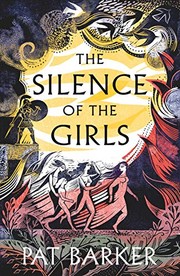
The Silence of the Girls
Briseis, queen of Lyrnessus, is captured by Achilles and narrates the Trojan War from inside the Greek camp, where women are prizes and survival is its own…
2,098-word summary · 9 min read
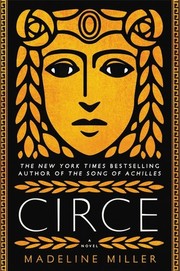
Circe
Exiled witch Circe masters plant magic on Aiaia, faces gods and monsters, loves Odysseus, and chooses a mortal life.
2,957-word summary · 13 min read
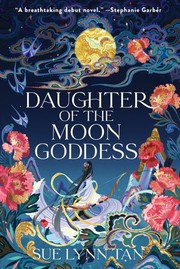
Daughter of the Moon Goddess
The daughter of Chang'e hides in the Celestial Court, trains as an archer, and risks everything to free her mother from the Emperor's punishment.
2,146-word summary · 10 min read

Galatea
The statue brought to life narrates her own story: a jealous sculptor, a locked hospital room, a daughter to protect, and one last plan to escape.
1,972-word summary · 9 min read

The Buried Giant
An old couple crosses a misty post Arthur Britain searching for a son.
2,593-word summary · 12 min read

A Touch of Malice
Engaged Hades and Persephone face gods who vote on their marriage.
2,562-word summary · 11 min read

The Golem and the Jinni
A clay woman and a fire spirit hide in 1899 New York, passing as immigrants while their makers' pasts close in.
2,726-word summary · 12 min read

Gleam
Captive Auren finds power in gold touch while Slade hunts her across kingdoms in Plated Prisoner book three.
2,073-word summary · 9 min read
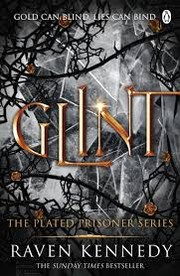
Glint
A gold-skinned captive of Midas falls to Fourth Kingdom troops and learns to fight with the ribbons she hid.
2,969-word summary · 13 min read

Gild
A gold-skinned woman kept as Midas favored learns her cage is a bargain, then war drags her onto the road.
2,755-word summary · 12 min read

The Mists of Avalon
Morgaine tells Arthur story from Avalon side, where goddess worship fades before priests.
1,944-word summary · 9 min read

Neon Gods
Promised to Zeus, Persephone flees to Hades and trades fake dating for real choice in Olympus.
2,002-word summary · 9 min read

The Invention of Wings
Sarah Grimke and enslaved Handful grow up bound in Charleston, then push toward freedom and abolition.
2,996-word summary · 13 min read
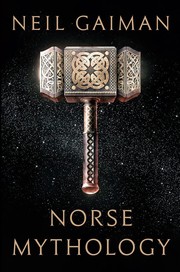
Norse Mythology
Gaiman retells the Norse myths in order, from the creation of the world to Ragnarok, with Odin, Thor and Loki at the center.
4,647-word summary · 21 min read

A Touch of Darkness
Persephone bargains with Hades in New Athens nightclub deal.
2,545-word summary · 11 min read
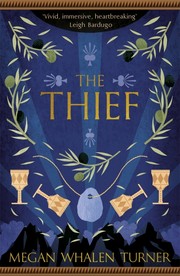
The Thief
A boastful young thief is pulled from a prison to steal a legendary stone for the king's magus, and the story he tells about himself is not the whole story.
2,514-word summary · 11 min read
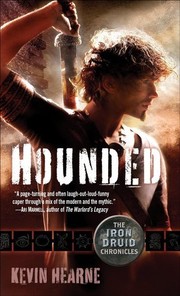
Hounded
A two-thousand-year-old druid runs a bookshop in Arizona, hides from an Irish god who wants his sword back, and talks to his dog.
2,159-word summary · 10 min read

The Shadow Sister
Star D'Apliese steps out of her sister's shadow and follows a bookshop clue into the Edwardian life of Flora MacNichol, a woman who gave up love for duty.
2,260-word summary · 10 min read

Magic Burns
A magic flare hits Atlanta, and mercenary Kate Daniels must recover stolen maps, find a missing witch, and keep a teenage girl alive while Celtic gods try to…
2,021-word summary · 9 min read

Little Town on the Prairie
In the spring after the Long Winter, fifteen-year-old Laura sews shirts, studies for a teaching certificate, and helps send her blind sister Mary to college.
2,071-word summary · 9 min read

The Secret of the Nagas
Shiva hunts the Naga who attacked Sati, discovers her hidden twin sister and lost son, and follows the trail to the Naga capital of Panchavati.
2,442-word summary · 11 min read

Mrs. Everything
Two Jewish sisters in Detroit grow up, apart and together, across seven decades of American life, from the 1950s to the 2016 election.
2,362-word summary · 10 min read

Iron Widow
Wu Zetian enlists to avenge her sister, kills her pilot, and becomes an Iron Widow in a mecha Huaxia where the machines are built to kill women.
2,444-word summary · 11 min read

The Siren
Saved from a shipwreck in 1930, Kahlen becomes a siren who sings men to their deaths for the Ocean, until a boy in a college library makes her want a life she…
2,369-word summary · 11 min read

Cruel Beauty
A girl raised to kill the demon prince who rules her cursed land instead falls in love with him, in a retelling that mixes Beauty and the Beast with Bluebeard…
2,669-word summary · 12 min read

The Lowland
Two brothers grow up beside a marshy lowland in Calcutta, and the choices of the younger one draw the older into a life of duty, distance, and quiet grief that…
2,213-word summary · 10 min read

Once Upon a River
A wounded man stumbles into a riverside inn carrying what appears to be a drowned child who is not quite dead, and the story braids the guesses of everyone who…
2,173-word summary · 10 min read
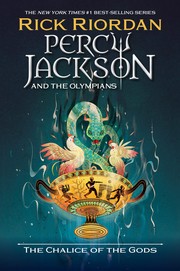
The Chalice of the Gods
Percy needs three recommendation letters from three gods to apply to college, so his first quest is recovering a stolen chalice from the god of old age.
2,106-word summary · 9 min read

The Ship of the Dead
Magnus and his crew sail to the edges of the Norse worlds to stop Loki from launching Naglfar, the ship of the dead.
2,426-word summary · 11 min read