
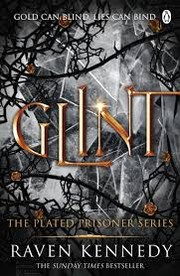
Glint
2,969-word summary 13 min read 480 pages in the book
- First published
- 2021
- Publisher
- Bloom Books
- Pages
- 480
- ISBN
- 9781464224423
- Series
- The Plated Prisoner (#2)
Reading options
What's inside (8 sections)
I picked up Glint the same night I finished Gild because the first book stops on a rough break. Auren is out of her tower but not safe, and you are left holding a lot of worry for a woman who has just started to doubt the man who caged her. Raven Kennedy first published this novel in 2021 on her own, and the edition most shops carry now is the Bloom Books paperback from April 2024 with 480 pages and ISBN 9781464224423. It is book two of The Plated Prisoner, a middle bridge with more travel and talk, and one large reveal near the close.
This is adult fantasy romance set in Orea, built around a retelling of King Midas. I will keep physical parts non graphic here. There is captivity, threats, blood, war talk, and consensual scenes between adults in the background. The focus is closer to power and choice than to detail. If you want a tidy standalone, this is not it. The book assumes you know Auren, Midas, Highbell, and the cage.
Taken by Fourth
Glint starts where Gild broke off. The Midas caravan has been hit by Red Raids pirates in the snow passes. Sail, the older guard who treated Auren like a person, is dead. Digby, her regular guard, is missing in the mess. Auren herself did something she had hidden for years. She let the gold ribbons that grow from her back come loose and she used them to kill the pirate leader who had her by the throat. That act saves her life and leaves her shaking. She has spent a decade binding those ribbons flat and calling them ugly. Now strangers have seen them move.
Fourth Kingdom soldiers arrive before Midas people can regroup. Their leader is Commander Rip, a tall man with black eyes and raised lines down his spine. The soldiers call him brutal and the stories about him are bad. Auren knows one more thing at once. He is fae, full blooded, the kind most folk in Orea say ruined the Seventh Kingdom and then vanished.
Rip claims her as a bargaining piece. That word matters. He does not free her. He moves her into his custody, into a carriage and then into camp life, and he tells her plainly she is useful because Midas wants her back. Auren hears that and holds to it at first. Midas will come. Midas will trade. Midas loves her best. She repeats those lines in her head while her body keeps score of hunger, bruises, cold, and grief for Sail.
What I liked about this opening is how Kennedy keeps Auren thinking like a captive even when the cage changes shape. She watches for locks, for veils, for orders about when to show her face. She expects punishment for speaking. She apologizes fast. Rip confuses her because he does not act the way she expects a captor to act. He gives her a tent. He has food brought. He tells the mender to look at her cuts. Then he mocks her loyalty to Midas in a tone that stings because part of her already wonders if the mock has truth in it.
A small note on names. The army men call her Goldfinch, mostly Rip at first, and the name sticks in camp talk. It sounds gentle but it works like a tag. It marks her as small, bright, and kept. Auren hates it and then, in odd moments, leans toward it because at least it means someone sees her as alive rather than as furniture. That push and pull runs through the whole book.
The shared tent
For much of the middle, Auren lives in Rip camp as the war host moves slowly over ground toward Ranhold and the disputed border towns. She sleeps in his tent because he says he does not trust her out of sight. She tries to find the messenger hawks so she can warn Midas that Fourth is coming in force. She learns fast that hawks are watched, that soldiers notice a gold skinned woman anywhere she goes, and that running in winter with no supplies would end badly.
Camp life gives Kennedy room to show how power looks when it is not gilded. Midas court was perfume, gold plate, and soft voices that threatened. Fourth camp is mud, smoke, boiled stew, and blunt talk. Keg, the cook, feeds her without making her beg. Some soldiers stare or make crude remarks and get latrine duty for it. Osrik, one of Rip closest fighters, dislikes her on sight because to him she stands for Midas greed. Lu, another of the inner circle, watches more quietly and steps in when talk turns ugly.
Hojat the mender treats her cuts and asks plain questions about pain, sleep, and food. Auren refuses to let him look at her ribs where bruising sits near the base of her ribbons. She fears what he will find. She has been told all her life that her body is either treasure to display or flaw to hide. Letting a stranger see the seams where gold meets skin feels worse than the bruise. That refusal leads to one of the more tense scenes early on, when washing and changing bring Rip into the tent and then back out again, and Auren realizes privacy here will always be partial. She is a prisoner with blankets, which is better than a cage and still not freedom.
I found these chapters slower than the Gild tower chapters, and I mean that as both praise and complaint. Praise because the daily detail makes Fourth feel real. You learn who sharpens what, who carries water, who tells jokes to cut fear before a march. Complaint because the plot treads in place for stretches. Auren tries the hawks. Auren fails. Auren argues with Rip about seeing the other captives. Auren argues with herself about Midas. Rip taunts. Repeat. If you like slow burn talk and small shifts, you will settle in. If you wanted battles right away, you may fidget until past the halfway mark.
One thread holds attention through the slow part. Rip keeps asking about the cage. Not with pity, more with a hard curiosity. How long were you locked. What did you eat. Could you go outside. Who held the key. Auren answers with the lines Midas gave her. Protection. Love. Safety. Rip picks at each answer without raising his voice, and you can see her grip on those lines loosen by small degrees. It is not a single speech that turns her. It is being asked normal questions by people who expect normal answers.
Learning to use the ribbons
The best part of Glint, to me, is the training thread with Osrik and Lu. They find out about the ribbons by accident when fear makes them flare, and instead of screaming or calling Auren monster, they treat the ribbons like a weapon that needs drills. Osrik throws a punch at her shoulder to prove her body will block on its own if she stops thinking so hard. Her gold strands snap up and stop him. Lu talks her through breathing and stance. They are Rip Wrath, his trusted few who know his fae nature and can therefore keep her secret, and that shared secrecy builds a rough trust.
Auren has twenty four ribbons, long and strong, rooted along her spine. She has kept them bound so tight for so long that using them leaves her sore and shaky. Early tries end with her flat on the ground, dizzy, cheeks hot with shame. Later tries end with her standing longer, turning faster, catching a wrist, lifting a weight she could not have lifted with her arms. Kennedy writes these sessions with sweat and humor rather than glow and triumph. Keg yells encouragement. Osrik swears. Lu corrects her footing. Auren laughs once in surprise and then looks guilty for laughing while Sail is dead and Digby is lost.
This is where the book earns its title in my reading. Glint is that flash when light hits gold at an angle. Auren starts to catch her own flashes. She notices she can choose where a ribbon lands. She notices she can shield another person, not only herself. She notices the ribbons respond to anger but also to clear choice, which scares her more because anger can be blamed and choice cannot. She starts to ask what else Midas told her to hide that might be strength.
I do wish Kennedy had cut some of the repeated drills and camp banter. The training lands, but you walk a long road of stew pots and tent flaps to reach each clear gain. Readers who love found family in war camps will enjoy every meal scene. I liked those scenes in pieces and skimmed a few when the jokes ran long.
There is a fair warning to add. Auren is groped and cornered at points, and violence breaks out fast. Kennedy does not linger for shock, but she does not look away either. If Gild upset you around control and ownership, Glint stays in that same hard space.
Malina in Highbell
Cut against the march are chapters back in Highbell with Queen Malina, and these will split readers. Malina watched Midas leave for war and decided she would not keep playing the quiet wife in gold. She orders gowns in the old colors of her house, white and blue, instead of Midas gold. She puts on her mother opal crown. She sits the throne to hear petitions. She stops messenger hawks from leaving the castle without her seal. Servants who mocked her start to stand straighter. Lords who smiled at her husband start to measure her.
I liked Malina here more than I expected after Gild. In the first book she was sharp and cold toward Auren, easy to dislike. Here her cold reads as method. Highbell is hungry. The store rooms are thin. Midas has traded away much for soldiers and promises. Malina counts grain, hears complaints about fuel, and sees how much gold paint hides rot in the beams. She does not love the small folk in some warm speech. She listens because a ruler who wants to hold a castle through winter must know what is left in it. Her pride is real and so is her work.
The tension in her chapters comes from how little room she has. Midas men watch her. Priests quote duty. Ladies who lived for Midas favor test her with smiles. She answers by learning names, keeping records, and refusing to be baited into shouting. One scene where she denies a hawk pass made me sit up. It is a small act, ink and seal, but it tells you she understands that information is supply. If Midas wants news from home, it will pass through her hands now.
Why some readers may not enjoy these cuts is simple. They slow the Auren and Rip pull, and Malina does not think about Auren with kindness. If you came for romance beats, being pulled north to grain counts can feel like cold water. I came to like the contrast after a while. Auren learns what power feels like from below in a war camp. Malina learns what it costs from above in an empty castle. Both women stop waiting for Midas to explain the world to them, and both start keeping their own lists of what is true.
Midas as memory
Glint spends a lot of time inside Auren memory, and this is where the book does its hardest work on the Midas myth. As a child on the streets, Auren was starved, used by others, and then found by a young Midas who fed her, clothed her, and told her she was precious. A later memory returns often. Nomads on the road cut her gold hair and strip her gold clothes while she screams. Midas arrives after, holds her, and promises no one will hurt her again if she stays close and stays his. Young Auren believes him with her whole body. Adult Auren on the march starts to turn that memory over and see the edges.
She recalls the cage being built as honor. She recalls being told snow would harm her skin, common folk would claw her, queens would poison her food. She recalls Midas visits that felt like sun after long gray days, and the way he petted her cheek and called her his good girl when she obeyed without questions. She recalls the other favored women too, their painted faces and tight smiles, Rissa sharpest among them, and the way Midas set them to compete for scraps of his time. At the time she read all this as love with hard rules. On the march, with Keg handing her stew like she is any hungry mouth and Lu asking what she wants to learn next, those rules start to look like training to stay small.
Kennedy does not flip Auren in one chapter, which I appreciated. Auren defends Midas well into the back half. She tells Rip he saved her. She tells Osrik loyalty matters. She tells herself Midas touch made her special. Then she remembers a detail that does not fit, like a promise moved or a kindness that came right after a punishment, and she goes quiet. The quiet grows longer as the book goes on. It felt true to how people loosen from long control, not a single clear break but many small snags.
The question the book keeps circling, without giving a full answer yet, is what Midas touch really is. Court story says his magic turns things to gold. Auren gold skin has lasted years. Her ribbons move like living tissue. Rip, who knows fae magic from the inside, looks at her with more interest than he admits and asks questions that point toward something older than Midas story allows. Auren fears the answer because if Midas did not make her gold in the way she was told, then much of her life story tilts. Kennedy leaves that thread hanging for the next book, and I was glad she did not rush it here.
A criticism belongs here. Auren repeats her loyalty loop enough times that some conversations with Rip feel circular. He says Midas caged you. She says Midas saved me. He says look at your wrists. She says you do not know him. The lines vary, but the shape returns. I understand why Kennedy does this. Ten years of belief do not fall in three talks. Still, two or three of those sparring scenes could have been trimmed without losing the point, and the space could have gone to Digby or the other captives, who fade for long stretches.
The king under the commander
The march ends near Ranhold with armies close and talk of terms. Fourth does not want a wasteful siege if a bargain will hold. Midas wants his gold treasure back and his name kept high. Auren is walked into that narrow place between sides, aware she may be traded like plate. She expects to be handed over with papers and seals. What she gets instead is a private reveal that reframes much of what came before.
Rip shows her what he is without the cover he wears in camp. The change is physical and hard to miss. Spikes stand along his arms and spine. Markings show at his cheeks. His ears cut to points. Rot and growth, decay and life, move around him in a way that reads as old magic rather than stage trick. He tells her his true name is Slade Ravinger, king of Fourth Kingdom, not only its commander. The man who shared his tent, argued over hawks, and watched her drills is the same man who sits the throne Fourth obeys.
I will not spoil every beat of how that scene plays, since the book holds some of it for the next volume, but the effect on Auren is shock mixed with anger at being managed once more. She has been kept by Midas with gold. She has been kept by Rip with orders and tents. Now she learns the second keeper held back the largest fact of all while asking her to be honest about her ribbons. Her fury makes sense. So does the small, unwilling relief under it, because a king can shield or trade with more weight than a commander, and she is tired of being light enough to pass hand to hand.
Peace of a sort is spoken. Fourth will hold at Ranhold for now. Auren goes back toward Midas orbit by the close, not free, not safe, but no longer blind in the same way. She looks at Midas hands when he reaches for her. She measures his smile for timing. She keeps her ribbons ready under her clothes rather than bound flat out of shame. The last pages feel like breath held before the next march rather than rest.
Stepping back, Glint works best as a bridge that deepens two people and thins one myth. Auren moves from displayed treasure toward fighter who still flinches. Slade moves from scary story toward ruler with a hidden cost to his power. The middle sags and some talks circle, and the army humor is not always to my taste. Yet the training arc and the slow unpicking of Auren memory kept me turning pages late, and the final reveal made me start Gleam the same week.
If you read Gild and felt stuck inside a locked room, Glint takes you outside into mud and wind. That feels right for book two. Auren can see farther now, even if she still cannot leave the road on her own.
FAQ
Is Glint part of a series?
Yes. It is book two of The Plated Prisoner after Gild, followed by Gleam. Read in order, since this one starts at the caravan attack and ends open.
Is Glint for adults?
Yes. It is adult fantasy romance with captivity, violence, and consensual sexual content between adults. This summary keeps physical parts non graphic.
When was Glint first published?
Raven Kennedy first published it on her own in 2021. Most shops now carry the Bloom Books paperback from April 2024 with 480 pages and ISBN 9781464224423.
Similar books
More from The Plated Prisoner first, then related titles.
Gild
A gold-skinned woman kept as Midas favored learns her cage is a bargain, then war drags her onto the road.
2,755-word summary · 12 min read
Gleam
Captive Auren finds power in gold touch while Slade hunts her across kingdoms in Plated Prisoner book three.
2,073-word summary · 9 min read
Daughter of the Moon Goddess
The daughter of Chang'e hides in the Celestial Court, trains as an archer, and risks everything to free her mother from the Emperor's punishment.
2,146-word summary · 10 min read

The Dark One
Winnie trades with Hook while Peter Pan turns cruel in Neverland.
2,596-word summary · 12 min read
A Touch of Malice
Engaged Hades and Persephone face gods who vote on their marriage.
2,562-word summary · 11 min read

Neon Gods
Promised to Zeus, Persephone flees to Hades and trades fake dating for real choice in Olympus.
2,002-word summary · 9 min read
A Touch of Darkness
Persephone bargains with Hades in New Athens nightclub deal.
2,545-word summary · 11 min read

The Lost Sisters
Taryn Duarte writes a letter to her twin, Jude, explaining how she fell for Locke and why she stayed silent while he used them both.
1,914-word summary · 9 min read

Magic Burns
A magic flare hits Atlanta, and mercenary Kate Daniels must recover stolen maps, find a missing witch, and keep a teenage girl alive while Celtic gods try to…
2,021-word summary · 9 min read

The Siren
Saved from a shipwreck in 1930, Kahlen becomes a siren who sings men to their deaths for the Ocean, until a boy in a college library makes her want a life she…
2,369-word summary · 11 min read
Cruel Beauty
A girl raised to kill the demon prince who rules her cursed land instead falls in love with him, in a retelling that mixes Beauty and the Beast with Bluebeard…
2,669-word summary · 12 min read

The Rose & the Dagger
Shahrzad is pulled from her Caliph husband and left in a desert camp of rebels, needing to break his curse and end a war before it ends her.
2,520-word summary · 11 min read
Stars Above: A Lunar Chronicles Collection
Nine Lunar Chronicles stories fill in the histories of Cinder, Wolf, Thorne, Cress, Winter, and Jacin, and end with a wedding after the war.
2,230-word summary · 10 min read

Lore
Lore Perseous, the last of a hunted bloodline, is pulled back into the Agon when a wounded Athena offers her revenge against the god who killed her family.
2,188-word summary · 10 min read
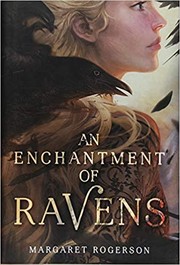
An Enchantment of Ravens
Isobel, a mortal artist in the fairy town of Whimsy, paints a portrait of the autumn prince and falls in love with him, breaking the laws of her craft.
2,087-word summary · 9 min read
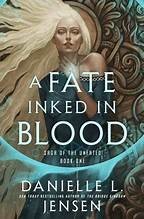
A Fate Inked in Blood
In Norse-inspired Skaland, a fish gutter hiding a goddess's blood is claimed by a jarl, bound by oath, and guarded by the son she cannot want.
1,971-word summary · 9 min read


Dreamfever
With the walls between worlds down and Mac broken by the Fae, Dreamfever is the darkest volume of the Fever series, and the one that changes everything.
2,007-word summary · 9 min read
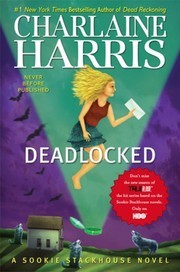
Deadlocked
A dead woman on Eric's lawn starts a murder investigation, a vampire queen wants Eric as her consort, and the fairies in Sookie's life close in.
2,885-word summary · 13 min read
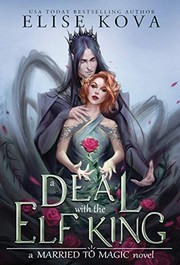
A Deal with the Elf King
A village herbalist is exposed as the hidden Human Queen, married to a cold elf king, and given three months to save his dying kingdom or be bound to it…
2,094-word summary · 9 min read
These Hollow Vows
Brie trades with the Unseelie to save her sister and steals for a prince.
2,384-word summary · 11 min read

The Iron Queen
Meghan faces the Iron King past while Ash pays a winter price.
2,548-word summary · 11 min read

Shadowfever
Mac Lane hunts the Sinsar Dubh in Dublin as Fae walls fail and Barrons secrets surface.
3,016-word summary · 13 min read
Half-Blood
Half-blood Alex trains at the Covenant while gods stir and rules close in.
2,601-word summary · 12 min read
Fated Throne
Twins face the throne trial as heirs close in and stars shift.
2,349-word summary · 10 min read

Electric Idol
Psyche wears a camera deal to dodge Aphrodite and falls for Eros.
2,332-word summary · 10 min read

Bloodfever
Mac hunts the Sinsar Dubh in Dublin while Barrons tests her.
2,124-word summary · 9 min read
Cursed Fates
Twin heirs Tory and Darcy Vega face Lionel Acrux, brutal trials and tangled mate bonds in this fifth Zodiac Academy book, a 749-page bridge to open war and…
2,750-word summary · 12 min read
Ariadne
A Cretan princess helps Theseus kill the Minotaur, is abandoned on Naxos, and rebuilds her life while her sister faces tragedy in Athens.
2,350-word summary · 10 min read
Shadow Princess
Tory and Darcy learn they are Phoenixes with shadows inside them and face Lionel, the Heirs and a rescue that goes wrong.
2,837-word summary · 13 min read