
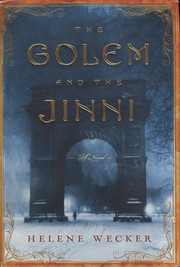
The Golem and the Jinni
2,726-word summary 12 min read 496 pages in the book
- First published
- 2013
- Publisher
- Harper
- Pages
- 496
- ISBN
- 9780062110831
- Series
- The Golem and the Jinni (#1)
Reading options
What's inside (8 sections)
- Chava: a clay wife wakes up a widow on the Atlantic
- Ahmad: a thousand year old spirit in a tinsmith's shop
- New York in 1899: rabbis, bakers, matchmakers, and ice cream
- The friendship: what a golem and a jinni talk about at night
- Schaalman comes to New York, and the past catches fire
- What sags, and who should actually pick this up
- Key takeaways
- FAQ
I picked up The Golem and the Jinni because a friend described it as a historical novel where the two main characters are not actually people, and I could not tell if she meant that as a warning. Helene Wecker published it with Harper in 2013, a 496 page debut that follows a golem and a jinni loose in New York City in 1899. It was nominated for the Nebula Award and the World Fantasy Award, and it won the Mythopoeic Award in 2014. A sequel, The Hidden Palace, arrived in 2021. All of that made me expect something careful and literary and maybe a little slow. What I got instead was a book I carried around the house for a week, reading in doorways, annoyed every time real life interrupted.
The setup sounds like a gimmick and plays like the opposite. Wecker is Jewish, her husband is Arab, and she has said the book grew out of the echoes she noticed between the two family traditions. So she took one mythical figure from each side, a clay woman from Jewish folklore and a fire spirit from Arab lore, and dropped them both into the immigrant Lower East Side at the turn of the century. Around them swirl rabbis and tinsmiths, bakers and matchmakers, social workers and con men. The result is part fantasy, part street level history, and mostly a story about what it costs to pass as human when you are not, which turns out to be exactly what every immigrant in the book is also trying to do.
Chava: a clay wife wakes up a widow on the Atlantic
The golem's story starts in the Polish town of Konin, and it starts ugly. A young man named Otto Rotfeld wants a wife, but he wants a specific kind: submissive, attentive, curious about him and nothing else. He pays a corrupt kabbalist named Yehudah Schaalman to make him one out of clay. Schaalman performs the forbidden work, and the creature wakes, female, strong, bound to serve the man who ordered her.
Then Rotfeld does something thoughtless that defines the whole novel. He takes his new bride across the ocean to America, and dies of an illness or injury during the sea voyage to New York. I will not dwell on the medical details because the book does not. What matters is that Chava, which is not yet her name, arrives in New York Harbor as the exact thing folklore warns about: a servant with no master, a tool with no hand guiding it. In the old stories that ends in rampage. Wecker chooses something sadder and more interesting. The golem is terrified.
She is found and taken in by a rabbi on the Lower East Side, an older man named Meyer who quickly understands what she is, or enough of what she is. He names her Chava, teaches her how to walk and talk and dress, finds her work in a bakery, and gives her the one rule that will govern her life: never let anyone know. A golem hears every human need and desire around her like noise. Without a master to focus her, the wants of crowds flood in, and she has to learn to wall them out or risk being pulled apart. Her great fear is not discovery exactly. It is losing control in public and hurting someone, which her strength makes horribly easy.
I loved these early chapters for their patience. Wecker does not rush Chava into adventure. She lets her learn to knead dough, to count change, to sit still in synagogue, to deflect the matchmaking of well meaning neighbors who see a quiet pretty widow and want to fix her up. Every small social skill is presented as both triumph and performance. Chava wants to be human with an intensity that real humans rarely feel, because for her it is a survival strategy. Pass, or perish. The bakery scenes, with their heat and repetition, give the fantasy a working body. She is not a symbol. She is a woman on her feet ten hours a day trying not to hear what everyone in the room secretly wants.
Ahmad: a thousand year old spirit in a tinsmith's shop
Across town, in the Syrian enclave centered on Washington Street that New Yorkers called Little Syria, a tinsmith named Boutros Arbeely accidentally frees the second creature. He opens or damages an old copper flask, and out comes a jinni who has been trapped inside for close to a millennium. He has no memory of how he was bound. He is furious, disoriented, and stuck.
The jinni's problem is the mirror of Chava's. Where she is bound to serve and desperate to belong, he is bound to flesh and desperate to escape. In his natural form he is made of fire and wind, able to travel vast distances and shape matter. In New York he is trapped in a human body, working as Arbeely's assistant under the name Ahmad, sleeping under a roof, forced to keep a schedule. Iron and water, ordinary facts of a tinsmith's trade, cause him real pain. Wecker makes his confinement physical in a way I felt in my own skin. He cannot stand being indoors. He climbs to rooftops at night just to feel air move.
Ahmad's personality is the book's live wire. He is proud, quick, funny in a cutting way, and openly contemptuous of human rules. Where Chava studies people to imitate them, Ahmad studies them to argue with them. He takes up with a wealthy married woman, gets drawn into street life, picks fights he could win too easily, and keeps hunting for a way back to his true form. Arbeely, gentle and lonely, becomes a sort of brother to him almost by accident, and their workshop scenes give the novel its warmth. An older immigrant craftsman and a bored ancient spirit, soldering pots and talking past each other, somehow make perfect roommates.
The backstory chapters, which trace what little Ahmad remembers of the desert and the wizards who once fought over creatures like him, are the slowest part of the book. I will be honest about that later. But they pay off. Once you understand that he was used and caged by powerful men, his refusal to be grateful in New York reads less like arrogance and more like a position. Nobody will own him again, not a master, not a boss, not a lover, not a city.
New York in 1899: rabbis, bakers, matchmakers, and ice cream
One reason the novel works at nearly five hundred pages is that Wecker builds a whole neighborhood around the two strangers, and the neighbors are worth the time. Rabbi Meyer, who shelters Chava, is no saint. He is tired, grieving his own losses, and drawn to the golem partly because she gives his late life a purpose. The bakery owner and her family, the boarders and shop girls, the matchmaker who keeps circling Chava with candidates, all get interior lives. On the Syrian side, Arbeely's circle includes fellow immigrants, shopkeepers, coffeehouse regulars, priests and gossips, and a young woman of good family whose path crosses Ahmad's with complicated results.
Wecker did serious research, and it shows in the street textures without ever reading like a tour. Pushcarts and tenements, the Elevated, the ice cream saloons, the settlement houses, the park at the edge of everything. Jewish and Syrian blocks sit close enough that a person could walk between worlds in an afternoon, which Chava and Ahmad eventually do. Yiddish and Arabic phrases go untranslated just often enough to remind you these are separate universes sharing one island. Food does half the world building. Bread, lentils, coffee, pastries. Hunger is the universal language, and both creatures, who do not need to eat the way humans do, learn to fake appetite as part of passing.
The historical timing matters. 1899 is late enough for electric light and early enough that old country habits still rule kitchens. Immigration officials, labor bosses, and charity ladies all hover at the edges. Wecker never turns this into a lecture about assimilation. She just shows person after person sanding down some part of themselves to fit an apartment, a job, a marriage market. When Chava practices smiling in a mirror, or Ahmad practices saying thank you without sounding insulting, they are doing a magical version of what the humans around them do every morning.
My favorite minor thread involves an ice cream business and a restless young man trying to get rich, because it captures the period's hustle without romanticizing it. Everyone is selling something. Everyone is one bad month from the street. The fantasy elements never lift the characters out of that pressure. If anything, the magic raises the stakes, because exposure would mean ruin for the humans sheltering them too.
The friendship: what a golem and a jinni talk about at night
Chava and Ahmad meet about a third of the way in, and the meeting scene is the one I kept thinking about after I finished. Each instantly recognizes the other as not human. Nobody else in the city can see through them, so the relief is enormous and immediate. They start meeting at night, walking, talking, arguing about everything.
Their conversations are the philosophical heart of the book, but Wecker keeps them grounded in character. Chava wants rules. She believes restraint is what makes a person good, because restraint is the only thing keeping her from disaster. Ahmad thinks rules are a cage humans built and then decorated. He urges her to admit what she is and stop apologizing. She thinks he is reckless. He thinks she is a servant calling her chains a virtue. Both have a point, and both miss something, and watching them circle each other is genuinely moving.
What I appreciated is that Wecker does not turn this into a romance in the usual sense. There is attraction, fascination, even a charge in the air when they are together, two solitudes recognizing each other. But the book is more interested in friendship across difference than in pairing them off. They compare notes on hearing human desire, on fearing discovery, on envying people who get to be ordinary. Ahmad teaches Chava to take up space. Chava teaches Ahmad, slowly and against his will, to care what happens to fragile short lived humans.
Around them, the humans keep pulling them toward normal life. Suitors for Chava. Temptations for Ahmad. Jobs, rents, holidays, illnesses. The middle of the novel alternates between the night walks, which feel free, and the daytimes, which feel like a tightening belt. That structure lets Wecker have it both ways: long reflective passages for readers who like them, and a growing sense of dread as secrets pile up. Someone is going to slip. The only question is who, and what it will cost the street.
Schaalman comes to New York, and the past catches fire
Every immigrant story has a figure from the old country who shows up with a claim, and this one gets the worst possible version. Yehudah Schaalman, the kabbalist who made Chava, comes to New York. He is older, harder, and fixed on a single goal: eternal life. He has been chasing forbidden knowledge for years, and he believes the secret runs through creatures like the ones he has made and bound.
I will keep the late plot spoiler light but complete, since these summaries aim to tell the whole story. Schaalman inserts himself into the community under a plausible guise and starts probing. He recognizes traces of his own work. He also turns out to be connected to Ahmad's ancient enemy, the sorcerer who trapped the jinni in the flask centuries ago, in a way that reframes both monsters as victims of the same hunger for power. The book's answer to its central mystery, how did a proud spirit of fire end up in a tinsmith's flask, lands through Schaalman's history, and it is grim enough to justify Ahmad's paranoia.
The climax gathers everyone, Chava, Ahmad, Rabbi Meyer, Arbeely, and Schaalman, toward a confrontation in and around Central Park and the city streets, with storms and fire that finally let both creatures use their full strength. Wecker stages it well, cutting between human confusion and inhuman effort. Chava has to choose between the safety of obedience and the risk of acting on her own judgment. Ahmad has to choose between seizing freedom at any price and protecting people he claims to despise. Neither choice comes cheap. There are deaths, injuries, and exposures that cannot be undone. The neighborhood that sheltered them pays part of the bill.
The ending, without giving away its last images, is neither a wedding nor a funeral. It is a settlement. Some characters leave. Some stay and rebuild. Chava and Ahmad survive with a clearer sense of what they are to each other and what New York will allow them to be. Threads are left open for the sequel, which follows them into the twentieth century. I closed the book satisfied and a little wrung out, the way you feel after a storm that damaged the fence but spared the house.
What sags, and who should actually pick this up
The honest criticism first, because the book invites it by being so long. The middle dips. Ahmad's ancient backstory arrives in big explanatory blocks, desert wizards and tribal politics from a thousand years ago, and while the material is rich, it stalls the New York momentum just when Chava's bakery life and Ahmad's shop life are getting good. One reviewer at the time said the story gets swamped by the jinni's history and the sorcerer's quest, and I felt that in a couple of sittings. If you are here for the Lower East Side, you may skim. If you love mythic history, you will be fine.
Pacing aside, the prose can be careful to a fault. Wecker writes clean, correct, handsome sentences, and sometimes I wanted more grit, more slang, more of the street's actual noise. Compared to the raw voice of a book like the Sedaris collection from the nineties, this is polite company. A few humans blur together on first read, especially the suitors and neighbors orbiting Chava. And readers who want fast fantasy, battles every fifty pages, should adjust expectations. This is a slow burn that saves its fire for the last hundred pages.
But the strengths outweigh all of that by a wide margin for the right reader. As a debut, it is remarkably assured. The research never shows off. The two leads are genuinely distinct, with opposite powers and opposite moral theories, and their debates about freedom and duty give the fantasy real weight. The immigration theme earns its keep instead of sitting on top. Chava learning to pass as a widow and Ahmad learning to pass as a workman dramatize what every newcomer in 1899 had to do, and the humans around them, with their own disguises and compromises, keep the metaphor honest.
Read it if you like historical fiction with a thread of magic, character driven fantasy, or stories about New York that treat neighborhoods as living things. Readers of Susanna Clarke or Erin Morgenstern will recognize the patience and the payoff. Book clubs will find plenty to argue about, from the ethics of creating life to the question of whether Ahmad is right about rules. Give it a hundred pages before you judge. The first section is all setup, and the reward is a friendship you will not forget and a finale that finally spends everything the slow middle saved.
For series tracking, this is firmly book one of The Golem and the Jinni. Published in the United Kingdom as The Golem and the Djinni, followed by The Hidden Palace in 2021, it starts the story of Chava and Ahmad. You can read it alone, the arc closes enough to satisfy, but you will likely want the next one. I did. The last image of the two of them in the city, still hiding, still learning, still arguing about what a person owes the world, stayed with me longer than any single plot twist. That is the test for me. Plot fades. Company remains. This is good company.
FAQ
When was The Golem and the Jinni published?
Harper published it in April 2013. The first edition hardcover runs 496 pages and the ISBN is 9780062110831. In the United Kingdom it appeared as The Golem and the Djinni.
Is it the first book in a series?
Yes. It is book one of The Golem and the Jinni, followed by The Hidden Palace in 2021.
Did it win any awards?
It was shortlisted for the Nebula Award and the World Fantasy Award, and it won the 2014 Mythopoeic Award. George Guidall reads the audiobook.
Similar books
More from The Golem and the Jinni first, then related titles.
Hounded
A two-thousand-year-old druid runs a bookshop in Arizona, hides from an Irish god who wants his sword back, and talks to his dog.
2,159-word summary · 10 min read

Magic Burns
A magic flare hits Atlanta, and mercenary Kate Daniels must recover stolen maps, find a missing witch, and keep a teenage girl alive while Celtic gods try to…
2,021-word summary · 9 min read
The Once and Future Witches
Three estranged sisters bring witchcraft back to an 1893 city where magic hides in nursery rhymes and the fight for the vote is also a fight for power.
2,132-word summary · 9 min read

The Siren
Saved from a shipwreck in 1930, Kahlen becomes a siren who sings men to their deaths for the Ocean, until a boy in a college library makes her want a life she…
2,369-word summary · 11 min read
The Magician
Sophie and Josh flee to Paris with Nicholas Flamel, where John Dee, Machiavelli, and an awakened god close in on the missing pages of the Codex.
2,162-word summary · 10 min read

A Fate Inked in Blood
In Norse-inspired Skaland, a fish gutter hiding a goddess's blood is claimed by a jarl, bound by oath, and guarded by the son she cannot want.
1,971-word summary · 9 min read

The Buried Giant
An old couple crosses a misty post Arthur Britain searching for a son.
2,593-word summary · 12 min read

Rebel Angels
Gemma returns to the realms to bind magic while facing Circe and London season.
2,708-word summary · 12 min read
The Rules of Magic
Franny, Jet, and Vincent Owens test strict family rules and a love curse in 1960s Manhattan and Massachusetts in Alice Hoffman's warm prequel about love, loss,…
2,686-word summary · 12 min read

The City of Brass
Cairo con artist Nahri summons djinn Dara and is drawn to Daevabad where Ali questions pureblood rule.
1,993-word summary · 9 min read

Ariadne
A Cretan princess helps Theseus kill the Minotaur, is abandoned on Naxos, and rebuilds her life while her sister faces tragedy in Athens.
2,350-word summary · 10 min read

The Alchemyst
Twins Sophie and Josh learn their boss is Flamel as Dee steals the Codex minus two pages.
2,085-word summary · 9 min read
A Great and Terrible Beauty
Sent to a Victorian boarding school after her mother death, Gemma finds a magic realm tied to it.
2,016-word summary · 9 min read

Jonathan Strange and Mr Norrell
Two magicians bring magic back to Napoleonic England, one by books and one by daring.
2,067-word summary · 9 min read

Children of Blood and Bone
White haired Zelie chases magic return with princess Amari hunted by Inan.
2,027-word summary · 9 min read
The Thief
A boastful young thief is pulled from a prison to steal a legendary stone for the king's magus, and the story he tells about himself is not the whole story.
2,514-word summary · 11 min read

The Stationery Shop
Two teenagers fall in love in a Tehran stationery shop in 1953, are separated by the coup and a family deception, and meet again sixty years later.
2,024-word summary · 9 min read

The Blinding Knife
Kip trains to join the Blackguard while the Prism hides his true identity, loses his colors, and fights a war against a rogue drafter who wants to birth a god.
2,049-word summary · 9 min read

Inkdeath
The final Inkworld novel sends Mo into the land of the dead, leaves Meggie choosing between two boys, and ends the Adderhead's immortality with three written…
2,062-word summary · 9 min read

Dawnshard
Rysn sails toward forbidden Akinah to save her dying larkin and finds a Dawnshard guarded by the Sleepless.
3,229-word summary · 14 min read
The Field Guide
Three siblings move into a creepy Maine estate, anger a brownie, and find a forbidden guide to the fairy world in the first Spiderwick book.
2,033-word summary · 9 min read

Year One
A plague released in Scotland kills most of humanity, and the survivors discover magic, build a town, and wait for a child who may save them.
2,029-word summary · 9 min read

The Secret of the Nagas
Shiva hunts the Naga who attacked Sati, discovers her hidden twin sister and lost son, and follows the trail to the Naga capital of Panchavati.
2,442-word summary · 11 min read

Secrets of the Dragon Sanctuary
Kendra is replaced by a plant copy and held by the Society, while Seth steals a unicorn horn so the family can enter a dragon sanctuary.
2,590-word summary · 12 min read
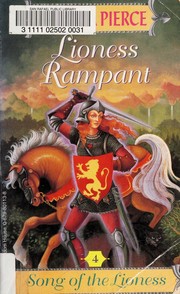
Lioness Rampant
Alanna searches for the Dominion Jewel with the Shang Dragon, then returns to Tortall to face Duke Roger at Jonathan's coronation.
2,478-word summary · 11 min read

Blood Bonds
Oleander is chained in a Resistance camp, and her five Bonds have to find her before Silas Davies finishes what he started in this third Bonds that Tie book.
2,018-word summary · 9 min read
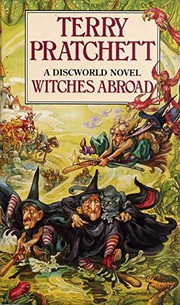
Witches Abroad
Three Lancre witches fly to Genua to stop a fairy godmother from forcing a servant girl into a storybook marriage, and find a city arranged around a happy…
2,651-word summary · 12 min read
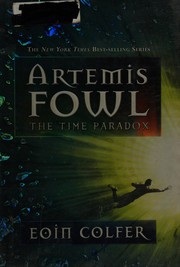
The Time Paradox
When his mother falls ill with a fairy disease, Artemis Fowl travels back in time to find the extinct lemur that can cure her and confronts his younger self.
2,601-word summary · 12 min read

The Golem's Eye
Two years after The Amulet of Samarkand, Nathaniel is a rising bureaucrat, Bartimaeus is his unwilling servant again, and something made of clay is tearing…
2,299-word summary · 10 min read

Magician's Gambit
Garion and his companions cross haunted Maragor and the caves beneath Rak Cthol to recover the Orb of Aldur.
2,391-word summary · 11 min read