
Anya's Ghost
2,001-word summary 9 min read 221 pages in the book
- First published
- 2011
- Publisher
- First Second
- Pages
- 221
- ISBN
- 9781596435520
Reading options
What's inside (7 sections)
Anya's Ghost is a graphic novel about a teenage girl who falls into a well and meets a ghost, which sounds like the setup for a sweet paranormal friendship story. It is not. Vera Brosgol's first book starts as a comedy about an awkward Russian immigrant at a New England private school, turns into a story about wanting to be popular, and then becomes something much darker. It is also very funny. By the end, the ghost is not a friend. She is a mirror, and what she reflects is not flattering.
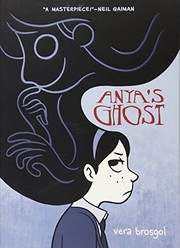
The book was published by First Second in 2011. It is 221 pages, drawn mostly in shades of violet, and it won the Cybils Award, the Eisner Award, and the Harvey Award. Brosgol had been working on comics for years, but this was her first full-length graphic novel, and it took about four years from idea to publication. You can feel that time in the drawing. The panels are clean and confident, and the story knows exactly how much to show and how much to leave off the page.
Falling into the well
Anya Borzakovskaya lives with her mother and her six-year-old brother, Sasha. They are Russian immigrants, and Anya is embarrassed by almost everything about her home life: the food, the accents, the cramped apartment, the way her mother dresses. She goes to a private school where she does not fit in. She is not bullied exactly. She is ignored, which is worse in some ways, because it gives her nothing to push against.
One day she skips school and walks through the woods. She falls into a dry well. At the bottom, she finds a human skeleton, and then she meets the skeleton's ghost. The ghost is a girl about her age named Emily Reilly. Emily says she fell into the well ninety years ago, broke her neck, and died of dehydration. She has been stuck there ever since, because her bones were never found.
Anya is rescued by a passerby, but Emily's skeleton stays in the well. Anya also accidentally takes a finger bone with her, which gives Emily a connection to the outside world. Emily starts appearing at school. She helps Anya cheat on a biology exam. She helps her spy on Sean, the boy Anya likes. She is eager to be useful, and Anya is lonely enough to accept the help.
The early chapters are funny. Anya is a great comic character: sulky, sarcastic, and deeply insecure. She wants to be seen, and she has no idea how to make that happen. Emily, by contrast, is sweet and old-fashioned and a little pathetic. She talks about her fiancé who died in the First World War, and her parents who were murdered, and the killer she was running from when she fell. Anya promises to find out who killed Emily's family. Emily promises to help Anya become popular.
The bargain
The middle of the book is about the cost of that bargain. Emily's help works, at first. Anya gets attention. She gets closer to Sean. But she also starts drifting away from Siobhan, the one friend she had before Emily showed up. Siobhan is overweight and unglamorous and loyal, and Anya is embarrassed by her in the same way she is embarrassed by her mother. The book is honest about that embarrassment. It does not make Anya a villain for feeling it, but it does not let her off the hook either.
Emily becomes more demanding. She wants Anya to dress a certain way. She wants Anya to go to a party. When Anya discovers that Sean has a girlfriend, Elizabeth, and that Sean cheats on her with her knowledge, Anya leaves the party. Emily is furious. She cannot understand why Anya would walk away from the boy she is supposed to want.
That is the first sign that Emily's idea of happiness is not Anya's. Emily has been dead for ninety years, and her understanding of high school is based on nothing. She is trying to live through Anya, and she has a very specific script for how Anya's life should go. The book is smart about how a ghost can be both needy and controlling. Emily does not have a body, so she uses Anya's.
The visual storytelling does a lot of work here. Brosgol draws Emily as a pale, soft figure with big eyes and a tentative smile. As the book goes on, Emily's appearance changes. She straightens her hair. She starts smoking ghostly cigarettes. She becomes sharper, more modern, more like the person Anya is trying to be. It is a subtle transformation, and it makes the reveal land harder.
One of the things the book does best is show assimilation as a daily negotiation rather than a single dramatic choice. Anya is not trying to stop being Russian. She is trying to stop being seen as Russian, which is different and more exhausting. She wants to blend in at school, and she wants her mother to blend in when her friends are around, and she is ashamed of wanting both things. Brosgol draws the mother with real warmth, which makes Anya's embarrassment more painful. You can see that the mother is doing her best, and you can see that Anya knows it, and you can see that knowing it does not make the shame go away.
That emotional honesty is what elevates the book above a simple ghost story. The supernatural plot is a vehicle for a very ordinary adolescent fear: that the person you are is not the person you want to be, and that everyone can tell. Emily offers Anya a way out of that fear, and the price is that Anya has to become someone else entirely. The book is careful to show that the price is not worth it, but it also shows why Anya is tempted.
The truth
Anya goes to the library without Emily and starts researching the Reilly family. She gets help from Dima, the class nerd, who knows how to use microfilm and old records. What they find is not the story Emily told. Emily had no fiancé. She was not running from a killer. She murdered a young couple in their home after a boy she loved rejected her, and then she died while running from the authorities.
The reveal recontextualizes everything. Emily's sweetness was a performance. Her stories about the war and her family were lies, or at least delusions. She is not a victim who needs justice. She is a killer who has been waiting in a well for someone to attach herself to.
When Anya confronts her, Emily does not deny it. She becomes threatening. The finger bone goes missing, and Emily starts moving objects. She causes Anya's mother to fall down the stairs. She appears to Sasha, who is terrified. Sasha eventually reveals that he found the bone earlier and thought it was a dinosaur bone for his collection. Anya takes it back and runs for the well, with Emily chasing her.
The chase is the best sequence in the book. Brosgol uses the panel layout to create speed and claustrophobia. Emily is not a physical threat in the ordinary sense, but she can affect the world just enough to be dangerous. When Anya reaches the well, she confronts Emily and tells her that she is trying to live through her. Emily fires back that Anya is no better. She says they are alike. And in a way, they are. Both of them want to be someone else. Both of them are willing to hurt the people close to them to get it.
Anya drops the bone into the well. Emily, desperate, possesses her own skeleton and climbs out. The image of a skeleton with a ghost inside it, dragging itself out of a well, is genuinely creepy. Anya does not fight her. She talks to her. She tells Emily that there is nothing left for her, that the world has moved on, that she cannot keep doing this. Emily cries, and then she dissipates. The skeleton falls back into the well.
The next day, Anya convinces the school to fill in the well. She reconnects with Siobhan. The ending is not a grand victory. It is a quiet decision to stop pretending to be someone else.
What the book does with the ghost story
Ghost stories usually use the ghost as a metaphor for something the living person cannot let go of. In Anya's Ghost, the ghost is a metaphor for the desire to be someone else, and for the way that desire can curdle into cruelty. Emily is what happens when you spend your whole life waiting to be chosen. She was rejected, she killed the people she blamed, and then she died alone. Her ghost is not evil in a cosmic sense. She is a sad, angry girl who never got what she wanted.
Anya's arc is about learning to accept the life she has. That sounds like a cliché, and the book knows it. What saves it is the specificity. Anya's embarrassment about her mother is not abstract. It is the smell of the food, the way her mother talks to strangers, the apartment that is too small. Her desire to be popular is not abstract either. It is a boy, a party, a group of girls who barely notice her. The book earns its ending by making the temptation real.
The art is a big part of why it works. Brosgol draws faces with a lot of expression and very little fuss. Anya's default expression is a scowl, and the book gets a lot of mileage out of watching that scowl soften or harden depending on who she is with. The violet palette gives the whole book a slightly dreamlike quality, which makes the ghost material feel natural. The linework is clean, and the panels are easy to follow, which matters for a story that has to balance comedy, horror, and emotional realism.
Reception and legacy
Anya's Ghost was well received when it came out. It won the Eisner for Best Publication for Young Adults in 2012, and it has become a staple of middle school and high school reading lists. It is often recommended to readers who liked Raina Telgemeier's Smile or Vera Brosgol's later picture books, though it is darker than either. A film adaptation was in development for a while, but it has not happened yet.
The book is not perfect. Some of the supporting characters are thin, especially Sean and Elizabeth, who exist mostly to be obstacles. The reveal about Emily's past is effective, but it comes late, and the middle section where Emily is helping Anya could have been tightened. The final act moves very fast, so a few of the emotional beats get less room than they need. The ending is a little too neat, with the well filled in and the friendship restored, as if trauma can be resolved by a single act of courage.
But the core is strong. Anya is a memorable protagonist, and her voice is funny and painful in equal measure. The book understands that being a teenager is often about wanting to be someone else, and that the people who promise to help you become that person are not always safe. Emily is a villain, but she is also a warning. She is what happens when you let someone else's idea of you take over.
I read Anya's Ghost in one sitting and then went back to look at the art again. That is the test for a graphic novel. The story has to work, and the pictures have to reward a second look. This one does both. It is a ghost story, a coming-of-age story, and a story about a girl learning to be okay with her mother, and it manages to be all three without feeling crowded.
FAQ
What is Anya's Ghost about?
It is a graphic novel about Anya, a Russian immigrant teenager who befriends a ghost named Emily and learns that Emily's helpfulness hides a violent past.
Is Anya's Ghost scary?
It has some genuinely creepy scenes, especially once Emily becomes controlling, but it is primarily a coming-of-age story with dark humor rather than a horror novel.
What awards did Anya's Ghost win?
It won the 2011 Cybils Award and the 2012 Eisner and Harvey Awards for young adult graphic literature.
Similar books

Dumplin'
Willowdean Dickson enters her town's beauty pageant as a protest and discovers that confidence is harder to keep once she lets someone close.
1,922-word summary · 9 min read
Me and Earl and the Dying Girl
A self-protective Pittsburgh senior is pushed to befriend a classmate with leukemia, and a clumsy film with Earl changes all three.
2,773-word summary · 12 min read
The DUFF
Bianca Piper hates Wesley Rush for calling her the DUFF, until a secret arrangement during her parents' divorce forces both teens to grow up.
2,323-word summary · 10 min read

The Second Summer of the Sisterhood
Four friends share the traveling pants through a summer of grandmothers, first loves, and mothers who are learning to let go.
2,209-word summary · 10 min read

Aristotle and Dante Dive into the Waters of the World
Ari and Dante return for senior year in El Paso, navigating first love, AIDS, family grief, and the cost of being openly gay in 1987 Texas.
2,188-word summary · 10 min read

Someone Like You
Halley and her best friend Scarlett face a summer of grief, a surprise pregnancy, and Halley's dangerous first romance in Sarah Dessen's 1998 young adult novel.
2,218-word summary · 10 min read
Loveless
Georgia starts university sure she wants love, then learns she is aro-ace.
2,539-word summary · 11 min read

Since You've Been Gone
Shy Emily spends summer finishing her vanished best friend Sloane list of thirteen dares, finding Frank, Dawn, and courage.
2,566-word summary · 11 min read
Angus, Thongs and Full-Frontal Snogging
Fourteen-year-old Georgia Nicolson journals boys, friends, parents, and Angus the cat in a frank, funny first year of teen chaos.
2,005-word summary · 9 min read
I Am the Messenger
Nineteen year old Ed stops a robbery, then gets playing cards sending him to help strangers.
2,124-word summary · 9 min read
Are You There God? It's Me, Margaret
Twelve-year-old Margaret navigates puberty in New Jersey while trying to choose a religion on her own.
2,178-word summary · 10 min read
The Absolutely True Diary of a Part-Time Indian
Fourteen-year-old Junior leaves his Spokane reservation school for an all-white farm town, drawing cartoons through grief, basketball, and divided loyalty.
3,224-word summary · 14 min read
Stargirl
Leo Borlock likes blending in until homeschooled Stargirl Caraway arrives at Mica High with a ukulele, a pet rat, and kindness that tests them both.
2,980-word summary · 13 min read
Will Grayson, Will Grayson
Two Chicago teens with one name collide, with Tiny Cooper's musical stealing every scene.
2,742-word summary · 12 min read
Simon vs. the Homo Sapiens Agenda
Closeted Simon Spier trades emails with Blue while Martin blackmails him over Abby and the school musical nears.
2,952-word summary · 13 min read
If He Had Been with Me
Childhood friends Autumn and Finn drift apart in high school until one August night changes everything.
2,785-word summary · 12 min read
The Sisterhood of the Traveling Pants
Four best friends share one magical pair of jeans through the summer that changes everything.
2,092-word summary · 9 min read
Aristotle and Dante Discover the Secrets of the Universe
Two Mexican American boys in 1987 El Paso become inseparable and learn what love asks of family.
2,093-word summary · 9 min read
The Perks of Being a Wallflower
Chbosky's Perks retold: Charlie's letters, Sam and Patrick, first year of high school in Pittsburgh.
1,951-word summary · 9 min read
The Outsiders
Outsiders retold: Ponyboy and greasers vs Socs, church fire, rumble, stay gold ache.
2,067-word summary · 9 min read

Paper Towns
Quentin chases clues after Margo vanishes, learning the girl he imagined was never the whole story.
2,198-word summary · 10 min read
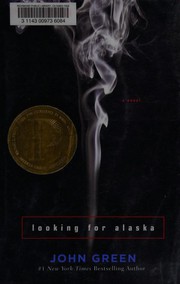
Looking for Alaska
Looking for Alaska retold: Miles at Culver Creek, Alaska Young, pranks, loss, before and after.
1,914-word summary · 9 min read

What Happened to Goodbye
Mclean has reinvented herself in four towns since her parents divorced. In Lakeview she uses her real name, and for the first time staying put becomes a choice.
2,796-word summary · 12 min read
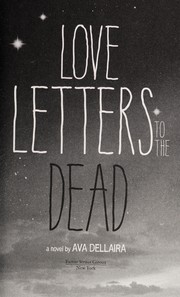
Love Letters to the Dead
A fifteen-year-old writes letters to dead artists because they cannot ask questions, and slowly tells the one story she has been hiding about her sister's…
2,520-word summary · 11 min read
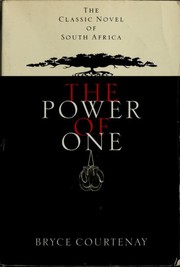
The Power of One
A boy in apartheid South Africa decides to become welterweight champion of the world, and the novel follows every mentor, fight, and loss that gets him there.
2,145-word summary · 10 min read
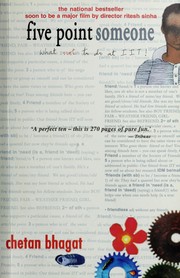
Five Point Someone: What Not to Do at IIT
Three friends at IIT drift to a five-point GPA, mock the system, and break into a professor's office for an exam paper.
2,458-word summary · 11 min read
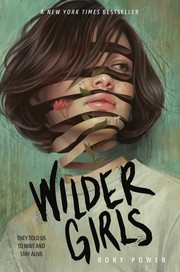
Wilder Girls
At a quarantined boarding school off Maine, three girls with strange mutations search for a missing friend and learn what the adults have hidden.
2,594-word summary · 12 min read
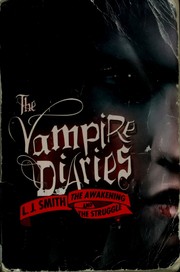
The Awakening / The Struggle
A popular high school girl falls for a vampire, then discovers that his dangerous brother wants her too, in the first two books of the Vampire Diaries series.
2,660-word summary · 12 min read
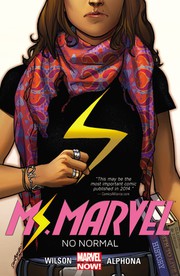
Ms. Marvel, Vol. 1: No Normal
Kamala Khan, a Jersey City teenager and Carol Danvers fan, gains shapeshifting powers and has to decide what kind of hero she wants to be.
2,579-word summary · 11 min read
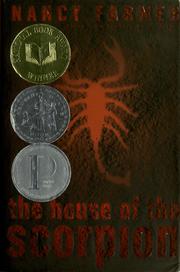
The House of the Scorpion
A clone raised in a drug lord's poppy fields learns what he was made for and chooses what to do with the life he was given.
2,527-word summary · 11 min read