
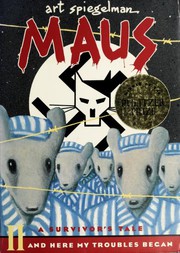
Maus II: A Survivor's Tale: And Here My Troubles Began
2,111-word summary 9 min read 144 pages in the book
- First published
- 1991
- Publisher
- Pantheon Books
- Pages
- 144
- ISBN
- 9780679729778
- Series
- Maus (#2)
Reading options
What's inside (8 sections)
I came to Maus II right after the first volume because stopping at the gate of Auschwitz felt impossible. Art Spiegelman published it with Pantheon Books in 1991, a 144 page book that finishes the story started in Maus I, and it is heavier in a different way. The first book was about getting to the camp. This one is about living inside it and then living after it.
The shape is the same. In the present, Art sits with his father Vladek in New York, in the Catskills, at a kitchen table covered with pills and papers, trying to get the rest of the story. In the past, Vladek and his wife Anja are inside Auschwitz and Birkenau, separated by fences and work details, trying to stay alive one more day. Art draws Jews as mice, Germans as cats, Poles as pigs. Americans later show up as dogs. People wear masks when they try to pass. It still works. It still stings.
A bungalow in the Catskills and a tired father
The present story opens with Vladek older, crankier, living with Mala in the Catskills and in Rego Park, counting money, arguing about food, refusing help he needs. Mala is worn out. She tells Art plainly that Vladek treats her like a servant. Vladek says Mala does not understand saving because she did not starve. Art holds his tape recorder between them and tries to keep peace.
Success has changed Art's life in uncomfortable ways. Maus I came out, got praised, sold, got taught. Strangers ask him what to draw next. Reporters want a message. He feels guilty for making art from his father's pain and guilty for feeling tired of being asked about it. There is a panel where he sits at his drawing table feeling small while famous names pile around him. I recognized that feeling even though my life looks nothing like his.
Art sees a therapist named Pavel, himself a survivor, and those sessions give the book air. Pavel listens while Art talks about fame, about hating Vladek and loving him, about fear that he does not deserve attention for drawing what his parents lived. Pavel says something plain about whether survival is noble or just luck plus help, and Art carries that line for chapters.
Vladek does not want to talk some days. His heart is bad. His eyes are bad. He naps, wakes, asks about the same bill twice. Art coaxes, rewinds, asks about Birkenau again. Mala leaves the room. The recorder keeps turning.
It is slow. It is supposed to be slow.
Separated by wire in Auschwitz
When Maus II picks up the past, Vladek has just arrived in Auschwitz and Anja has been sent to Birkenau, the women's section nearby. They can barely see each other. They cannot write openly. Vladek describes the striped uniform, the shaved head, the wooden shoes that cut his feet, the number on his arm. Older prisoners teach him fast. Keep your head up at selection. Look able to work. Do not cough where guards can hear. Trade carefully.
Work saves him at first. He knows tin work and shoe repair and English and some German, and he makes himself useful to kapos who need things fixed. He mends boots. He patches roofs. He carries loads without complaint. Usefulness buys soup, buys a warmer corner, buys another week. Anja, in Birkenau, has fewer openings. She is thin, scared, missing Vladek and grieving their son Richieu, who stayed behind in Poland and did not live. News moves by whisper. Alive today. Taken last night. Sick in that block.
What got to me was how much of camp life is waiting in lines. Line for soup. Line for work. Line to be looked at and pointed left or right. Spiegelman draws those lines tight and flat, fences and towers plain, smoke in the distance. He does not draw gore to shock. He draws routine that kills.
Vladek gets moved between jobs and barracks. He learns which guard takes cigarettes for a favor, which prisoner will share bread and which will steal it. Anja sews or sorts or cleans, depending on the week. Both of them lose weight you can see in the drawings. Cheeks hollow. Coats hang loose.
I think the calm in these pages makes them harder to read than louder books about the camps.
Messages through Mancie and food that saves
The middle of the book turns on contact. Vladek cannot visit Anja, but he finds ways to reach her. A French prisoner named Mancie, as I remember, works in a place where messages can pass. Vladek bribes, begs, trades bread to get small notes to Anja and to get word back. Are you alive. Are you eating. Hold on. Anja writes back short lines that Vladek keeps in his head for forty years.
Food is currency and medicine. Vladek trades cigarettes he does not smoke for bread he can share. He saves half a ration for a friend who can get news. He fixes a shoe for a kapo and gets a little extra soup, which he carries to someone who can carry a note. Every exchange risks a beating. He does it anyway because knowing Anja lives keeps him upright at morning roll call.
Anja's side is thinner in the record because she left fewer words behind, and Spiegelman does not fill the gap with invention. We see her through Vladek: thin, loyal, frightened, trying to stay near women she trusts. She trades a small thing for a favor. She stands straight when she feels faint. She holds onto Vladek's messages like proof.
There are selections in these chapters that come without warning. A guard looks, points, and lives divide. Vladek watches men he ate beside walk away. He learns not to stare, not to cry out, not to step forward. Survival looks like stillness.
Repair skills keep coming up. A boot sole. A hinge. A strap. Small fixes earn nods from men with power. Vladek is not strong in the way young prisoners are strong. He is handy and polite and watchful, and that keeps him off the worst details.
Short truth: these pages made my hands hurt to read.
The march out and the long way back
As the war turns, the Germans empty the camps. Prisoners are forced onto the road in winter with little food, what histories call the death march, though Vladek just calls it walking until your feet bleed. Men fall. Guards shoot or leave them. Vladek keeps moving by staying near the middle of the column, sharing what little he has, sleeping sitting up in barns.
He ends up in Dachau for a stretch, crowded and sick and still hungry when hunger should be over. Then the guards leave or lose control, and the prisoners wait in confusion for Americans or for anyone with bread. Vladek describes eating too fast and getting sick, sleeping on a real floor, not believing quiet means safe.
Reunion comes slowly. Vladek and Anja each survive, each displaced, each searching lists and faces for the other. Spiegelman gives this part little space, which felt right. After hundreds of pages of detail, the meeting is almost quiet. They find each other. They cry. They try to go back to Poland, see what remains, learn who is gone. Richieu is gone. Many cousins are gone. Home holds ghosts and strangers in their rooms.
They leave for America. Vladek starts over selling cloth, saving coins, learning English from signs. Anja cares for baby Art, born after the war, while carrying grief she rarely names. A photo of Richieu stays on the wall. Art grows up beside a brother he never met, feeling second to a perfect child.
The past ends. The recorder clicks off.
Fame, Pavel, and the burned diaries
Back in the present, Art cannot enjoy finishing. Maus I brought money and interviews and guilt. He draws himself wearing a mouse mask now, to show he feels like a fraud. Reporters ask how it feels to speak for survivors. He wants to say he only spoke for his father, and even that felt incomplete.
Pavel helps him name it. Art talks about Richieu, the brother who died before he was born and who seems perfect in Vladek's memory. Art talks about Anja, who killed herself in 1968 when Art was twenty, after years of low spells. He talks about Vladek finding her notebooks after her death and burning them, page by page, because grief and old habits told him to clear things away. Art never forgave that fire. Her own words are gone. He has to find his mother through his father's telling, which is loving and partial.
Vladek's second marriage fills these late chapters with noise. Mala wants to leave or be heard. Vladek accuses her of wasting, of moving papers, of not respecting his pills. Art tries to mediate and fails. He yells at Vladek about being cheap with help, then hates himself for yelling at an old man who survived Auschwitz. Mala cries in the kitchen. The phone rings. Bills pile.
There is a hard scene where Vladek admits he burned Anja's diaries because he could not bear to read them and did not want Art burdened. Art shouts that it was murder of memory. Vladek shrugs in that closed way he has, saying he did what he thought was right. Neither man bends. Pavel later tells Art that grief makes people strict, and Art nods without feeling better.
One detail I keep turning over is how Vladek saves even now. He tapes receipts together, refuses a new coat, argues over a few coins with Mala while Art watches with a mix of shame and recognition. In Auschwitz that habit fed him for a day. In Queens it empties the room. Art sees the link and still loses patience, which makes him feel disloyal. As I remember, Pavel tells him that living with that split is part of the work, not a failure of it.
I found this part more painful than the camp chapters in some ways, because no guard can be blamed. Just tired people hurting each other at a table.
Masks, mice, and the last tired line
Spiegelman keeps playing with the animal drawings in this volume, and it pays off. Mice wear pig masks to pass as Polish on trains and streets. A mouse in a cat uniform might get by for an hour. Americans as dogs do not bark with hate in the same way; they hand out chocolate and stare. The point is not cute. It shows race as a costume forced on people, one that can slip and kill you.
The art stays black and white, small panels packed tight, lots of crosshatch. Birkenau fences look endless. Barracks look damp. Faces age fast. Vladek in the present has a heavy brow and thick glasses. Art often looks hunched over his desk. When Art draws himself with strings on his mask, like a child in costume, you feel how thin the line is between witness and performer.
My fair criticism is short. The time jumps can confuse. One page you are in Birkenau trading soup, next you are in the Catskills arguing about a grocery receipt. Names pile up fast, kapos and cousins and neighbors, and keeping them straight takes work. A few camp chapters repeat the same trade and bribe shape, fix, eat, pass note, wait, which is true to life there but slow on the page. Young readers may need an adult nearby, not because the drawings are graphic but because the weight builds. I also wanted more of Anja in her own voice, though I know those pages are gone for a reason the book mourns.
The ending lands without speech making. Vladek is tired. He tells Art he is done talking, that he told enough, that he needs rest. He calls Art Richieu by mistake, or by love, mixing his living son with his dead one. Art stops the tape. No lesson is printed in bold. No healing montage follows.
I sat quiet after that last panel. A father asleep. A son with hours of tape. A mother gone twice, once to death in 1968 and once to fire when her pages burned. History filed into boxes in Rego Park. What stays is not a message about strength. It is a family still talking across wire, still misunderstanding, still trying. For a 1991 book only 144 pages long, that feels like a lot to carry, and worth carrying carefully.
FAQ
Is Maus II the end of the story?
Yes. Published by Pantheon Books in 1991, it is the second volume of Maus and picks up at arrival in Auschwitz. It ends with Vladek tired and done telling his story.
Why are Germans cats and Jews mice?
Germans appear as cats, Jews as mice, Poles as pigs, and later Americans as dogs. Masks show passing, and the crude split pictures Nazi racial thinking.
Is Maus II a light or quick read?
No. At 144 pages it is short but heavy, with camp selections, the death march, Anja's death in 1968, and hard family quarrels. It suits teens and adults reading with care.
Similar books
More from Maus first, then related titles.
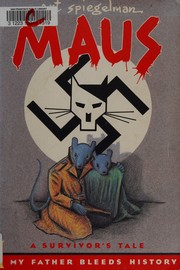
Maus I: A Survivor's Tale: My Father Bleeds History
Art Spiegelman interviews his father Vladek about Sosnowiec and Auschwitz, drawing Jews as mice in this tense father and son memoir.
2,223-word summary · 10 min read
Night
Elie Wiesel's account of Sighet, the cattle cars, Auschwitz and Buchenwald, told in short flat sections by a boy about fifteen. Why the book carries the year…
2,594-word summary · 12 min read

The Zookeeper's Wife: A War Story
The directors of the Warsaw Zoo hid roughly three hundred Jews in empty cages and outbuildings after the German invasion, while Jan worked for the resistance.
2,065-word summary · 9 min read

Long Walk to Freedom
Mandela's account of a Thembu childhood, a law practice, a banned movement, twenty-seven years in prison, and the negotiation that ended apartheid.
2,454-word summary · 11 min read
Brown Girl Dreaming
Jacqueline Woodson retells her childhood in verse, moving from Ohio to South Carolina to Brooklyn while the civil rights movement reshapes the world around her.
2,727-word summary · 12 min read

Too Much and Never Enough: How My Family Created the World's Most Dangerous Man
Mary L. Trump's 2020 memoir traces how a cold, zero-sum Queens household shaped her uncle, and uses family tax documents to challenge his self-made story.
2,059-word summary · 9 min read
The Happiest Man on Earth
Eddie Jaku's memoir follows a Leipzig childhood, Buchenwald, Auschwitz, a death march, and the slow rebuilding of a life in Australia.
2,597-word summary · 12 min read

Down and Out in Paris and London
Orwell's account of washing dishes in Paris hotels and tramping through London does not ask for pity, only for a clear look at how poverty actually works.
2,282-word summary · 10 min read
Beautiful Boy: A Father's Journey Through His Son's Addiction
David Sheff recounts watching his son Nic slide into meth addiction, and his own desperate, humbling search for how to help without destroying them both.
2,076-word summary · 9 min read

The Magnolia Story
How Chip and Joanna Gaines met, closed their first shop, nearly lost everything in a housing development, and built Fixer Upper.
2,994-word summary · 13 min read
Lone Survivor: The Eyewitness Account of Operation Redwing and the Lost Heroes of SEAL Team 10
Marcus Luttrell's account of the 2005 SEAL mission in Afghanistan that killed three of his team and left him alone.
2,144-word summary · 10 min read
The Letters of Vincent van Gogh
Vincent van Gogh's letters to his brother Theo, in a Penguin Classics selection edited by Ronald de Leeuw, trace a decade of work, faith, and obsession.
2,611-word summary · 12 min read
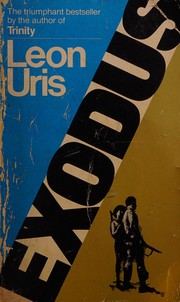
Exodus
Leon Uris's sweeping 1958 novel follows Jewish refugees, Haganah fighters, and Holocaust survivors from Cyprus to the founding of Israel and the 1948 war.
2,529-word summary · 11 min read

The Choice
Auschwitz survivor and therapist turns prison into a guide for healing.
2,472-word summary · 11 min read

Wild Swans
Three generations of women survive warlords, revolution, and the Cultural Revolution in Jung Chang's family memoir.
2,356-word summary · 10 min read

Twelve Years a Slave
Free violinist Solomon Northup tells how Brown and Hamilton lured him south into twelve years of Louisiana bondage until Bass letters brought rescue in January…
2,931-word summary · 13 min read
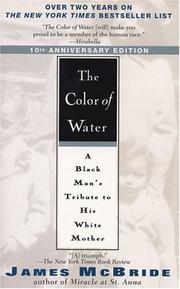
The Color of Water
A Black journalist presses his white mother about her hidden past, from a Virginia store to twelve college degrees.
2,457-word summary · 11 min read
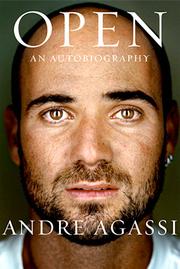
Open
Tennis star Andre Agassi recalls hating tennis, falling to No. 141, and rebuilding his life on his own terms.
2,352-word summary · 10 min read

Narrative of the Life of Frederick Douglass
Douglass names names from Maryland slavery to his 1838 escape, showing how literacy, wages, and faith were policed, then answers with defiance.
2,630-word summary · 12 min read
Holidays on Ice
Six Christmas pieces, from a Macy's elf stint to a feral family newsletter. Sedaris at his sharpest and most sentimental.
2,410-word summary · 11 min read

Hidden Valley Road: Inside the Mind of an American Family
The Galvin family raises twelve children while six sons develop schizophrenia across decades of shifting science.
2,492-word summary · 11 min read
American Sniper: The Autobiography of the Most Lethal Sniper in U.S. Military History
Navy SEAL sniper Chris Kyle recounts Texas roots, SEAL training, four Iraq tours, and the strain combat placed on his marriage and health.
2,011-word summary · 9 min read

The Storyteller: Tales of Life and Music
Foo Fighters frontman recalls Nirvana, drumming, fatherhood, and life on the road.
2,307-word summary · 10 min read

The Story of My Life
Deafblind Keller learns water at pump through Sullivan finger spelling.
2,149-word summary · 10 min read
The History of Love
An elderly locksmith and a grieving teenage girl in New York are joined by a lost manuscript published in Spanish under another man's name.
2,805-word summary · 12 min read
Let's Explore Diabetes with Owls
Sedaris gets French dental work, feeds a kookaburra in Australia, shops for a stuffed owl in London, and survives China, airports and a colonoscopy.
2,538-word summary · 11 min read
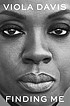
Finding Me
Viola Davis traces her path from poverty in Rhode Island to Oscar night with blunt honesty about race and family.
2,823-word summary · 13 min read
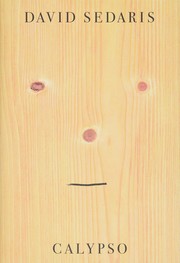
Calypso
Sedaris buys a Carolina beach house, grieves his sister Tiffany, tends his aging father, and turns illness and marriage into dry family comedy.
2,835-word summary · 13 min read
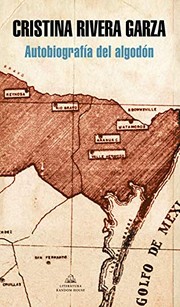
Autobiography of Cotton
A Pulitzer winner traces her cotton-worker grandparents and a 1934 border strike through archives, memory, and damaged land.
2,213-word summary · 10 min read