
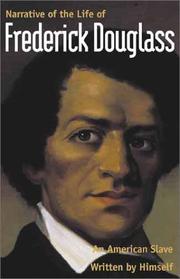
Reading options
What's inside (8 sections)
I picked this up because it is short and I kept hearing it named as the slave narrative to read first. I expected something stiff and old. What I got instead was a plainspoken account that moves fast and keeps pointing at how the system worked day by day. First published in 1845 by the Anti-Slavery Office in Boston, it runs only 192 pages in the Yale University Press paperback I read, ISBN 9780300087017, and Douglass wrote it just seven years after he got out. He was in his late twenties, working as an antislavery speaker in Massachusetts, and people in the audience kept doubting he had ever been enslaved because he spoke so well. So he sat down and named names, places, dates, and owners. That choice gives the book its force and also explains its shape. It reads like testimony given under oath.
You should know going in what kind of book this is. It is not a full life story. It covers birth to escape, roughly 1818 to 1838, with a preface by William Lloyd Garrison and a letter from Wendell Phillips up front, plus an appendix at the back about churches and slaveholders. Douglass skips or blurs a few things on purpose, especially the exact method of his escape, because others still needed those routes. If you want psychology and reflection on every page, this is not that. If you want to see how slavery stole food, sleep, family, reading, and wages through specific rules and punishments, it is all here.
Born in Tuckahoe without a birthday
Douglass opens with the fact that he does not know his age. Slaves on the Maryland Eastern Shore were kept ignorant of birthdays, and he guesses 1818 based on what he heard. His mother was Harriet Bailey, held by the same men who held him. He saw her only a few times. She walked miles at night after field work to lie with him briefly, then walked back before sunrise. She died when he was around seven. He says he was not allowed to see her during her illness or death or burial. That flat telling sets the tone for much of the book.
His first master on paper was Captain Aaron Anthony, manager for Colonel Edward Lloyd, one of the richest men in that part of Maryland. Douglass lived for a time at the Lloyd home farm, where the big house stood apart from the rough slave cabins and where children ran half clothed and hungry. He describes the monthly allowance of cornmeal and salt pork, the yearly issue of one pair of trousers and a couple of shirts, no beds to speak of, and children sleeping on clay floors with a sack for covering. He remembers singing that sounded cheerful to outsiders and felt like grief to those singing. He is blunt that masters judged the contentment of slaves by these songs and got it wrong.
The early beating scene is famous for a reason. He watches his Aunt Hester tied up and whipped by Captain Anthony for seeing a neighboring man. He writes that he hid in a closet and that the sight burned into him. He does not dress it up. He says it was the first time he understood that white men could do such things and face no answer for it. Shortly after, his grandmother Betsy, who had served the family for years and raised many children, is put alone in a hut in the woods after she grows too old for field work. Douglass returns to her a few times in the book. Her fate tells you what the system did with people once their labor ran out.
One small thing stayed with me. Douglass notes that slave children were separated from mothers before the age of twelve months to break attachment early. He treats this as policy, not accident. That is the level he writes at most of the time. He gives you the rule, then the instance, then the cost.
Sent to Baltimore where reading got dangerous
Around age eight he is sent to Baltimore to live with Hugh and Sophia Auld, relatives of his owner by marriage. The move probably saved his life in one sense and changed it in another. In the city he sees slaves hired as ship caulkers and laborers, with a little more movement and dress than field hands, though still owned and whipped. Sophia Auld starts teaching him the alphabet. She had never held slaves before and does not yet know she is forbidden to teach. When Hugh finds out he shuts it down hard. Douglass quotes the substance of Hugh's warning: reading would make him unfit for slavery.
That sentence becomes the hinge of his youth. Douglass decides that if learning is the road out, he will take it. He bribes hungry white street boys with bread to help him with letters. He copies shipyard markings, practices with chalk on fences and brick, works through a used copy of The Columbian Orator, a school reader full of speeches about liberty and dialogues about freedom. One piece in it, a debate between a master and a runaway, hits him with special weight. Another, about emancipation under a tyrant, gives him words for what he already felt.
Baltimore also teaches him about wages and theft by law. Later, when he is hired out as a caulker, he earns good money and must hand every cent to Master Hugh. He describes asking Hugh for a little time to find his own work and pay a weekly sum instead. Hugh agrees to a price that rises over time. The arrangement still leaves Douglass paying for the right to keep part of what his own hands made. He keeps the arithmetic visible. Readers in 1845 who thought of slavery as mostly a Southern farm matter were forced to see city slavery and money slavery too.
I read these chapters slowly because they answer a question I had carried in without noticing. Why did slaveholders fear a book more than a knife. Douglass shows why. A knife can be taken. Once a boy understands that records, passes, papers, and laws are marks on paper, he starts to see the whole order as made and therefore breakable.
The year with Covey and the fight he kept returning to
When Douglass is about sixteen he is sent to Edward Covey, a poor farmer with a reputation for breaking young slaves. Slaveholders paid Covey to take difficult hands for a year. Douglass calls him a professor of the craft. The work runs from before dawn to dark in all weather. Covey sneaks through fields and woods to catch anyone resting. He whips for small faults. Douglass, worn down and half starved, writes that his spirit was nearly crushed and that he sometimes wished himself an animal to escape thought.
The passage people remember comes after months of this. Covey ties him and beats him until the blood runs. Douglass crawls to Master Thomas Auld to plead for protection and is sent back with a lecture about deserving it. On a hot morning Covey tries to tie him again in the stable. Douglass, who says something in him snapped back into place, grabs Covey by the throat and holds him. They struggle for a long stretch, with Covey calling for help from hired hands. One refuses clearly. Another tries halfheartedly and gets hurt. In the end Covey lets him go and never lays a hand on him again in the remaining months.
Douglass is careful about what he claims here. He does not say he beat Covey bloody or won some contest. He says he resisted and held his own, and that Covey, who cared about his reputation as a breaker, preferred to let the story die rather than admit a sixteen year old had stood him off. The result mattered more than the details. Douglass writes that the fight revived his sense of manhood and his will to be free. He dates his resolve from that morning.
If you have heard Douglass reduced to slogans about struggle and progress, this chapter corrects that. It is not a speech. It is a tired teenager in a stable deciding he would rather risk a bullet than take another tying. I found it more moving than any later oratory because he admits fear all through it.
Sabbath school, a failed plot, and jail in Easton
After Covey, Douglass is hired to William Freeland, a fairer master by the standards of the time. There he holds a secret Sabbath school in the woods and empty houses, teaching other slaves to read with smuggled spelling books. At first a few come. Then forty show up. Freeland does not stop it. Other whites threaten to break it up with clubs. Douglass keeps it going until the group plans something larger.
In 1836 he and several friends plan to escape by canoe up the Chesapeake. They write passes in Douglass's hand, pack dry food, and agree to move on a Saturday night when boats are less watched. Someone betrays them. They are seized before they reach the water, tied, and taken behind horses to Easton jail. Douglass expects to be sold South, which to Maryland slaves meant a likely death sentence by labor in Louisiana or Mississippi cotton and sugar fields. His friends are in danger too because his forged passes prove planning.
What follows shows how arbitrary mercy could be. Thomas Auld, instead of selling him South, sends him back to Baltimore to learn caulking and hire out. Douglass understands it as luck mixed with family interest. Baltimore needs his wages. He goes back angry and more careful. He joins a Black church, takes part in debate and self improvement groups, meets Anna Murray, a free Black woman who believes in him and later helps fund his flight. He saves money bit by bit. He studies shipyard movement, railroad timetables, and the look of free Black sailors with their papers and protection papers.
There is a fair criticism to make here. Douglass races through some of these Baltimore years. People who want a full portrait of Anna Murray will not find it in this book. She appears briefly, mostly as help and faith. Friends get a line or two. Douglass had reasons. He was protecting people and methods, and he was writing an antislavery tract, not a memoir of courtship. Still, I felt the thinness. The woman who would share his whole life deserves more than a few sentences, and Douglass himself must have known it.
The escape he refuses to map
He escaped in September 1838 at about twenty. On that much he insists. On how, he will not give a usable account in this book, and he explains why at length. To print the route, the disguise, the helpers, and the papers would be to close that road for those coming after and to endanger free Black sailors and railroad workers who aided fugitives. Later autobiographies say more. Here he gives you the feeling rather than the diagram.
He describes reaching New York with almost no money, afraid of every door because kidnappers and return agents watched the docks and boarding houses. A Black sailor directs him to a safe house. Anna follows. They marry in New York. They take a steamer to New Bedford, Massachusetts, where whaling money supports a large free Black community. He changes his name along the way. Born Frederick Augustus Washington Bailey, he drops the middle names, tries Stanley, then Johnson when that proves too common, and finally accepts Douglass, suggested by a white friend after a character in Walter Scott's poem. Work comes hard. He saws wood, shovels coal, digs cellars, and later caulks ships when white caulkers drive Black workers off the docks. He notes the Northern prejudice that barred him from his trade even in a free state.
The closing movement turns from story to argument. Douglass attends an antislavery meeting in Nantucket in 1841, is asked to speak, and finds his calling. Garrison prints his early speeches. Phillips vouches for him in the prefatory letter. Then Douglass takes up the pen himself, and the last thirty pages widen into an attack on slaveholding religion. He lists the gap between Sunday preaching and Monday whipping, between prayers for missions abroad and the selling of Black members of the same church at home. The appendix offended many churchgoers in 1845. That was the point. He wanted Northern readers who hated slavery in theory to see the money and communion wine connecting their own pews to it.
Readers who only know Douglass as a statue or a postage stamp may be surprised by the edge here. He is not soothing. He says slave songs prove sorrow, not joy. He says kind masters are still masters. He says the worst overseers were often poor whites rented for the job, which spread guilt through the whole white community. He spares almost no one except the few poor whites who refused to help Covey and the Black friends who studied with him at night.
Where it holds and where it pinches
The strength is clarity. At 192 pages in this edition, the book never wastes a scene. Every beating has a name attached. Every law has a body attached. When he wants you to understand hiring out, he tells you his weekly price and what he kept. When he wants you to understand literacy, he shows you bread traded for letters. The style is plain with sudden rises into anger or grief, then back to record keeping. It never reads like dictation. It reads like a man who learned sentences the hard way and now uses them as tools.
The thin spots are real too. Women other than his mother, grandmother, and Aunt Hester get little space. Sophia Auld starts as a kind teacher and turns cold under her husband's rule, but we see that change from outside only. Anna Murray, so central to his survival, barely speaks. The escape chapter withholds so much that first time readers may feel cheated. The Garrison preface and Phillips letter, useful in 1845 as white guarantees of a Black man's truth, now feel patronizing and slow the start. Skip them if you must on a first pass and come back later. The appendix repeats some points from earlier chapters and preaches where the story had already persuaded.
I would still place it near the front of any American shelf. Read it in two sittings with a pencil. Mark every place where Douglass states a rule of slavery in one sentence. Mark every price. By the end you will have a working model of the institution in your head, built from rules and prices rather than from cruel images alone. Then read the last ten pages again. He asks Northern churches what their faith is worth if it can bless a trader on Sunday and buy from him on Monday. It is a hard question. It has not aged out.
For facts to keep straight: Douglass published this first book on May 1, 1845 in Boston through the Anti-Slavery Office at 25 Cornhill, with Garrison's preface and Phillips's letter. The first edition ran about 125 pages. The Yale paperback I cite runs 192 pages and carries the approved text with notes, which is why teachers favor it. He would go on to write My Bondage and My Freedom in 1855 and Life and Times in 1881 and 1892, much longer books with more on the escape and the later public career. Start here for the raw account. Go there for the rest of the life.
FAQ
When was Narrative of the Life of Frederick Douglass first published?
On May 1, 1845 in Boston by the Anti-Slavery Office at 25 Cornhill, with a preface by William Lloyd Garrison and a letter from Wendell Phillips. The Yale paperback cited here runs 192 pages with ISBN 9780300087017.
Why does Douglass not explain exactly how he escaped?
He says printing routes, disguises, and helpers would close the road for others and endanger free Black sailors and railroad workers. His later books My Bondage and My Freedom and Life and Times say more.
Is it part of a series?
No. It is the first of three autobiographies, followed by My Bondage and My Freedom in 1855 and Life and Times in 1881, revised in 1892.
Similar books
Twelve Years a Slave
Free violinist Solomon Northup tells how Brown and Hamilton lured him south into twelve years of Louisiana bondage until Bass letters brought rescue in January…
2,931-word summary · 13 min read
The Water Dancer
An enslaved man with a strange power for travel fights to free himself and rescue those he loves.
2,910-word summary · 13 min read
The Story of My Life
Deafblind Keller learns water at pump through Sullivan finger spelling.
2,149-word summary · 10 min read
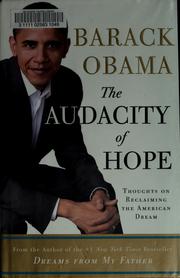
The Audacity of Hope
Obama's 2006 Senate memoir on parties, values, faith and race, written before his presidential run.
2,782-word summary · 12 min read
Dreams from My Father
Obama traces his Kansas and Kenyan families from Hawaii to Chicago community work to a first trip to Kenya.
2,053-word summary · 9 min read
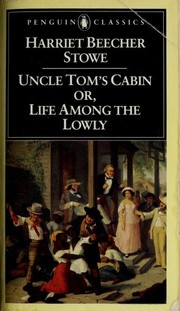
Uncle Tom's Cabin
Enslaved Tom, Eliza, and George face sale and escape under Southern law.
2,105-word summary · 9 min read
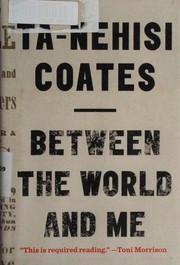
Between the World and Me
Coates writes to his son about the Black body in America, from Howard to the loss of Prince Jones.
2,234-word summary · 10 min read

Long Walk to Freedom
Mandela's account of a Thembu childhood, a law practice, a banned movement, twenty-seven years in prison, and the negotiation that ended apartheid.
2,454-word summary · 11 min read
Brown Girl Dreaming
Jacqueline Woodson retells her childhood in verse, moving from Ohio to South Carolina to Brooklyn while the civil rights movement reshapes the world around her.
2,727-word summary · 12 min read
1491: New Revelations of the Americas Before Columbus
Charles C. Mann gathers archaeology, ecology, and demography to argue that the Americas before Columbus were older, fuller, and more deliberately shaped than…
2,712-word summary · 12 min read

Too Much and Never Enough: How My Family Created the World's Most Dangerous Man
Mary L. Trump's 2020 memoir traces how a cold, zero-sum Queens household shaped her uncle, and uses family tax documents to challenge his self-made story.
2,059-word summary · 9 min read
James
Percival Everett retells Huckleberry Finn from Jim's side, giving him a library, a hidden school, and a voice the novel lets loose.
2,211-word summary · 10 min read

Down and Out in Paris and London
Orwell's account of washing dishes in Paris hotels and tramping through London does not ask for pity, only for a clear look at how poverty actually works.
2,282-word summary · 10 min read
The Wright Brothers
David McCullough tells the story of two self-taught Ohio brothers, working largely alone and out of a bicycle shop, who solved the problem of flight before…
2,027-word summary · 9 min read
Lone Survivor: The Eyewitness Account of Operation Redwing and the Lost Heroes of SEAL Team 10
Marcus Luttrell's account of the 2005 SEAL mission in Afghanistan that killed three of his team and left him alone.
2,144-word summary · 10 min read

Bury My Heart at Wounded Knee: An Indian History of the American West
Dee Brown's 1970 retelling of the American West from the point of view of the people it destroyed.
2,233-word summary · 10 min read

Wide Sargasso Sea
Jean Rhys gives the first Mrs. Rochester a Caribbean childhood, a marriage built on money and suspicion, and a voice that Charlotte Bronte left in the attic.
2,021-word summary · 9 min read

The Letters of Vincent van Gogh
Vincent van Gogh's letters to his brother Theo, in a Penguin Classics selection edited by Ronald de Leeuw, trace a decade of work, faith, and obsession.
2,611-word summary · 12 min read
Native Son
Richard Wright's landmark novel follows Bigger Thomas through one panicked night in Chicago and the manhunt, trial and reckonings that follow, exposing the…
2,265-word summary · 10 min read
A Raisin in the Sun
Lorraine Hansberry's 1959 play follows the Younger family as a $10,000 insurance check, a house in a hostile neighborhood, and a stolen investment test their…
2,444-word summary · 11 min read
The Warmth of Other Suns
Three migrants ride north out of Jim Crow toward Chicago and LA.
2,561-word summary · 11 min read
The New Jim Crow: Mass Incarceration in the Age of Colorblindness
How mass incarceration became a racial caste system after civil rights.
2,413-word summary · 11 min read
The Fire Next Time
Baldwin writes his nephew and faith on race in America.
2,463-word summary · 11 min read
Hidden Figures
Black women computers at Langley launch rockets past Jim Crow.
2,385-word summary · 11 min read
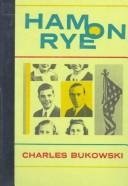
Ham on Rye
Henry Chinaski grows up rough in Depression Los Angeles and finds writing.
2,244-word summary · 10 min read
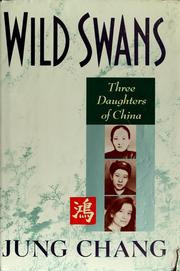
Wild Swans
Three generations of women survive warlords, revolution, and the Cultural Revolution in Jung Chang's family memoir.
2,356-word summary · 10 min read
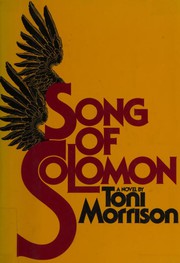
Song of Solomon
Milkman Dead leaves Michigan to hunt for family gold and finds instead the old song of his ancestor Solomon.
2,465-word summary · 11 min read
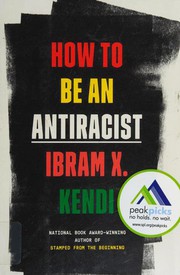
How to Be an Antiracist
Kendi blends memoir and history to argue that fair policy, not self fixing, creates an equal society.
2,513-word summary · 11 min read
The Color of Water
A Black journalist presses his white mother about her hidden past, from a Virginia store to twelve college degrees.
2,457-word summary · 11 min read