
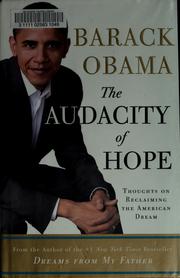
The Audacity of Hope
2,782-word summary 12 min read 375 pages in the book
- First published
- 2006
- Publisher
- Crown
- Pages
- 375
- ISBN
- 9780307237699
Reading options
What's inside (8 sections)
I came to this one late and a little backwards. I had already read Dreams from My Father and A Promised Land, so I thought I knew the Obama story. This book sat between them and I kept skipping it, assuming a Senate memoir from 2006 would feel dated. A friend left a worn hardcover on my table after a move, and I started it on a slow Sunday just to say I had. I finished three days later with a lot of penciled stars in the margins.
The edition I read was the Crown hardcover from 2006. It runs 375 pages in that printing. Obama was still the junior senator from Illinois when it came out, fresh off his 2004 convention speech in Boston and his Senate win, about four months before he announced for president in Springfield in February 2007. That timing matters. He is not writing with the caution of a president. He is writing like a man trying to explain to voters who he is before the national campaign machine does it for him.
The full subtitle is Thoughts on Reclaiming the American Dream, and the title comes from a sermon he heard in Chicago about having hope when the facts give you little reason for it. He tells that story briefly and moves on. Most of the book is less about hope as a feeling and more about how governing might work if people stopped performing for cameras.
A new senator learns how the building works
The opening chapters are the most readable part, at least for me. Obama describes arriving in Washington after a strange and lopsided Senate race in Illinois. His original Republican opponent dropped out after a scandal, and Alan Keyes was brought in from out of state late in the race. Obama won big. He went from state legislator to national figure in about two years, mostly on the strength of that one convention speech about there being no red America or blue America.
He is funny and a bit sheepish about how green he was. He gets lost in the Capitol basement. He gets a small office. He learns that Senate life means a lot of time in rooms with donors. This is where the book gets specific in a way I did not expect. He talks about the fundraising treadmill, the hours on the phone in a bare room near the Capitol calling people who can give, the way a vote on a bankruptcy bill or an energy amendment starts to look different when you know you will need ads in Chicago media markets that cost a fortune.
He names names and habits without sounding bitter. He kept a lot of his state senate habits, reading memos himself, writing his own speeches. In Washington he found that lobbyists often wrote the background papers, that amendments lived or died on procedure, that cable producers wanted a fight rather than a fix. He tells a story about going on television opposite a Republican colleague where both of them were polite in the green room and then sharp with each other on air because that was the format. It rang true to me. I have seen that switch in local politics too, just with smaller cameras.
His section on parties tries to be fair to both sides and will probably annoy loyalists in both. He says Democrats can sound like they think government programs solve everything and can dodge talk about values. He says Republicans under George W. Bush talked about ownership and freedom while running up deficits and expanding federal power where it suited them. He was writing during the Iraq war and after Hurricane Katrina, so his examples are from that period. The levees, the slow federal response, the images from the Superdome, all sit in the background. He uses them to argue that competence in government is a moral issue, not just a management one.
If there is a weakness early on, it is that he wants to agree with ordinary people a little too much. He meets voters in downstate Illinois diners and VFW halls who disagree with him on guns or abortion, and he reports that they are decent and have a point. Sometimes they do. Sometimes I wanted him to push back harder in the retelling. He admits this himself in places. He says he dislikes conflict and prefers to find a working middle. That honesty helps. It also tells you why some later critics would call his proposals cautious.
What he means by values and the Constitution
The middle of the book slows down. Obama tries to reclaim words like values and faith from the culture fights of the early 2000s. He grew up with a Kansas family that taught him self reliance and fair play, plus time in Hawaii and Indonesia that gave him a different view of custom. He says values for him include hard work and honesty and also a sense that we owe something to kids who did not pick their parents or zip code.
The Constitution chapter was my favorite surprise. He teaches constitutional law in Chicago, or did before the Senate, and he writes about the document like a teacher who still likes the classroom. He talks about Madison and the framers arguing through summer heat in Philadelphia, about the compromises over slavery that stained the start, about later amendments and court cases that widened who counted as a full person under law. He mentions Brown against the Board of Education and the civil rights statutes as corrections, not as proof the system always works on its own.
He makes a case for restraint by judges and by legislators. He is pro choice and says so plainly, but he also says he understands why someone who believes life starts at conception sees the issue differently. He supports a strong reading of free speech and is wary of both parties trying to bend rules to win the next election, whether through gerrymandered districts or court stripping proposals that were floating around then. Some readers will find this too careful. I found it refreshing after years of online shouting, even if I kept wanting dates and votes attached to the principles. He gives a few, like his opposition to the Iraq resolution and his votes on judicial nominees, but he stays at the level of approach more than record.
One small thing stuck with me. He describes carrying a pocket copy of the Constitution and pulling it out during town meetings. People laugh at first, then they listen. I am not sure every meeting went that way. Memory smooths stories. But the image fits the larger point he keeps making. The rules matter because they force us to live with people we did not choose.
Opportunity, schools, and the economy as he saw it then
The chapter on opportunity reads like a time capsule from before the 2008 crash, and that is useful. Obama is writing when the economy looks okay on paper and shaky in factories. He visits a Maytag plant in Illinois that is closing, talks to men in their fifties who trained for one kind of work and now face retail jobs at half the pay. He talks to teachers in Chicago who buy paper with their own money. He talks to community college students juggling shifts.
His argument runs like this. Global trade and automation have raised returns for capital and for highly educated workers. Towns built around one plant have lost their anchor. Government cannot stop trade, and he says we should not try to wall off, since he voted against the Central American Free Trade Agreement but still thought open markets helped poor countries and American consumers. What government can do is help people adjust. Better funded schools, especially early childhood. Help with college costs. Portable health care so a layoff does not mean losing a doctor. Help with retraining that actually leads to a job rather than a certificate on a wall.
He is specific about a few ideas that later showed up in his presidency. Expand the earned income tax credit. Make Pell grants simpler. Put money into basic science and into broadband for rural areas. Reform health care so small businesses can afford coverage. None of this will thrill readers who want a full plan with numbers. He gives directions more than blueprints. He admits programs can be wasteful and says Democrats lose trust when they defend every agency as if reform were betrayal.
I kept thinking about what he leaves out. He talks about personal responsibility, about parents reading to kids and turning off the television, which will sound moralizing to some and plain sense to others. He talks less about Wall Street pay or about enforcement against fraud, probably because the crash had not happened yet. Reading now, after 2008, the chapter feels incomplete. He sees insecurity. He does not yet see the cliff. That is not his fault, exactly. It does mean you should read this alongside later accounts rather than as a full economic theory.
A thread that ties these pages together is his belief that policy should be tested against a family budget. Can a parent work full time and still pay rent. Can a kid from Cairo, Illinois get the same shot as a kid from Winnetka. He returns to those two towns more than once. It gets repetitive in spots. It also keeps the prose grounded when theory threatens to float away.
Faith in public and race in private
The faith chapter is the one people argued about most when the book came out, and I can see why. Obama describes coming to Christianity as an adult through Trinity United Church of Christ in Chicago and through community work with Black churches on the South Side. He is not coy about doubt. He says reason tells him a lot and does not tell him everything. He prays. He also says he does not think his faith gives him answers on tax rates.
He tries to make room for religious voters without giving ground on pluralism. He criticizes liberals who mock churchgoers, and he criticizes leaders who use the Bible to shut down debate on abortion or gay rights. Writing in 2006, before his own views on marriage equality changed publicly, he defends civil unions and nondiscrimination rules while saying he wrestles with the theology. Some readers now will find that position dated. It was. He presents it as a step, not as a final word, and history moved fast after this book.
Race gets its own chapter, and it is blunt in a different way. He writes about being followed in stores as a young man, about white colleagues assuming he got help he did not get, about Black friends questioning whether a mixed race kid raised by white grandparents can speak for the South Side. He writes about Chicago segregation block by block, about schools that might as well be in different states, about crime and drugs and also about churches and block clubs doing steady work nobody films.
What surprised me was his attention to white working class resentment. He describes union members in southern Illinois who feel Democrats talk about race and poverty in ways that skip them. He says affirmative action helped open doors and also created doubts, including self doubt among beneficiaries. He does not resolve this. He suggests class based help alongside race conscious remedies, better schools for poor districts of all colors, enforcement against discrimination paired with investment in jobs. You can disagree with the mix. I did in places. At least he states the tradeoffs instead of pretending there are none.
These two chapters work best when he stays with people. A volunteer in a church kitchen. A farmer who prays before meals and votes Republican and likes Obama personally. A Black mother in Englewood who wants safer streets and better teachers and does not care about party labels. When he moves to abstraction, the sentences get longer and the energy dips. An editor could have cut twenty pages here. I skimmed a little, then got pulled back by a sharp aside about his own flaws as a congregant who oversleeps and doodles during sermons.
Iraq, Katrina, and the family waiting at home
The foreign policy chapter shows its age the most, but in an honest way. Obama opposed the Iraq invasion from the start, famously at an antiwar rally in Chicago in 2002 when he was still a state senator. In this book he argues the war drained focus from Afghanistan and from al Qaeda, strained the military, and hurt American standing. He favors a phased withdrawal tied to political benchmarks in Baghdad, plus more troops and aid for Afghanistan. He talks about Darfur, about AIDS programs in Africa, about the need to rebuild alliances after the split with France and Germany.
He does not pretend to have all answers. He admits intelligence is often wrong, that dictators exploit American mistakes, that withdrawal has costs too. He wants a foreign policy that mixes force with diplomacy and aid, that closes Guantanamo as a symbol and as a practice, that spends more on language training and less on grand speeches about spreading democracy by force. Readers who lived through the surge and the long tail in Afghanistan will see gaps. He underestimates how hard the politics of Baghdad would get. He overestimates what benchmarks can do. Still, the direction is clear, and it matches what he tried early as president.
Then the book turns home. The last chapter on family is short and warm. Michelle Obama appears as the person who keeps the whole project honest. She was a successful lawyer who scaled back to raise Malia and Sasha and to manage a household where her husband was often gone four nights a week. He writes about missed recitals, about his mother in law helping out, about his grandmother Toot in Hawaii who helped raise him and who clipped coupons and worried about him on television. He worries he is becoming an absent father like his own, and he does not dress it up.
He ends not with a platform but with a story about election night crowds and about ordinary people waiting for politics to catch up to their decency. It could feel staged. To me it felt earned because he had spent 300 pages admitting what he did not know. He believes progress comes from arguing honestly, losing sometimes, and trying again. That sounds simple. After reading his accounts of committee markups and midnight calls with donors and funerals for soldiers from small towns, simple feels different from naive.
Would I press this on a friend. Yes, with caveats. If you want memoir, start with Dreams from My Father. If you want presidency, read A Promised Land. Read this one if you want to see a politician thinking out loud before power narrowed his choices. Some chapters drag. Some hopes now look thin. The questions about money in politics, about faith in public life, about race and class, have not gone away. I closed the cover feeling less cynical about the daily grind of legislating and more impatient with excuses for it, which seems about right for a book with this title.
What stayed with me after closing it
A few days later I kept thinking about small moments rather than big lines. The phone room for fundraising. The pocket Constitution. The plant closing in Galesburg. The church kitchen in Chicago. The kitchen table where Michelle told him to be home for dinner or stop promising it.
I am not sure Obama solved the puzzles he raised. Money still bends votes. Districts are still drawn for safety. Schools still depend too much on zip code. Faith still gets used as a weapon and as a shield. But I appreciated that he named those puzzles before he had the power to fix them and before he had reason to hide behind that power. That gives the book a clarity his later memoir sometimes lacks under the weight of events.
If you pick it up, give the middle chapters time. Skim where it lags. Argue in the margins. I did, and the book held up better than I expected for something written between a Senate win and a presidential run. It reads now like a message from a version of American politics that still believed argument could lead somewhere. Whether that belief was wise or foolish is the real question the book leaves you with, and I am still turning it over.
FAQ
When was The Audacity of Hope published?
Crown published it on October 17, 2006. The first hardcover runs 375 pages with ISBN 9780307237699.
Is it a memoir of his presidency?
No. It is a Senate era book of ideas and memoir, written before his February 2007 presidential announcement.
Should I read it before A Promised Land?
Start with Dreams from My Father for his youth, then this book for his Senate thinking, then A Promised Land for the White House years.
Similar books
Dreams from My Father
Obama traces his Kansas and Kenyan families from Hawaii to Chicago community work to a first trip to Kenya.
2,053-word summary · 9 min read
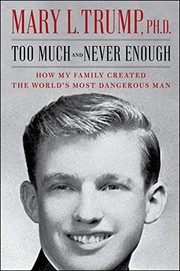
Too Much and Never Enough: How My Family Created the World's Most Dangerous Man
Mary L. Trump's 2020 memoir traces how a cold, zero-sum Queens household shaped her uncle, and uses family tax documents to challenge his self-made story.
2,059-word summary · 9 min read
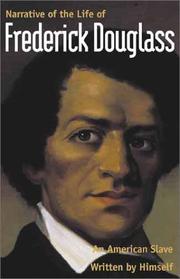
Narrative of the Life of Frederick Douglass
Douglass names names from Maryland slavery to his 1838 escape, showing how literacy, wages, and faith were policed, then answers with defiance.
2,630-word summary · 12 min read
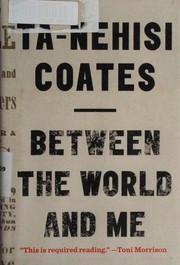
Between the World and Me
Coates writes to his son about the Black body in America, from Howard to the loss of Prince Jones.
2,234-word summary · 10 min read
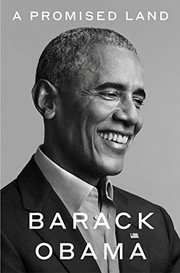
A Promised Land
First-volume memoir from Iowa 2008 through the 2011 bin Laden raid, crisis management and doubt.
2,243-word summary · 10 min read

Long Walk to Freedom
Mandela's account of a Thembu childhood, a law practice, a banned movement, twenty-seven years in prison, and the negotiation that ended apartheid.
2,454-word summary · 11 min read
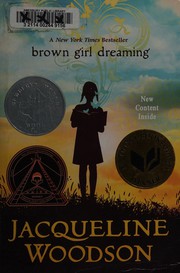
Brown Girl Dreaming
Jacqueline Woodson retells her childhood in verse, moving from Ohio to South Carolina to Brooklyn while the civil rights movement reshapes the world around her.
2,727-word summary · 12 min read

In Order to Live: A North Korean Girl's Journey to Freedom
A young North Korean girl crosses the Yalu, survives trafficking in China, and rebuilds her life in Seoul in this unsparing memoir.
2,027-word summary · 9 min read

Infidel
Ayaan Hirsi Ali's memoir of a Somali childhood, a forced marriage, a Dutch asylum claim, and the political fight that followed the murder of Theo van Gogh.
2,041-word summary · 9 min read
Down and Out in Paris and London
Orwell's account of washing dishes in Paris hotels and tramping through London does not ask for pity, only for a clear look at how poverty actually works.
2,282-word summary · 10 min read
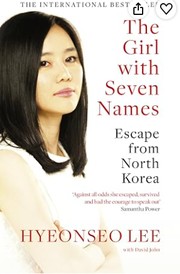
The Girl with Seven Names: A North Korean Defector's Story
Hyeonseo Lee crossed the frozen Yalu River at seventeen, spent years hidden in China, escaped to South Korea, and later returned to rescue her family.
2,404-word summary · 11 min read
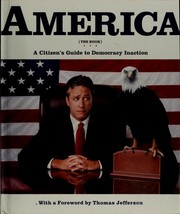
America (The Book): A Citizen's Guide to Democracy Inaction
Jon Stewart and the Daily Show writers turn a high school civics textbook inside out, with a foreword from beyond the grave.
2,511-word summary · 11 min read

Why I'm No Longer Talking to White People About Race
Reni Eddo-Lodge traces black British history and shows how institutions, culture, and everyday assumptions keep producing racial inequality.
2,071-word summary · 9 min read
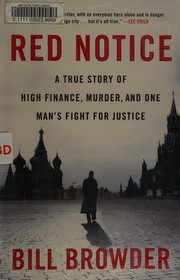
Red Notice
An American financier in Moscow exposes a $230 million tax fraud, watches his lawyer die in prison, and turns the case into an international human rights law.
2,008-word summary · 9 min read
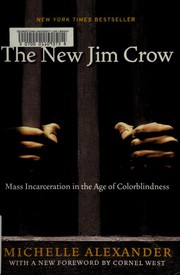
The New Jim Crow: Mass Incarceration in the Age of Colorblindness
How mass incarceration became a racial caste system after civil rights.
2,413-word summary · 11 min read
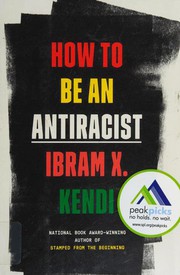
How to Be an Antiracist
Kendi blends memoir and history to argue that fair policy, not self fixing, creates an equal society.
2,513-word summary · 11 min read
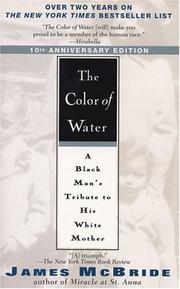
The Color of Water
A Black journalist presses his white mother about her hidden past, from a Virginia store to twelve college degrees.
2,457-word summary · 11 min read

Finding Me
Viola Davis traces her path from poverty in Rhode Island to Oscar night with blunt honesty about race and family.
2,823-word summary · 13 min read
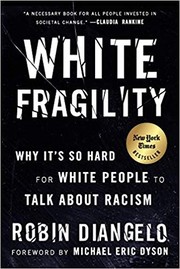
White Fragility: Why It's So Hard for White People to Talk About Racism
DiAngelo's 2018 bestseller on why cross-racial talk about racism stalls, and what white readers can practice instead.
2,904-word summary · 13 min read
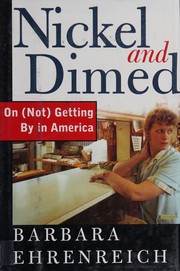
Nickel and Dimed: On (Not) Getting By in America
A journalist works waitress, cleaning, retail, and care jobs undercover to test whether full-time work keeps a person housed and fed.
2,328-word summary · 10 min read
Alexander Hamilton
Orphaned Caribbean immigrant becomes Washington's aide and America's first Treasury secretary, then falls in a duel.
2,004-word summary · 9 min read
The Autobiography of Malcolm X
Malcolm X traces his life from Michigan childhood through Harlem, prison, and the Nation of Islam to Mecca in this 1965 memoir told to Alex Haley.
2,816-word summary · 13 min read
Hillbilly Elegy
Vance traces Mamaw and Papaw from Kentucky to Middletown through addiction, Marines, and Yale Law.
3,390-word summary · 15 min read
Becoming
Michelle Obama traces her path from South Side Chicago through Princeton, Harvard law and the White House years in this warm, candid memoir of family, work and…
2,143-word summary · 10 min read

Violeta
A woman born in 1920 writes her life story to her grandson, from one pandemic to another, through wealth, ruin, passion, and dictatorship in South America.
2,555-word summary · 11 min read

Take My Hand
In 1973 Montgomery, a young nurse discovers that two sisters were sterilized without consent, and spends the rest of her life living with what she could not…
2,126-word summary · 9 min read
Nudge: Improving Decisions About Health, Wealth, and Happiness
Thaler and Sunstein show how defaults, framing, and social cues steer choices, and argue for choice architecture with an opt-out.
3,146-word summary · 14 min read

Heretics of Dune
Fifteen centuries after Leto II, the Bene Gesserit raise a new Duncan Idaho while the Honored Matres return and Rakis burns.
2,673-word summary · 12 min read
1491: New Revelations of the Americas Before Columbus
Charles C. Mann gathers archaeology, ecology, and demography to argue that the Americas before Columbus were older, fuller, and more deliberately shaped than…
2,712-word summary · 12 min read
The Power of One
A boy in apartheid South Africa decides to become welterweight champion of the world, and the novel follows every mentor, fight, and loss that gets him there.
2,145-word summary · 10 min read