
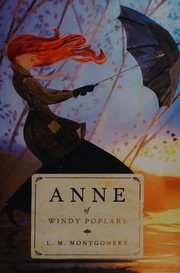
Anne of Windy Poplars
2,599-word summary 12 min read 368 pages in the book
- First published
- 1936
- Publisher
- McClelland & Stewart
- Pages
- 368
- ISBN
- 9781770497375
- Series
- Anne of Green Gables (#4)
Reading options
What's inside (8 sections)
Every long series has a book like this: the late arrival that fills a gap the earlier books left standing. Anne of Windy Poplars, published in 1936, goes back to the three years Anne spent as principal of Summerside High School while Gilbert Blythe finished his medical training in Kingsport. Chronologically it is the fourth book, tucked between Anne of the Island and Anne's House of Dreams, though it was the seventh to be written. It is also the odd one out in form, because almost everything arrives through Anne's letters to Gilbert, posted from a rented tower room on a lane called Spook's Lane. It first appeared from McClelland & Stewart in 1936, and British readers know it as Anne of Windy Willows; the page count and ISBN on this page come from the Tundra Books reissue.
That letter form is the whole charm and the main limitation. There is no plot in the usual sense, no wedding at the end, only the one waiting after the last page, just three years of small-town life delivered by mail: a feud won with an old diary, a school play that changes two lives, a bedtime rescue of a bride who lost her nerve, a Christmas that thaws an iceberg, and a little girl next door who has invented a country called Tomorrow. Readers who need a strong through-line will find this book maddening in stretches. Readers who come to Montgomery for the voice will find some of her warmest and funniest writing here, and I count myself in the second group without much hesitation.
A Room at the Top of the House
Anne comes to Summerside expecting a school and a boarding house and finds both full of complications. The boarding house is Windy Poplars, kept by two widowed sisters, Aunt Kate and Aunt Chatty, and run, in the manner of indispensable housekeepers everywhere, by Rebecca Dew, a woman of around forty with firm views on cats, weather, and the proper way to do things. Rebecca declares every fresh trouble "the last straw" and then carries on regardless, and her loyalty, once given, never wobbles. The cat is Dusty Miller, who sleeps where he should not and is forgiven everything. Anne takes the tower room, where she can watch both the sunrise and the sunset, and settles in to write letters.
The school is Summerside High, where she has been made principal over the objections of the town's leading family. The Pringles, known to everyone as the Royal Family, run Summerside socially and educationally, and they had another candidate in mind for Anne's job. Their campaign against her is petty and relentless: no invitation to the walking party, no table at the church tea, an anonymous letter full of nasty hints, and Jen Pringle, the clan's most gifted daughter, collecting insults the way other children collect pebbles. Rebecca Dew sums up the family philosophy: once the Pringles make up their minds, they have never been known to change them. The rest of the book is the story of how that truism gets broken.
The Battle of the Pringles
The war comes to a head in a way nobody could have predicted, with a school play and a borrowed diary. Anne organizes a dramatic club to raise money for engravings for the classrooms, and the vice-principal talks her into casting Jen Pringle as Mary Queen of Scots, because no one else has the personality for it. Anne has her doubts. She has noticed Sophy Sinclair, a tall girl with hazel eyes and chestnut hair who has never been allowed on a stage. When she finds Sophy crying in the coatroom, she offers her the thing that changes the girl's life on the spot: she will write out the part and coach her as an understudy, quietly, with nobody told.
The night of the performance, Jen has a sore throat and a threatened case of tonsillitis that Anne does not believe for a minute. Everyone is very sorry about Jen. Anne says they will not postpone. Sophy goes on, and she is not merely good: she is Mary. The town hall audience, which has only ever seen her in shapeless serge, sits up and stares, and years later this night will be remembered as the start of a celebrated stage career. It is one of the most satisfying scenes Montgomery ever wrote, precisely because it costs Anne so little and gives Sophy so much.
Jen's revenge arrives as an insult buried in a composition on Important Happenings, and by the turn of the year Anne is seriously considering a resignation. What saves her is an errand. A local historian named Mrs. Stanton is writing a county history and asks Anne to keep an eye out for old diaries. Rooting through the sea chest of a dead sailor named Andy Bryce, Anne finds his logbook, and inside it an entry about Myrom Pringle, the brother of the Pringle patriarch, who was shipwrecked, starved, and, according to Andy's flat account, ate a member of the crew. Anne knows exactly what the diary is worth in Summerside. She debates all night, decides she will not stoop to blackmail, and sends it to the Pringle sisters as a gift, with a stiff little note.
The result is the funniest capitulation in the series. The Maplehurst carriage rolls down Spook's Lane, and two old ladies appear at the front door, one of whom has not left the grounds in ten years. "We have come to capitulate," Miss Sarah announces bitterly, convinced she is being blackmailed. Anne, genuinely horrified, explains that she only thought they might like to have the memories of their father. The misunderstanding dissolves into a friendly chat, a recipe for pound cake that takes thirty-six eggs is handed over for Aunt Chatty, and the feud dies on the spot. Jen apologizes before the whole room, every young Pringle follows, and the adults fall over themselves inviting Anne to dances. The diary gets burned, but the memory of it works like magic for years.
The Iceberg
The best running thread in the book is Anne's campaign against the loneliness of Katherine Brooke, the vice-principal, who has taught at Summerside High for years, hoped for the principalship, and watched it go to a stranger considerably her junior. Katherine is sarcastic, dowdy, friendless, and she wears her unhappiness like armor. When Anne compliments the way she spells her name, the next note from her room is signed "Catherine" out of pure spite. Anne's method for cracking her is characteristically Anne: she simply refuses to accept the surface, and she keeps showing up.
The breakthrough scene is worth the price of the book. Anne walks to Katherine's grim rooming house on Temple Street, where the landlady complains about a boarder who wants a dog, and climbs to a bedroom furnished with an iron bed and a view of a backyard full of tin cans, redeemed only by a magnificent sunset. Katherine is at her most withering. Anne looks her in the eye and tells her that what she wants is a good spanking. There is a silence, and then, amazingly, Katherine laughs. She agrees to come to Green Gables for Christmas, on one condition: nobody is to wish her a merry Christmas.
At Green Gables, the usual magic goes to work. There are sleigh bells and Marilla's kitchen and Mrs. Lynde's hideous parlor lamp, and a snowshoe tramp through Lover's Lane that ends with Katherine crying at the gate under a winter moon. Then Anne does her hair, makes her look at herself in a mirror, and tells her that her eyes are the color of amber tea. Katherine reads at a concert and dances until she laughs without bitterness. "I've got a new outlook on life," she thinks, going to sleep. Marilla says, "Come again," which in Marilla's language is a standing ovation.
What I love most is that Montgomery lets the change stick without overselling it. Katherine does not become sweet. She becomes possible: she keeps coming back to Green Gables, she gets her dog, she resigns from teaching at the close of the school year on Anne's advice, takes a secretarial course at Redmond, and by the end of the story she is private secretary to a globe-trotting Member of Parliament, which suits her exactly. She says her changed prospects are all Anne's doing. Anne, being Anne, half agrees.
The Little Girl Next Door
Then there is little Elizabeth, and if you have any soft spot at all for lonely children, this book will find it. Elizabeth Grayson lives at The Evergreens, the gloomy mansion next to Windy Poplars, with her great-grandmother and an unsmiling guardian everyone calls the Woman. Her mother died when she was born, her father is far away in France, and nobody in the house has ever used a word of affection in her hearing. She is small and golden and starved of love, and she copes by naming her moods: some nights she is Elizabeth, some nights Betty, and on her worst nights, Beth or Lizzie. She first meets Anne through the wall door, coming for a glass of milk, and after that the two of them hold daily court in the tower room, where they keep a map of fairyland and plan to visit Tomorrow, which is where all the best things happen.
The June afternoon when Tomorrow finally arrives is the emotional center of the novel. Anne takes Elizabeth along on an errand to Flying Cloud, a slender little island the child has dreamed about all spring. While Anne hunts up the convener of the Ladies' Aid refreshment committee, Elizabeth is left in the parlor and meets a strange man who feeds her ice cream with strawberry jam and looks at her with a tenderness she has never seen on any face. Only after the drive home, a set of runaway horses, and a bad quarter hour does the reader get the reveal along with the child: the man on the island is her father, come quietly to see her for himself before facing the family, and the accident has brought them together instead of keeping them apart. "Will we live together?" Elizabeth asks. "Always," her father says. "I've found Tomorrow," she says, and later, leaving for Boston: "I'll be Betty all the time now." Montgomery earns every tear in this sequence, and I do not say that often.
The Library of Summerside Hearts
The rest of the book is a gallery of small dramas, and your patience with it will define your patience with the whole. My favorite is Nora Nelson and Jim Wilcox, a proud pair who have snubbed and frozen each other in circles for years. Anne, watching Nora glower through her sister's wedding, sets a lamp in a dormer window on impulse, thinking it might lure Jim back across the harbor. The evening passes without him, and Anne goes to bed convinced the gesture was wasted. Then Aunt Mouser, the family's doom-croaking relative, hears a bump at two in the morning, and the house turns out with candles and a poker to discover Jim in the library with his arms around Nora, pressing a handkerchief to her nose. "He's chloroforming her!" shrieks Aunt Mouser. The truth is sillier and better: Nora ran into the library door hurrying to meet him and got a nosebleed, Jim had seen the light and sailed right over, and before the household disperses into tea and embarrassment he has asked her to marry him and she has said, shamelessly, "Oh, won't I." They marry in September, quietly, expressly to escape Aunt Mouser.
The other set piece is Dovie Westcott and Jarvis Morrow, whose worthiest exploit is Anne's. Dovie's father has forbidden the match on principle, and Dovie, who has no spine to speak of, has agreed to elope and then, on the evening itself, gone to bed instead. Jarvis appears at Windy Poplars in a panic. Anne marches to the Westcott house, hauls the bride out of bed, gives her ten minutes to dress, holds up the rose taffeta, and delivers her to the wedding. The bill comes due the next evening, when Anne keeps her promise to break the news to Franklin Westcott. She braces for an earthquake, and instead the man throws back his head and laughs, because the whole tyrannical performance has been his own strategy: he forbade Jarvis precisely to make his daughter interesting to the Morrow men, who always go by contraries. "You've saved my face," he tells her, and asks her to help him keep up the pretense of heartbreak for the sake of appearances. It is one of the most beautifully constructed comic scenes in all of Montgomery.
The rest of the town files past in shorter strokes: Hazel Marr, who gets engaged in the moonlight, un-engaged by confession, and re-engaged by a letter forgiving Anne for her trouble, exits the tower room with the air of Mary Queen of Scots, a joke Montgomery lands twice in one book. The Taylor family stages a company dinner to secure Esme's shy engagement to a professor, complete with a sulking father served his favorite orange custard. Pauline Gibson, who has been under her mother's thumb for years, invites Anne to supper at last, once her mother is no longer there to forbid it. And Miss Minerva Tomgallon, last of her line, gives Anne a one-sided supper in a house full of tiger-skin rugs and family tragedies, every story a gruesome jewel, and sends her home with an aquamarine ring. The townspeople are less characters than weather, but Montgomery makes good weather.
The Last Letter
The book closes in June, with a letter Anne writes "for the last time" from the tower room. In a few weeks she will marry Gilbert. She looks back on three years that seemed endless at the start and passed like a watch in the night, and does the rounds: Jen broken-hearted at losing her, Sophy off to Queen's and then to a drama school, the little Pringle who brings roses from the pine woods and a note calling her the sweetest teacher in the world, Elizabeth gone to Boston with her father at last. The widows and Rebecca Dew see her off, and Rebecca cannot trust herself to say goodbye, so she leaves a letter, assembled from her beloved book of deportment and signed with a postscript, "God bless you," that could only be hers. As the carriage pulls away, the last thing Anne sees is a bath towel flapping frantically from the tower window. Some endings are earned by three whole years of small kindnesses, and this one is.
So where does this leave the book? It is not the strongest novel in the series. It is episodic, it has no villain by the final page, and the letters drift where a plot should pull. It is also indispensable if you love Anne, because it is the book where her best qualities are finally up against something worthy of them: not a rival or a poverty or a school board, but a whole town's settled mind. She wins, as usual, by paying attention to people instead of positions, and the winning is worth watching. Read it at the pace of an evening letter, not a marathon, and it will leave you with the feeling it leaves Anne, of having lived for a while on Spook's Lane.
FAQ
When was Anne of Windy Poplars published?
It was first published in 1936 by McClelland & Stewart, with Frederick A. Stokes publishing the first American edition and the British edition appearing as Anne of Windy Willows. The page count and ISBN on this page come from the Tundra Books reissue.
Where does it fit in the Anne of Green Gables series?
It is specifically book four, set between Anne of the Island and Anne's House of Dreams, even though it was the seventh Anne book to be written.
How is Anne of Windy Poplars told?
Mostly through Anne's letters to Gilbert from the tower room at Windy Poplars, with a few episodes unfolding in straight third-person narration.
Similar books
More from Anne of Green Gables first, then related titles.
Anne of Green Gables
L. M. Montgomery brings talkative Anne Shirley to Green Gables on Prince Edward Island, where mistakes, school rivalries, and fierce friendship slowly turn…
2,182-word summary · 10 min read
Anne of Avonlea
Anne teaches at sixteen, adopts twins, and learns that fixing Avonlea takes patience.
1,909-word summary · 8 min read

Anne of the Island
Anne leaves Avonlea for Redmond College, shares Patty's Place with friends, and learns to tell admiration apart from love.
2,766-word summary · 12 min read
Anne's House of Dreams
Newlyweds Anne and Gilbert start in a seaside house with kind neighbors.
2,465-word summary · 11 min read

What Happened to Goodbye
Mclean has reinvented herself in four towns since her parents divorced. In Lakeview she uses her real name, and for the first time staying put becomes a choice.
2,796-word summary · 12 min read
The Long Winter
Dakota Territory, 1880: seven months of blizzards cut a town off from the railroad, and a family survives on twisted hay, ground wheat, and a dangerous wheat…
2,210-word summary · 10 min read

Love Letters to the Dead
A fifteen-year-old writes letters to dead artists because they cannot ask questions, and slowly tells the one story she has been hiding about her sister's…
2,520-word summary · 11 min read
How the Light Gets In
Gamache investigates the murder of the last Ouellet quintuplet while the Sûreté he served is dismantled from inside by the man who took his protégé.
2,279-word summary · 10 min read

Bury Your Dead
Recovering from a failed raid that killed his officers, Gamache investigates a murder in a Quebec City library while Beauvoir reopens a case in Three Pines.
2,022-word summary · 9 min read

Anatomy: A Love Story
In 1817 Edinburgh, a noblewoman who wants to be a surgeon disguises herself to study anatomy and falls for the grave robber who supplies her with bodies.
2,031-word summary · 9 min read

Vow of Thieves
Kazi and Jase return to Tor's Watch to find it occupied, and their marriage is tested by captivity, betrayal, and a war for the town of Hell's Mouth.
2,059-word summary · 9 min read
The Lost Sisters
Taryn Duarte writes a letter to her twin, Jude, explaining how she fell for Locke and why she stayed silent while he used them both.
1,914-word summary · 9 min read

Dumplin'
Willowdean Dickson enters her town's beauty pageant as a protest and discovers that confidence is harder to keep once she lets someone close.
1,922-word summary · 9 min read

Amelia Bedelia
A literal-minded housekeeper follows her employer's list to disastrous and funny effect in the 1963 picture book that made wordplay a children's staple.
2,038-word summary · 9 min read

Masquerade
After Cordelia's death, Schuyler flies to Venice to find her exiled grandfather, then returns to the Blue Bloods as they prepare for a masked ball and a hidden…
2,543-word summary · 11 min read

Archenemies
Nova steals for the Anarchists while Adrian hides his Sentinel identity, and a serum that erases prodigy powers puts them both at risk.
2,485-word summary · 11 min read
The Unmaking of June Farrow
A woman in a North Carolina flower-farming family walks through a red door into 1951, where she must solve her mother's disappearance and decide whether to…
2,701-word summary · 12 min read

The Siren
Saved from a shipwreck in 1930, Kahlen becomes a siren who sings men to their deaths for the Ocean, until a boy in a college library makes her want a life she…
2,369-word summary · 11 min read

The Bookshop on the Corner
A Birmingham librarian loses her job, buys a van, and moves to the Scottish Highlands to run a mobile bookshop. Warm and bookish, with uneven pacing.
2,557-word summary · 11 min read

The Awakening / The Struggle
A popular high school girl falls for a vampire, then discovers that his dangerous brother wants her too, in the first two books of the Vampire Diaries series.
2,660-word summary · 12 min read
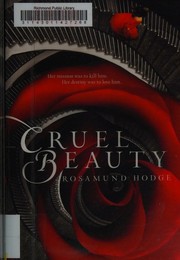
Cruel Beauty
A girl raised to kill the demon prince who rules her cursed land instead falls in love with him, in a retelling that mixes Beauty and the Beast with Bluebeard…
2,669-word summary · 12 min read

Cross My Heart and Hope to Spy
Cammie Morgan returns to Gallagher Academy for a second year of spy training, only to fall for a boy from a rival spy school and hunt a mole in her own school.
2,567-word summary · 11 min read

Carve the Mark
On a planet divided between conquered and conqueror, the tyrant's sister and a kidnapped oracle's son discover that their gifts make them useful to everyone…
2,340-word summary · 10 min read

Sam's Letters to Jennifer
A grieving journalist reads her grandmother's letters and finds a decades-long love affair that changes how she sees her family.
2,310-word summary · 10 min read

Reason to Breathe
Emma Thomas is a star student with a careful, invisible life at home. Evan Mathews notices the cracks, and the novel follows what happens when kindness gets…
2,197-word summary · 10 min read

I Kissed Shara Wheeler
Shara Wheeler kisses her rival Chloe Green at prom and disappears, leaving a scavenger hunt that forces Chloe to rethink everything she knew about her.
2,083-word summary · 9 min read

Demonglass
Sophie Mercer spends the summer at the Council's English estate, where two new demons, a suspicious host, and Archer's return complicate her plan to remove her…
2,771-word summary · 12 min read

Born at Midnight
Kylie Galen is sent to a camp for troubled teens and discovers it is a haven for vampires, werewolves, and witches, and that she may be something stranger…
2,310-word summary · 10 min read

Amy & Roger's Epic Detour
Amy Curry has not driven since the crash that killed her father. With Roger at the wheel and a box of maps between them, a cross-country trip becomes a slow…
3,034-word summary · 13 min read

Act Your Age, Eve Brown
Eve Brown crashes into a Lake District bed and breakfast, breaks the owner's arm, and talks her way into his kitchen. A grumpy-sunshine romance about work,…
2,474-word summary · 11 min read