
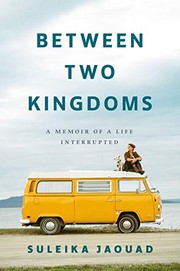
Between Two Kingdoms: A Memoir of a Life Interrupted
2,311-word summary 10 min read 368 pages in the book
- First published
- 2021
- Publisher
- Random House
- Pages
- 368
- ISBN
- 9780399588587
Reading options
What's inside (8 sections)
I read most of this book in three sittings, which is unusual for me with illness memoirs, because illness memoirs tend to organize themselves around a lesson and I can smell the lesson coming from a chapter away. This one is organized around a thousand-mile drive instead, and the lesson, if there is one, arrives late and sideways and is not the kind you can put on a poster. Suleika Jaouad was twenty-two when she got sick, and she wrote the book at thirty-two, and the decade between those two facts is the book.
The title comes from Susan Sontag's Illness as Metaphor, the line about every person holding dual citizenship in the kingdom of the well and the kingdom of the sick. Jaouad takes the phrase literally. The memoir begins when she crosses the border from one kingdom into the other, spends its long middle in the sick kingdom's hospitals and waiting rooms, and then does something I have not seen another memoir of this type do: it treats the return to the well kingdom as its own full-length drama, with its own plot, its own crisis, and no guarantee of a happy landing.
The book was published by Random House in February 2021, runs 368 pages, and grew out of a column Jaouad wrote for The New York Times called Life, Interrupted, which began as a blog when she was in her early twenties and hospitalized. Chapters of the memoir carry the texture of that column: first person, present tense in spirit, specific about medical detail and honest about moods. What the book adds is hindsight, and hindsight gives it teeth.
The itch before the diagnosis
The story starts in Paris, in the summer of 2010, where Jaouad has moved after graduating from Princeton with a plan that could have been torn from a magazine: war correspondence, a small apartment, a boyfriend named Will who is studying there too. She is twenty-two. The future is arranged. Then she starts feeling tired in a way that sleep does not fix. Her skin itches. She naps for four hours and wakes up wrecked. She treats it, in the way of healthy people everywhere, as an inconvenience with a temporary cause.
It is leukemia. Acute myeloid, a form with a survival rate the book does not spare you. Weeks short of her twenty-third birthday, after months of misdiagnoses and dismissals, she learns that her blood is trying to kill her. Her first reaction, which she reports without flattering herself, is relief. Finally there is an answer, and with an answer there is a plan, and with a plan the uncertainty has edges.
The plan requires her to go home, meaning back to her parents in upstate New York: Anne, a Swiss-born painter, and Hédi, a Tunisian-born professor, whose house fills with the machinery of catastrophe in a few weeks. She loses her job, her apartment in Paris, her independence, her body's ordinary reliability, and roughly all of the future she had been living inside. The book makes you count the losses one by one, which is how loss actually works, and it also makes you notice the counterweights: two parents who show up, a brother, a boyfriend who moves back across an ocean.
Life in the bubble
Treatment does what treatment does. She moves through rounds of chemotherapy at Mount Sinai, most of them in an isolation room the staff call the Bubble, because her immune system cannot tolerate the world. Her hair goes. Her body changes shape in ways that are catalogued with grim precision. She freezes eggs before the chemo makes the question academic, in a sequence that reads like a science fiction scene about a person file-formatting her future.
And, because she is a writer and because a room is a terrible place to keep a mind, she starts a blog. The blog becomes a column at The New York Times, and the column becomes a strange second life: a twenty-something woman reporting from inside the kingdom of the sick, in public, weekly, with strangers writing back from their own hospital rooms and their own griefs. She interviews herself for deadlines in waiting rooms. Family and friends become recurring characters in the column with names changed, which is its own kind of honesty, and which sets up the book's final movement: the readers who write to her become the itinerary of her future road trip.
There is a practical detail in this section I have never forgotten. In the hospital, the immune-compromised patient cannot have more than one visitor at a time, which means the people who love her have to organize themselves into shifts, and the shifts become a schedule of loneliness. Caregiving in this memoir is a logistics problem with a broken heart, and Jaouad treats the caregivers with a fairness that costs her. Her mother paints in the hours around hospital shifts. Her father, a professor, becomes a manager of appointments. And Will, the boyfriend, becomes a nurse, a role neither of them chose.
Adam's marrow
The transplant section is the medical center of the book, and it works because of the numbers inside it. Her younger brother Adam turns out to be a perfect match, which is a lottery win, and he celebrates by giving her the nickname Suleikemia, which is either the funniest or the worst thing a brother has ever done depending on the day. The transplant itself is brutal: her own marrow is destroyed and replaced with his, and the book describes the procedure as a medical game of Russian roulette, which is exactly right, because the new immune system may decide the body it has been given is foreign.
It does, for a while. By Day 80 there is a rash, which is graft-versus-host disease saying hello, and the medications climb. She reaches Day 100, the milestone, with no cancer cells, and with a maintenance regimen stretching ahead like a toll road. There is a sequence at Hope Lodge, a charity residence for transplant patients, where the romance of survival frays into something more ordinary: whose turn to sit, whose turn to sleep, whose needs are the bigger emergency this hour. Jaouad writes the Will chapters with real affection and real blame, in the same sentences, which is how the end of young love actually goes when a hospital is in the middle of it.
After Day 100, they get an apartment in the East Village. They adopt a dog, a scruffy terrier named Oscar, who will matter later. And the relationship, which the illness postponed the ending of, proceeds to end in the ordinary way that relationships end, in stages, over months, until the final break arrives and is not the one either of them wanted. The breakup is the last hospital of the book. It is also the first place Jaouad starts telling you what this memoir is actually about: that the hardest part of cancer treatment was not the treatment, but everything after it.
The kingdom of the well is not waiting for you
That sentence deserves its own section because it is the book's thesis. When treatment ends, the well kingdom does not throw open its gates. Friends have moved on. The work she left is done by other people with different phone numbers. Her body carries scars and a port scar and a chemical debt that keeps being collected. And the community she belonged to in the sick kingdom, the one that knew what her days actually felt like, is dying. Of the ten young people she calls her cancer comrades, only three are alive when she writes the book. Her friend Max dies by suicide. Her friend Melissa dies of a different cancer. She describes surviving her own support group, which is a category of grief most illness narratives edit out.
Around this stretch, a quiet thing happens that reorganizes the book. She reconnects with Jon Batiste, a musician she knew at band camp as a teenager. He appears at a gig at the NoMad Hotel in New York, she goes to see him, and what starts almost offhandedly, as a rebound in her own description, grows into the partnership that carries the rest of her life. Batiste is drawn with the lightest touch in the book, which feels deliberate: after two hundred pages of the heaviest touch imaginable, she needs a character who simply isn't heavy.
She gets her port removed. She learns to drive, at twenty-something, after a decade of hospitals has done its best to keep the skill irrelevant. And she makes a plan that is the actual engine of the memoir: one hundred days, thirty-three states, fifteen thousand miles, to visit the strangers who wrote to her during the worst years. That is the book's second half, and it converts the memoir from a story about illness into a story about a country.
The 100-day road trip
The trip begins with a comedy beat and a dog. Jaouad drives the wrong way down a one-way street on day one, and she does the whole trip with Oscar the terrier riding shotgun, because the correspondents of the sick kingdom receive each other, dogs included. The stops are the chapters, and the chapters are portraits.
In Columbus, Ohio, Howard, a man who wrote to her in the first months of the column, lives with a chronic illness and a marriage that has absorbed it into daily rhythm; their meeting is the book's proof that a normal life exists on the far side of the worst years. At Pine Ridge, she spends time with Nick, a community leader who turns out to be a friend of Will's, and the ghost of the relationship she never finished mourns itself there, in a landscape that has its own enormous history of loss. She decides, at a gas station or a lookout, to let him go. In Detroit, Nitasha has taken her own hard years and made them into art, part of the book's growing catalogue of ways to live after something breaks.
In Marfa, Texas, she stays with Kit and JR, who live in a van, camps in Big Bend National Park, and swims in the river at the border with her scars showing, which is the first time her body appears to belong to her again. In Seattle, a man named Isaac talks about forgiveness in a register she can use. In Northern California, Rich, a sculptor, tells her there are three trips: the one you prepare for, the one you take, and the one you remember, which is the most important sentence anyone gives her on the road. And she visits Katherine, whose son, Brooke, died by suicide, hours after Jaouad had visited another mother's son; Katherine's letter-writing and her way of turning grief into support becomes the book's clearest statement about why people tell their stories at all: so that we keep each other company, again and again.
The final planned visit is in Texas, and it happens inside a prison, at a death row unit, where Jaouad meets Quintin, a man she has been corresponding with for years, and he asks her the question that the whole book has been walking toward: if you could take it all back, would you. She does not answer for him, or for herself. She drives home through Florida, stops to see one more young survivor, and the trip ends where she began, in New York.
What the criticism gets right
The reception was close to unanimous praise. The New York Times bestseller lists, best of the year picks at the Times, The Washington Post, NPR, Kirkus, and others; Chanel Miller writing that she would follow Jaouad anywhere; The Washington Post calling the book harrowing and honest. The pushback, where it exists, is worth repeating because it is the interesting kind: some critics, notably in a thoughtful review at The Intima, question the memoir's triumph arc, arguing that the road trip resolves more than life usually does and that some of the illness anecdotes run together. I think both objections land, and I think the book survives them. The trip's endings are suspiciously well-shaped, chapter by chapter, and a cynical reader can see the structure. But Jaouad keeps a ledger of what does not recover, including friends, including some days entirely, and the ledger is the point. The literature of cancer has enough arrivals. This one is mostly about the toll roads.
There is also one thing a reader should know that the book cannot tell you. After it was published, Jaouad's cancer returned, and she went through another transplant and another long winter. She and Batiste became the subjects of a documentary made during that time. In Texas, in 2021, the state executed Quintin Jones over Jaouad's public campaign to stop it, and I put the book down after reading that news and sat with the ending differently, because the road trip was not the end of her story and was never pretending to be.
The last pages of the memoir are a move to Vermont, a season of writing, friends met again through their art, a brother moving into the East Village apartment, and a VW van she learns to drive on a stick shift. What she keeps, she says, is the in-between place: a wilderness she has learned to love. Ten years of a young life, spent between two kingdoms, arrive at the only honest answer: you are never only well, and you are never only sick, and the road between them is where you live. It is the least triumphant and most useful thing an illness memoir has told me.
FAQ
Is Between Two Kingdoms a true story?
Yes. It is Jaouad's memoir of being diagnosed with acute myeloid leukemia at twenty-two, her years of treatment, and the 100-day road trip she took afterward. It grew out of her New York Times column, Life, Interrupted.
Who was the death row correspondent Jaouad visited?
Quintin Jones was a death row inmate in Texas whom Jaouad corresponded with and visited at the end of her trip. After the memoir was published, she campaigned publicly for clemency, and he was executed in May 2021.
What happened to Suleika Jaouad after the book ends?
Jaouad's cancer returned in late 2021, and she underwent a second bone marrow transplant. She and Jon Batiste remain partners and became the subjects of the 2023 documentary American Symphony.
Similar books
Dry
A memoir of drinking, rehab and relapse, and the strange business of getting sober one morning at a time.
2,643-word summary · 12 min read
Travels with Charley
Steinbeck drives across America with his poodle Charley, looking for the country he remembers and finding a place that has changed.
2,039-word summary · 9 min read
Brain on Fire: My Month of Madness
A young reporter loses her mind to a rare brain illness and must rebuild from notes and video she hates to watch.
2,080-word summary · 9 min read

Long Walk to Freedom
Mandela's account of a Thembu childhood, a law practice, a banned movement, twenty-seven years in prison, and the negotiation that ended apartheid.
2,454-word summary · 11 min read

In Order to Live: A North Korean Girl's Journey to Freedom
A young North Korean girl crosses the Yalu, survives trafficking in China, and rebuilds her life in Seoul in this unsparing memoir.
2,027-word summary · 9 min read

Too Much and Never Enough: How My Family Created the World's Most Dangerous Man
Mary L. Trump's 2020 memoir traces how a cold, zero-sum Queens household shaped her uncle, and uses family tax documents to challenge his self-made story.
2,059-word summary · 9 min read
Same Kind of Different as Me
An art dealer and a formerly homeless sharecropper tell the story of the friendship that began at a Fort Worth mission and the woman who insisted on it.
2,023-word summary · 9 min read

Infidel
Ayaan Hirsi Ali's memoir of a Somali childhood, a forced marriage, a Dutch asylum claim, and the political fight that followed the murder of Theo van Gogh.
2,041-word summary · 9 min read
The Happiest Man on Earth
Eddie Jaku's memoir follows a Leipzig childhood, Buchenwald, Auschwitz, a death march, and the slow rebuilding of a life in Australia.
2,597-word summary · 12 min read

Down and Out in Paris and London
Orwell's account of washing dishes in Paris hotels and tramping through London does not ask for pity, only for a clear look at how poverty actually works.
2,282-word summary · 10 min read
Year of Yes: How to Dance It Out, Stand in the Sun and Be Your Own Person
Shonda Rhimes takes her sister’s accusation seriously and spends a year saying yes to the things that frighten her, from live television to her own reflection.
2,585-word summary · 11 min read

The Girl with Seven Names: A North Korean Defector's Story
Hyeonseo Lee crossed the frozen Yalu River at seventeen, spent years hidden in China, escaped to South Korea, and later returned to rescue her family.
2,404-word summary · 11 min read
Scar Tissue
Kiedis's memoir follows the Red Hot Chili Peppers from Hollywood house parties to fame, heroin, and the long work of staying clean.
2,217-word summary · 10 min read
Love Does
A lawyer and activist tells stories of saying yes, showing up, and loving people through ordinary, often ridiculous actions.
2,411-word summary · 11 min read
Beautiful Boy: A Father's Journey Through His Son's Addiction
David Sheff recounts watching his son Nic slide into meth addiction, and his own desperate, humbling search for how to help without destroying them both.
2,076-word summary · 9 min read
The Magnolia Story
How Chip and Joanna Gaines met, closed their first shop, nearly lost everything in a housing development, and built Fixer Upper.
2,994-word summary · 13 min read

Lone Survivor: The Eyewitness Account of Operation Redwing and the Lost Heroes of SEAL Team 10
Marcus Luttrell's account of the 2005 SEAL mission in Afghanistan that killed three of his team and left him alone.
2,144-word summary · 10 min read
Life
The Rolling Stones guitarist tells his own story: a Dartford childhood, the band's first gigs, the drug raids, the tax years and Patti Hansen.
2,761-word summary · 12 min read

Dear Girls: Intimate Tales, Untold Secrets & Advice for Living Your Best Life
Ali Wong's debut collects fourteen letters to her daughters, covering sex, money, work, marriage, Vietnam, and being a working Asian American mother.
2,266-word summary · 10 min read
Smoke Gets in Your Eyes: And Other Lessons from the Crematory
A young medieval history graduate takes a job at an Oakland crematory and becomes a mortician, confronting the physical reality of death and the funeral…
2,003-word summary · 9 min read

Scrappy Little Nobody
Anna Kendrick's essays trace her path from a Portland childhood and Broadway to Hollywood, with jokes, anxiety, and a refusal to pretend fame fixed her.
2,092-word summary · 9 min read
Red Notice
An American financier in Moscow exposes a $230 million tax fraud, watches his lawyer die in prison, and turns the case into an international human rights law.
2,008-word summary · 9 min read
The Letters of Vincent van Gogh
Vincent van Gogh's letters to his brother Theo, in a Penguin Classics selection edited by Ronald de Leeuw, trace a decade of work, faith, and obsession.
2,611-word summary · 12 min read
Lucky
Alice Sebold's memoir of the 1981 rape she survived as a college freshman, the courtroom that followed, and a conviction later proven to be a case of mistaken…
2,091-word summary · 9 min read
90 Minutes in Heaven: A True Story of Death and Life
A pastor declared dead at a 1989 crash scene describes ninety minutes he says he spent in Heaven, then thirteen months of surgeries, depression, and recovery.
2,246-word summary · 10 min read
The Stranger Beside Me
Ann Rule's classic memoir of her friendship with Ted Bundy, written by the true-crime author who knew him long before the world learned what he had done.
2,481-word summary · 11 min read
Reasons to Stay Alive
Matt Haig's memoir of the breakdown that nearly killed him at twenty four and the three years of unglamorous recovery that followed.
2,065-word summary · 9 min read
Maid: Hard Work, Low Pay, and a Mother's Will to Survive
Stephanie Land's memoir of cleaning houses as a single mother on the poverty line, and of the paperwork that made every step forward cost something else.
2,039-word summary · 9 min read
Bird by Bird
Anne Lamott's 1994 book on writing and life: shitty first drafts, the one-inch picture frame, and quieting the inner critic so you can take it bird by bird.
2,592-word summary · 12 min read
The Choice
Auschwitz survivor and therapist turns prison into a guide for healing.
2,472-word summary · 11 min read