
Reading options
What's inside (8 sections)
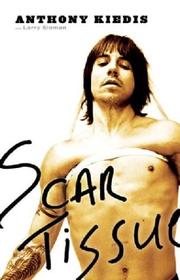
The first thing that surprises you about Scar Tissue is how little it tries to make Anthony Kiedis likable. Rock memoirs usually arrive with a built-in defense: the artist was young, the industry was cruel, the drugs were everywhere. Kiedis mostly skips the defense. He tells you what he did, who got hurt, and how often he went back for more, and he leaves you to decide what to make of him. That bluntness is the book's best quality and the reason it can be hard to stay inside for 465 pages.
The book came out in 2004, written with Larry "Ratso" Sloman, and it covers roughly the first four decades of Kiedis's life. The Red Hot Chili Peppers are the spine of the story, but the real subject is appetite. Food, sex, applause, heroin, cocaine, attention: Kiedis treats them as variations on the same hunger. The title comes from the 1999 song, and the scar tissue in question is emotional as much as physical. He keeps returning to the same wounds, picking at them, describing them in detail, then moving on before the reader can get comfortable.
A Hollywood childhood
Kiedis was born in Grand Rapids, Michigan, in 1962. His parents split when he was small, and for a while he lived with his mother and stepfather in the Midwest. The stable version of his childhood is not the one that shapes the book. What shapes the book is the summer visits to his father in Los Angeles, and then the decision, around the age of eleven, to go live with him full time.
His father, John Kiedis, known as Blackie Dammett, was an actor and a dealer who moved through a glamorous, dangerous slice of Hollywood. Kiedis describes a house where drugs were not hidden, where adults stayed up for days, and where a boy could watch the whole performance from the corner of the room. He does not pretend this was normal or harmless. He also does not pretend it was boring. The prose around his father is affectionate and wary at once, which feels honest. Blackie was charismatic, unreliable, and the first person to teach Anthony that a room could be held with a story.
There is a scene early on where his father gives him marijuana, or at least does not stop him from taking it. Kiedis presents it as a threshold, not a single dramatic fall. Soon he is smoking regularly, skipping school, and testing how far the adult world will let him go. He is a smart kid who learns to read the adults around him and to perform for them. That skill later becomes stage presence. It also becomes a way to avoid telling anyone what he actually needs.
School is a recurring disappointment. He is bright but restless, and the book is full of teachers who either see something in him or give up. He finds music instead. Not in a tidy moment of inspiration, but through the kids who are also hanging around the fringes: Michael Balzary, who becomes Flea, and Hillel Slovak, a guitarist with a serious, patient relationship to his instrument. The three of them, plus drummer Jack Irons, form the core of the story's early years.
Kiedis is honest about being the least trained musician in the room. His gift is verbal and physical. He writes lyrics, invents personas, and throws himself around a stage with a disregard for his own body. The book makes clear that this was not a calculated career move. It was the one place where his excess had a use.
The band forms and the machine starts
The Red Hot Chili Peppers begin in Los Angeles in 1983, out of the ashes of a band called Anthym and a short-lived project with a name too long to remember. The early shows are chaotic, funny, and occasionally dangerous. Kiedis describes performing in a sock, or nearly naked, and the audience responding to the nerve of it. The band's early sound is a mix of funk, punk, and the kind of Los Angeles energy that sounds like a party until you notice how many people are not having fun.
Their first album, The Red Hot Chili Peppers, arrives in 1984. It does not make them stars. The follow-up, Freaky Styley, produced by George Clinton, gives them a stranger, funkier identity but still no real commercial traction. Kiedis is already deep into drugs by this point. The book's early chapters have a repetitive quality that is clearly deliberate: score, use, crash, promise to stop, score again. He does not smooth out the cycle. He wants you to feel how boring it was, even as he was living it as drama.
The band's relationships are just as volatile. Flea is the brother, the constant, the person who keeps believing in the project. Hillel is the artistic conscience. Jack Irons is the steady presence who eventually leaves because the atmosphere is unbearable. Kiedis is the engine and the leak. He writes about arguments, firings, and reconciliations with the bluntness of someone who has stopped protecting anyone's reputation, including his own.
What comes through is how much of the band's early mythology was built on scarcity. They were broke, sleeping on floors, eating badly, and playing to rooms that sometimes wanted a spectacle more than a song. The book is good on that grind. It is less good at explaining why the music mattered to people outside the band. Kiedis can describe a crowd's reaction, but he struggles to step back and say what the songs were doing for the audience. The memoir stays close to his own nervous system.
Hillel and the worst year
The center of the book is Hillel Slovak's death. Slovak struggled with heroin for years, and Kiedis knew it. The two men had a friendship built on music and shared history, but also on a mutual permission to keep using. Kiedis describes trying to help and failing, or perhaps helping just enough to feel better about himself. When Slovak died in 1988, the loss broke something open.
The timing is brutal. The band had just released The Uplift Mofo Party Plan and was starting to get real attention. Kiedis was not clean when his friend died. He has said in interviews that he was in rehab at the time, and the book circles the guilt of not being there. That detail matters less than the pattern it exposes: the person who might have helped was also the person least able to help.
After Slovak's death, Kiedis went into recovery with more seriousness than before. He also had to face the fact that the band might end. Jack Irons left. The auditions for a new guitarist brought John Frusciante into the story, a young, gifted, socially awkward musician who had grown up worshipping Slovak. Frusciante's arrival is one of the book's happiest accidents. He gives the band a new melodic language and, for a while, a new emotional center.
The book is careful to show that sobriety did not make Kiedis a saint. It made him available. He starts to work, to write, and to think about the band as something worth protecting. Mother's Milk in 1989 is the first record where you can hear the difference. The songs are tighter, the singing is more melodic, and the funk is no longer just a pose. It is still a party record, but the party has a curfew now.
Blood Sugar and the fall
Blood Sugar Sex Magik in 1991 is the album that changes everything. Produced by Rick Rubin, recorded in a mansion, and full of songs that balance funk, rap, and genuine melancholy, it makes the band famous in a way that none of them are prepared for. Kiedis writes about the making of the record with real affection. He also writes about the aftermath with dread. Fame amplifies every problem they already had.
The tour is exhausting, and Frusciante begins to unravel. Kiedis describes his guitarist withdrawing, becoming strange, and eventually leaving the band in 1992. The book does not pretend to understand Frusciante's inner life. It reports what Kiedis saw: a friend disappearing into addiction and isolation while the machine kept moving. That limitation is honest, but it also leaves the reader wanting more. Frusciante is one of the most important people in the story, and the memoir never quite gets inside his decision to go.
Kiedis relapses around this period. The book describes the return to heroin and cocaine with the same flat, procedural tone it uses for the earlier years. There is no dramatic turning point, just a series of mornings that get worse. The band brings in Dave Navarro for One Hot Minute in 1995. The record is darker and heavier, and it does not fit the band's public image. Kiedis is candid that the chemistry was wrong, even if the album has defenders.
The Navarro years are also the years when Kiedis's romantic life becomes a parade of famous names. He writes about Cher, Ione Skye, and others with varying degrees of introspection. Some of these passages are funny. Some are uncomfortable. The book has a habit of describing women by their beauty or their role in his recovery, and then moving on before they become full people. It is one of the clearest places where the memoir shows its age, and where Kiedis's self-awareness runs out.
Getting clean and finding the song
The road back is not a single moment. Kiedis goes through rehab, relapse, and another attempt. He credits a combination of therapy, discipline, and the band's willingness to keep him. Flea's patience is a recurring theme. So is the idea that sobriety is not a finish line but a daily negotiation. The book is most useful when it refuses to make recovery heroic. It is presented as maintenance, sometimes dull, often fragile.
Frusciante returns in 1998, and the band makes Californication in 1999. The album is a commercial and critical comeback, and Kiedis writes about it with relief. The song "Scar Tissue" gives the book its title and its central image. He explains that the song came out of a period of loneliness and drug seeking, and that the phrase captured the way old wounds can become a kind of identity. It is one of the few moments where the memoir connects the lyrics to the life without over-explaining.
By the Way follows in 2002, and the book ends around there, before the later records and before Kiedis became a father. That cutoff gives the memoir a shape. It is a story about a man learning to stay in one place, not a complete life. The ending is not triumphant. It is cautiously optimistic, which suits the material better.
What the book gets right and what it avoids
Scar Tissue is unusually good on the texture of addiction. Kiedis remembers the logistics: who had money, who had a connection, which hotel room, which lie. He remembers the boredom of waiting for a dealer and the sudden clarity of wanting to stop. He does not glamorize the high. He also does not pretend that sobriety is a simple moral choice. The book understands that addiction is a system, and that the system includes friends, money, fame, and the stories people tell about themselves.
It is less good on other people. The women in the book often arrive as scenery. The band members are vivid, but the supporting cast tends to be judged by how useful or attractive they are to Kiedis. Some readers will find this honest, since it reflects how he saw the world at the time. Others will find it exhausting. Both reactions are fair. The memoir does not offer a corrected, retrospective version of his younger self, and that is a choice with costs.
The prose is also uneven. Sloman keeps the book readable, and the short chapters move quickly, but the language can slip into rock-star mysticism. Kiedis writes about "energy" and "the universe" in ways that are meant to be sincere and sometimes land as vague. The drug cycle becomes repetitive, which is truthful but does not make the middle of the book any less of a slog. There are stretches where you want an editor to cut twenty pages of the same relapse.
The book is at its best when it stays concrete: the smell of a room, the specific song, the exact way a friendship changed. It is at its weakest when it tries to turn all of that into a life philosophy. Kiedis is not a natural aphorist, and the memoir does not need him to be. The story is strong enough without the lessons.
Would I recommend it? If you want a clean, flattering portrait of the Red Hot Chili Peppers, no. If you want a rock memoir that admits how much damage a person can do while making something people love, yes. It is long, and it is often ugly, but it is not empty. The best chapters leave you with the sense that Kiedis is still trying to understand the boy in the Hollywood house, and that the book is one more attempt to tell him the truth.
FAQ
What years does Scar Tissue cover?
It covers Kiedis's childhood in Michigan and Los Angeles, the formation of the Red Hot Chili Peppers in 1983, and the band's career through the early 2000s.
Does Scar Tissue discuss Hillel Slovak's death?
Yes. Slovak's heroin overdose in 1988 is the emotional center of the book and the event that pushes Kiedis toward sustained recovery.
Is Scar Tissue a flattering rock memoir?
No. Kiedis admits to relapses, selfish behavior, and damage done to friends, though the book is less critical of how it portrays women.
Similar books
Dry
A memoir of drinking, rehab and relapse, and the strange business of getting sober one morning at a time.
2,643-word summary · 12 min read

Open Book
Simpson replays pop fame, love and drink through recovery work.
2,552-word summary · 11 min read
A Million Little Pieces
Marketed memoir of addiction and rehab that proved partly invented, still read for sentences.
2,049-word summary · 9 min read

The Woman in Me
Britney Spears tells her own story from teen stardom to a thirteen year conservatorship, and how she fought to reclaim her voice and freedom.
2,505-word summary · 11 min read

Lick
Evelyn wakes up married to the lead guitarist of Stage Dive after a Las Vegas birthday she cannot remember, and the annulment gets complicated.
1,989-word summary · 9 min read
Life
The Rolling Stones guitarist tells his own story: a Dartford childhood, the band's first gigs, the drug raids, the tax years and Patti Hansen.
2,761-word summary · 12 min read

Scrappy Little Nobody
Anna Kendrick's essays trace her path from a Portland childhood and Broadway to Hollywood, with jokes, anxiety, and a refusal to pretend fame fixed her.
2,092-word summary · 9 min read
Between Two Kingdoms: A Memoir of a Life Interrupted
Diagnosed with leukemia at twenty-two, Suleika Jaouad survives treatment and then takes a 100-day road trip to meet the strangers who wrote to her.
2,311-word summary · 10 min read
Born Standing Up: A Comic's Life
Steve Martin's memoir of how a shy Disneyland magician's assistant built a strange avant-garde act, and why he walked away from stand-up at his peak.
2,034-word summary · 9 min read

Seriously...I'm Kidding
DeGeneres strings show stories and home jokes into light life advice.
2,292-word summary · 10 min read

My Horizontal Life: A Collection of One-Night Stands
Handler turns dating disasters and family chaos into brash comic essays about single life in Los Angeles.
2,304-word summary · 10 min read
Revival
Jamie Morton shadows preacher Jacobs from boyhood healings to electric cures that open a door best left shut.
2,037-word summary · 9 min read
Open
Tennis star Andre Agassi recalls hating tennis, falling to No. 141, and rebuilding his life on his own terms.
2,352-word summary · 10 min read
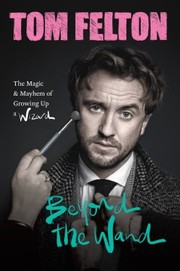
Beyond the Wand: The Magic and Mayhem of Growing Up a Wizard
Tom Felton looks back on ten years as Draco Malfoy, from schoolboy auditions to fame, music, and getting sober.
2,267-word summary · 10 min read
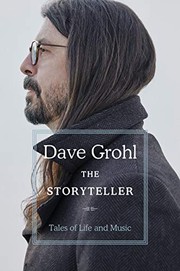
The Storyteller: Tales of Life and Music
Foo Fighters frontman recalls Nirvana, drumming, fatherhood, and life on the road.
2,307-word summary · 10 min read

Are You There, Vodka? It's Me, Chelsea
Handler mines family, jail, dating, and travel for brash essays where oversharing is both joke and shield.
2,186-word summary · 10 min read

Just Kids
Patti Smith recalls broke young years with Robert Mapplethorpe in 1960s New York, from Brooklyn rooms to the Chelsea Hotel, art, music, and a kept promise.
2,401-word summary · 11 min read
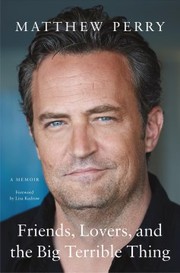
Friends, Lovers, and the Big Terrible Thing
Matthew Perry revisits Friends fame and a long struggle with addiction, from junior tennis to Chandler Bing to a 2018 health crisis, with blunt humor.
2,258-word summary · 10 min read

I'm Glad My Mom Died
Jennette McCurdy recalls child acting, her mother's control, eating disorders, and the slow work of getting free.
2,049-word summary · 9 min read

Long Walk to Freedom
Mandela's account of a Thembu childhood, a law practice, a banned movement, twenty-seven years in prison, and the negotiation that ended apartheid.
2,454-word summary · 11 min read
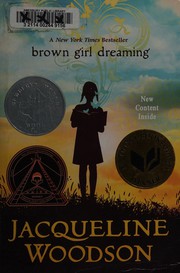
Brown Girl Dreaming
Jacqueline Woodson retells her childhood in verse, moving from Ohio to South Carolina to Brooklyn while the civil rights movement reshapes the world around her.
2,727-word summary · 12 min read

In Order to Live: A North Korean Girl's Journey to Freedom
A young North Korean girl crosses the Yalu, survives trafficking in China, and rebuilds her life in Seoul in this unsparing memoir.
2,027-word summary · 9 min read

Too Much and Never Enough: How My Family Created the World's Most Dangerous Man
Mary L. Trump's 2020 memoir traces how a cold, zero-sum Queens household shaped her uncle, and uses family tax documents to challenge his self-made story.
2,059-word summary · 9 min read
Same Kind of Different as Me
An art dealer and a formerly homeless sharecropper tell the story of the friendship that began at a Fort Worth mission and the woman who insisted on it.
2,023-word summary · 9 min read
My Life in France
Julia Child's memoir of learning to cook in Paris, testing recipes for nine years, and becoming the teacher who changed how America thought about French food.
2,038-word summary · 9 min read

Infidel
Ayaan Hirsi Ali's memoir of a Somali childhood, a forced marriage, a Dutch asylum claim, and the political fight that followed the murder of Theo van Gogh.
2,041-word summary · 9 min read
The Happiest Man on Earth
Eddie Jaku's memoir follows a Leipzig childhood, Buchenwald, Auschwitz, a death march, and the slow rebuilding of a life in Australia.
2,597-word summary · 12 min read

Down and Out in Paris and London
Orwell's account of washing dishes in Paris hotels and tramping through London does not ask for pity, only for a clear look at how poverty actually works.
2,282-word summary · 10 min read
Year of Yes: How to Dance It Out, Stand in the Sun and Be Your Own Person
Shonda Rhimes takes her sister’s accusation seriously and spends a year saying yes to the things that frighten her, from live television to her own reflection.
2,585-word summary · 11 min read

The Girl with Seven Names: A North Korean Defector's Story
Hyeonseo Lee crossed the frozen Yalu River at seventeen, spent years hidden in China, escaped to South Korea, and later returned to rescue her family.
2,404-word summary · 11 min read