
Reading options
What's inside (8 sections)
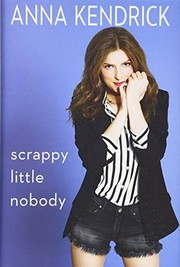
I picked up Scrappy Little Nobody on a night when I wanted something funny and short and not too serious. I had seen Anna Kendrick in Up in the Air and the Pitch Perfect movies, and I knew her as the actress with the dry delivery and the surprisingly powerful singing voice. I did not know much about her childhood, her Broadway years, or the peculiar anxieties that come with being famous before you have figured out how to be a person. The book is a collection of autobiographical essays rather than a continuous memoir, and that suits her voice. She is a anecdotal writer, not a confessional one. She circles the painful stuff with a joke, then lands a sentence that is more honest than the joke prepared you for.
The first thing to know is that Kendrick was not a polished child star. She grew up in Portland, Maine, in a family that was supportive but not show business. At five, she performed a Shirley Temple number at a recital, forgot the lyrics, and when her mother asked if she was upset, she said, "Well, that was stupid." That line tells you almost everything about the narrator. She is hard on herself, but she is also funny about it. She does not ask for pity. She asks you to laugh with her at the absurdity of a small person being handed a spotlight and no instructions.
She describes herself as a "very, very small weirdo" and as "10 percent defiant." The phrase is a good description of the book's persona. Kendrick is not a rebel. She is a person who follows the rules just enough to get access to the room, then says the thing everyone else is thinking. She is suspicious of precocious child actors who boast about their process. She is suspicious of Hollywood people who pretend that fame is a burden they bear nobly. She is suspicious of herself most of all.
The book is arranged by theme rather than by year, which means it circles back to the same periods of her life from different angles. A chapter about childhood might be followed by a chapter about an awards show, then a chapter about dating, then a chapter about a movie set. The effect is conversational. It feels like sitting with someone who keeps remembering another story just as the first one is ending. That is charming when the stories connect, and frustrating when they do not. Kendrick is not interested in a clean narrative arc. She is interested in the jokes and the details that did not fit into a press interview.
Annie and Broadway
Her first professional role was Tessie in Annie. She describes the production's "Hard-Knock Life" number in loving detail: the tin buckets, the scrub brushes, the added tap sequence that made the choreography harder than it needed to be. She was a child with an agent and a job, but she still had to go to school and live in a house where nobody cared about theater gossip. That duality is one of the book's recurring themes. Kendrick was never fully inside the child actor world, and she was never fully outside it. She was a visitor in both.
At twelve, she made her Broadway debut in High Society, earning a Tony nomination. The book is good on the strangeness of that experience. She was a middle school student who also had to perform eight shows a week. She had a dresser, a schedule, and a professional obligation that most adults would find exhausting. She also had a growing sense that she was different from her classmates in a way that could not be explained by talent. She was a kid who had already been looked at by strangers and judged, which is different from a kid who simply liked acting. That changes you.
Kendrick writes about the moment she decided to keep the "crazy" inside her head. She was thirteen. She realized that the feelings she had been expressing freely were making people uncomfortable, so she started editing herself. The joke is that the crazy did not stay inside. It came out in anxiety, in overthinking, in the need to control small things. The book is funny about this, but it is also sad. A thirteen-year-old should not have to become a public relations manager for her own personality.
Twilight, Up in the Air, and the red carpet
The book moves through her film career without pretending to be a complete history. She talks about Twilight, which gave her a taste of franchise fame and the particular madness of fan culture. She talks about Up in the Air, which gave her a serious role and an Oscar nomination. She talks about Into the Woods, which fulfilled a dream of being in a period piece, and about the costumes, the singing, and the strange intimacy of a movie set. She talks about Pitch Perfect, which made her a household name and gave her a song that people still shout at her from cars.
The best Hollywood material is about the gap between the public image and the private experience. Kendrick describes presenting at the Academy Awards and feeling like a child playing dress-up. She describes wearing thousands of dollars' worth of diamonds and then going home to a squalid apartment furnished with Ikea pieces. She describes reviewing a binder full of butt doubles, an absurd behind-the-scenes task that makes the industry sound less glamorous than a office job. She describes the rituals of press junkets, where actors are expected to answer the same questions for hours and pretend it is the first time. She is not complaining. She is reporting. The tone is closer to a travel writer describing a strange country than to a celebrity settling scores.
She is also honest about money. She grew up in a family that was comfortable but not wealthy, and she has a performer's awareness of how quickly a career can end. She writes about the anxiety of being an adult who still feels like a "man-child," about the weirdness of buying a house, and about the guilt of having more than her parents did. These passages are less funny than the Hollywood ones, but they are more revealing. Kendrick is not a person who takes success for granted. She is a person who keeps waiting for someone to tap her on the shoulder and tell her there has been a mistake.
The book is also a record of how the entertainment industry treats young women. Kendrick writes about being asked to look a certain way, about the difference between how she is perceived and how she feels, and about the exhaustion of being professionally charming. She does not turn these observations into a manifesto. She makes a joke, then moves on. But the accumulation of small indignities is effective. By the end, you understand why she is so determined to be the weird one in the room. It is a way of refusing to be a product.
Dating, body image, and the invention of adult life
The dating essays are the weakest part of the book, at least for me. Kendrick jokes about liking boys who did not like her back, about the indignity of early relationships, and about the way she used to treat romance as a audition. Some of the anecdotes are funny. Some of them feel like filler. She is more interesting when she writes about friendship, or about the long process of learning to be kind to herself, than when she writes about boyfriends. The book is not a tell-all, and she is careful not to name people or settle scores. That is admirable, but it does make some of the relationship material feel vague.
She is better on body image and anxiety. She writes about being small, about shopping in the kids' section, and about the way people comment on her body as if it belongs to them. She writes about the fear of being perceived, which is a particular occupational hazard for an actress. She writes about the gap between the confident person she plays on screen and the person who worries about saying the wrong thing at a party. That gap is the book's real subject. Kendrick is not interested in proving that she is likable. She is interested in showing that likability is a performance, and that the performer is often tired.
The chapter about her early dating experiments includes the observation that she liked boys who did not like her back because their indifference felt familiar. That is a sharp line, and it points to something deeper than a joke. She does not analyze it much. She moves on to the next story. The book's resistance to psychology is both a strength and a limitation. It keeps the tone light. It also keeps the reader at a distance.
The book club chapter
The final chapter is a satirical book club guide. Instead of offering solemn conclusions, Kendrick turns the expected discussion questions into another comic exchange. A question about her many bad decisions becomes an accusation directed at the reader: "YOU THINK YOU'RE BETTER THAN ME?!" It is a funny way to end a memoir, and it fits the book's refusal to wrap things up neatly. Kendrick does not pretend that she has figured out her life. She presents the book as a collection of evidence, not a verdict.
I liked that ending more than I expected. Memoirs by famous people often end with a lesson about gratitude or authenticity. Kendrick ends with a joke about the reader's judgment. It is a defensive move, but it is also an honest one. She knows that people will read the book and decide who she is. She is trying to get there first.
What works and what does not
The book's strengths are voice, timing, and specificity. Kendrick is a good comic writer. She knows how to build a joke and how to undercut it. She is at her best when she is describing a particular world: the backstage of a Broadway theater, the parking lot of a Hollywood studio, the apartment of a young person who has not yet bought a couch. She is less good at structure. The essays do not build toward anything. Some of them are only a few pages long and end before they have found a point. The timeline jumps around. If you are looking for a coherent account of her life, you will be frustrated.
The reception was mixed. The Harvard Crimson found the childhood chapters the weakest, arguing that the sarcastic interjections sometimes overwhelm the stories. Kirkus said her humor often falls flat and concluded that she should stick to acting. The Winnipeg Free Press complained about "one average anecdote after another," though it praised her candor about body image and anxiety. Other reviewers found the book charming and funny. I land somewhere in the middle. I laughed out loud several times. I also skimmed a few chapters. The book is a snack, not a meal, and it knows it.
The comparison to other celebrity memoirs is unavoidable. Kendrick is not as raw as some, and she is not as polished as others. She is funny, self-deprecating, and smart enough to know that a famous person's childhood is not automatically interesting. She earns the reader's attention by being specific. The Shirley Temple recital, the Annie buckets, the binder of butt doubles, the Ikea apartment: those details do more work than any statement about fame.
Who should read it
This is for fans of Kendrick who want to hear her voice for a few hours. It is for readers who like essays that are funny and a little anxious. It is for anyone who has ever felt like a fraud in a room full of confident people. It is not for readers who want a deep, revealing memoir or a serious account of the entertainment industry. It is also not for readers who dislike sarcasm. The book is soaked in it.
I finished Scrappy Little Nobody in two sittings, which is the right way to read it. It is light, fast, and occasionally sharp. The title is accurate. Kendrick is scrappy. She is also a little nobody in the sense that she has never fully believed her own press. That tension is the book's engine, and it keeps running until the last joke.
FAQ
Is Scrappy Little Nobody a memoir?
It is a collection of autobiographical essays rather than a continuous memoir, arranged by theme and covering her childhood, Broadway years, and film career.
Does Anna Kendrick write about Pitch Perfect?
Yes. She discusses the film and the attention it brought her, along with Twilight, Up in the Air, Into the Woods, and the rituals of Hollywood publicity.
Is the book appropriate for younger readers?
It includes adult language, drinking, and sexual references, so it is aimed at adult readers despite Kendrick's young adult fan base.
Similar books
My Horizontal Life: A Collection of One-Night Stands
Handler turns dating disasters and family chaos into brash comic essays about single life in Los Angeles.
2,304-word summary · 10 min read
Are You There, Vodka? It's Me, Chelsea
Handler mines family, jail, dating, and travel for brash essays where oversharing is both joke and shield.
2,186-word summary · 10 min read
Dear Girls: Intimate Tales, Untold Secrets & Advice for Living Your Best Life
Ali Wong's debut collects fourteen letters to her daughters, covering sex, money, work, marriage, Vietnam, and being a working Asian American mother.
2,266-word summary · 10 min read
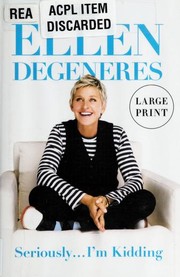
Seriously...I'm Kidding
DeGeneres strings show stories and home jokes into light life advice.
2,292-word summary · 10 min read
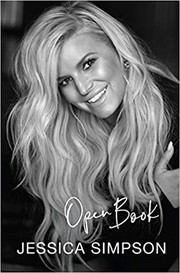
Open Book
Simpson replays pop fame, love and drink through recovery work.
2,552-word summary · 11 min read
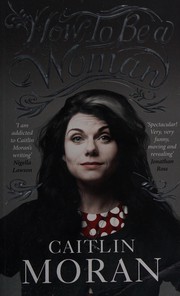
How to Be a Woman
Moran mixes girlhood and work stories into plain feminist advice.
2,600-word summary · 12 min read
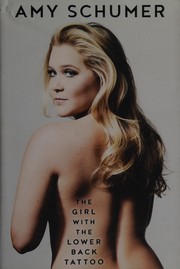
The Girl with the Lower Back Tattoo
Amy Schumer mixes raunchy jokes with frank essays on family, dating, body image, and the shooting that pushed her into gun control advocacy.
2,259-word summary · 10 min read
Not That Kind of Girl: A Young Woman Tells You What She's Learned
Girls creator Lena Dunham's essays on work, bodies, love, and family, frank and funny with uneven edges.
2,156-word summary · 10 min read
Talking as Fast as I Can: From Gilmore Girls to Gilmore Girls
Lauren Graham looks back on broke actress years, Parenthood, and playing Lorelai Gilmore twice in this funny 2016 memoir.
2,701-word summary · 12 min read
Calypso
Sedaris buys a Carolina beach house, grieves his sister Tiffany, tends his aging father, and turns illness and marriage into dry family comedy.
2,835-word summary · 13 min read
Why Not Me?
Essays on work, dating, and body image from the Office writer learning to ask for bigger rooms.
2,000-word summary · 9 min read
Naked
Growing up odd in Carolina, working bad jobs, and learning to watch people closely and kindly.
2,020-word summary · 9 min read
Dress Your Family in Corduroy and Denim
Sedaris on snow days, rental houses, Dutch Christmas, and the family that made him funny.
3,098-word summary · 14 min read
Dry
A memoir of drinking, rehab and relapse, and the strange business of getting sober one morning at a time.
2,643-word summary · 12 min read
Born Standing Up: A Comic's Life
Steve Martin's memoir of how a shy Disneyland magician's assistant built a strange avant-garde act, and why he walked away from stand-up at his peak.
2,034-word summary · 9 min read
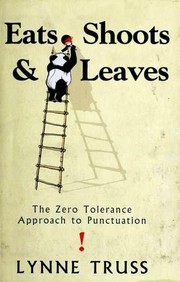
Eats, Shoots & Leaves
Truss defends commas with jokes about pandas and posters.
2,423-word summary · 11 min read
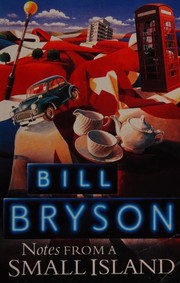
Notes from a Small Island
Bill Bryson's 1995 farewell tour of Britain, funny and fond, from Dover to London, the north, Scotland and Wales.
2,301-word summary · 10 min read
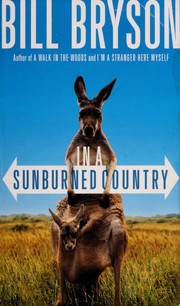
In a Sunburned Country
Bryson revisits Australia by city walks and long trains, with reef trips, critter comedy, and explorer history.
2,387-word summary · 11 min read
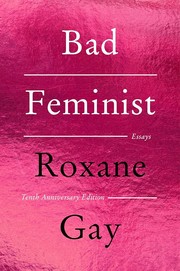
Bad Feminist
Gay mixes memoir and pop culture criticism to argue for imperfect feminism, from Sweet Valley to Django to Fifty Shades.
2,493-word summary · 11 min read
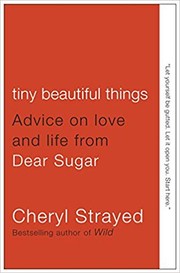
Tiny Beautiful Things: Advice on Love and Life from Dear Sugar
Dear Sugar answers letters on love, grief, and work with tough empathy drawn from her own losses.
2,253-word summary · 10 min read
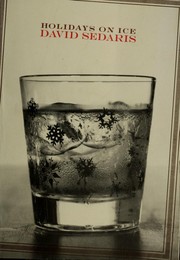
Holidays on Ice
Six Christmas pieces, from a Macy's elf stint to a feral family newsletter. Sedaris at his sharpest and most sentimental.
2,410-word summary · 11 min read
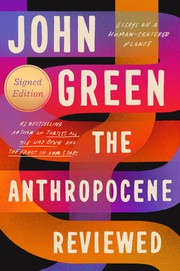
The Anthropocene Reviewed: Essays on a Human-Centered Planet
John Green reviews ordinary parts of human life on a five-star scale, turning geese, keyboards, and sunsets into a warm memoir about attention.
2,982-word summary · 13 min read
Let's Explore Diabetes with Owls
Sedaris gets French dental work, feeds a kookaburra in Australia, shops for a stuffed owl in London, and survives China, airports and a colonoscopy.
2,538-word summary · 11 min read
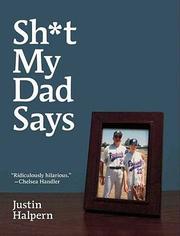
Sh*t My Dad Says
A comedy writer moves home and writes down his blunt fathers funniest lines with love.
1,961-word summary · 9 min read
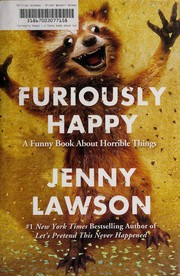
Furiously Happy: A Funny Book About Horrible Things
Jenny Lawson mixes blunt talk about depression with wild stunts and taxidermy to argue for grabbing joy on purpose.
2,963-word summary · 13 min read
Let's Pretend This Never Happened: A Mostly True Memoir
The Bloggess turns a strange Texas childhood and anxious adult life into a funny, warm memoir about family.
2,479-word summary · 11 min read
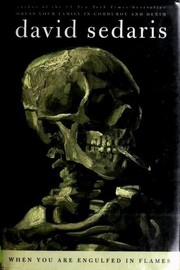
When You Are Engulfed in Flames
In twenty two essays Sedaris tries to quit smoking in Japan, buys a skeleton, fights spiders in Paris, and files dry reports from France on family, country…
2,974-word summary · 13 min read
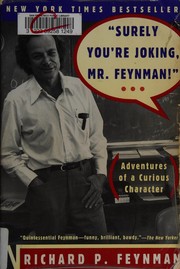
Surely You're Joking, Mr. Feynman!
Feynman drums, cracks safes, and learns by doing from Los Alamos to Caltech classrooms.
1,946-word summary · 9 min read
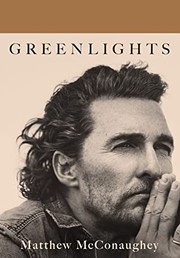
Greenlights
McConaughey shares outlaw stories and greenlight catching from Texas to Hollywood.
2,577-word summary · 11 min read
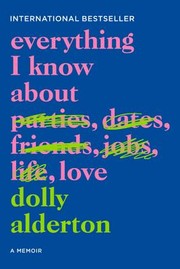
Everything I Know About Love
Dolly Alderton recalls bad dates flatshares and female friendship in her twenties memoir.
2,194-word summary · 10 min read