
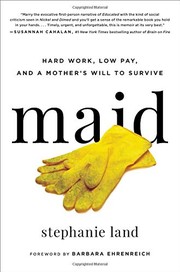
Maid: Hard Work, Low Pay, and a Mother's Will to Survive
2,039-word summary 9 min read 288 pages in the book
- First published
- 2019
- Publisher
- Hachette Books
- Pages
- 288
- ISBN
- 9780316505116
Reading options
What's inside (9 sections)
The first line of Maid is the whole book in one sentence: my daughter learned to walk in a homeless shelter. Stephanie Land does not ease you in, and she does not ask for your sympathy in the paragraph that follows. She just starts telling you how it was. I have read a lot of memoirs in this register, books about surviving poverty and surviving bad men, and this is one of the few that feels like a worker reporting from inside the machine rather than a survivor delivering a verdict after the fact.
It was published in January 2019 by Hachette Books, spent time high on the New York Times bestseller list, landed on Barack Obama's summer reading list, and became a Netflix miniseries in 2021 with Margaret Qualley. The show is good, but it is a dramatization. The book is quieter, more procedural, and more useful. It is a memoir about labor, and labor memoirs are rare.
The job
The spine of the book is the cleaning work. Land cleans houses through an agency called Classic Clean, earning between $8.55 and $9.25 an hour over the years the book covers. The number alone is not the story. The story is everything around the number: the unpaid travel time between houses, the six-hour daily cap that keeps her technically part time, the rags and cleaners she buys and launders herself because the agency does not, and the gas she cannot always afford to put in the car before a shift.
Land is very good at showing how this adds up into a trap rather than an income. Every hour of work carries hidden hours of cost. Every raise of a dollar or so gets absorbed by something, a car repair, a shift cut short, a client canceling at the last minute with no payment for the wasted trip. She is not writing economic theory and she does not need to. She gives you the budget and lets you do the arithmetic, and the arithmetic is damning.
She also does not pretend the job is only suffering. There is real skill in what she does, and a strange dignity in doing it well, and the book is honest about both. The pride is complicated, and she knows it. Cleaning other people's houses well while your own is falling apart is a particular kind of work, and Land writes it without either romanticizing or despising it.
Reading other people's lives
The best writing in the book is about objects. Land cleans houses she cannot afford to live in, often with no one home, and she reads the residents the way a detective reads a room: the imprint of a body on a bed, the coffee rings left standing for days, the toiletries, the mail, the way a family arranges its things when it thinks no one is watching. It is a portrait of the American middle class assembled from outside the glass.
Sometimes the clients are kind. There is a man who leaves her water bottles, clients who remember her name, small generosities that mean more than they should because of how rare they are. Sometimes they are indifferent, or worse than indifferent. Land notes that she often knows intimate details about people who never learn to actually see her, and she is smart about what that says, about them and about the country. She does not turn any of it into a lecture. The detail does the work.
There is also an unspoken class anxiety running through these chapters, the awareness that she is one missed paycheck from the street and that her clients are not. That awareness is the book's ambient tension, and it is present in almost every chapter, even the funny ones.
The paperwork
The other half of the book is the bureaucracy, and this is the part I think people who have never needed help underestimate until they read it. Land is on as many as seven forms of public assistance at once: food stamps, Medicaid, child care grants, housing and utility help, and others. Each program has its own rules, its own reviews, its own paperwork, and its own way of punishing people for trying to escape it.
The welfare cliff is explained better here than in any article I have read. Roughly $50 more per month could erase hundreds of dollars in benefits, which means a raise can make a single mother poorer. To get a child care voucher she has to have a job. To keep the job she needs child care. The book walks you through that closed loop from the inside, with the receipts, and by the end you feel the exhaustion that comes from being audited every month by people who suspect you of fraud because you bought a coffee.
And the stigma: the looks at the grocery store, the sideways comments, the way food stamps turn a private act like feeding your kid into a public performance. Land captures the small humiliations in a way that readers with means will not forget, without ever letting any of the officials in the book become cartoons. Most of them are just tired people enforcing rules. That is worse, in its way.
Mia
The heart of the book is Land's relationship with her daughter. Mia is a real presence, not an argument, and the memoir is full of small, contained moments that do more than any statistic: Mia's shoes that do not quite fit, the attempts to give her a birthday, the mother's constant calculations about what she can afford and what she can do without. The damp apartment they end up in is the most vivid antagonist in the book. It makes Mia sick, again and again, ear and sinus infections that keep a single working mother home from jobs she cannot afford to miss, until a doctor tells Land bluntly that she needs to do better. Land writes the shame of that moment exactly, and then writes what she did with it.
The relationship with Mia's father, Jamie, arrives in pieces rather than a single narrative. It begins before the pregnancy, while Land is working as a landscaper, and becomes abusive, and she leaves, which is the decision that determines the money problem for the next few years. Land is careful not to turn him into a monster and not to pretend the situation was more romantic than it was. The book's honesty about the period when she was still hoping he would be better is one of the things that makes the rest of it trustworthy.
What the book does not do
Maid does not have a tidy arc, and I mean that as praise. It is built from the daily texture of four hard years, and its climaxes are things like moving into a slightly better apartment or getting through a month without a crisis. Land does not present a program, and she does not explain what her story should mean to you. She also resists the ending that makes everyone comfortable: the book ends with Land getting into the University of Montana in Missoula through Pell grants and student loans, which is a beginning, not a rescue. The second memoir, Class, takes over from there. Land is explicit in interviews that her story is one that got out, not a template, and the knowledge that most people in her position do not get out hangs over the last chapters without being stated.
Reception and pushback
The reception was strong and also instructive. It was a bestseller, it was praised by Kirkus as required reading for anyone who has never struggled with poverty, and it did the thing a book like this mostly cannot do, which is reach people who would never pick it up voluntarily. It also drew fair criticism. A New York Times review found the prose not particularly artful and the narration circular, and the criticism of the writing is not wrong: this is a memoir by a person becoming a writer, and you can watch the seams. Another reviewer, in Newsday, felt the attention to personal slights grew wearying, and I understand that too, since the book's eye for being ignored sometimes reads as grievance even when it is accurate.
The deeper critique came from scholars who noted that the most famous poverty memoir of its moment centers a white woman in a situation shared, statistically, by enormous numbers of women of color, and that the book's success says something about which poor stories get amplified. Land has acknowledged as much herself, calling her story a privileged one in context. These are real questions, and they do not undermine the book. They just mean it should sit on a shelf next to more than one account.
What remains, after all of that, is the texture: the mold in the apartment, the rags in the trunk, the endless forms, the small kindnesses, the daughter learning to walk in a homeless shelter. This is a book about work that nobody sees, done by people most readers will never actually look at. Read it, and then tip your cleaner, or better, pay her a living wage.
From the page to the screen
The book's reach changed in 2021, when Netflix released a ten-episode adaptation created by Molly Smith Metzler, with Margaret Qualley playing the protagonist. The show made one decision that tells you a lot about the difference between the two versions: it renames Stephanie to Alex, which lets the series be honest about being a dramatization rather than a documentary. It also casts Andie MacDowell, Qualley's real mother, as Alex's mother Paula, a piece of family casting that sounds like a gimmick until you watch it and realize the resemblance does most of the emotional work.
Land executive produced the series, and it follows the broad shape of the memoir, but television has different needs than a memoir. The show compresses four years into one continuous narrative and gives the audience a more cinematic version of the escape: confrontations, crises, a bigger supporting cast, and far less time with the welfare office. A lot of the procedural texture that makes the book good, the six-hour caps and the voucher rules and the arithmetic of the welfare cliff, becomes background music on screen. That is not a knock on the adaptation. It is a good season of television. It is just that the book is the version where the paperwork is the story, and that difference is worth understanding before you decide which one to start with.
The series did reunite the memoir with a large audience, and it also led a lot of readers toward Land's second book, Class, published in 2023, which picks up the story in college and carries it through the harder, stranger problems of being poor among the educated. Read together, the two books form one of the more complete accounts we have of what economic mobility actually costs a person, hour by hour and form by form. Netflix made the escape look like a sprint. The memoirs are honest that it was a decade.
And one thing the book understands that policy writing usually does not: the way love and exhaustion live in the same body. Land is not just a worker and not just a mother. She is a mother trying to be a worker in a system that assumes every worker has a wife at home, and the memoir's quiet central plea is that parenting is labor, that it never clocks out, and that the country's entire arithmetic of assistance pretends otherwise. That is the argument the story makes without ever standing up to announce it, which is why the book outlasts the statistics it contains.
If the memoir has one limitation, it is the one its subject imposes. The years after the story stay compressed, and some readers will finish wanting more detail about how she actually wrote her way out, which classes, which mentors, which drafts. That book exists, and it is Class, and the pair is best read in order. Maid is the descent and the climb out. Class is what the climb bought, and what it cost.
FAQ
Is Maid based on a true story?
Yes. It is Stephanie Land's own account of her years as a single mother cleaning houses in Washington State and her route into college. The 2021 Netflix miniseries is adapted from it.
Does Maid have a happy ending?
It ends hopefully rather than happily: Land moves to Missoula to study at the University of Montana with the help of Pell grants and loans. Her second memoir, Class, continues the story through college.
Is the Netflix series faithful to the book?
The 2021 miniseries was executive produced by Land and follows the same events, but it compresses and dramatizes her episodic memoir into a season of television. The book is the more matter-of-fact version.
Similar books
Same Kind of Different as Me
An art dealer and a formerly homeless sharecropper tell the story of the friendship that began at a Fort Worth mission and the woman who insisted on it.
2,023-word summary · 9 min read
Down and Out in Paris and London
Orwell's account of washing dishes in Paris hotels and tramping through London does not ask for pity, only for a clear look at how poverty actually works.
2,282-word summary · 10 min read

Dear Girls: Intimate Tales, Untold Secrets & Advice for Living Your Best Life
Ali Wong's debut collects fourteen letters to her daughters, covering sex, money, work, marriage, Vietnam, and being a working Asian American mother.
2,266-word summary · 10 min read
Nickel and Dimed: On (Not) Getting By in America
A journalist works waitress, cleaning, retail, and care jobs undercover to test whether full-time work keeps a person housed and fed.
2,328-word summary · 10 min read
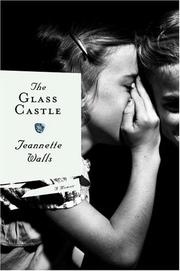
The Glass Castle
Jeannette Walls's memoir of a childhood spent hungry and moving, from a stove fire at three to a Bronx apartment and parents on the street.
2,255-word summary · 10 min read

Long Walk to Freedom
Mandela's account of a Thembu childhood, a law practice, a banned movement, twenty-seven years in prison, and the negotiation that ended apartheid.
2,454-word summary · 11 min read
Nothing to Envy
Barbara Demick follows six defectors from Chongjin through the North Korean famine, showing how ordinary people lived, believed, and finally left.
2,068-word summary · 9 min read

In Order to Live: A North Korean Girl's Journey to Freedom
A young North Korean girl crosses the Yalu, survives trafficking in China, and rebuilds her life in Seoul in this unsparing memoir.
2,027-word summary · 9 min read

Too Much and Never Enough: How My Family Created the World's Most Dangerous Man
Mary L. Trump's 2020 memoir traces how a cold, zero-sum Queens household shaped her uncle, and uses family tax documents to challenge his self-made story.
2,059-word summary · 9 min read

Infidel
Ayaan Hirsi Ali's memoir of a Somali childhood, a forced marriage, a Dutch asylum claim, and the political fight that followed the murder of Theo van Gogh.
2,041-word summary · 9 min read
Year of Yes: How to Dance It Out, Stand in the Sun and Be Your Own Person
Shonda Rhimes takes her sister’s accusation seriously and spends a year saying yes to the things that frighten her, from live television to her own reflection.
2,585-word summary · 11 min read

The Girl with Seven Names: A North Korean Defector's Story
Hyeonseo Lee crossed the frozen Yalu River at seventeen, spent years hidden in China, escaped to South Korea, and later returned to rescue her family.
2,404-word summary · 11 min read
Love Does
A lawyer and activist tells stories of saying yes, showing up, and loving people through ordinary, often ridiculous actions.
2,411-word summary · 11 min read
Beautiful Boy: A Father's Journey Through His Son's Addiction
David Sheff recounts watching his son Nic slide into meth addiction, and his own desperate, humbling search for how to help without destroying them both.
2,076-word summary · 9 min read

The Magnolia Story
How Chip and Joanna Gaines met, closed their first shop, nearly lost everything in a housing development, and built Fixer Upper.
2,994-word summary · 13 min read
Lone Survivor: The Eyewitness Account of Operation Redwing and the Lost Heroes of SEAL Team 10
Marcus Luttrell's account of the 2005 SEAL mission in Afghanistan that killed three of his team and left him alone.
2,144-word summary · 10 min read
Life
The Rolling Stones guitarist tells his own story: a Dartford childhood, the band's first gigs, the drug raids, the tax years and Patti Hansen.
2,761-word summary · 12 min read
Dry
A memoir of drinking, rehab and relapse, and the strange business of getting sober one morning at a time.
2,643-word summary · 12 min read
Travels with Charley
Steinbeck drives across America with his poodle Charley, looking for the country he remembers and finding a place that has changed.
2,039-word summary · 9 min read
The Blind Side: Evolution of a Game
Michael Lewis traces how the left tackle became a premium position and tells the story of Michael Oher, a homeless Memphis teenager whose size and speed made…
2,038-word summary · 9 min read
Smoke Gets in Your Eyes: And Other Lessons from the Crematory
A young medieval history graduate takes a job at an Oakland crematory and becomes a mortician, confronting the physical reality of death and the funeral…
2,003-word summary · 9 min read

Scrappy Little Nobody
Anna Kendrick's essays trace her path from a Portland childhood and Broadway to Hollywood, with jokes, anxiety, and a refusal to pretend fame fixed her.
2,092-word summary · 9 min read
Red Notice
An American financier in Moscow exposes a $230 million tax fraud, watches his lawyer die in prison, and turns the case into an international human rights law.
2,008-word summary · 9 min read

The Letters of Vincent van Gogh
Vincent van Gogh's letters to his brother Theo, in a Penguin Classics selection edited by Ronald de Leeuw, trace a decade of work, faith, and obsession.
2,611-word summary · 12 min read
Lucky
Alice Sebold's memoir of the 1981 rape she survived as a college freshman, the courtroom that followed, and a conviction later proven to be a case of mistaken…
2,091-word summary · 9 min read
Between Two Kingdoms: A Memoir of a Life Interrupted
Diagnosed with leukemia at twenty-two, Suleika Jaouad survives treatment and then takes a 100-day road trip to meet the strangers who wrote to her.
2,311-word summary · 10 min read
90 Minutes in Heaven: A True Story of Death and Life
A pastor declared dead at a 1989 crash scene describes ninety minutes he says he spent in Heaven, then thirteen months of surgeries, depression, and recovery.
2,246-word summary · 10 min read
The Stranger Beside Me
Ann Rule's classic memoir of her friendship with Ted Bundy, written by the true-crime author who knew him long before the world learned what he had done.
2,481-word summary · 11 min read
Reasons to Stay Alive
Matt Haig's memoir of the breakdown that nearly killed him at twenty four and the three years of unglamorous recovery that followed.
2,065-word summary · 9 min read
Evicted: Poverty and Profit in the American City
Desmond follows eight Milwaukee families and two landlords through a year of evictions, showing how losing a home causes poverty rather than just reflecting it.
2,032-word summary · 9 min read