
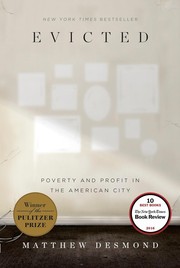
Evicted: Poverty and Profit in the American City
2,032-word summary 9 min read 432 pages in the book
- First published
- 2016
- Publisher
- Crown
- Pages
- 432
- ISBN
- 9780553447439
Reading options
What's inside (10 sections)
Most books about poverty begin with a statistic and work backward to people. Evicted does it the other way. Matthew Desmond, then a young sociologist at the University of Wisconsin, moved into a trailer park on the South Side of Milwaukee and spent months living alongside the people he was studying, and the book he produced from that year reads like a novel that happens to be reporting. It came out in 2016 from Crown, runs 432 pages in the first hardcover, and won the 2017 Pulitzer Prize for General Nonfiction.
I resisted it for a while because the title sounds like homework. It is not homework. It is the closest thing I have read to living inside the arithmetic of American poverty.
The two neighborhoods
Desmond works two rooms of the same city. On the North Side, a Black neighborhood where most tenants rent, the landlord is Sherrena Tarver, a former schoolteacher who owns inner-city properties and who can talk about a furnace or a mortgage the way other people talk about children. In a trailer park on the South Side, the tenants are mostly white, the proprietor is Tobin Charney, and the business model is 131 trailers at around $550 a month, a combination that earned him about $447,000 in the year Desmond documents, which placed him in the top one percent of American earners while most of his tenants sat in the bottom ten. The landlord lives seventy miles away in Skokie, Illinois, and the property is always full of people who cannot leave.
Desmond alternates chapters between tenants and landlords until you understand that they are not separate stories. Every eviction is a transaction that needs two parties, and the book is scrupulous about both. Sherrena buys distressed units and keeps them running on thin margins, and she also evicts people over small sums in ways that are perfectly legal and perfectly devastating. Tobin keeps his license by a hair and pays for it, like everyone else does. Nobody in the book is a cartoon. That is the point.
Arleen
The heart of the book is Arleen, a mother of two boys, Jori and Jafaris, who is evicted early on and spends most of the year trying to get back to a lease. Her income is welfare and small informal work, and at one stretch she has about twenty dollars a month left after paying for a rundown apartment, which means a family survives on a budget that does not survive contact with a grocery store.
Arleen's oldest son, Jori, is bright, angry, and quick to explode, which in any other neighborhood would be called being eleven. A snowball he throws at a passing car leads the driver to kick in their door. A fight at school leads to police at the apartment. Every call brings the family closer to losing the lease, because landlords on the North Side have plenty of applicants and a low tolerance for anything they can call trouble. The book follows her through shelters, doubled-up housing, and dozens of applications. At one point, by Desmond's count, she contacts more than eighty landlords, and the answers stop being human at some point in that list.
There is a cat the boys adopt and there is a chapter where the cat has to go. I am not going to pretend the cat is the point, and neither does the book. But it is the kind of detail a policy report does not have and this book does.
Crystal and Vanetta
Arleen's friend Crystal Mayberry grew up in foster care, has children she cannot currently raise, and has a disability case that pays out in bursts that stop without notice. When the payments stop, Crystal lives on the street, and when survival costs too much, she turns to sex work. Desmond never makes her a cautionary tale. He lets her be a person whose paperwork failed.
Then there is Vanetta, young, cornered, and facing a choice between losing her children and doing something illegal. She takes part in a robbery and gets eighty-one months in prison. The chapter where her sentence lands is the hardest in the book because the crime and the cause sit in the same paragraph. She is not innocent, and the book does not argue she is. It argues that the set of options presented to her was constructed, and that a society that constructed those options and then punishes her for choosing among them is lying to itself about what it is doing.
The trailer park
The South Side chapters rotate around people whose problems are of a different flavor and the same shape. Scott, a former nurse who lost his license for stealing opioids, cycles through rehab, a bender, a job at an AA bar called the Serenity Club, methadone paid for with his mother's last hundred and fifty dollars, a shelter where he becomes the resident manager, and finally a subsidized apartment downtown. His is the rare arc with an upward slope, and Desmond is honest that it required luck and, eventually, the state.
Pam and Ned are a couple with addiction struggles who get evicted while Pam is pregnant. When they apply for new places, landlords refuse them because of the children, so Ned pretends to be a single father to pass the screening. Larraine spends a full month's food stamps on a lobster dinner to mark her anniversary with her late husband, which makes complete sense if you have ever had a life and a story and no other way to honor either. And Kamala's apartment catches fire, killing her eight-month-old baby, in a building where the heat was a patch job, in a city where nobody was going to be held responsible for the thermostat.
The trailer park chapters do something specific to the argument. They show that this is not a story about race or a story about class, but a story about both. The white tenants of College Mobile Home Park are as trapped as the Black tenants on the North Side, and the mechanisms that trap them are the same: no savings, no legal help, screening algorithms, and a court system that processes evictions in minutes.
The court
The eviction court chapters are the engine of the book's argument. In an average year, Desmond reports, around ninety percent of evicted tenants faced their hearings without a lawyer. Landlords have forms, procedures, and practice. Tenants have shifts to get to. Most hearings end in default judgments, which is the polite term for one side not showing up, and default judgments go on your record where every future landlord can see them, where they stay for years, where they foreclose the idea of ever renting near a decent school.
This is the pivot of the whole book. Eviction is usually imagined as a symptom of poverty, the thing that happens after everything else goes wrong. Desmond shows it is also a cause, maybe the most efficient cause there is. Lose your home in Milwaukee and you do not just lose a place to sleep. You lose your neighborhood, your children's school, your stuff, and your shot at the next apartment, and the record follows you. Losing a home makes you poorer, and being poorer makes you more likely to lose the next one. That is the cycle the title names.
The arithmetic
There is a reason this book is assigned in policy courses as often as it is read for pleasure. Desmond keeps the numbers close to the people who generate them. In Milwaukee in the years he covers, roughly one in eight renters experienced a forced move, and the numbers were worse in Black neighborhoods, where eviction filings clustered into a few blocks, meaning that a small number of landlords and a small number of buildings were producing a large share of the city's displacement. Eviction was not spread evenly like weather. It was a business decision applied to a map.
He also tracks what happens after the officer comes. Evicted families move into worse units, worse neighborhoods, worse schools. The record of the eviction follows them into screening systems that charge application fees for the privilege of being automatically rejected. Children change schools mid-semester and lose months of instruction. Whatever the family owned that did not fit in the truck, including the furniture that made dinners possible, ends up on the curb. The famous finding, the one the book repeats until it is impossible to miss, is that these outcomes are not just correlated with poverty. They cause it. A family that loses a home is measurably more likely to lose the next one, which means eviction is not an event in the life of poverty. It is one of poverty's engines.
The worst part of the machinery is how legal it all is. Judges follow statutes. Landlords follow statutes. The statutes were written by people whose interests were represented in the room. That is why the epilogue, for all its tonal risk, matters: it names the part that could be changed, which is money and law, not character.
The epilogue and the argument
The last chapter steps back and turns into an argument, and I know some readers find this tonal swerve awkward. After two hundred pages of close reporting, Desmond proposes a universal housing voucher program, a guaranteed federal entitlement to housing assistance that would reach every poor household, which today is available to only a fraction of those who qualify because the waiting lists are miles long.
I found the epilogue load-bearing. Desmond earned it, and it is short and concrete enough to function as a policy memo rather than a sermon. What is missing from it is any engagement with skeptics who think the deeper problem is jobs and crime and family structure. The Milwaukee Journal Sentinel, which covered the same ground as a newspaper, pushed back on the book's causal claims, and readers who come in convinced that housing policy is secondary will not leave converted. Desmond is aware of those arguments and mostly declines to litigate them here. He wants the reader to walk the vivid path first and the argument after.
The book's other tension is one Desmond acknowledges in his own method notes. He paid some participants, he intervened when he saw harm, and he is present in the story as a presence rather than a transparent eyeball. His reasons are also personal in a way he discloses plainly: while he was in college, the bank foreclosed on his parents' house, the home where he grew up. He came to Milwaukee already knowing what it is like to watch a family's floor tilt. That disclosure does not make the reporting softer, and it does explain why the book refuses to treat the poor as a subject and the reader as a tourist. A purist would call that contamination. I think it is part of why the book works. The people in it are not specimens. They are people who knew him.
What stays
Reading Evicted in the middle of any housing crisis year feels like being handed the schematic of a machine you have been standing inside. The details stay: the snowball, the lobster, the fire that killed the baby, the court dockets, the teenager's case file, the eighty applications. The prose is plain and controlled, and the structure, with its alternating tenants and landlords, is quietly elegant. It would have been easy to write this book as an indictment of Sherrena or Tobin. Desmond does not, and the book is more damning for it. He indicts the system the two of them are also living inside, and he leaves you with the uncomfortable arithmetic: at current funding, most poor renting families in America get no housing help at all, and the ones who lose their spot on the floor stay lost. The title is not a metaphor. It is a machine, and the book takes it apart in front of you, bolt by bolt, and then shows you where the missing part was supposed to go.
FAQ
Is Evicted based on real people?
Yes. Desmond spent months embedded in Milwaukee, and the book follows real families and landlords whose stories he documented and paid for where he intervened.
Did Evicted win a Pulitzer Prize?
Yes, it won the 2017 Pulitzer Prize for General Nonfiction and the National Book Critics Circle Award, among other honors.
What is Desmond's main argument in Evicted?
That eviction is a cause of poverty rather than only a condition of it, and that a universal housing voucher would change the equation for poor renting families.
Similar books
Behind the Beautiful Forevers: Life, Death, and Hope in a Mumbai Undercity
Life in a Mumbai slum near the airport, where families hustle for a better future.
2,406-word summary · 11 min read
Nudge: Improving Decisions About Health, Wealth, and Happiness
Thaler and Sunstein show how defaults, framing, and social cues steer choices, and argue for choice architecture with an opt-out.
3,146-word summary · 14 min read

Nothing to Envy
Barbara Demick follows six defectors from Chongjin through the North Korean famine, showing how ordinary people lived, believed, and finally left.
2,068-word summary · 9 min read
Same Kind of Different as Me
An art dealer and a formerly homeless sharecropper tell the story of the friendship that began at a Fort Worth mission and the woman who insisted on it.
2,023-word summary · 9 min read
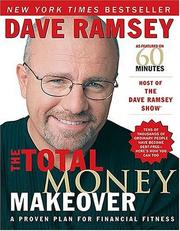
The Total Money Makeover: A Proven Plan for Financial Fitness
Dave Ramsey lays out seven Baby Steps, from a $1,000 starter fund to a paid-off house, with the debt snowball at the center.
2,663-word summary · 12 min read
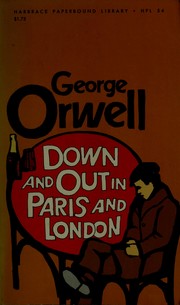
Down and Out in Paris and London
Orwell's account of washing dishes in Paris hotels and tramping through London does not ask for pity, only for a clear look at how poverty actually works.
2,282-word summary · 10 min read
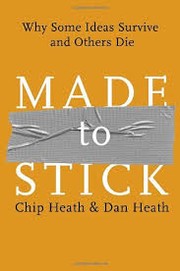
Made to Stick: Why Some Ideas Survive and Others Die
The Heath brothers break down why some ideas vanish on contact while others lodge in memory, tracing six traits that make a message stick.
2,527-word summary · 11 min read

Cultish: The Language of Fanaticism
Amanda Montell argues that the real machinery of a cult is its vocabulary, and she traces how loaded language from 1960s communes to modern wellness brands and…
2,087-word summary · 9 min read
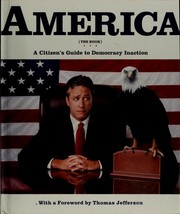
America (The Book): A Citizen's Guide to Democracy Inaction
Jon Stewart and the Daily Show writers turn a high school civics textbook inside out, with a foreword from beyond the grave.
2,511-word summary · 11 min read
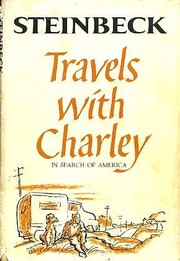
Travels with Charley
Steinbeck drives across America with his poodle Charley, looking for the country he remembers and finding a place that has changed.
2,039-word summary · 9 min read
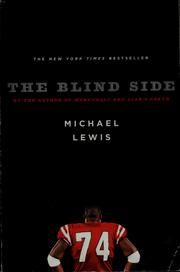
The Blind Side: Evolution of a Game
Michael Lewis traces how the left tackle became a premium position and tells the story of Michael Oher, a homeless Memphis teenager whose size and speed made…
2,038-word summary · 9 min read

Prisoners of Geography: Ten Maps That Tell You Everything You Need to Know About Global Politics
Tim Marshall explains how mountains, rivers, coasts, and resources shape the choices of nations, from Russia's flat borders to the chokepoints of the South…
2,328-word summary · 10 min read

The World Is Flat: A Brief History of the Twenty-first Century
Thomas L. Friedman's 2005 bestseller argues that technology, trade, and open borders leveled the global playing field, and it names the ten forces that did it.
2,369-word summary · 11 min read

What the Dog Saw and Other Adventures
Nineteen New Yorker essays on pitchmen, ketchup, Enron, profiling, late bloomers and the limits of prediction, arranged in three parts.
2,049-word summary · 9 min read
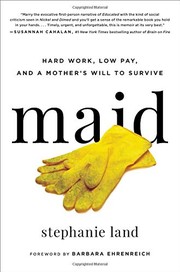
Maid: Hard Work, Low Pay, and a Mother's Will to Survive
Stephanie Land's memoir of cleaning houses as a single mother on the poverty line, and of the paperwork that made every step forward cost something else.
2,039-word summary · 9 min read
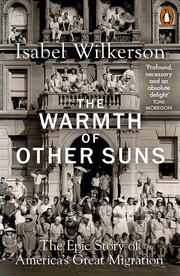
The Warmth of Other Suns
Three migrants ride north out of Jim Crow toward Chicago and LA.
2,561-word summary · 11 min read
Killing Lincoln
Booth plots as Lincoln pushes war end and reunion in 1865.
2,486-word summary · 11 min read

The Black Swan
Taleb argues rare shocks shape history more than models admit, and urges safer exposure over prediction.
2,588-word summary · 12 min read
The Millionaire Next Door
Stanley and Danko survey wealthy Americans and find frugal savers living next door, not big spenders, in this 1996 money study.
2,466-word summary · 11 min read

SuperFreakonomics: Global Cooling, Patriotic Prostitutes And Why Suicide Bombers Should Buy Life Insurance
Levitt and Dubner apply incentives to prostitutes, suicide bombers, doctors, and climate fixes with cheeky data.
2,007-word summary · 9 min read
Predictably Irrational
Behavioral economist Dan Ariely shows why we overpay, procrastinate, and misjudge through simple experiments.
2,183-word summary · 10 min read
Invisible Women: Data Bias in a World Designed for Men
Data treating men as default harms women in medicine, work, transit, and design, with fixes from studies worldwide.
2,316-word summary · 10 min read
The Intelligent Investor
Graham's 1949 guide teaches Mr Market, margin of safety, and defensive versus enterprising plans for calm stock and bond investing.
2,423-word summary · 11 min read

Moneyball
Oakland buys walks and patience to win 103 games on a small payroll in Lewis's 2003 baseball story.
2,955-word summary · 13 min read

Football
Klosterman asks why America worships football on Sunday television and argues the sport will lose its crown within sixty years.
2,219-word summary · 10 min read
Caste: The Origins of Our Discontents
Wilkerson argues America runs on a hidden caste system, tracing eight pillars across the US, India, and Nazi Germany.
2,629-word summary · 12 min read
The Big Short: Inside the Doomsday Machine
Outsiders who read the bonds shorted subprime and watched the machine eat itself in 2008.
2,194-word summary · 10 min read
White Fragility: Why It's So Hard for White People to Talk About Racism
DiAngelo's 2018 bestseller on why cross-racial talk about racism stalls, and what white readers can practice instead.
2,904-word summary · 13 min read
Nickel and Dimed: On (Not) Getting By in America
A journalist works waitress, cleaning, retail, and care jobs undercover to test whether full-time work keeps a person housed and fed.
2,328-word summary · 10 min read

Modern Romance
A comedian and a sociologist combine interviews, focus groups, and Reddit stories to explain why dating feels harder now.
2,322-word summary · 10 min read