
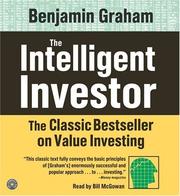
The Intelligent Investor
2,423-word summary 11 min read 640 pages in the book
- First published
- 1949
- Publisher
- Harper
- Pages
- 640
- ISBN
- 9780060555665
Reading options
What's inside (8 sections)
I came to The Intelligent Investor late, after years of hearing people call it the only investing book that matters. Benjamin Graham first published it in 1949 with Harper, and the standard revised edition with Jason Zweig commentary runs 640 pages. Warren Buffett has praised it for decades, and that praise is part of why I finally sat down with it. I expected something dry and full of old numbers. Parts of it are old. The numbers in the examples come from railroads and utilities that no longer look like our market. Still, the core argument felt fresh, and in places uncomfortably personal.
Graham writes for someone with savings and a job, not for a trader with screens all day. He thinks most of us lose money because we act like gamblers while telling ourselves we are investors. The book tries to talk you out of that habit. It is patient, repetitive on purpose, and sometimes stern. I read it over two weeks, a chapter at a time, with a pencil. By the end I had changed how I look at price drops, which is exactly what Graham wants.
The edition I read keeps Graham's fourth revised text from the early seventies and adds Zweig commentary after each chapter, published in 2003. That setup helps. Graham gives the rule, Zweig shows how people broke it in the nineties dot-com run. Reading both together keeps the old book from feeling like a museum piece.
Investor or speculator, pick one
Graham starts with a split that runs through everything. An investor buys a piece of a business after checking the numbers and leaving room to be wrong. A speculator bets on price moves. Most market activity, Graham says, belongs in the second camp, even when it wears a suit and uses words like research.
This stung a little. I have bought stocks because a friend liked them, because the chart looked strong, because I felt late. Graham would call that speculation. He does not say speculation is evil. He says you should admit what you are doing and keep the money separate. The investor part of your savings gets rules. The betting part, if you must, stays small enough that mistakes do not wreck you.
He also warns about the word safety. People hear safe stocks from a broker and stop asking questions. Graham keeps showing how high quality companies at crazy prices become risky, while boring bonds at fair prices can be sensible. Price matters as much as quality. That idea sounds plain until you try to live by it during a hot market when everyone around you is doubling money on stories.
One early chapter walks through results from long stretches of market history. Stocks beat bonds over many decades, but with drops that scared owners out at the worst time. Inflation eats bond income. Cash feels calm and then quietly loses buying power. His point is not to pick the perfect asset. It is to build a plan you can hold when the news turns ugly, because it will turn ugly at some point.
I found this opening slower than expected. The tables of old returns take work. Stick with the message underneath. Know which game you are playing before you place money down.
Mr Market knocks every day
The most famous part of the book is a parable about a fellow called Mr Market. Picture yourself owning part of a private business with a partner who shows up each morning with a price. Some days he names a cheerful number because he feels bright. Some days he names a low number because he is gloomy. You can sell to him, buy from him, or ignore him completely. He will be back tomorrow with a new mood.
Graham says real stock prices work like that partner. A share is a slice of a firm that sells goods, pays workers, and earns profits. The market price for that slice swings with fear and greed. The smart owner does not ask Mr Market what the business is worth. The owner decides from the accounts, and then uses Mr Market when his quote turns useful.
This chapter changed my habits more than any other. I used to check prices during lunch and let a red day sour my mood. Graham treats that as backwards. If you own a house, you do not get sad because a stranger shouts a low bid through your window. You only care when you plan to sell, or when the bid gets so low that buying more makes sense. Stocks deserve the same distance.
Zweig adds modern proof. He retells how sensible people in 1999 paid huge multiples for firms with no profit because prices kept rising and friends kept bragging. Then in 2002 the same people sold solid funds near the low because the mood had flipped. The names change with each cycle. The pattern of chasing heat and dumping in cold repeats.
Graham gives a practical rule here. Buy when you have done the work and the price gives you room. Sell when your reason breaks or the price runs far past worth. In between, do nothing on purpose. Doing nothing sounds lazy. In this book it counts as skill.
Short aside. I taped a note above my desk while reading this section. It says price is what he shouts, worth is what the firm earns. Crude, but it stopped me from opening my brokerage app twice one week.
The margin of safety
If Mr Market is the personality of the book, the margin of safety is its spine. Graham means something simple. When you buy a bond, a stock, or a whole company, leave a gap between what you pay and your careful estimate of worth. That gap covers your errors, bad luck, and the fact that the future stays cloudy.
Engineers build bridges to hold far more than expected traffic. Graham wants the same cushion in money. If a firm earns about ten dollars a share across normal years and you pay fifty, you have room. If you pay one hundred and twenty because growth looks certain, you have no room. One shortfall and the price can fall hard.
He shows this first with bonds and preferred issues. A small firm can be a fine creditor if it earns interest several times over and owns assets well above the debt. A large famous firm can be a poor creditor if it owes too much against thin cover. Size impresses people. Coverage protects them. Graham trusts coverage.
With common stocks the cushion comes from price against earnings and assets across a full cycle, not one good year. He likes to average earnings over many years to smooth booms. He checks the balance sheet for debt. He compares the earnings yield to bond yields as a sanity check. None of this predicts next quarter. All of it lowers the cost of being partly wrong.
My notes in this part are full of crossed out lines. I tried to apply the formula fast to a stock I owned and got a fuzzy answer. That fuzz is the lesson. Graham does not promise exact value. He promises that buying cheap relative to sober worth beats buying dear relative to hope, repeated over years.
Zweig points out where readers twist this idea. Some turn margin of safety into an excuse to buy dying firms at low multiples and call it value. Graham meant something stricter. Cheap price plus solid finances plus honest management. The price alone never makes the safety. The strength behind it does.
Defensive or enterprising, pick your job
Graham splits readers into two types and tells you to choose honestly. The defensive investor wants safety with little time spent. The enterprising investor will spend hours studying firms and wants to put that work to use. Most of us claim the second label and live the first life. Graham asks you to stop pretending.
For the defensive owner he sketches a plain portfolio. Hold a mix of high grade bonds and broad stocks, shifting within bounds as prices move. He suggests keeping between a quarter and three quarters in either camp, with the middle fifty fifty as a default. When stocks soar and your stock share grows past your rule, sell some and buy bonds. When stocks sink and your share shrinks, do the reverse. It forces selling high and buying low without needing courage in the moment.
He pairs this with dollar cost averaging, meaning you put a fixed sum into the market on a schedule through good months and bad. You buy fewer shares when prices run high and more shares when prices fall. It will not catch the bottom. It keeps you from going all in at the top because you felt bold at dinner.
The rules for stock picking here are narrow. Large firms with long profit records, steady dividends, modest debt, and prices that do not stretch far past asset worth or past earnings. Graham even gives sample screens, like earnings at least double interest, current assets at least double current bills, and price below a set multiple of average earnings and book value. You can argue with his exact cutoffs. The spirit is clear. Boring strength at a fair quote.
The enterprising path allows more room. Buy bargains that the defensive screen rejects, work out special cases, buy into neglected issues. But Graham ties this freedom to effort and temperament. You must read reports, compare competitors, check management, and stay calm when a cheap stock gets cheaper. He is blunt that most people who try this add trading costs and stress without adding return.
Reading this as someone with a full time job, I took the defensive hint personally. I cut my watch list from thirty names to a handful, set a regular buying date, and wrote down my stock bond target on paper. Less exciting. Easier to follow on a tired Tuesday.
Funds, advisers, and reading the market
The middle later chapters take on the industry around you. Graham reviews investment funds, advisers, and forecasting with a skeptic eye. He finds that average fund results trail the market by about their costs, that hot records fade, and that sales talk peaks when it should warn.
His fund chapter reads like it was written last year. People buy the fund that just won, after the win. Costs eat the edge. Clever labels hide plain portfolios. Zweig updates this with the late nineties, when new growth funds filled with tech names soared and then fell further than the market. The lesson stays steady across decades. Past heat tells you little. Fees tell you a lot.
Graham is fair to good advisers. He says a careful counselor can help with taxes, estate rules, and keeping you from yourself. He warns against anyone who promises beat the market skill based on a short run, or who trades your account to show effort. Ask what they own, how they get paid, and what they did in bad years. Vague answers are an answer.
He spends time on market history and formulas that claim to time entries. He tests them against long records and finds most break when you need them. His advice stays modest. Decide your mix from your age, income steadiness, and nerves. Fund it on schedule. Rebalance by rule. Judge results over years, not weeks.
One passage I kept rereading covers inflation and interest. Graham shows how rising prices punish cash and long bonds, while stocks adjust better over time but with painful spells. He does not offer a trick to avoid all harm. He offers posture. Keep some buying power safe, keep some growing, keep costs low, and refuse to chase yield into risks you do not grasp.
I also liked his bluntness about business honesty. He tells you to read the footnotes, check how profits are counted, watch stock options and pension guesses, and distrust fast growth that needs constant borrowing. It reads like advice from a teacher who has seen smart students fooled by neat charts.
What drags, and who should skip it
No honest account should skip the weak spots. This book drags in places, and it will not fit everyone.
The examples age hard. Pages on railroads, utilities, and old tax rules feel distant. Bond math sections ask for patience if you have never worked with yields. Some chapters repeat the same warning with new tables. I skimmed a few stretches and returned later with coffee. A reader who wants fresh stories about current firms will find little here. Graham names types more than tickers, on purpose, but that choice makes long nights longer.
The method also limits upside by design. A defensive mix with rebalancing will lag a long bull market where friends get rich on one stock. Graham accepts that trade. He wants survival across cycles, not top rank in one year. If you need fast growth to meet a near bill, or if you crave action, his rules will feel like a fence. That fence is the point, but it still chafes.
Zweig commentary helps yet adds bulk. The book runs thick because every Graham chapter gets a modern mirror. Some mirrors repeat the same dot-com warning. Readers who already distrust hype may tire of being told again. I found the repetition useful as a guardrail. Others may wish for a shorter path.
Who should skip it for now. Anyone looking for step by step picks, options tactics, or crypto rules will walk away hungry. Graham barely touches trading tools and would likely scorn most of them. Anyone who cannot stand old prose should start with a shorter modern book on index funds and return here later. The ideas will wait.
Who should read it. Savers who want a calm plan, new investors burned by a first loss, parents teaching teens about money, and anyone who checks prices too often. I fit the third and fourth groups. My selling slowed while reading. My savings rate rose a little because the chapters on discipline made excuses harder.
I closed the book less excited about markets and more settled about my part in them. Buy pieces of strong firms at fair prices. Leave room to be wrong. Rebalance by rule. Ignore Mr Market most days. Pay little in fees. That is almost the whole trick, and the reason the trick is hard is that it asks for character more than cleverness.
FAQ
When was The Intelligent Investor published?
Benjamin Graham first published it in 1949 with Harper. The widely read revised text with Jason Zweig commentary runs 640 pages with ISBN 9780060555665.
Do I need to trade often to follow Graham?
No. Graham favors a set stock and bond mix, regular buying, and rebalancing by rule. The enterprising path fits only readers who will study reports for hours.
Is this book only for professionals?
No, it suits defensive savers who want calm habits. Readers who want quick picks or trading tactics will find it slow and strict.
Similar books
The Total Money Makeover: A Proven Plan for Financial Fitness
Dave Ramsey lays out seven Baby Steps, from a $1,000 starter fund to a paid-off house, with the debt snowball at the center.
2,663-word summary · 12 min read
The Millionaire Next Door
Stanley and Danko survey wealthy Americans and find frugal savers living next door, not big spenders, in this 1996 money study.
2,466-word summary · 11 min read
The Big Short: Inside the Doomsday Machine
Outsiders who read the bonds shorted subprime and watched the machine eat itself in 2008.
2,194-word summary · 10 min read
The Psychology of Money
Housel retells 19 short money stories on luck, compounding and knowing when enough is enough, arguing behavior shapes wealth more than math skill.
2,504-word summary · 11 min read
Rich Dad Poor Dad
Kiyosaki contrasts his poor dad and rich dad to teach assets, liabilities and minding your business.
2,031-word summary · 9 min read
Nudge: Improving Decisions About Health, Wealth, and Happiness
Thaler and Sunstein show how defaults, framing, and social cues steer choices, and argue for choice architecture with an opt-out.
3,146-word summary · 14 min read
Red Notice
An American financier in Moscow exposes a $230 million tax fraud, watches his lawyer die in prison, and turns the case into an international human rights law.
2,008-word summary · 9 min read

Prisoners of Geography: Ten Maps That Tell You Everything You Need to Know About Global Politics
Tim Marshall explains how mountains, rivers, coasts, and resources shape the choices of nations, from Russia's flat borders to the chokepoints of the South…
2,328-word summary · 10 min read

The World Is Flat: A Brief History of the Twenty-first Century
Thomas L. Friedman's 2005 bestseller argues that technology, trade, and open borders leveled the global playing field, and it names the ten forces that did it.
2,369-word summary · 11 min read
Liar's Poker
Michael Lewis recalls his years as a Salomon Brothers bond salesman in the 1980s, when bluffing paid better than analysis and the mortgage machine was just…
2,405-word summary · 11 min read
Evicted: Poverty and Profit in the American City
Desmond follows eight Milwaukee families and two landlords through a year of evictions, showing how losing a home causes poverty rather than just reflecting it.
2,032-word summary · 9 min read
The Black Swan
Taleb argues rare shocks shape history more than models admit, and urges safer exposure over prediction.
2,588-word summary · 12 min read
SuperFreakonomics: Global Cooling, Patriotic Prostitutes And Why Suicide Bombers Should Buy Life Insurance
Levitt and Dubner apply incentives to prostitutes, suicide bombers, doctors, and climate fixes with cheeky data.
2,007-word summary · 9 min read
Predictably Irrational
Behavioral economist Dan Ariely shows why we overpay, procrastinate, and misjudge through simple experiments.
2,183-word summary · 10 min read
Moneyball
Oakland buys walks and patience to win 103 games on a small payroll in Lewis's 2003 baseball story.
2,955-word summary · 13 min read
Zero to One: Notes on Startups, or How to Build the Future
Thiel argues monopolies create value through vertical progress, not by copying competition.
2,582-word summary · 11 min read
Thinking, Fast and Slow
Kahneman's tour of two minds: fast gut System 1 and slow careful System 2, and how biases, overconfidence, and framing shape every choice.
2,306-word summary · 10 min read
Freakonomics
Levitt asks why cheating teachers, sumo wrestlers and crime drops share incentives.
4,055-word summary · 18 min read

The Zookeeper's Wife: A War Story
The directors of the Warsaw Zoo hid roughly three hundred Jews in empty cages and outbuildings after the German invasion, while Jan worked for the resistance.
2,065-word summary · 9 min read
The E-Myth Revisited
Gerber argues that most small businesses are run by technicians who own a job rather than a business, and that the fix is a system that runs without them.
2,169-word summary · 10 min read

Sybil
A 1973 case study of a woman treated for multiple personalities, and the book that made dissociative identity disorder a household phrase.
2,054-word summary · 9 min read
Long Walk to Freedom
Mandela's account of a Thembu childhood, a law practice, a banned movement, twenty-seven years in prison, and the negotiation that ended apartheid.
2,454-word summary · 11 min read

1491: New Revelations of the Americas Before Columbus
Charles C. Mann gathers archaeology, ecology, and demography to argue that the Americas before Columbus were older, fuller, and more deliberately shaped than…
2,712-word summary · 12 min read

What Happened to You?
Oprah Winfrey and psychiatrist Bruce Perry explain how early experience shapes the brain, and why asking what happened to someone works better than asking what…
2,238-word summary · 10 min read
The DaVinci Code: A Quest for Answers
A short 2006 dialogue in which three friends test Dan Brown's claims about Jesus, Mary Magdalene, Nicaea, and the canon.
2,088-word summary · 9 min read
The Courage to Be Disliked: The Japanese Phenomenon That Shows You How to Change Your Life and Achieve Real Happiness
A philosopher and an angry young man argue over five nights about Adlerian psychology, trauma, approval, and the freedom to be disliked.
2,054-word summary · 9 min read

Nothing to Envy
Barbara Demick follows six defectors from Chongjin through the North Korean famine, showing how ordinary people lived, believed, and finally left.
2,068-word summary · 9 min read

In Order to Live: A North Korean Girl's Journey to Freedom
A young North Korean girl crosses the Yalu, survives trafficking in China, and rebuilds her life in Seoul in this unsparing memoir.
2,027-word summary · 9 min read

Too Much and Never Enough: How My Family Created the World's Most Dangerous Man
Mary L. Trump's 2020 memoir traces how a cold, zero-sum Queens household shaped her uncle, and uses family tax documents to challenge his self-made story.
2,059-word summary · 9 min read
Same Kind of Different as Me
An art dealer and a formerly homeless sharecropper tell the story of the friendship that began at a Fort Worth mission and the woman who insisted on it.
2,023-word summary · 9 min read