
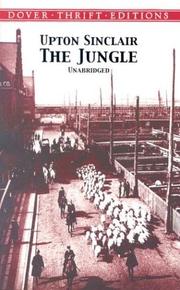
The Jungle
2,496-word summary 11 min read 304 pages in the book
- First published
- 1906
- Publisher
- Doubleday, Page & Co.
- Pages
- 304
- ISBN
- 9780486419237
Reading options
What's inside (8 sections)
I picked up The Jungle because I kept hearing it as a food book. People mention dirty meat and new laws and move on. What I found was closer to a family story that turns cold chapter by chapter. Sinclair published it in book form in 1906 with Doubleday, Page & Co., after it ran as a serial in 1905 in Appeal to Reason, and he had spent seven weeks around the Union Stock Yards in 1904. That background sits behind every page.
The opening surprised me. It does not start with a lecture. It starts with a party that costs too much.
Jurgis Rudkus has married Ona Lukoszaite. They are Lithuanians newly arrived in Chicago, living near the yards in a district called Packingtown. The wedding feast, the veselija, fills a saloon hall with music from a cello and fiddles, with cousins shouting, with children and dogs slipping in for food. Marija Berczynskas, Ona's cousin, runs the whole thing with a loud voice and strong arms. Teta Elzbieta, Ona's stepmother, watches the children. Dede Antanas, Jurgis's father, sits among older men. Jonas, Elzbieta's brother, and the boy Stanislovas are there too. Ona is small and young, not quite sixteen, in a white muslin dress with paper roses in her veil. Jurgis is big and hopeful, certain that steady work will cover everything.
Sinclair lets that hope run for a little while so the later fall hurts more.
A wedding and a house contract
The family shares rooms in a crowded boarding house at first. The men find work quickly. Jurgis is hired at one of the big packing plants and marvels at the speed of the line. Animals move through chutes and pens, men with knives make the same cut all day, blood runs in channels, and the whole floor smells of smoke and chemicals. He likes the pay envelope. He thinks strength will protect him.
Ona and Marija look for sewing or wrapping work. Elzbieta keeps house and minds the little ones. Jonas talks big about wages. Stanislovas, only thirteen, should be in school, but the family already counts his future pay.
Then comes the house. A Lithuanian speaking agent shows them a small four room place and talks about ownership and monthly payments that sound easy. Ona, who can figure sums, believes the combined wages will cover it. They sign. An older neighbor later helps them read what they signed, and the terms are harsh in practice, with interest and fees and strict payment dates. Miss one month and they can lose everything they paid. Lose the house and face eviction like other buyers on the street.
This is the trap Sinclair returns to again and again. The contract is legal. The agent smiled. Nobody forced a signature. Yet the family must now send Ona out to work and must put Stanislovas to work with false papers about his age. Jurgis still says work will fix it. He attends no meetings yet. He trusts the foreman.
Winter comes early in the story and stays long. Dede Antanas takes a job in a cold damp place and breathes bad air. He weakens and dies. The funeral costs money. Marija is laid off in a seasonal cut. Ona returns to work a week after giving birth to her first child, a boy they call Antanas. Tamoszius Kuszleika, a fiddler, courts Marija and brings brief music into the flat. For a short stretch Jurgis feels like a father and a provider. Then wages fall and the line speeds up again.
The killing beds
The middle of the book stays inside the plants. Sinclair walks the reader from room to room. Men stun and stick cattle. Others split carcasses. Men scrape hides. Women wrap meat in paper. Boys carry cans. Fertilizer dust fills one building. Refrigeration rooms freeze fingers. The floors are wet. Knives slip.
Jurgis hurts his ankle and cannot work. No work means no pay. The house payments do not pause. Ona and Marija stretch soup. Stanislovas sells papers with other boys. The youngest crippled child in Elzbieta's care sickens from bad food and dies, and only his mother has time to grieve properly because the rest must keep earning.
Jurgis learns other things while idle. He learns that his first vote in Chicago was bought with two dollars and a promise. He learns from union talk that foremen favor certain gangs. He learns that meat meant for the pile sometimes comes from animals that were sick. He sees men with sores and coughs sent back to the line because the line cannot stop. When he heals he takes the worst job he can get, in the fertilizer mill, where the dust gets in the throat and the pay is low. He starts to drink after shifts.
Packingtown in these chapters is not a metaphor. It is streets of mud and rotting boards, saloons on corners, children barefoot near the yards, summer stench that reaches the flats. Sinclair piles detail on detail here. Some readers will find it heavy. I thought it worked because the detail stays tied to the family budget. Every injury has a price. Every layoff means another mouth to feed on less.
Ona grows thin and frightened. She comes home late some nights and will not explain. Jurgis, sore and tired and drinking, presses her. She breaks and tells him about Phil Connor, a foreman where she works. He forced himself on her and then threatened to have her fired and blacklisted, along with the rest of the family, unless she kept meeting him. Miss Henderson, her forelady, looks away. There is no office to complain to that would hear her.
Connor and the prison term
Jurgis goes straight to the plant and attacks Connor. Half a dozen men pull him off. Police take him. He sits in a cell over Christmas Eve and talks with a cellmate named Jack Duane, a smooth thief who gives him an address and advice. At trial Connor says he fired Ona for impudence and denies the rest. The judge believes the foreman. Jurgis gets thirty days plus court fees. He cannot pay the fees at once, so he serves three extra days.
Stanislovas visits and tells him things are worse. When Jurgis finally walks home through slush, the house is gone in the way Sinclair makes most painful. It has been repainted and sold to another family. The payments they bled to make did not save it. A neighbor tells him the family was evicted and went back to rooms.
He finds them in time for the worst night. Ona is in premature labor. They have no money for a doctor. Marija explains through tears. Jurgis runs for Madame Haupt, the midwife, and begs her to come. She comes, but the baby is dead and Ona dies after one last look at Jurgis. The other children come in with a day's wages from paper selling. Jurgis takes the coins and spends them on drink.
I had to put the book down there. Not because it was gory. It was plain. A girl married at fifteen, worked to the bone, used by a boss, dead in a boarding house while her husband drinks the children's pennies. Sinclair does not soften it.
Ona's stepmother pleads with Jurgis to think of his living son. He tries. He looks for work while blacklisted from the yards. For a while he manages day labor and comes home to hear baby Antanas try words. Then one day the boy falls from a rotting boardwalk into muddy street water and drowns. Jurgis does not cry in the scene. He walks away from Chicago and keeps walking.
Tramping and crime
The next stretch follows Jurgis on the road while the weather holds. He works harvest jobs, sleeps in barns, begs at doors, steals coal and food. Country people feed him sometimes. He likes the open air after the fertilizer rooms. When fall comes he drifts back to Chicago and lives by turns as a laborer and a tramp.
One cold night he begs near a fine house and meets the eccentric son of a packing owner, a rich drunk named Freddie Jones who takes him in for a lark, feeds him, talks wildly, and presses a one hundred dollar bill into his hand. Jurgis, stunned, tries to spend it in a bar. The bartender cheats him and keeps most of the change. Jurgis hits him. Police come. Back to prison.
There he meets Jack Duane again. With no family to hold him, Jurgis agrees to join him. They mug a well off man and divide money worth many weeks of packing wages. Jurgis reads about the victim's injuries the next day and feels sick, then tells himself this is how the city works. From there he slides into the political machine. He becomes a vote fixer for Mike Scully, the stockyards boss who controls jobs and saloons and police favors. Jurgis brings new Slavic immigrants to vote as told, the same way he once voted for cash without knowing names. He also works as a strikebreaker in the plant during a packinghouse strike, which pays because he will cross lines other men will not.
Chance puts Connor in front of him again. Jurgis beats him badly. This time his friends in Scully's crew cannot fix it because Connor has standing with the same machine. A friend helps him post bail. Jurgis skips and hides.
He begs again. A woman who had been a guest at his wedding tells him where Marija is. He follows the address and walks into a brothel during a police raid. Marija is there. She tells him plainly what happened after he left. Work dried up. The children sickened. She sold herself to feed them. Stanislovas, worn out and drinking, fell asleep at work and was eaten by rats in the plant, a horror she reports flatly because she has no strength left for shock. She says she cannot save money and cannot leave, and that heroin use in the house holds her. The police hearing is quick. She stays.
These pages are grim and uneven. The rat death and the brothel speeches feel rushed after the careful factory chapters. Sinclair wants to show every trap at once, and the story starts to sound like a list of worst cases. I believed Marija's tired voice more than the plot turns around her.
The socialist meetings
Cold and broke, Jurgis ducks into a hall for warmth and stays for a political meeting. A kind woman wakes him when he nods off and says, comrade, listen a bit. A speaker thunders about wages and ownership. Jurgis, who has lived the examples, listens hard. Afterward he seeks out the speaker and asks about socialism.
A Polish immigrant named Ostrinski takes him home and explains in simple terms, sharing bread while he talks. Later Jurgis finds work at a small hotel run by Tommy Hinds, a state organizer for the Socialist Party. He hears a preacher named Mr Lucas and a Swedish thinker named Nicholas Schliemann argue for cooperation over competition. He carries leaflets. He feels, for the first time since Ona died, that his anger has somewhere to go.
Sinclair, who dedicated the book To the Workingmen of America, gives these chapters a lot of room. Speeches run pages. Characters ask questions so the speaker can answer. Elzbieta listens and agrees partly to please Jurgis, which felt true to me. She has buried a husband and a grandchild and has no faith left in promises, but she sees the boy working again and lets him talk.
The history around the book helps explain why Sinclair ends here. Readers in 1906 seized on the meat passages. President Theodore Roosevelt ordered an inquiry and sent Labor Commissioner Charles P. Neill and James Bronson Reynolds to Chicago. Their report backed much of the dirt and smell if not every grotesque tale. Congress passed the Meat Inspection Act and the Pure Food and Drug Act in 1906. Sinclair later summed up the mismatch in a magazine line that people still quote:
I aimed at the public heart, and by accident I hit it in the stomach.
He had wanted converts to socialism. He got food inspectors.
What holds and what wears thin
The early wedding and the house contract carry the novel. I can still see Marija clearing a path through the hall, Ona twisting her new gloves, Jurgis trying to pay the saloon keeper for the feast while guests eat who were never invited. Those scenes do the arguing without speeches. A man who believes hard work answers everything signs paper he cannot read and pays for it with his wife and children. That is clear and terrible and needs no moral attached.
The factory chapters hold too, though they repeat. The repetition is the point on the line, same cut, same cold, same foreman, but on the page it can tire. Sinclair sometimes stops the story to explain ownership and dividends. Readers who came for Jurgis may skim those parts. I did in one spot and went back, and the plot had not moved.
The last third is the weakest as fiction. Jurgis changes fast once he hears Ostrinski and Hinds. The thief and vote fixer who learned to survive by force becomes a devoted convert in a few evenings. The speeches state ideas well enough, but they sound alike. Ona and Marija, so vivid early, become examples in someone else's talk. Elzbieta's doubt is the only check on all that certainty, and I wanted more of her.
There are other honest complaints. Jonas simply vanishes. Some foremen are pure villains. The rich drunk with the hundred dollar bill arrives like a trick to move Jurgis from road to jail to crime. The rat story and the brothel arrive fast and leave fast. Sinclair cares more about the system than about keeping every thread neat.
Still, the book earns its place. Few American novels show the link between a pay envelope and a kitchen table this directly. A sprained ankle becomes hunger. A layoff becomes child labor. A boss with power over jobs becomes power over a woman's body. A missed house payment becomes homelessness. Sinclair ties each step to the next without needing villains to conspire. The market does the work.
If you read it now, pace yourself. The first hundred pages in the Dover Thrift copy read like a wedding story and a work story. The middle reads like a slow accident. The end reads like a meeting hall. Take the meeting hall as history. Sinclair believed cooperation would end scenes like Ona's death. You do not have to agree to feel the force of how he got there. I closed it thinking less about meat than about how tired the family was all the time, and how little room tired people get to say no.
FAQ
When was The Jungle first published?
It came out in book form in 1906 from Doubleday, Page & Co., after running as a serial in 1905 in the socialist paper Appeal to Reason. Sinclair had spent seven weeks in 1904 gathering material around the Union Stock Yards in Chicago.
Did The Jungle change food laws?
As food reform, yes. Public anger over dirty meat helped push Congress to pass the Meat Inspection Act and the Pure Food and Drug Act in 1906. Sinclair said he had aimed at the public heart over wages and hit the stomach instead.
Is The Jungle mostly plot or mostly argument?
Yes, in plain terms. It follows Jurgis from the wedding feast through injury, prison, loss of Ona and his son, crime and tramping, to socialist meetings. The last chapters carry long speeches, so readers who dislike preaching may skim there.
Similar books
Native Son
Richard Wright's landmark novel follows Bigger Thomas through one panicked night in Chicago and the manhunt, trial and reckonings that follow, exposing the…
2,265-word summary · 10 min read

My Ántonia
Jim Burden recalls his Nebraska boyhood beside Bohemian friend Antonia Shimerda, from prairie farms to town work and a late return.
2,918-word summary · 13 min read
The House on Mango Street
Esperanza Cordero grows up on Mango Street in Chicago, watching neighbors closely while dreaming of a house of her own.
2,567-word summary · 11 min read

The Joy Luck Club
Four Chinese mothers and four American daughters trade sixteen stories across the mahjong table.
1,941-word summary · 9 min read
The Stationery Shop
Two teenagers fall in love in a Tehran stationery shop in 1953, are separated by the coup and a family deception, and meet again sixty years later.
2,024-word summary · 9 min read

The Long Winter
Dakota Territory, 1880: seven months of blizzards cut a town off from the railroad, and a family survives on twisted hay, ground wheat, and a dangerous wheat…
2,210-word summary · 10 min read
The Crying of Lot 49
A California woman named executor of her ex-lover's estate follows a muted post horn into a possible centuries-old postal conspiracy, and Pynchon refuses to…
2,003-word summary · 9 min read
Silas Marner
A falsely accused weaver hoards gold in Raveloe until a stolen hoard and an abandoned child remake his narrow life.
2,699-word summary · 12 min read
Revolutionary Road
A Connecticut couple who believe they are too good for the suburbs plan to move to Paris, and the plan slowly exposes everything they cannot say to each other.
2,085-word summary · 9 min read
Make Way for Ducklings
A pair of mallards raise eight ducklings on the Charles River and lead them across Boston to the Public Garden, with a little help from a friendly policeman.
2,044-word summary · 9 min read
Rosencrantz and Guildenstern Are Dead
Stoppard's 1966 play retells Hamlet from the wings, where two minor courtiers wait, joke, and walk toward a death they cannot see.
2,021-word summary · 9 min read

Little Town on the Prairie
In the spring after the Long Winter, fifteen-year-old Laura sews shirts, studies for a teaching certificate, and helps send her blind sister Mary to college.
2,071-word summary · 9 min read

In Order to Live: A North Korean Girl's Journey to Freedom
A young North Korean girl crosses the Yalu, survives trafficking in China, and rebuilds her life in Seoul in this unsparing memoir.
2,027-word summary · 9 min read
Amelia Bedelia
A literal-minded housekeeper follows her employer's list to disastrous and funny effect in the 1963 picture book that made wordplay a children's staple.
2,038-word summary · 9 min read

Infidel
Ayaan Hirsi Ali's memoir of a Somali childhood, a forced marriage, a Dutch asylum claim, and the political fight that followed the murder of Theo van Gogh.
2,041-word summary · 9 min read

Howards End
Forster's 1910 novel follows two families, a house in Hertfordshire, and a burned note, asking whether money and feeling can ever be connected.
2,187-word summary · 10 min read
The Mitten
Jan Brett retells a Ukrainian folktale about a boy, a lost white mitten, and the woodland animals that crowd inside until a bear sneezes.
2,609-word summary · 12 min read

The Agony and the Ecstasy
Irving Stone turns Michelangelo's seventy years of carving, painting, and arguing with popes into a novel about the cost of making something that outlives you.
2,260-word summary · 10 min read

Sophie's Choice
A young Southern writer in 1947 Brooklyn befriends a brilliant, unstable couple and slowly learns the story of the Polish Catholic woman at the center of their…
2,798-word summary · 12 min read

Fathers and Sons
Arkady brings the nihilist Bazarov home to his father's estate, and a generational argument turns into love, a duel, and an early death.
2,192-word summary · 10 min read
Clifford the Big Red Dog
Emily Elizabeth picks the smallest puppy in the litter, loves him as hard as she can, and wakes up to a dog the size of a house.
2,092-word summary · 9 min read

Unaccustomed Earth
Lahiri’s second story collection follows Bengali families in America and abroad, tracing the quiet distances between parents and children, spouses, and the…
2,333-word summary · 10 min read
The Story of Ferdinand
A gentle Spanish bull would rather smell flowers than fight, and when he is taken to the bullring he simply sits down among the flowers in the ladies' hats.
2,135-word summary · 9 min read
Naked Lunch
Burroughs's banned 1959 collage novel follows Bill Lee through addiction, Tangier, and the nightmare bureaucracy of the Interzone.
2,082-word summary · 9 min read
Go, Dog. Go!
Dogs drive, work, play, and climb a tree for a party in this Beginner Book built on repetition, opposites, and one very unpopular hat.
2,196-word summary · 10 min read
Caps for Sale
A peddler balances his caps on his head, naps under a tree, and wakes to find monkeys wearing his stock in this 1940 picture book.
2,787-word summary · 12 min read
The Lowland
Two brothers grow up beside a marshy lowland in Calcutta, and the choices of the younger one draw the older into a life of duty, distance, and quiet grief that…
2,213-word summary · 10 min read
The Moonstone
A cursed yellow diamond vanishes on the night of a birthday party, and eight witnesses tell what they saw.
2,603-word summary · 12 min read

The Chosen
A shattered pair of glasses in a 1944 Brooklyn softball game starts a friendship between a Hasidic boy and his Orthodox neighbor, and their fathers pull them…
2,443-word summary · 11 min read
The Lottery
In Jackson's 1948 story, a village draws lots to keep the corn heavy, and the chosen person is stoned by her neighbors.
3,080-word summary · 14 min read