

Clifford the Big Red Dog
2,092-word summary 9 min read 32 pages in the book
- First published
- 1963
- Publisher
- Scholastic
- Pages
- 32
- ISBN
- 9780590442978
- Series
- Clifford the Big Red Dog (#1)
Reading options
What's inside (9 sections)
The first thing you see is red. Not a little red, not a spot of red on a white page. A whole spread of it, a dog the size of a barn, filling the frame so completely that the girl beside him looks like a doll. Then you notice the girl is not scared. She is standing with her hand on his paw, telling you his name.
Clifford was not always huge. In the first pages of Norman Bridwell's 1963 picture book, Emily Elizabeth explains that she got him when he was the smallest puppy in the litter. He was the runt, the one nobody else wanted. She picked him because he was small and needed someone. Then she loved him, and he grew.
That is the entire premise, and it is a very good one. A child's love makes a dog enormous. Not magic, not science, not a curse. Just love, treated as a force with physical consequences. The book does not explain the rule. It states it and moves on, the way a child would.
I read this to a four-year-old recently, and the thing that struck me was how quickly she accepted the logic. She did not ask why Clifford was red or how he got so big. She asked whether he could fit through the door. That is the right question, and it is the question the book is built to answer.
The smallest puppy
The opening is a lesson in economy. Bridwell does not give us Emily Elizabeth's town, her school, her family, or her favorite food. He gives us a girl and a dog and one fact about each. The girl is the narrator. The dog is red and enormous. Everything else follows.
The runt detail matters more than it seems. Clifford is not a magical puppy found in a forest. He is the one left at the back of the litter, the one the breeder thinks nobody will take. Emily Elizabeth chooses him precisely because he is unremarkable. The book never says this outright, but the logic is clear: she gives her love to the least promising puppy, and the love turns him into something the world has never seen.
That is a very old story shape, and Bridwell tells it without sentimentality. There is no scene where the puppy is mocked. There is no villain who doubts him. There is just a girl and a small dog and a decision. The simplicity is the point. A four-year-old can follow it. A forty-year-old can feel it.
The name is worth a note. Bridwell wanted to call the dog Tiny. His wife, Norma, told him Clifford was better. She was right. "Tiny" would have made the joke obvious on the first page and tired by the third. "Clifford" is a plain, slightly old-fashioned name, the kind of name a child would give a dog without thinking about whether it fits. The mismatch between the name and the size is part of the charm.
The joke that keeps growing
The middle of the book is a series of escalations. Clifford is too big for the house. He is too big for the car. He is too big for the yard. He is too big for the neighborhood. Each page adds a new practical problem, and each problem is solved by the same simple fact: Clifford is loved, so the world adjusts.
Bridwell draws the scale carefully. Emily Elizabeth is always small beside him, but she is never in danger. Clifford's paws are like dinner plates. His head is bigger than her whole body. When he sits, he takes up the entire room. The illustrations do not try to be realistic. They are flat, bright, and clean, with thick outlines and no shading. The red is the only color that matters.
The book is not a plot in the modern sense. There is no conflict, no villain, no quest. It is a catalog of impossible situations treated as ordinary. Clifford cannot fit through the front door, so the family uses the barn door. Clifford cannot ride in the car, so Emily Elizabeth walks him. Clifford's tail knocks things over, so they move the furniture. The solutions are practical and slightly absurd, which is exactly how a child would solve them.
The best pages are the ones where Clifford is helpful. He can carry groceries. He can pull a car out of a ditch. He can dry the dishes with his breath, or provide shade for a picnic. The book does not make him a superhero. He is just a dog who happens to be enormous, and the ordinary tasks of family life become possible in new ways. That is a gentler fantasy than power. It is the fantasy of being useful.
The world of the book
The setting is a small American town in the early 1960s. The houses are modest. The cars are wide and finned. The children play outside. There are no screens, no cell phones, no organized activities. Emily Elizabeth's world is a sidewalk, a yard, and a dog. The book is not nostalgic about this. It simply assumes it.
That assumption is part of why the book still works. A child today does not need to know what a 1963 station wagon looked like to understand the problem of a dog who cannot fit in it. The scale is the joke, and scale is timeless. The red is timeless. The love is timeless.
Bridwell's art is often described as simple, which is true but a little unfair. Simple is hard. His compositions are built around the contrast between the tiny girl and the giant dog. He uses negative space well. He knows when to fill the page with red and when to leave it white. The expressions are minimal, but the dog's face is always readable. Clifford looks friendly, slightly puzzled, and entirely good.
Bridwell came to children's books from commercial illustration, and it shows in the best way. There is no flourish for its own sake. The pages are designed to be read aloud and pointed at from a distance. The text sits in short blocks, often at the top or bottom of the image, so the picture can do most of the work. A beginning reader can follow the shapes before they can read the words.
The color is the thing people remember. Clifford is not just red. He is a specific red, bright and flat, the color of a fire truck or a cherry lollipop. The color makes him visible from across a room. It also makes him seem like a toy, which is part of the appeal. He is a pet and a stuffed animal at the same time.
The series and the merchandise
The first book was published by Scholastic in 1963. It was not an immediate sensation, but it sold steadily, and Bridwell kept making more. By the time of his death in 2014, there were dozens of Clifford books, several television series, a feature film, and a mountain of toys. The dog became a brand.
That is worth acknowledging, because the brand can obscure the book. The Clifford most children know is the one from the PBS cartoon that began in 2000, with a talking dog, a lively neighborhood, and a theme song. The Clifford in the 1963 book does not talk. He does not have a sarcastic sidekick. He does not solve mysteries. He is a dog.
The later books vary in quality. Some are gentle and funny. Some are tie-ins to the show, with flattened art and lessons bolted onto the last page. The original remains the best because it is the least ambitious. It has one idea and it trusts that idea.
The 2021 live-action movie is a different animal entirely, literally and figuratively. It turns Clifford into a CGI creation, gives him a plot about a scientist and a greedy corporation, and surrounds him with adult actors. It is not a bad movie for what it is, but it has almost nothing to do with Bridwell's book. The book is about a girl and her pet. The movie is about a product.
What the book does not do
The original is thin. That is the fairest criticism, and it is also the reason the book works. There is no character development. Emily Elizabeth does not learn a lesson. Clifford does not overcome a flaw. The neighbors do not come around. The story begins with a girl who loves her dog and ends with a girl who loves her dog. Nothing has changed except the reader's sense of what a dog can be.
Some adults find this unsatisfying. They want a story with an arc, a problem, a resolution. The book offers a situation instead. It is closer to a poem than a novel. The pleasure is in the repetition and the exaggeration, not in the plot.
The book is also very much of its time in its gender roles and its whiteness. Emily Elizabeth is a girl in a dress. The town is white. The family is conventional. None of this is malicious, but it is visible. A modern reader can use that as a conversation starter, or can simply choose a more inclusive book. The book does not have to carry the weight of being the only picture book in the house.
The "love makes him grow" premise is also, if you think about it for more than a second, a little disturbing. A pet's size is determined by how much a child loves him. What happens if the love falters? What happens to a child who cannot love enough? The book does not go there. It is a fantasy, and the fantasy is benevolent. But the logic has a shadow, and older readers will notice it.
Why it lasts
The book lasts because it understands something about children that most adults forget. A child's love is enormous. It does not fit in the house. It knocks things over. It takes up the whole yard. A child feels this constantly and has no way to say it. Bridwell gives that feeling a body. Clifford is what love looks like when you are four feet tall and the world is always telling you to be smaller.
The book also lasts because it is kind. There is no punishment in it. Clifford's size is not a problem to be solved. It is a fact to be lived with. The family adjusts. The town adjusts. The dog is not sent away, not cured, not taught to be smaller. He is loved as he is. That is a radical idea in a children's book, and it is delivered without a lecture.
The final page is simple. Emily Elizabeth says she loves Clifford, and Clifford loves her. That is the whole book. The red dog, the small girl, the impossible size, the ordinary town. It should not work. It works because Bridwell never blinks. He commits to the premise on page one and never apologizes for it.
There is also the pleasure of return. A child who asks for the same book every night is not bored by the repetition. They are learning the shape of a story, and this book gives them a shape they can hold. The words are predictable. The pictures are generous. The ending is safe. That is not a small thing to give a child at the end of a long day.
Reading it now
If you are reading this to a child, slow down on the pictures. The text is short enough that you can spend a minute on each spread. Ask the child where Clifford would sleep. Ask what he would eat. Ask whether he could fit through their front door. The book is a machine for generating those questions.
If you are reading it yourself, pay attention to the scale. Bridwell is doing something clever with the page. The dog is always too big for the frame, and the girl is always small enough to be held. The composition tells the story before the words do. That is picture-book craft, and it is worth noticing.
The book is not a classic because it is deep. It is a classic because it is true. A child loves a small dog and the dog becomes the biggest thing in the world. That is not a metaphor. That is just what it feels like.
FAQ
What is Clifford the Big Red Dog about?
A girl named Emily Elizabeth chooses the runt of a litter, and her love makes him grow into an enormous red dog.
Who wrote Clifford the Big Red Dog?
Norman Bridwell wrote and illustrated the first book, published in 1963.
Is this the first Clifford book?
Yes. It introduces Clifford and Emily Elizabeth and is the first in the long-running series.
Similar books
More from Clifford the Big Red Dog first, then related titles.

Make Way for Ducklings
A pair of mallards raise eight ducklings on the Charles River and lead them across Boston to the Public Garden, with a little help from a friendly policeman.
2,044-word summary · 9 min read
The Mitten
Jan Brett retells a Ukrainian folktale about a boy, a lost white mitten, and the woodland animals that crowd inside until a bear sneezes.
2,609-word summary · 12 min read
The Story of Ferdinand
A gentle Spanish bull would rather smell flowers than fight, and when he is taken to the bullring he simply sits down among the flowers in the ladies' hats.
2,135-word summary · 9 min read
Go, Dog. Go!
Dogs drive, work, play, and climb a tree for a party in this Beginner Book built on repetition, opposites, and one very unpopular hat.
2,196-word summary · 10 min read
Caps for Sale
A peddler balances his caps on his head, naps under a tree, and wakes to find monkeys wearing his stock in this 1940 picture book.
2,787-word summary · 12 min read
Frog and Toad Are Friends
Five short stories about a cheerful frog and a grumpy toad who need each other for waking up, swimming, and waiting for the mail.
1,969-word summary · 9 min read
Stellaluna
A baby fruit bat falls into a bird nest, learns to perch and eat bugs, then reunites with her mother in Cannon's acclaimed 1993 picture book about difference…
2,486-word summary · 11 min read
Curious George
Curious George retold: a monkey sails from Africa to the city, phones the fire station, floats off on balloons, and finds home.
2,979-word summary · 13 min read
Brown Bear, Brown Bear, What Do You See?
A rhythmic animal parade teaches colors and names, from brown bear to schoolchildren.
3,226-word summary · 14 min read
The Tale of Peter Rabbit
Peter Rabbit disobeys his mother, squeezes under the gate into Mr. McGregor garden, and ends in a chase back home to chamomile tea.
2,157-word summary · 10 min read
Are You My Mother?
A newborn bird falls from the nest and asks a kitten, a hen, a dog, a cow, a plane and a giant Snort if any will be his mother.
2,351-word summary · 10 min read
Winnie-the-Pooh
Edward Bear comes downstairs bump-bump-bump and into the Hundred Acre Wood for honey, hunneys, and heffalumps.
2,068-word summary · 9 min read
The House at Pooh Corner
Tigger bounces into the Hundred Acre Wood while Pooh builds Eeyore a house and Piglet does a grand thing.
2,022-word summary · 9 min read
Amelia Bedelia
A literal-minded housekeeper follows her employer's list to disastrous and funny effect in the 1963 picture book that made wordplay a children's staple.
2,038-word summary · 9 min read
Click, Clack, Moo: Cows That Type
Cows learn to type, demand electric blankets, and go on strike in a deadpan picture book about negotiation and withheld labor.
2,617-word summary · 12 min read
Harriet the Spy
Eleven year old Harriet Welsch fills notebooks with honest, often cruel observations about her neighbors, until her classmates read one and turn her spy route…
2,510-word summary · 11 min read
The Snowy Day
Peter in his red snowsuit explores fresh snow, from footprints and angels to a melted pocket snowball, in Keats classic winter day.
2,375-word summary · 11 min read
The Little Engine That Could
Watty Piper follows a stranded toy train past proud engines that refuse, to a small blue switcher who agrees to try the mountain and pulls her chanting load…
2,311-word summary · 10 min read
Redwall
A novice mouse hunts for Martin the Warrior's lost sword while Cluny the Scourge besieges Redwall Abbey.
2,727-word summary · 12 min read
The Jungle Book
Mowgli, raised by wolves in the Seeonee Hills, learns the Law from Baloo and Bagheera while Shere Khan circles. Kipling's 1894 story collection.
2,799-word summary · 12 min read
The Twits
Mr. and Mrs. Twit trade vile pranks and torment caged monkeys until the birds and monkeys flip the house on them.
2,864-word summary · 13 min read
Fantastic Mr. Fox
Mr. Fox raids three cruel farmers to feed his family, then outdigs tractors and a siege to host a feast underground.
2,910-word summary · 13 min read
Cloudy with a Chance of Meatballs
A grandfather tells of Chewandswallow, where soup rains and meatballs fall, until giant food storms force everyone to flee.
2,873-word summary · 13 min read
A Dog's Purpose
A reincarnated dog lives four lives as Toby, Bailey, Ellie and Buddy while searching for his purpose with Ethan.
2,962-word summary · 13 min read
Chicka Chicka Boom Boom
Letters race up a coconut tree, tumble down with a boom, then climb again with help in this chant classic.
2,120-word summary · 9 min read
Mrs. Frisby and the Rats of NIMH
A widowed mouse races the spring plow to save her sick son Timothy, and finds help from the intelligent rats of NIMH hiding under the rosebush.
3,159-word summary · 14 min read
Anne of the Island
Anne leaves Avonlea for Redmond College, shares Patty's Place with friends, and learns to tell admiration apart from love.
2,766-word summary · 12 min read
True Story of the Three Little Pigs
A. Wolf tells his side from the Pig Pen: he only wanted sugar for a cake, had a bad cold, and sneezed. You decide.
2,975-word summary · 13 min read
The Tale of Despereaux
A bookish mouse, a light loving rat, and a servant girl meet in a castle where soup is banned to save Princess Pea.
2,680-word summary · 12 min read
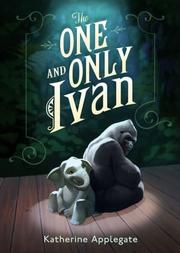
The One and Only Ivan
A mall gorilla who paints promises a dying elephant friend to get baby Ruby to a better home.
2,178-word summary · 10 min read