
Click, Clack, Moo: Cows That Type
2,617-word summary 12 min read 32 pages in the book
- First published
- 2000
- Publisher
- Simon & Schuster Books for Young Readers
- Pages
- 32
- ISBN
- 9780689832130
Reading options
What's inside (10 sections)
The first thing that gets you is the sound. Not the moo. The clack. Somewhere in the barn, behind the stall door, there is an old typewriter, and the cows have learned to use it. Click, clack, moo. Click, clack, moo. That rhythm is the whole engine of the book, and it is the reason a thirty-two page picture book from 2000 is still being read aloud in classrooms where the kids were born a quarter century after it came out.
Doreen Cronin wrote it. Betsy Lewin illustrated it. Simon & Schuster Books for Young Readers published it in 2000, and it took a Caldecott Honor in 2001, the American Library Association's recognition for the year's best illustrated children's books. Lewin's watercolors are the reason for that honor, and I will get to them. But the reason the book survives is simpler. It is funny without condescending, and it is built so precisely that a five year old and a forty year old can laugh at the same beat on the same page.
I came to it late, as an adult, after hearing a teacher do the voices. She did Farmer Brown in a flat grumble and the cows in nothing at all, just the letters read straight, and the room went quiet in the way rooms go quiet when a joke is being set up properly. That is the effect the book aims for. It is not a loud book, and it is not a whimsical one. It is a deadpan book, and deadpan is harder to pull off at this length than rhyme or cuteness.
A typewriter in the barn
Farmer Brown has a barn, and in that barn his cows have found a typewriter. Cronin does not explain how. It is simply there, an old machine with heavy keys, and the cows have worked out what it does. The first joke is that nobody in the story finds this remarkable for very long. The cows type. The farmer hears it. He is irritated rather than astonished. That flat acceptance sets the tone for everything that follows: in this world, a typing cow is a nuisance, not a miracle.
The first note is a request. The barn is cold at night. The cows would like electric blankets. They type this out and leave it where Farmer Brown will find it, and Cronin gives the note the formal, slightly prissy cadence of a business letter. That mismatch between the sender and the register is the book's basic comic move, and it repeats without wearing out because each new note raises the stakes by a notch.
Farmer Brown reads it and types back. His reply is short: "No way." The illustration makes clear he thinks he has ended the conversation. He has not. The genius of the scene is that he answers in writing. A man who bothers to type a refusal has already accepted that the cows are a party to be answered, and that concession is the crack the rest of the book goes through.
He is not a villain, either. He is tired, he is cheap, and he is outnumbered. Lewin draws him in overalls with a face like a man who has been up since four and does not want to hear about blankets. Children recognize that adult. Many of them live with one.
The strike, and the hens
The cows go on strike. That is the word the book uses, and it does not soften it. No milk until the blankets arrive. The hens, watching from the coop, decide they want in. They have their own grievance, which is also the cold, and they stop laying. Now the farm is producing nothing, and Farmer Brown is losing money by the hour.
What I admire here is the pacing of the escalation. Cronin does not have the animals storm the house or shout. They simply stop. The power in the book is withheld labor, and the withholding is polite. The cows keep typing notes, and the notes stay courteous, which is funnier than rage would be. An angry cow is a cartoon. A cow that writes that milk production has been suspended pending a response is a joke about bureaucracy, and children understand bureaucracy earlier than adults give them credit for.
The hens matter more than their page count suggests. They arrive as a comic echo and widen the strike from one barn to the whole farm, which is what turns a domestic argument into a standoff. But Cronin folds them into the cows' cause almost immediately. They never get their own note. Their demand is never typed in their own voice. They become a second signature on someone else's letter, and that is one of the places where the book is thinner than its reputation suggests.
The middle of the book is all procedure, and procedure is where the comedy lives. Notes are folded. Notes are carried. Notes are read, frowned at, and answered. There is no chase, no slapstick, no running around. The tension is entirely in the question of who will give in first, and Cronin trusts a four year old to find that suspenseful. She is right. Children lean into the next page because they want to know what the farmer typed.
Duck carries the mail
Between the barn and the farmhouse there is Duck. Duck is the neutral party, the courier, the one who waddles up the path with a note in his bill and waits while Farmer Brown reads it. He says nothing. He is the diplomatic channel, and Cronin uses him as a straight man, which is exactly why the ending works as well as it does.
The notes go back and forth and Farmer Brown gets angrier each time. Lewin draws him from below in some of these scenes, so he looms, jaw tight, hands on hips, while the cows regard him with those wide blank eyes. The rhythm is call and response. Note, reply, note, reply. Each exchange gets a page turn or half a page, and the repetition is the structure. By the third round a child knows the pattern, and knowing the pattern is what makes the break funny.
The break is the trade. The cows offer the typewriter itself in exchange for the blankets. It is a real concession and a clever one. They give up the tool of their protest, which is also the thing Farmer Brown most wants removed from his barn. It reads as a deal two sides could actually make, which is rare in a book for this age. Most picture book conflicts resolve because someone apologizes. This one resolves because both parties want something the other has.
What Betsy Lewin draws
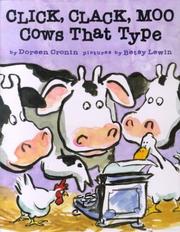
Lewin's watercolors are the other half of the joke. Heavy black outlines, loose washes, deep shadow in the barn, and a lot of low and tilted angles. She puts the reader on the floor, or behind a fence rail, or looking up at Farmer Brown's boots. The effect is theatrical. You feel the size difference between a man and his livestock, and you feel how much of the farm belongs to him on paper even when it does not belong to him in practice.
The cows' faces are the best thing in the book. Wide eyed and blank. Not cute, not pleading, not expressive in any way a human can read. That blankness is what makes the demands funny, because a cow with a grievance and no visible emotion looks exactly like a mid level manager who has read the policy manual twice. Lewin never winks at the reader. She draws the animals as if they were entirely serious, and the seriousness is the comedy.
The typewriter is a character too. It sits there, black and heavy, keys in rows, and Lewin gives it weight. It is a machine, not a cute prop, and the cows operate it the way anyone operates a machine they taught themselves: slowly, with visible effort, and with results that are legible but not pretty. The clack is drawn as much as written. You can hear it in the lettering, in the shape of the words on the page.
The palette deserves a mention. Barn browns and greys, a lot of night blue in the cold scenes, and the blankets, when they finally arrive, are the brightest thing in the book. That is deliberate. The whole story has been dim, and the blankets are a small warm rectangle in a cold picture. Lewin does not oversell them. They are just there, plugged in, and the cows look content in a way that is almost anticlimactic. That restraint is why the last page lands.
The trade, and the last page
The trade happens. The cows and the hens get their electric blankets. Farmer Brown gets the typewriter. Everyone seems satisfied, and if the book stopped there it would be a tidy lesson about compromise, the kind of ending that gets printed on a poster in a staff room.
It does not stop there. Duck, who has been carrying notes this entire time, has been paying attention. He types one more note. He wants a diving board for the pond. And the final joke is the reveal that Duck now has the typewriter, which means the machine has changed hands again and the whole cycle is about to restart with a new species and a new demand.
That beat is what elevates the book. It is a punchline rather than a moral, and it lands because Cronin spent the previous thirty pages teaching you the grammar of the notes. You know what a typed demand looks like by the time Duck makes one. You know Farmer Brown will type back, and you know he will lose. Ending on the beginning of the next argument is a much better ending than a hug, and it is the reason adults quote this book at each other.
What the book teaches about power
Adults have spent twenty five years reading this as a labor story. It is not hard to see why. Withheld labor, a demand for better conditions, a negotiated settlement, a messenger who becomes the next organizer. Some read it as a political allegory. Teachers use it for persuasive writing and letter writing, and for units on voting and negotiation, because the structure is so clean. Every note has a claim, a reason, and a consequence. Small children can copy that shape on a worksheet the same afternoon.
The lesson is more honest than most picture book lessons about power. It does not say that asking nicely works. It says that asking nicely works when you have something the other party needs. The cows do not win because they are right about the cold, though they are right. They win because the milk stops. That is a sharper idea than use your words, and I suspect it is why a few adults get uneasy. The book is not subversive. It is simply clear eyed about how a deal gets made, and clarity about that is rarer in children's books than whimsy.
It also teaches that a deal is not a victory. The cows trade away the typewriter to get the blankets. They get warmer and they get quieter. Whether that counts as a win depends on what you think they wanted in the first place, and Cronin leaves the question open, probably without meaning to. A child reads it as a happy ending. An adult notices that the farm's ownership has not been touched, only its thermostat.
The sequel machine
Cronin was a lawyer before she wrote picture books, and by most accounts the manuscript began as a story she wrote while working at a law firm. The origin shows. The letters read like the work of someone who has spent years receiving correspondence from people who want something and are pretending not to.
The book became a bestseller and an ALA Notable, and it seeded a franchise. Giggle, Giggle, Quack came next, then Duck for President, Dooby Dooby Moo, Thump, Quack, Moo, Click, Clack, Boo!, Click, Clack, Peep!, and Click, Clack, Ho! Ho! Ho! Lewin illustrated many of Cronin's books, and the partnership is one of the more durable ones in American picture books. There is a stage adaptation as well, which makes sense. The book is already shaped like a scene: two locations, a messenger, and a series of letters that function as dialogue.
Sequels are usually a warning sign. Here they are mostly harmless. None is as tight as the first, because the first is a machine with no slack in it. Duck for President comes closest, and it does so by taking the same joke, an animal with procedural ambitions, into a bigger room with more institutions to annoy.
The limits of a thirty-two-page joke
Two thousand words is a lot to spend on a book you can read in four minutes. I know that. The honest accounting is that Click, Clack, Moo is a small perfect thing, and small perfect things do not reward length. They reward attention to how they are built, which is what I have been doing, and even that has a ceiling. You can only say the repetition is the structure so many times before you are the one repeating.
So the criticism. The resolution is a trade, not a change. The cows get blankets and lose the typewriter, and the underlying arrangement of the farm, one man owns everything and the animals have nothing but their labor, is untouched. That is fine for a picture book. It is also why the adult allegory can feel like it is doing more work than the text supports. The book is a joke with a good spine. The people who read it as a political parable are often reading their own politics into thirty two pages, and the text is polite enough to let them.
The hens are the clearest casualty. They join, they stop laying, they get blankets, and they never get a line of their own. Their grievance is identical to the cows', which flattens them into a chorus. A version of this book where the hens type their own letter, or where the cows and hens have to negotiate with each other, would be a different and possibly better book. Cronin did not write it, and the omission is visible once you notice it.
There is also the matter of the adult reading crowding out the child's. A child sees animals outsmarting a grumpy farmer. An adult sees a labor dispute with a courier who is about to become management. Both readings live on the same page, which is a strength, but the adult one has a way of taking over, especially in a classroom with a lesson plan attached. The book does not need the lesson plan. It needs a reader willing to do the grumble and then stop talking.
Reception has been warm for twenty five years, and the book has outgrown its thirty two pages. It is still read in classrooms, still handed to new parents, still funny on the fourth read.
Still, think about the last page. Duck at the typewriter, the pond in front of him, a diving board not yet built, Farmer Brown somewhere in the farmhouse about to receive another note. The machine has moved from cows to duck. The demand has moved from warmth to fun. The farm has not changed at all, except that someone new has learned to type, and that is the book's real subject. Not compromise. Succession.
FAQ
What age group is Click, Clack, Moo suitable for?
It is a picture book for preschool and early elementary readers, and it also works as a read-aloud for older children studying persuasion.
Did Click, Clack, Moo win any awards?
Yes. Betsy Lewin's illustrations received a Caldecott Honor in 2001.
Is Click, Clack, Moo a standalone book?
It works as a standalone, but it began a long series that includes Giggle, Giggle, Quack and Duck for President.
Similar books
Caps for Sale
A peddler balances his caps on his head, naps under a tree, and wakes to find monkeys wearing his stock in this 1940 picture book.
2,787-word summary · 12 min read
Curious George
Curious George retold: a monkey sails from Africa to the city, phones the fire station, floats off on balloons, and finds home.
2,979-word summary · 13 min read
Make Way for Ducklings
A pair of mallards raise eight ducklings on the Charles River and lead them across Boston to the Public Garden, with a little help from a friendly policeman.
2,044-word summary · 9 min read
Amelia Bedelia
A literal-minded housekeeper follows her employer's list to disastrous and funny effect in the 1963 picture book that made wordplay a children's staple.
2,038-word summary · 9 min read
The Mitten
Jan Brett retells a Ukrainian folktale about a boy, a lost white mitten, and the woodland animals that crowd inside until a bear sneezes.
2,609-word summary · 12 min read
Clifford the Big Red Dog
Emily Elizabeth picks the smallest puppy in the litter, loves him as hard as she can, and wakes up to a dog the size of a house.
2,092-word summary · 9 min read
The Story of Ferdinand
A gentle Spanish bull would rather smell flowers than fight, and when he is taken to the bullring he simply sits down among the flowers in the ladies' hats.
2,135-word summary · 9 min read
Frog and Toad Are Friends
Five short stories about a cheerful frog and a grumpy toad who need each other for waking up, swimming, and waiting for the mail.
1,969-word summary · 9 min read
The Stinky Cheese Man and Other Fairly Stupid Tales
Scieszka and Lane Smith take nine fairy tales apart, joke by joke, while Jack, the narrator, keeps losing the pages.
2,206-word summary · 10 min read
Don't Let the Pigeon Drive the Bus!
A bus driver leaves the reader in charge with one rule, and a very persuasive pigeon spends the rest of the book trying to break it.
2,084-word summary · 9 min read
Miss Nelson Is Missing!
Room 207 gets kind Miss Nelson, then terrible Viola Swamp instead.
2,597-word summary · 12 min read
Hoot
Roy tracks a shoeless boy to save burrowing owls from a pancake house.
2,290-word summary · 10 min read
Stellaluna
A baby fruit bat falls into a bird nest, learns to perch and eat bugs, then reunites with her mother in Cannon's acclaimed 1993 picture book about difference…
2,486-word summary · 11 min read
The Monster at the End of This Book
Grover begs readers not to turn pages for fear of a monster, until the ending reveals himself.
2,061-word summary · 9 min read
The Twits
Mr. and Mrs. Twit trade vile pranks and torment caged monkeys until the birds and monkeys flip the house on them.
2,864-word summary · 13 min read
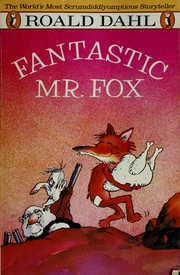
Fantastic Mr. Fox
Mr. Fox raids three cruel farmers to feed his family, then outdigs tractors and a siege to host a feast underground.
2,910-word summary · 13 min read
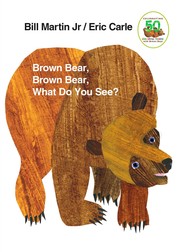
Brown Bear, Brown Bear, What Do You See?
A rhythmic animal parade teaches colors and names, from brown bear to schoolchildren.
3,226-word summary · 14 min read
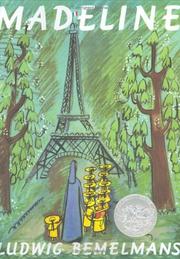
Madeline
Ludwig Bemelmans's 1939 Madeline: the twelve girls in Paris, Miss Clavel, the midnight appendix scare, and why the smallest girl became a classic.
2,944-word summary · 13 min read
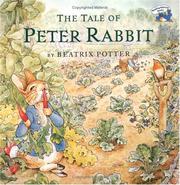
The Tale of Peter Rabbit
Peter Rabbit disobeys his mother, squeezes under the gate into Mr. McGregor garden, and ends in a chase back home to chamomile tea.
2,157-word summary · 10 min read
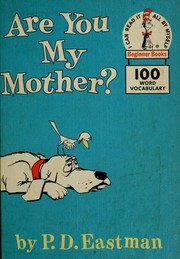
Are You My Mother?
A newborn bird falls from the nest and asks a kitten, a hen, a dog, a cow, a plane and a giant Snort if any will be his mother.
2,351-word summary · 10 min read
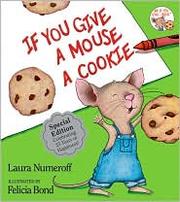
If You Give a Mouse a Cookie
A mouse gets a cookie and turns one small favor into a whole busy day.
2,560-word summary · 11 min read
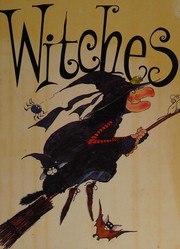
Witches
Colin Hawkins's rhyming picture book teaches small readers to spot witches, flaps and all.
2,783-word summary · 12 min read
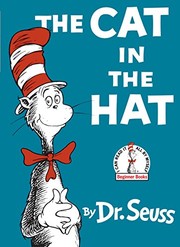
The Cat in the Hat
A tall Cat turns a rainy day upside down for Sally and her brother, with Thing One and Thing Two in tow.
2,546-word summary · 11 min read
Winnie-the-Pooh
Edward Bear comes downstairs bump-bump-bump and into the Hundred Acre Wood for honey, hunneys, and heffalumps.
2,068-word summary · 9 min read
The House at Pooh Corner
Tigger bounces into the Hundred Acre Wood while Pooh builds Eeyore a house and Piglet does a grand thing.
2,022-word summary · 9 min read
Strega Nona
A village witch doctor hires a boy who does not listen, and the pasta pot he was told not to touch floods Calabria with noodles he cannot stop.
2,587-word summary · 11 min read
Go the Fuck to Sleep
A rhyming bedtime book for adults in which an exhausted father narrates the fourth hour of a toddler's stalling, one profane couplet at a time.
2,291-word summary · 10 min read
Hard Luck
Rowley has a girlfriend, so Greg turns to a Magic 8 Ball, a family Easter hunt and the school yearbook for answers.
2,586-word summary · 11 min read
Go, Dog. Go!
Dogs drive, work, play, and climb a tree for a party in this Beginner Book built on repetition, opposites, and one very unpopular hat.
2,196-word summary · 10 min read
George's Marvellous Medicine
George stirs a brew of dozens of household chemicals and gives it to his grumpy grandmother, and the medicine works far better than anyone planned.
2,014-word summary · 9 min read