
Reading options
What's inside (8 sections)
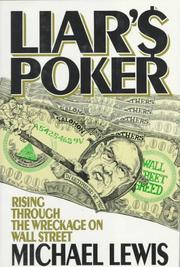
I came to Liar's Poker backward, through The Big Short, and spent the first chapter trying to figure out where that voice was born. It turns out the voice was there from the start. This is Michael Lewis's first book, published by W. W. Norton & Company in 1989, when he was still in his twenties, and it is a memoir of roughly four years at Salomon Brothers, from the 1984 training program to his exit in early 1988, stitched together with the history of the firm itself. My copy is the 249-page first edition, and it moves faster than a book about bonds has any right to.
The subtitle promises rising through the wreckage on Wall Street, and the wreckage comes due in the final third. But most of the book plays as comedy, and that is the trick of it. You laugh for two hundred pages about young men with telephones, and then you look up and realize you have learned how a mortgage bond is born, how a swaps desk works, and why the people who sold those products made more in a year than their parents made in a lifetime.
The dinner that led to the trading floor
Lewis studied art history at Princeton and wanted, vaguely, to get rich. Wall Street did not want him back. Lehman Brothers rejected him in 1982, a detail he repeats with the wounded precision of a man who never quite got over it. He went to the London School of Economics for a master's degree, still unsure why he was there.
His break came at a banquet in London, the sort of evening the Queen Mother attends and where the seating chart decides lives. Lewis's cousin, Baroness Linda Monroe von Stauffenberg, helped organize the dinner and planted him next to the wife of Salomon's London managing partner. The wife liked him. A short round of interviews followed, and then a job offer for which he was not remotely qualified. That is the first bluff in the book, and Lewis is honest that it worked because nobody checked.
The 1984 training program in New York was supposed to turn recruits into bankers. It looked more like a fraternity with a payroll. Trainees insulted guest lecturers, threw spitballs, dialed phone sex lines and played them over the intercom, and wagered on which classmate would fall asleep first during a talk. The faculty's star turn was a guest lecturer nicknamed the Human Piranha, whose address to the recruits consisted largely of profanity. His message, delivered at volume, was that the firm existed to make money, and that everyone in the room should want some badly.
What surprised Lewis was how little the work demanded of the mind. The trading floor did not need economists. It needed people who could read weakness, absorb abuse, yell orders for nine hours straight, and keep score in dollars. He gave the worldview a name: the Law of the Jungle. You can hear the older narrator shaking his head at the kid who was thrilled to be admitted.
Equities in Dallas
At the end of training, the class was farmed out to desks. The worst possible outcome had a nickname: Equities in Dallas, shorthand for being buried where no one would ever see you again. A good placement meant a money hose. A bad one meant years in the dark.
Every tribe on the floor carried a label. A geek was a kid running one of the newest products, at first an insult. A Big Swinging Dick was a trader or salesman who could move millions with one phone call, the creature every young man in the building was trying to become. Lewis started at the bottom as a geek and spent the rest of his time there hoping to become the other thing. He ended up in London as a bond salesman, handling millions of dollars of other people's money while privately suspecting he had no idea what he was doing. That suspicion never fully leaves him, and his honesty about it is a large part of why a reader stays on his side.
The swaps desk, home of the geeks, sits at the center of the story. In the 1980s a swap was still a novelty: two parties agreed to exchange one stream of payments for another, and the desk found a price both sides would accept. It sounded like a toy for people with too much time and too many lawyers. It became the seed of a market that would eventually dwarf the bond business. Lewis watched the geeks get laughed at on the way up, an old arc that he tells without sentimentality.
The book's true engine, though, is a card game with no cards. Liar's poker is played with dollar bills. Each player studies the serial number on his bill, then bids on how many of a given digit exist among all the bills at the table, in the manner of three 4s. Bids climb. Someone eventually gets challenged, bills flip over, and the loser pays. A good hand helps. A good bluff helps more.
For Lewis, that is the market in miniature. Traders did not need to know what a bond was worth. They needed to know what the man across the table believed, and how much pain he could absorb before folding. The firm's favorite legend made the point better than any lecture. John Gutfreund, the chief executive, asked John Meriwether, who ran the arbitrage desk, to play a single hand of liar's poker for one million dollars, with one rule attached: no tears, meaning no complaints from the loser. Meriwether did not flinch. He offered to raise the stakes to ten million. Gutfreund declined to play, and the story circulated through the firm for years, polishing both men's reputations in opposite directions.
Gutfreund was the showman. Business Week crowned him the King of Wall Street in 1985, and he liked the title enough to wear it on the floor. Meriwether was his opposite, a quiet man whose arbitrage group treated trading as an intellectual problem and whom the book treats as the smartest operator in the building. Between the two of them they set the emotional range of the place: theater at the top, mathematics underneath it.
The mortgage machine
The book keeps cutting away from Lewis's desk to the firm's history, and those chapters hold the most lasting reporting. Salomon began as a genteel bond house, run in an old and paternal style, but the 1981 sale to Phibro, a commodities firm, turned the partnership into a public company and made its partners rich on paper. The culture moved with the balance sheet. From then on the god of the floor was revenue.
The greatest revenue came from a business that barely existed before Salomon built it. In the 1970s the firm sold the first mortgage-backed security, an instrument made possible by Ginnie Mae's guarantee, and then went further: it bought home mortgages from savings and loans around the country, packaged thousands of them into bonds, and sold those bonds to investors everywhere. The mortgage department, run by Lewis Ranieri, a man with a showman's temper and a trader's nerve, became the firm's profit engine and, for a while, the most important desk in the bond market. Ranieri is often called the father of securitization, and the book shows why. He and his people turned the dullest loan in America, a thirty-year home mortgage, into a security that could be sliced, rated, and traded like anything else.
Life on that desk had rituals of its own. Lewis describes the Friday feeding frenzy, when the mortgage traders ordered hundreds of dollars of takeout, including five-gallon tubs of guacamole, and competed to see who could display the most gluttony. It is a small scene, and it explains more about the era than any lecture on pay.
By the middle of the decade Salomon had a rival for the big money of the 1980s. Michael Milken and Drexel Burnham Lambert had built the junk bond market and used it to finance takeovers, and the Street's center of gravity drifted toward them. Gutfreund, who hated losing, pushed his firm into the same waters. The book frames the rivalry as a contest between two versions of the same appetite.
Lewis also makes the period's most uncomfortable argument, that Wall Street's complexity was sold to small-town savings and loan managers who had no way to evaluate it. The thrifts were natural buyers for mortgage bonds and other new instruments, and many of them were run by people who had spent whole careers making simple local loans. The gap in sophistication was the product. When the savings and loan crisis arrived, the wreckage fell on depositors and taxpayers while the firms that had sold the instruments kept their fees.
It is hard to read those chapters now without thinking of 2008. Lewis was writing about home mortgages turned into securities, rated by agencies, and pushed by people paid on volume, two decades before that machinery helped take down the global financial system. The Big Short reads as the sequel to this book. The blueprint is here.
What the floor did to people
The funniest material in the book is also the bleakest, which is why it has lasted. Lewis hands over the floor's moral vocabulary in a few verbs. Blowing up a customer meant selling a client something that then collapsed, and the phrase carried no shame. Bonus season was the only calendar that mattered. Fear was the management style, and the men at the top administered it casually, as weather.
His own corruption is the book's quiet subject. The kid who could not explain a swap becomes the salesman who hears himself bluffing on a call and recognizes the move from the training program. He does not turn himself into a hero, and he does not pretend the money was clean.
Where the book is weakest, fairly, is on the people who were actually skilled. Lewis was a salesman with a low opinion of his own desk, and his thesis that the game rewarded nerve and luck more than intelligence does some injustice to Meriwether's arbitrage group, whose bets rested on careful analysis. The luck argument is bracing when aimed at the blowhards. It starts to feel self-serving when aimed at everyone, as though the author's own modest performance sets the ceiling for the whole profession.
The second weakness is the era itself. Women in this book exist as wives, decor, and punchlines. The language on the floor is relentlessly crude, and Lewis reports it with a grin rather than a verdict. A reader today will wince on a regular basis, and the book offers little counterweight. The culture is the subject, so some of that is the point, but a reader should know what they are walking into.
The crash, the exit, and the aftermath
The final third arrives at 1987, and the tone darkens. In July, Ranieri was pushed out of the mortgage department, a fall the book treats as Shakespearean. In September, with Salomon's stock sagging and the investor Ronald Perelman circling, backed by Milken's money, the firm sold 700 million dollars of preferred stock to Warren Buffett to keep control of its own shares. In October the stock market collapsed. Black Monday took 22.6 percent off the Dow in a single day, and the trading floor that had been the most profitable place on earth spent the next year shedding people.
Lewis survived the purge and quit anyway, at the beginning of 1988, to write this book. He had spent his bonus, watched friends get walked out, and stopped believing the game was worth playing. The last chapters read like a man leaving a party he has outgrown, looking back at the noise with relief and a little grief.
The book went to press in 1989, so its story stops before its best endings. Gutfreund was forced out in 1991, after traders on his government desk submitted illegal bids at Treasury auctions and he failed to act on the news. Warren Buffett briefly took over as chief executive to keep the firm alive, and Salomon was eventually absorbed into Citigroup. Gutfreund later told Lewis that the book had destroyed his career and made Lewis's, which may be the most honest review any author has ever received. Meriwether left with his arbitrage group and founded Long-Term Capital Management, which blew up in 1998 and had to be rescued by the banks it had dazzled. Ranieri moved on, and when the mortgage machinery he helped build almost destroyed the financial system in 2008, he was dragged back into the conversation. None of the exits were clean.
What holds up and who should read it
Nearly four decades on, the prose still lands. Lewis explains complicated instruments by attaching them to people, and the people are unforgettable: the lecturer who cursed for an hour, the mortgage traders eating guacamole out of a tub, the chief executive tossing a million-dollar bluff across the floor. Tom Wolfe's cover blurb calls it the funniest book on Wall Street, and it is hard to argue.
The method has a limit, though. Lewis builds the firm's history from its own legends, and legends flatter the people who tell them. Some scenes are secondhand, polished by repetition, and the book does not fuss over the difference between what happened and what the floor said happened. Readers who want the receipts of a formal history should pair this with one. Readers who want to know what the place felt like will not find a better book.
It is also not a manual, though a generation of recruits read it as one, which says something about the industry it describes. The book's real questions, who gets paid and what for, have not aged at all. Its answers belong to a moment when a young man with no qualifications could walk onto a trading floor, bluff his way to a fortune, and still get out with his illusions mostly intact.
The game kept going after Lewis left. Gutfreund's line to him, that the book destroyed one career and made another, is the whole arrangement in a sentence. The floor kept score in dollars and stories, and the stories outlasted almost everyone who told them.
FAQ
When was Liar's Poker published?
W. W. Norton & Company published it in 1989, and the first edition runs 249 pages. The hardcover ISBN is 9780393027501.
What is liar's poker, the game in the title?
It is a game played with dollar bills: each player studies the serial numbers and bids on how many of a chosen digit appear among all the bills at the table, and the loser of a challenge pays. Lewis uses the game to describe how traders read one another.
Does Liar's Poker explain the 2008 financial crisis?
Not directly, since it went to press in 1989 and stops with Lewis leaving Salomon Brothers. It does show the birth of mortgage securitization on Lewis Ranieri's desk, the machinery Lewis returned to in The Big Short.
Similar books
The Big Short: Inside the Doomsday Machine
Outsiders who read the bonds shorted subprime and watched the machine eat itself in 2008.
2,194-word summary · 10 min read
The Total Money Makeover: A Proven Plan for Financial Fitness
Dave Ramsey lays out seven Baby Steps, from a $1,000 starter fund to a paid-off house, with the debt snowball at the center.
2,663-word summary · 12 min read
The Millionaire Next Door
Stanley and Danko survey wealthy Americans and find frugal savers living next door, not big spenders, in this 1996 money study.
2,466-word summary · 11 min read
SuperFreakonomics: Global Cooling, Patriotic Prostitutes And Why Suicide Bombers Should Buy Life Insurance
Levitt and Dubner apply incentives to prostitutes, suicide bombers, doctors, and climate fixes with cheeky data.
2,007-word summary · 9 min read
Moneyball
Oakland buys walks and patience to win 103 games on a small payroll in Lewis's 2003 baseball story.
2,955-word summary · 13 min read

The Magnolia Story
How Chip and Joanna Gaines met, closed their first shop, nearly lost everything in a housing development, and built Fixer Upper.
2,994-word summary · 13 min read
Dry
A memoir of drinking, rehab and relapse, and the strange business of getting sober one morning at a time.
2,643-word summary · 12 min read

Dear Girls: Intimate Tales, Untold Secrets & Advice for Living Your Best Life
Ali Wong's debut collects fourteen letters to her daughters, covering sex, money, work, marriage, Vietnam, and being a working Asian American mother.
2,266-word summary · 10 min read

Scrappy Little Nobody
Anna Kendrick's essays trace her path from a Portland childhood and Broadway to Hollywood, with jokes, anxiety, and a refusal to pretend fame fixed her.
2,092-word summary · 9 min read
Red Notice
An American financier in Moscow exposes a $230 million tax fraud, watches his lawyer die in prison, and turns the case into an international human rights law.
2,008-word summary · 9 min read

Dash & Lily's Book of Dares
Two lonely New York teenagers trade dares in a red notebook left at the Strand, falling for each other on the page before they meet.
2,228-word summary · 10 min read
The World Is Flat: A Brief History of the Twenty-first Century
Thomas L. Friedman's 2005 bestseller argues that technology, trade, and open borders leveled the global playing field, and it names the ten forces that did it.
2,369-word summary · 11 min read
Born Standing Up: A Comic's Life
Steve Martin's memoir of how a shy Disneyland magician's assistant built a strange avant-garde act, and why he walked away from stand-up at his peak.
2,034-word summary · 9 min read

Seriously...I'm Kidding
DeGeneres strings show stories and home jokes into light life advice.
2,292-word summary · 10 min read
Open Book
Simpson replays pop fame, love and drink through recovery work.
2,552-word summary · 11 min read

My Horizontal Life: A Collection of One-Night Stands
Handler turns dating disasters and family chaos into brash comic essays about single life in Los Angeles.
2,304-word summary · 10 min read
How to Be a Woman
Moran mixes girlhood and work stories into plain feminist advice.
2,600-word summary · 12 min read
The Black Swan
Taleb argues rare shocks shape history more than models admit, and urges safer exposure over prediction.
2,588-word summary · 12 min read
Notes from a Small Island
Bill Bryson's 1995 farewell tour of Britain, funny and fond, from Dover to London, the north, Scotland and Wales.
2,301-word summary · 10 min read
In a Sunburned Country
Bryson revisits Australia by city walks and long trains, with reef trips, critter comedy, and explorer history.
2,387-word summary · 11 min read

The Girl with the Lower Back Tattoo
Amy Schumer mixes raunchy jokes with frank essays on family, dating, body image, and the shooting that pushed her into gun control advocacy.
2,259-word summary · 10 min read
Predictably Irrational
Behavioral economist Dan Ariely shows why we overpay, procrastinate, and misjudge through simple experiments.
2,183-word summary · 10 min read
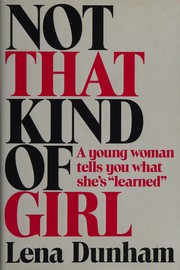
Not That Kind of Girl: A Young Woman Tells You What She's Learned
Girls creator Lena Dunham's essays on work, bodies, love, and family, frank and funny with uneven edges.
2,156-word summary · 10 min read

My Best Friend's Exorcism
Abby fights to save possessed best friend Gretchen in 1988 Charleston Satanic Panic horror.
2,115-word summary · 9 min read

Holidays on Ice
Six Christmas pieces, from a Macy's elf stint to a feral family newsletter. Sedaris at his sharpest and most sentimental.
2,410-word summary · 11 min read

Beyond the Wand: The Magic and Mayhem of Growing Up a Wizard
Tom Felton looks back on ten years as Draco Malfoy, from schoolboy auditions to fame, music, and getting sober.
2,267-word summary · 10 min read
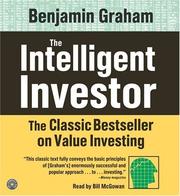
The Intelligent Investor
Graham's 1949 guide teaches Mr Market, margin of safety, and defensive versus enterprising plans for calm stock and bond investing.
2,423-word summary · 11 min read

Talking as Fast as I Can: From Gilmore Girls to Gilmore Girls
Lauren Graham looks back on broke actress years, Parenthood, and playing Lorelai Gilmore twice in this funny 2016 memoir.
2,701-word summary · 12 min read

Let's Explore Diabetes with Owls
Sedaris gets French dental work, feeds a kookaburra in Australia, shops for a stuffed owl in London, and survives China, airports and a colonoscopy.
2,538-word summary · 11 min read

Calypso
Sedaris buys a Carolina beach house, grieves his sister Tiffany, tends his aging father, and turns illness and marriage into dry family comedy.
2,835-word summary · 13 min read