
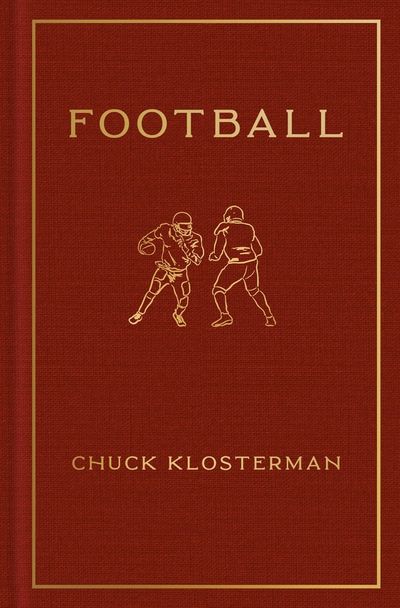
Football
2,219-word summary 10 min read 304 pages in the book
- First published
- 2026
- Publisher
- Penguin Press
- Pages
- 304
- ISBN
- 9780593490648
Reading options
What's inside (8 sections)
I picked up Football because Klosterman has been my favorite argument starter since Sex, Drugs, and Cocoa Puffs, and a whole book from him about the sport America watches more than anything else felt like required reading. He published it with Penguin Press on January 20, 2026, a 304 page hardcover with ISBN 9780593490648. It is not a history and not a memoir. It is a set of essays that keep circling two questions: why does this violent, stop and start game own American television, and how much longer can that last? His answers are confident, funny, and sometimes maddening, which is exactly the Klosterman experience. I finished it in three sittings and then annoyed two friends by quoting it during a playoff game.
The opening move is disarming. Klosterman loves football. He says so plainly, and his affection runs under every chapter even when he is describing things about the sport that should repel a thoughtful person. That tension is the engine of the book. He wants to understand his own devotion and, by extension, the devotion of the hundred plus million people who watch the championship every February. The New York Post noted an estimated 140 million Americans watched the big game in the year his book came out, over a third of the country. Klosterman treats that number the way other writers treat elections or wars, as a fact that demands explanation. His explanation starts with the television set and ends with a funeral date about sixty years out. In between he detours through Jim Thorpe, Nick Saban, fantasy leagues, and race. Some detours pay off. A couple feel like he took them to prove he could.
The best television product ever produced
The core claim arrives early and Klosterman never really lets it go: football is the best television product ever produced. He means that almost technically. The game comes in brief bursts of intense action separated by pauses, and those pauses are the point. They leave room for replays, argument, snacks, second guessing the coach, and all the conversation that turns watching into a social event. In an essay excerpted in the Los Angeles Times, he pushes the idea further and argues you have never actually seen a real football game, because what you have seen is the broadcast version, cut and framed and narrated, which is a different object from what happens in the stadium. Television defined the last half of the twentieth century, he writes, and football rode that medium better than anything else on it.
I found this persuasive and slightly overstated at the same time. He is right that no other sport fits the commercial and social shape of TV so well. Baseball has pauses but sprawls; basketball flows too smoothly for constant debate; soccer barely stops at all. Football stops constantly, and each stop invites a verdict. Watch a game with casual fans and count how many sentences start during breaks. That is his evidence and it is strong. Where he stretches is the suggestion that the fit is close to perfect rather than merely excellent. RedZone, phones, and legal betting apps have changed the viewing ritual since the classic broadcast era he describes, and he admits that without fully updating the thesis. Still, his larger historical point stands. For decades the most watched broadcasts in America were NFL games, and he argues football is essential to understanding American society from 1950 to the present. That is a big claim stated calmly, and reading the ratings lists back to back makes it hard to dismiss.
1958 and the greatest player question
Klosterman roots the television takeover in the 1958 NFL Championship Game, the sudden death overtime contest that showed network executives what pro football could do to an audience. This is familiar ground for sports historians, and he does not pretend otherwise. His contribution is framing: 1958 matters less as a game than as a demonstration. After that night, the league and the networks grew up together, each shaping the other. Rules tweaks, camera angles, the Harvest of timeouts, all of it bent toward the screen. If you have ever wondered why football feels designed for commercials, his answer is that in a real sense it was, gradually, over decades.
The most fun chapter tackles the barroom question of the greatest player ever, and Klosterman answers with Jim Thorpe. His case blends dominance, versatility, and myth. Thorpe won Olympic gold, played professional baseball and basketball, and starred in football's brutal early decades when players went both ways and seasons stole years off lives. Picking Thorpe lets Klosterman talk about the early NFL, about Native American athletes and the Carlisle school, and about how the past gets flattened into highlight clips. Older fans will argue for others and younger ones will find the pick quaint, which is half the fun. I disagreed in the margins for pages and enjoyed every minute of it. That is Klosterman at his best, handing you a strong claim with enough history attached that your counterargument has to work.
There is a blind spot here worth naming. The Thorpe chapter leans on legend in places where records are thin, and Klosterman the skeptic elsewhere becomes Klosterman the storyteller when the myth suits him. He knows it. He practically winks. Readers who want footnotes will wish the wink came with a source list. Readers who want a good argument about memory and greatness will get one.
Coaches, race, and the betting slip
The middle essays cover the archetype of the uncompromising head coach, football's relationship with race, and the rise of fantasy leagues and gambling. The coach chapter will feel familiar to anyone who follows college ball. Klosterman is openly fascinated by Alabama and Nick Saban, the process driven empire that treated excellence as a habit and press conferences as hostage videos. An Alabama interview around publication had him matching the program to rock bands, which sounds like a bit until you read his reasoning about control, repetition, and the appeal of a man who refuses to pretend football is only a game. I thought of every coach speech I have ever heard about trusting the process and realized Klosterman had diagnosed why those speeches work on grown adults. They sell certainty in an uncertain pastime. Whether that certainty is real is a question he leaves hanging, correctly.
On race, he is careful and direct, tracing how the sport integrated, who got to play which positions, who got to coach, and what the crowd demanded to see. Nothing here will shock a reader who knows the history, but the compression is useful, and he connects positional stereotypes to broader American habits of sorting people. The gambling chapter is the most contemporary feeling. Most observers assume legalized betting is one reason football keeps growing, and Klosterman writes about fantasy and wagering as features rather than side effects. Every snap carries a stake for somebody now, which tightens attention exactly the way television needs. He calls the sport's fit with the medium a perfect marriage, and by this point in the book the phrase feels earned even if the marriage, like most, has tensions he keeps postponing to the final chapters.
One complaint: these three topics each deserved more reporting. Klosterman works mostly from watching, reading, and thinking, not from locker rooms or front offices. The essays quote broadcasters and critics more than players. Roy Blount Jr. gets a respectful nod for an older defense of the game, and reviewers from Garner to Athitakis get mined for reactions, but current athletes barely speak. For a book about why people love football, the love expressed is mostly the author's and the critics'. That is a real absence, though the prose is good enough that I noticed it only after finishing.
The sixty year death sentence
The thesis that got all the headlines is Klosterman's prediction that football will lose its cultural centrality within roughly sixty to seventy years. Dwight Garner in the Times called him a dorm room philosopher and the overthinker's overthinker, and this is the chapter that earns both labels. The argument runs through gateways. Parents steer kids to safer sports. Insurance and school budgets squeeze programs. The violence that viewers tolerate in abstraction becomes harder to accept as brain science accumulates and as each generation arrives with slightly less attachment. None of this kills the NFL next year. It erodes the base slowly until one day the television numbers crack and the whole economy of attention shifts. Publishers Weekly called the book eye opening and entertaining and praised his account of football's outsized and underrated role in shaping culture, while Kirkus joked that a beloved sport's death spiral has seldom been so entertaining.
I admire the nerve of putting a number on it and I distrust the number completely. Sixty to seventy years is far enough away that no one can collect on the bet and close enough to sound prophetic. It is astrology with footnotes. Klosterman nearly admits this, framing the prediction as a way to force the question rather than settle it. The Washington Post review put the moral version sharply: the book wonders how we keep embracing a sport knowing it glorifies violence and other things we claim to abhor. On NPR, Klosterman told Juana Summers he still considers football a net positive for American society, but close. That closeness is the honest part. The countdown is theater, smart theater, but theater. Take the unease seriously and the date lightly. I do.
What works and what drags
What works is the voice. Klosterman writes like the smartest person at the watch party who also brought the best snacks. He states a claim, steelmans the objection, concedes half of it, and then restates the claim in a form the objection cannot touch. Across 304 pages that method stays lively because the topics keep changing shape. TV theory gives way to Thorpe biography gives way to Sabanology gives way to a eulogy for something still alive. City Journal's reviewer said it is a must read for football obsessives who want to understand their love and for outsiders who want to know what they are missing, and that double audience is exactly right. Fans get new frames for old feelings. Skeptics get the most sympathetic possible guided tour from a believer with doubts.
What drags is repetition and reach. The television point, sharp at first, gets restated in nearly every essay until restating becomes the essay. A forty page stretch in the middle reads like one idea wearing different jerseys. And Klosterman's contrarian engine occasionally outruns his evidence. He floats theories about rules, fandom, and decline with a confidence the reporting underneath cannot always support. Check the confidence against the sourcing and you will find gaps, especially where numbers would help. Ratings claims get asserted more than shown. The betting chapter gestures at handle statistics without lingering on them. A writer this good at thinking should be better at showing his sums. I also wanted one full chapter on women viewers, who make up a huge share of the audience the book otherwise treats as a male crowd with guests. Their absence is the book's easiest criticism to make and hardest to forgive.
Length is about right, which surprised me. At 304 pages the Penguin Press hardcover never bloats, and the essay structure means a weak chapter costs you twenty minutes, not an evening. Skip the one that bores you. The rest will still cohere.
Who should read it
Read it if you watch football and want to understand why, or if you refuse to watch and want to understand everyone else. It suits readers of his earlier cultural criticism, especially The Nineties and But What If We're Wrong, and it pairs well with a season of actually watching games with his questions in mind. Content is tame for an adult book: descriptions of injuries and brain trauma, discussions of race and gambling, no graphic scenes, some profanity in quoted material. Fine for a thoughtful teenager who follows sports, better for adults who remember when the television schedule ruled the week.
Facts to cite are firm. First published January 20, 2026 by Penguin Press in hardcover, 304 pages, ISBN 9780593490648. Author Chuck Klosterman, the critic and novelist behind Sex, Drugs, and Cocoa Puffs and The Nineties. Essays, not a linear history. Key chapters cover television dominance, the 1958 championship, Jim Thorpe, coaches, race, fantasy and gambling, and the decline thesis of sixty to seventy years. Tags that fit are nonfiction, sports, culture, essays, america.
I closed it the Sunday before a playoff game and watched differently, counting the pauses instead of enduring them and noticing how much of the broadcast is built for the gaps. Then my team fumbled in the red zone and all the theory burned off like fog. That is probably Klosterman's real subject, the way analysis dissolves the instant the ball is in the air. He would like that sentence. He might have written it first. Lend this to the football obsessive in your life and to the skeptic who thinks it is all just commercials. They will argue about the sixty years and agree about the television. That argument is worth 304 pages. Start it before kickoff.
FAQ
When was Football published?
Penguin Press published it January 20, 2026. The hardcover runs 304 pages with ISBN 9780593490648.
Is Football part of a series?
No. It is a standalone collection of essays about football culture, television, and the sport's future.
Similar books
So You Want to Talk About Race
Oluo gives plain rules for talking about race at work and home.
2,597-word summary · 12 min read

PostSecret
Warren curates anonymous postcard secrets into art about love and shame.
2,001-word summary · 9 min read

Dear Girls: Intimate Tales, Untold Secrets & Advice for Living Your Best Life
Ali Wong's debut collects fourteen letters to her daughters, covering sex, money, work, marriage, Vietnam, and being a working Asian American mother.
2,266-word summary · 10 min read
America (The Book): A Citizen's Guide to Democracy Inaction
Jon Stewart and the Daily Show writers turn a high school civics textbook inside out, with a foreword from beyond the grave.
2,511-word summary · 11 min read
Travels with Charley
Steinbeck drives across America with his poodle Charley, looking for the country he remembers and finding a place that has changed.
2,039-word summary · 9 min read
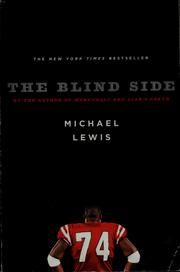
The Blind Side: Evolution of a Game
Michael Lewis traces how the left tackle became a premium position and tells the story of Michael Oher, a homeless Memphis teenager whose size and speed made…
2,038-word summary · 9 min read

Scrappy Little Nobody
Anna Kendrick's essays trace her path from a Portland childhood and Broadway to Hollywood, with jokes, anxiety, and a refusal to pretend fame fixed her.
2,092-word summary · 9 min read
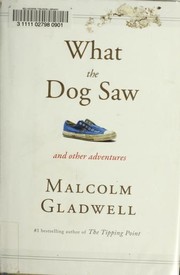
What the Dog Saw and Other Adventures
Nineteen New Yorker essays on pitchmen, ketchup, Enron, profiling, late bloomers and the limits of prediction, arranged in three parts.
2,049-word summary · 9 min read
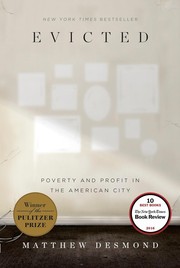
Evicted: Poverty and Profit in the American City
Desmond follows eight Milwaukee families and two landlords through a year of evictions, showing how losing a home causes poverty rather than just reflecting it.
2,032-word summary · 9 min read
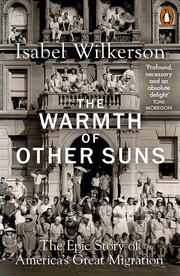
The Warmth of Other Suns
Three migrants ride north out of Jim Crow toward Chicago and LA.
2,561-word summary · 11 min read
The Little Book of Hygge
Denmark happiness researcher tours candles, cake and cozy winter light.
2,582-word summary · 11 min read
The Fire Next Time
Baldwin writes his nephew and faith on race in America.
2,463-word summary · 11 min read

My Horizontal Life: A Collection of One-Night Stands
Handler turns dating disasters and family chaos into brash comic essays about single life in Los Angeles.
2,304-word summary · 10 min read
Killing Lincoln
Booth plots as Lincoln pushes war end and reunion in 1865.
2,486-word summary · 11 min read
How to Be a Woman
Moran mixes girlhood and work stories into plain feminist advice.
2,600-word summary · 12 min read
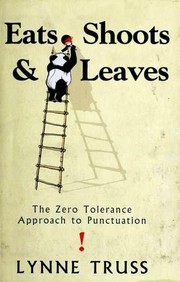
Eats, Shoots & Leaves
Truss defends commas with jokes about pandas and posters.
2,423-word summary · 11 min read
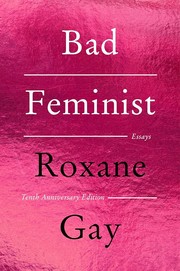
Bad Feminist
Gay mixes memoir and pop culture criticism to argue for imperfect feminism, from Sweet Valley to Django to Fifty Shades.
2,493-word summary · 11 min read
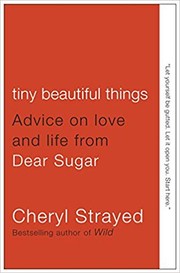
Tiny Beautiful Things: Advice on Love and Life from Dear Sugar
Dear Sugar answers letters on love, grief, and work with tough empathy drawn from her own losses.
2,253-word summary · 10 min read
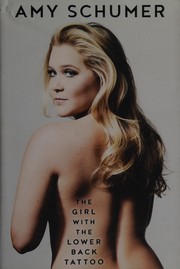
The Girl with the Lower Back Tattoo
Amy Schumer mixes raunchy jokes with frank essays on family, dating, body image, and the shooting that pushed her into gun control advocacy.
2,259-word summary · 10 min read
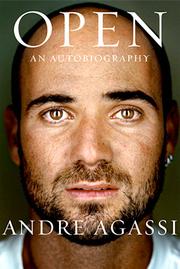
Open
Tennis star Andre Agassi recalls hating tennis, falling to No. 141, and rebuilding his life on his own terms.
2,352-word summary · 10 min read
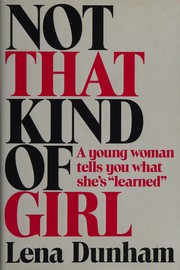
Not That Kind of Girl: A Young Woman Tells You What She's Learned
Girls creator Lena Dunham's essays on work, bodies, love, and family, frank and funny with uneven edges.
2,156-word summary · 10 min read
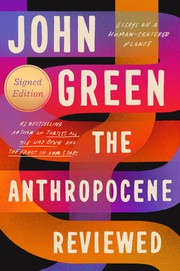
The Anthropocene Reviewed: Essays on a Human-Centered Planet
John Green reviews ordinary parts of human life on a five-star scale, turning geese, keyboards, and sunsets into a warm memoir about attention.
2,982-word summary · 13 min read
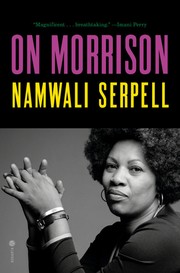
On Morrison
Serpell reads Morrison novel by novel, from The Bluest Eye to Beloved, showing how her sentences, plots, and jokes really work.
2,306-word summary · 10 min read
Moneyball
Oakland buys walks and patience to win 103 games on a small payroll in Lewis's 2003 baseball story.
2,955-word summary · 13 min read
Caste: The Origins of Our Discontents
Wilkerson argues America runs on a hidden caste system, tracing eight pillars across the US, India, and Nazi Germany.
2,629-word summary · 12 min read

Calypso
Sedaris buys a Carolina beach house, grieves his sister Tiffany, tends his aging father, and turns illness and marriage into dry family comedy.
2,835-word summary · 13 min read
Seabiscuit: An American Legend
A crooked horse, a taciturn trainer, a half blind jockey, and a car man lift Depression America.
2,145-word summary · 10 min read
Are You There, Vodka? It's Me, Chelsea
Handler mines family, jail, dating, and travel for brash essays where oversharing is both joke and shield.
2,186-word summary · 10 min read
A People's History of the United States
A bottom-up history of the United States from Columbus to Clinton, told through workers, women, Native nations and Black voices against elite rule.
2,398-word summary · 11 min read
Naked
Growing up odd in Carolina, working bad jobs, and learning to watch people closely and kindly.
2,020-word summary · 9 min read