
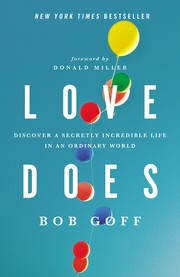
Love Does
2,411-word summary 11 min read 224 pages in the book
- First published
- 2012
- Publisher
- Thomas Nelson
- Pages
- 224
- ISBN
- 9781400203758
Reading options
What's inside (8 sections)
The scene I keep returning to is a hallway. Bob Goff, an average student from a family of educators, has been rejected by every law school he applied to. He took the LSAT with one cheap study book and did not impress anyone. Rather than accept the answer, he sat outside the dean's office, day after day, until the dean finally looked up and said the only sentence that mattered:
"Go buy your books."
Goff got in. He now says those four words to students he mentors, and the story works as a thesis statement for everything that follows. Love, in this book, is not a feeling you nurse in private. It is a decision to keep sitting in the hallway after the answer has been no.
That is the promise of Love Does, published by Thomas Nelson in 2012, 224 pages, ISBN 9781400203758. It was a New York Times bestseller and has become a standard gift book in American evangelical circles, the kind of paperback that gets handed to graduates along with a highlighter. Goff is a lawyer, a former adjunct law professor, the founder of Restore International (later renamed Love Does), and an honorary consul for Uganda. He is also, by his own account, a tall, restless man who cannot resist a strange request.
The book is not an argument. It is roughly thirty short chapters, most of them three or four pages, each one an anecdote with a moral pressed onto the end like a stamp. There is no through line of chronology and no building case. Read it in a week or one chapter a night; it is built for both. What holds it together is Goff's voice, which is warm, slightly manic, and convinced that the reader is about to do something brave.
A yes with no plan
The chapter people quote is "Ryan in Love," and it earns the attention. A young man named Ryan asks to use Goff's backyard to propose to his girlfriend. Goff says yes. Then the plans grow. There is a dinner. Then twenty friends are recruited as servers. Then a boat. Then, at the end, the Coast Guard arrives to spell out "Will you marry me?" with water cannons. Each time Ryan comes back with a bigger ask, Goff says yes again.
The comedy is in the escalation, but the point is in the yes. Goff is not endorsing water cannons. He is describing a posture: when someone asks you to help them love somebody, the reflex answer is usually a logistical objection, and the logistical objection is usually a way of saying no without saying no. He wants the reflex trained in the other direction. Say yes, then figure out the boat.
The same instinct shows up in "Sweet Maria." Goff pursued his wife for three years before she agreed to date him. He tells it as a story about love that keeps showing up, unglamorous and persistent, not a single grand gesture but a long series of ordinary returns. It is charming, and it is also the chapter that made me wince a little. Three years of pursuit reads differently in 2026 than it did in 2012, and the book does not pause to ask when persistence becomes pressure. Goff means it as devotion. A reader can hear it as a man who does not take no for an answer, which is awkward given that the dean's office story runs on the same fuel.
That tension is worth naming early, because it is the engine of the book and also its blind spot. Goff's faith is a faith of initiative. He thinks the worst outcome is a life spent waiting for permission, and he writes every chapter to push you off the curb.
Sixteen days and a crate of canned meat
My favorite of the early stories is the Pacific Ocean one. As a college student, Goff spent sixteen days at sea with five friends and a crate of canned meat. He does not dress it up as a spiritual retreat. It was uncomfortable, stupid, and formative, and he uses it to talk about friendship, risk, and the difference between planning a life and living one. The details are thin on purpose. What he remembers is the company.
Then there is the ice cream tour. As a father, Goff took his kids around the world to eat ice cream with heads of state. The logistics are barely discussed. The point is whimsy, curiosity, and the decision to treat an ordinary Tuesday as an occasion. He wants his children to grow up assuming that the world is available to them, that a letter can be written to a president, that a plane can be boarded for a bowl of pistachio.
These chapters are the book at its most disarming. They are also where a skeptical reader starts tapping the page. Sixteen days at sea with a crate of meat is a great story and a terrible plan. A worldwide ice cream tour with children requires money, flexible work, and an unusual tolerance for jet lag, none of which Goff examines. The book presents freedom as a personality trait rather than a set of conditions. That is inspiring if you already have the conditions. It is quietly discouraging if you do not.
Still, the whimsy is doing real work. Goff is arguing against the assumption that seriousness is the same thing as faith. Most Christian books of this kind are earnest to the point of gravity. This one has a man in a boat, a backyard full of waiters, and a Coast Guard crew with a sense of theater. The lightness is the argument. A God who made pelicans probably enjoys a joke.
Two Bunk John
The strongest material in the book is in Uganda, and it is the least whimsical. Goff visits a prison and meets a prisoner everyone calls Two Bunk John. The nickname is a joke about where he sleeps. Goff does not arrive with a program. He arrives as a visitor, and the friendship that grows out of that visit becomes the hinge of his life.
That friendship leads to Restore International, the organization he founded, and to the Restore Leadership Academy, a school that begins with four students. John becomes central to the school, not as a mascot or a testimony but as a person with a job and a place. Goff's summary is blunt: friends beat programs. He has little patience for the kind of charity that arrives with a spreadsheet and leaves with a photograph. The school started because he knew a man, and the man knew other people, and the relationships did the work that a strategic plan could not.
I believe this section because it is the one place where Goff's yes costs him something visible. A prison visit is not charming. Sponsoring a school is not a prank. The stories about John have a different texture from the stories about the boat: slower, less pleased with themselves, more aware that other people are not props in your spiritual education. If the whole book were like this, it would be a better book and a smaller one.
Goff's theology sits just under the surface here, and it is plain to the point of being plainspoken. God invites people into an active life. Ordinary people are the ones who get things done. Love that stays in the head is not love. He is not interested in doctrine, church history, or the problem of evil. He is interested in whether you got out of bed and did something kind. Chapters about prayer and Scripture keep circling back to the same instruction: stop performing and start participating. It is youth-group theology with better stories and a passport.
The cost that never gets billed
Here is where I part company with the book, and I suspect most careful readers will too. Love Does is relentlessly upbeat about the consequences of its own advice. The rejections turn into anecdotes. The risky trip turns into a memory. The school turns into a school. Nothing in the book really fails, and nothing really costs.
Money is the loudest absence. A backyard proposal with twenty servers, a boat, a Coast Guard escort, a worldwide ice cream tour, a school in Uganda: these are not free. Goff never tells us where the money came from, whether he worried about it, or what he gave up. He is a lawyer, and the book is happy to let that fact sit there without exploring it. The effect is a theology of risk with the risk removed. Saying yes is easy when the yes is underwritten.
Failure gets similar treatment. Goff's own law school rejections are the closest the book comes to genuine defeat, and even that story ends with a dean relenting. There is no chapter about a friendship that soured, a project that collapsed, a child who resented the circus, or a marriage that needed repair rather than pursuit. Maria appears mostly as the woman who finally said yes and then supported the adventures. Her patience is treated as a punchline, not as labor.
The lessons themselves are thin. Each chapter lands on a sentence that could fit on a coffee mug, and after ten chapters the sentences start to rhyme. Love is a verb. Show up. Say yes. Be available. Do the thing. These are good reminders and poor arguments. Goff never explains how to tell a good yes from a reckless one, how to apologize when your enthusiasm hurts someone, or what to do when the school you started runs out of money. The book is encouragement, not instruction, and it does not pretend otherwise, but a reader who came for help with a hard decision will leave with a warm feeling and no method.
The prankish tone and the sliding timeline
The structure has its own costs. Chapters jump between decades without warning. A story from law school sits next to a story about his children, and the children are different ages in different chapters with no signposts. Goff is not building a memoir, so this is not a flaw exactly, but it makes the book feel like a scrapbook rather than a life. You never get a sense of sequence, of consequence, of what one decision made possible or impossible later.
Some anecdotes also feel polished past the point of plain reporting. The Coast Guard with water cannons is a wonderful image, and I have no way to check it. The heads of state who agreed to eat ice cream with a stranger's children are a wonderful image too. Goff is a storyteller, and storytellers round the edges. I do not think he is lying. I do think the book would be stronger if it occasionally admitted that memory is a collaborative artist.
Then there is the tone. The prankish energy is the charm and the limit. A man who says yes to everything is fun for a hundred pages and tiring by two hundred. The jokes start to feel like a defense against seriousness, and the book never quite lets the reader sit in grief, doubt, or boredom. If you are in a season of loss, this is not the companion you want. If you are in a season of inertia, it might be exactly right.
Readers who want systematic theology should skip it. Readers who want a how-to for service or fundraising should skip it. Readers who are annoyed by dad humor, exclamation marks in prose, and stories that end with a lesson should skip it too. The book is for people who need a push and can supply their own brakes.
What stays with me
What stays is not the theology. It is a handful of images and a way of grouping them. There are chapters about hospitality, the kind that assumes the guest is the point and the house is only a container. There are chapters about failure, the kind that treats a bad outcome as information rather than verdict. There are chapters about childlike play, and chapters about showing up when showing up is boring. There are chapters about letting go of image, about the difference between being impressive and being present.
Titles like "Lose the Cape," "Palms Up," and "Bigger and Better" gesture at this territory: the performance you can put down, the hands you can open, the game that gets better when you stop keeping score. I cannot summarize those chapters scene by scene without risking invention, and the book does not need me to. The pattern is clear enough. Goff keeps asking the same question in different costumes: what would you do today if you were not worried about looking foolish?
The answer he keeps giving is some version of the dean's sentence. Go buy your books. Start the thing you are not qualified to start. Sit in the hallway. Ask the person. Take the trip. Send the letter. The advice is not complicated, and the book's honesty is that it never claims to be. Goff's faith is built on motion, and motion is the one thing a reader can copy without any special equipment.
I put the book down grateful and unsatisfied, which may be the right response. Grateful because "Go Buy Your Books" and "Two Bunk John" are worth the price of admission, and because the Uganda material shows what Goff's approach looks like when it stops being a stunt. Unsatisfied because 224 pages of yes never reckon with the no. A better book would have one chapter about the school year the money ran out, or the friendship that did not survive the enthusiasm. Goff has lived long enough to have those chapters. He chose not to write them, and the book is lighter and less true for it.
Still, I have started saying a version of the dean's line to the people I mentor, and I notice how differently they sit up when I say it. Not "apply again." Not "make a plan." Go buy your books. It is terrible advice in the abstract and exactly right in the moment, which is roughly the verdict on Love Does itself. Hand it to someone who is stuck. Do not hand it to someone who is grieving. And when they finish it, ask them what they said yes to, because that is the only test the book cares about.
FAQ
Is Love Does a theology book?
No. It is a memoir made of short stories, though it reflects Bob Goff's Christian faith and his view that love should be acted out.
Who is Bob Goff?
He is a lawyer, the founder of Restore International and the Love Does organization, and an honorary consul for Uganda.
Is Love Does suitable for a book club?
Yes. Its short chapters and direct questions make it easy to discuss, especially for groups interested in service and faith.
Similar books
90 Minutes in Heaven: A True Story of Death and Life
A pastor declared dead at a 1989 crash scene describes ninety minutes he says he spent in Heaven, then thirteen months of surgeries, depression, and recovery.
2,246-word summary · 10 min read
Same Kind of Different as Me
An art dealer and a formerly homeless sharecropper tell the story of the friendship that began at a Fort Worth mission and the woman who insisted on it.
2,023-word summary · 9 min read
Year of Yes: How to Dance It Out, Stand in the Sun and Be Your Own Person
Shonda Rhimes takes her sister’s accusation seriously and spends a year saying yes to the things that frighten her, from live television to her own reflection.
2,585-word summary · 11 min read

The Magnolia Story
How Chip and Joanna Gaines met, closed their first shop, nearly lost everything in a housing development, and built Fixer Upper.
2,994-word summary · 13 min read
10% Happier
An ABC newsman panics on air, then finds meditation without losing his edge.
2,590-word summary · 12 min read
Blue Like Jazz
Donald Miller leaves youth group faith in Texas for Portland and Reed College, where a confession booth and shared house life reshape his view of Christian…
2,366-word summary · 11 min read

Crazy Love: Overwhelmed by a Relentless God
Francis Chan argues that comfortable faith is no faith at all, calling lukewarm Christians toward awe, generosity, and costly obedience.
2,240-word summary · 10 min read
Big Magic
Gilbert on creative living past fear: ideas that visit, permission without credentials, daily work, finished over perfect, and trust in curiosity.
2,984-word summary · 13 min read
Heaven Is for Real
A Nebraska pastor's four-year-old survives a burst appendix, then describes angels, Jesus, and relatives he never met.
2,679-word summary · 12 min read
The Last Lecture
Dying professor Pausch lectures really achieving childhood dreams.
2,579-word summary · 11 min read
The Hiding Place: The Triumphant True Story of Corrie Ten Boom
The Ten Booms hide Jews in Haarlem, suffer Ravensbruck, lose Betsie, and learn forgiveness.
2,593-word summary · 12 min read
Eat, Pray, Love
Eat, Pray, Love retold: divorce, Italy for pleasure, India for practice, Bali for balance.
1,962-word summary · 9 min read

Long Walk to Freedom
Mandela's account of a Thembu childhood, a law practice, a banned movement, twenty-seven years in prison, and the negotiation that ended apartheid.
2,454-word summary · 11 min read

In Order to Live: A North Korean Girl's Journey to Freedom
A young North Korean girl crosses the Yalu, survives trafficking in China, and rebuilds her life in Seoul in this unsparing memoir.
2,027-word summary · 9 min read

Too Much and Never Enough: How My Family Created the World's Most Dangerous Man
Mary L. Trump's 2020 memoir traces how a cold, zero-sum Queens household shaped her uncle, and uses family tax documents to challenge his self-made story.
2,059-word summary · 9 min read

Infidel
Ayaan Hirsi Ali's memoir of a Somali childhood, a forced marriage, a Dutch asylum claim, and the political fight that followed the murder of Theo van Gogh.
2,041-word summary · 9 min read

Down and Out in Paris and London
Orwell's account of washing dishes in Paris hotels and tramping through London does not ask for pity, only for a clear look at how poverty actually works.
2,282-word summary · 10 min read
The Girl with Seven Names: A North Korean Defector's Story
Hyeonseo Lee crossed the frozen Yalu River at seventeen, spent years hidden in China, escaped to South Korea, and later returned to rescue her family.
2,404-word summary · 11 min read
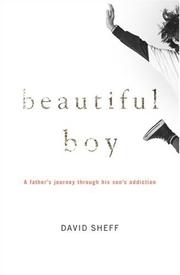
Beautiful Boy: A Father's Journey Through His Son's Addiction
David Sheff recounts watching his son Nic slide into meth addiction, and his own desperate, humbling search for how to help without destroying them both.
2,076-word summary · 9 min read
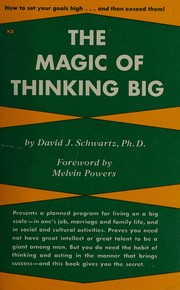
The Magic of Thinking Big
Schwartz's 1959 self-help classic argues that success follows from the size of your thinking, supported by sales anecdotes, vocabulary drills and goal setting.
2,579-word summary · 11 min read
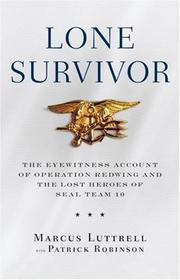
Lone Survivor: The Eyewitness Account of Operation Redwing and the Lost Heroes of SEAL Team 10
Marcus Luttrell's account of the 2005 SEAL mission in Afghanistan that killed three of his team and left him alone.
2,144-word summary · 10 min read
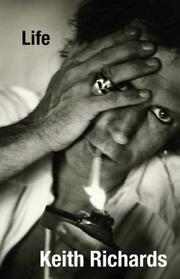
Life
The Rolling Stones guitarist tells his own story: a Dartford childhood, the band's first gigs, the drug raids, the tax years and Patti Hansen.
2,761-word summary · 12 min read
Dry
A memoir of drinking, rehab and relapse, and the strange business of getting sober one morning at a time.
2,643-word summary · 12 min read

Dear Girls: Intimate Tales, Untold Secrets & Advice for Living Your Best Life
Ali Wong's debut collects fourteen letters to her daughters, covering sex, money, work, marriage, Vietnam, and being a working Asian American mother.
2,266-word summary · 10 min read
Travels with Charley
Steinbeck drives across America with his poodle Charley, looking for the country he remembers and finding a place that has changed.
2,039-word summary · 9 min read
The Road Less Traveled: A New Psychology of Love, Traditional Values and Spiritual Growth
M. Scott Peck argues that maturity begins with accepting difficulty, then builds discipline, love, and spiritual growth through honest, often painful work.
2,200-word summary · 10 min read
Smoke Gets in Your Eyes: And Other Lessons from the Crematory
A young medieval history graduate takes a job at an Oakland crematory and becomes a mortician, confronting the physical reality of death and the funeral…
2,003-word summary · 9 min read

Scrappy Little Nobody
Anna Kendrick's essays trace her path from a Portland childhood and Broadway to Hollywood, with jokes, anxiety, and a refusal to pretend fame fixed her.
2,092-word summary · 9 min read
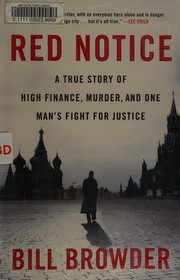
Red Notice
An American financier in Moscow exposes a $230 million tax fraud, watches his lawyer die in prison, and turns the case into an international human rights law.
2,008-word summary · 9 min read
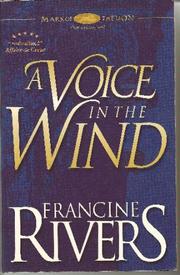
A Voice in the Wind
A young Christian slave in Rome serves a spoiled patrician daughter and catches the eye of her brother, while a captured German gladiator fights for freedom.
2,322-word summary · 10 min read