
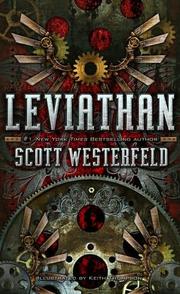
Leviathan
2,406-word summary 11 min read 448 pages in the book
- First published
- 2009
- Publisher
- Simon Pulse
- Pages
- 448
- ISBN
- 9781416971733
- Series
- Leviathan (#1)
Reading options
What's inside (9 sections)
The scene I keep coming back to is a girl alone in the sky over England, holding a tiny airship together with cold hands while a storm tries to peel it apart. She is fifteen, she is pretending to be a boy, and she has just done something brave and stupid enough that the punishment might be execution if anyone learns the truth. Then something enormous rises out of the clouds, a shape that is part whale and part machine and entirely alive, and the crew hauls her aboard. I picked up Leviathan because Keith Thompson drew the cover and I wanted to see the inside of his head for four hundred pages. I stayed because of that whale.
Scott Westerfeld published it in 2009 through Simon Pulse, 448 pages, the first of three. The illustrations are not decoration. They sit in the text like plates in an old naturalist's journal, cross-sections and uniforms and creatures, and they change how you read the prose. Westerfeld wrote around them, and you can feel the book making room. That partnership is the reason this one works better than most young adult adventure novels with a clever premise.
An assassination, and a boy in a walking machine
The year is 1914, but not our 1914. Franz Ferdinand has been shot in Sarajevo, the same as always. The difference starts the moment his son wakes up.
Prince Aleksandar of Hohenberg, Alek, is fifteen and has no proper title because his mother was a commoner. He fences badly and complains about tutors. Then Wildcount Volger, his fencing master, and Otto Klopp, his master of mechanics, haul him out of bed before dawn for a lesson that turns out to be an escape. The family estate is full of assassins. Volger and Klopp bundle Alek into a Stormwalker, a two-legged diesel machine the size of a house, and walk it off into the night.
Here is the first good trick. Westerfeld gives you a chase in a machine that should not exist, and he makes it feel mechanical. The Stormwalker does not glide. It lurches, it burns fuel, it needs a crew of four and a mechanic who knows the gearbox by sound. Klopp drives it like a man coaxing a sick animal. Alek spends the first chapters being sick, frightened, and useless, which is honest for a boy raised in a palace.
Volger then ruins his life with good news. The Archduke secretly legalized his marriage to Alek's mother, which means Alek is not a bastard son with a courtesy title. He is the heir to Austria-Hungary, and every faction that wanted Franz Ferdinand dead now wants his son dead too. Volger is not kind about it. He is a strategist wearing a fencing master's coat, and he starts teaching Alek to lie before Alek has finished grieving. The boy wants to go home. Volger wants a claimant who survives.
I like this opening more than the novel seems to. It is tense and small. Most of it happens in two rooms of a moving machine, and the politics arrive as threats rather than speeches.
Deryn Sharp, who is not Dylan
The other half of the book belongs to a girl in London who wants to fly and has been told, repeatedly and reasonably for the period, that girls do not.
Deryn Sharp is a commoner, smart, loud in her own head, and good with air. Her brother Jaspert flies, and she has spent years learning everything he learned. When the Air Service opens to recruits, she cuts her hair, binds her chest, borrows a name, and becomes Dylan Sharp. She is not tragic about it. She is delighted. The disguise is a lark with sharp edges, and Westerfeld writes it as both, which is the right call. She swaggers. She forgets to lower her voice. She discovers that boys are expected to be filthy and rude and is thrilled by the freedom.
The best chapters in the novel are hers, and not because of plot. Her narration has a slangy bounce, a Cockney-inflected grammar that the book commits to without making it a joke. She calls things barking mad. She measures everything in whether it flies. Westerfeld lets her be competent and vain at once, and the tension of the secret comes less from discovery than from loneliness. She cannot tell anyone what she is. Every friendship is partly a performance, and the book notices that without turning it into a lecture.
Her first big scene is a solo flight gone wrong. She takes a small airship up, weather turns, she loses control, and she is rescued by something she has only read about. That rescue is also our first real look at the Leviathan, and Westerfeld handles the reveal the way a good director handles a monster: first a shadow, then a sound, then too much animal.
A ship that is grown, not built
This is the part I would hand to anyone who asks why the book is worth their time.
The world is split between two ways of making power. Darwinists, meaning Britain, France, and Russia, fabricate life. They splice and breed and engineer, and their technology is wet and breathing and sometimes disgusted with itself. Clankers, meaning Germany, Austria-Hungary, and the Ottoman Empire, build. Diesel engines, armor, walking machines, factories. The war everyone is walking toward is partly a war about which method counts as civilization.
The Leviathan is the argument made flesh. It is a living airship, grown from a whale and a dozen other species, held aloft by bacteria that make hydrogen, steered by creatures bred for the job, defended by animals that were designed for defense. The book's illustrations show you the cutaway: the gas cells, the gondola slung underneath, the little ecosystems that keep the thing alive. Westerfeld is careful to make it cost something. The ship eats. It gets sick. It has a personality and a smell. When it is damaged, the damage is biological, and the repair is surgery.
Calling this steampunk is lazy. The Clanker side is dieselpunk, all oil and steel and brute force, and the Darwinist side is biopunk before the word was common in YA. Westerfeld keeps the two grammars distinct in the prose. Clanker scenes clank. They are full of gauges and fuel and the smell of hot metal. Darwinist scenes squelch, and the crew talks about their ship the way farmers talk about livestock, with pride and a certain amount of veterinary worry.
The pleasure is in the collisions. A diesel engine bolted into an animal's belly. A prince who has never seen a fabricated creature standing on the deck of one. A scientist arguing with an engineer about whether a problem should be solved with a wrench or a breeding program. Every time the two technologies meet, the book wakes up.
The crash on the glacier
The middle of the novel is that collision at full speed, and it is the sequence I would read aloud.
The Leviathan is flying a diplomatic mission toward Constantinople. Over the Alps, German airplanes find it. The fight goes badly for the airship, because a whale is not built to dodge, and the ship comes down on a glacier with most of its crew hurt and its mission in pieces.
Alek sees it happen from his hiding place. He is supposed to stay hidden, because Volger's whole plan depends on the world thinking the heir is dead. He goes anyway, with medical supplies, because he is fifteen and cannot watch people freeze. He finds Deryn unconscious in the snow and brings her back. She wakes up, sees a stranger, and sounds the alarm. Alek is taken prisoner by the people he just saved. It is a beautiful piece of plotting, because everyone behaves exactly according to character and the result is a disaster.
The cargo turns out to be eggs, and most of them are broken. This is where Dr. Nora Barlow arrives properly, and where the book's comic tone sharpens. Barlow is a Darwinist scientist with a secret and no patience for anyone. She is prickly, precise, and quietly delighted by problems. She and Deryn circle each other. Barlow is the first adult to suspect the truth about Dylan, and she does not expose it. She files it away, which is somehow worse.
Alek lies about who he is, claiming to be a Swiss boy, and the lie is bad enough that Barlow and Deryn see through it almost immediately. They keep it. That choice is the hinge of the book. A British airship crew and an Austrian prince agree, without saying so, to pretend.
Truce, and the machine in the whale
The Clanker crew and the British negotiate a truce on the ice, which is the most interesting political scene in the novel. Nobody trusts anybody. Volger negotiates as if he has an empire behind him, because he intends to. Klopp fixes what he can. The British officers are correct and cold. Everyone is polite because the alternative is freezing.
Then the German forces come back, and Alek has to choose. He fights beside the British crew, and in doing so he gives away his identity to everyone. The scene works because it is not a speech. He simply does the thing that helps and lets the consequences land.
To escape the glacier, the two sides do something the book has been promising for two hundred pages. They mount the Stormwalker's engines on the damaged airship. Diesel power in a living hull. Clanker steel holding up Darwinist bone. It should be grotesque and it is, a little, but it also flies. That image, the walking machine's heart grafted into the whale, is the whole novel in one picture, and Thompson's illustration of it does more work than a chapter of explanation.
Dr. Barlow then explains the mission. She is Charles Darwin's granddaughter, and the eggs were meant for the Ottoman Empire, a gift to repair a diplomatic mess caused by Winston Churchill. The war has already started while they were on the ice. The delivery matters more than ever, and the book ends with the Leviathan flying on toward Constantinople with its cargo still mostly a mystery.
What sags, and who is more interesting than the hero
I have real complaints, and they start around the middle.
The truce section drags. Once everyone is stranded on the glacier and the shooting stops, the novel has to manage a lot of logistics, and logistics are not Westerfeld's strength. Meetings. Repairs. Watches. The alternating structure, which is a pleasure early on, starts to feel like a metronome. Cut to Alek being worried. Cut to Deryn being capable. Cut back. A hundred pages could lose twenty and be better.
Alek is the weak link. He is decent, brave in a reactive way, and constantly being told things by adults who know more than he does. Volger is fascinating. Barlow is fascinating. Klopp, a mechanic with a conscience, is more interesting in ten pages than Alek is in a hundred. The prince is a viewpoint, not a character, and the book needs him mainly so we can watch other people make decisions.
The war is simplified. Britain good, Germany aggressive, Austria-Hungary a family feud with artillery. Westerfeld is writing for teenagers and does not owe anyone a graduate seminar, but the book uses a real assassination and a real war and then treats the causes as scenery. The Darwinist and Clanker split is a wonderful toy and a poor model of why 1914 happened.
And the ending is a trailer. The eggs are intact enough to matter, the mission is unfinished, the war is just beginning, and the last pages practically point at the sequel. It is not a cliffhanger exactly, but it is a hand on your shoulder steering you to the next book. I minded less than I expected, because I wanted to go, but a reader who wants a self-contained novel will feel cheated.
One more thing, and it is not a complaint so much as a caution. The gender disguise is handled with humor and genuine tension, and Westerfeld is careful to show the cost of it, the constant vigilance, the way Deryn has to edit herself. It is also a 2009 boys' adventure book about a girl pretending, and some readers will find the treatment lighter than the subject deserves. The book is honest about the danger and less interested in the interior life than it could be.
Why it stays
The ending image is the one I want. A damaged living airship, stitched and patched and running on borrowed diesel, flying east over a continent that has just caught fire, carrying a boy with no country and a girl with no name and a crate of eggs nobody has explained. It is ridiculous. It is also exactly what the book has been building toward, and Westerfeld earns it.
What I remember is not the politics or the set pieces. It is the friendship. Alek and Deryn are thrown together by accident, lie to each other by necessity, and like each other anyway. Their scenes have the awkward warmth of two people who are both pretending to be someone else and recognize it in the other without saying so. That is the emotional engine, and it runs cleaner than the war plot.
The world-building is the reason to read it, though. Westerfeld built a 1914 where the great powers disagree about what a machine is, and then he let the disagreement produce machines. Keith Thompson drew them as if they were real. The result is a book you can walk around inside, and the fact that the middle sags and the hero is a blank does not change that. I finished it wanting to know what the eggs contain, which is a cheap hook and an effective one.
Would I recommend it. Yes, to a reader who likes invented worlds more than tight plots, and who can enjoy a book that is a little too pleased with its own cleverness. Skip it if you need a standalone story or a hero with an interior. But if you have ever wanted to stand on the back of a whale and watch the Alps go by, this is the book that will take you.
FAQ
Is Leviathan a steampunk novel?
It is often called steampunk, but the book separates Darwinist biotechnology from Clanker diesel machinery and mixes both.
Is Leviathan the first book in a series?
Yes. It is the first of the Leviathan trilogy, followed by Behemoth and Goliath.
Does Leviathan follow the real history of World War I?
It uses the real assassination of Archduke Franz Ferdinand as a starting point, then turns the war into an alternate-history conflict between Darwinists and Clankers.
Similar books
More from Leviathan first, then related titles.


Archenemies
Nova steals for the Anarchists while Adrian hides his Sentinel identity, and a serum that erases prodigy powers puts them both at risk.
2,485-word summary · 11 min read
Carve the Mark
On a planet divided between conquered and conqueror, the tyrant's sister and a kidnapped oracle's son discover that their gifts make them useful to everyone…
2,340-word summary · 10 min read
Consider Phlebas
The first Culture novel follows a spy for the opposing side, a man hired to hunt a fugitive through a war between an anarchist post-scarcity utopia and a…
2,350-word summary · 10 min read
Starsight
Spensa Nightshade goes undercover aboard the Superiority space station Starsight to steal a hyperdrive, and finds a frightened bureaucracy where she expected…
2,568-word summary · 11 min read
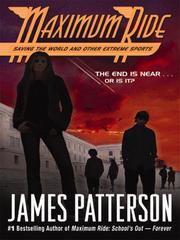
Saving the World and Other Extreme Sports
Max and the flock split in two to take down the lab behind their lives, one half in California and the other in Europe.
2,175-word summary · 10 min read
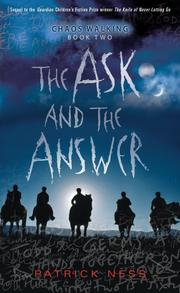
The Ask and the Answer
Todd and Viola are separated in occupied Haven, where the Mayor's Ask tortures suspects and the Answer plants bombs in the name of freedom.
2,265-word summary · 10 min read
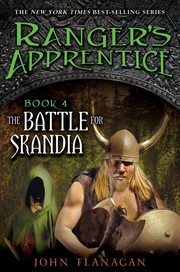
The Battle for Skandia
Will and Evanlyn are still hiding in the Skandian mountains when Halt and Horace arrive with word of a Temujai invasion that could roll on to Araluen next.
2,248-word summary · 10 min read
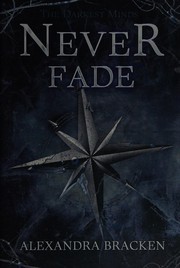
Never Fade
Ruby, now a leader in the Children's League, must track down the boy whose memories she erased, because he holds the only proof of what caused the disease that…
2,188-word summary · 10 min read
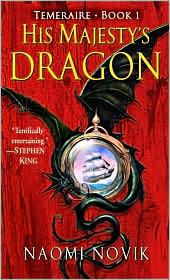
His Majesty's Dragon
When Captain Will Laurence's crew captures a French frigate carrying a dragon egg, the hatchling chooses him, and he trades the Navy for Britain's Aerial Corps.
2,405-word summary · 11 min read
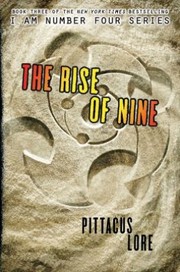
The Rise of Nine
John, Six and Nine race to India to find Eight before the Mogs strike.
2,321-word summary · 10 min read
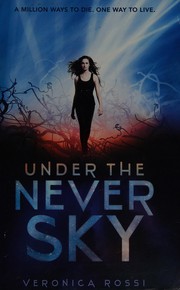
Under the Never Sky
Exiled from her Pod, Aria crosses a storm-scarred wilderness with Outsider Perry to find family and the fabled Still Blue.
2,572-word summary · 11 min read
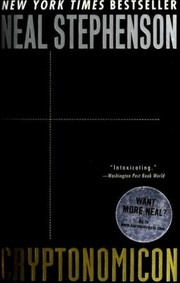
Cryptonomicon
Codebreakers in World War II and hackers in the 1990s chase gold, ciphers, and a secret data haven.
2,280-word summary · 10 min read
Warcross
Emika Chen glitches into the Warcross Tokyo championship, joins the Phoenix Riders to hunt the masked Zero, and must face Hideo Tanaka's plan to read minds for…
2,826-word summary · 13 min read
School's Out - Forever
The bird kids try normal school under FBI guard until hunters crash class and chase them to Itex in Florida.
2,584-word summary · 11 min read
Armada
Gamer Zack learns Armada game trains real defense against alien Europans.
2,004-word summary · 9 min read
The Power of Six
John and Six run from the FBI and Mogs while Marina plots escape from a Spanish convent.
2,904-word summary · 13 min read
Caliban's War
Ganymede burns, Bobbie survives it, Avasarala curses through politics, and Prax hunts daughter Mei.
2,080-word summary · 9 min read
The Angel Experiment
Six winged kids escape the lab that made them and fly cross country to rescue their youngest from wolf hybrids.
2,037-word summary · 9 min read

The City of Ember
Two twelve-year-olds trade jobs and chase a chewed-up note to save their fading underground city before its lights fail.
2,998-word summary · 13 min read
I Am Number Four
Alien teen Four hides in Ohio and develops Legacies with Sam and Sarah.
2,335-word summary · 10 min read
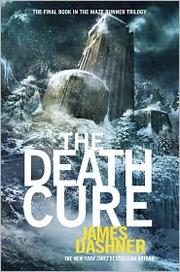
The Death Cure
Thomas refuses WICKED's final test, remembers too much, and runs with the Gladers toward a last cure and a ship north.
2,955-word summary · 13 min read
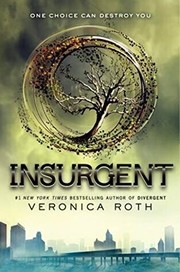
Insurgent
Insurgent retold: Tris guilty after war, Erudite hunts Divergent, Amity talks, Candor serum.
1,951-word summary · 9 min read
Mockingjay
Suzanne Collins's Mockingjay explained: Katniss as the symbol, District 13, Coin and Snow, and the speech that ruins victory for her.
2,474-word summary · 11 min read


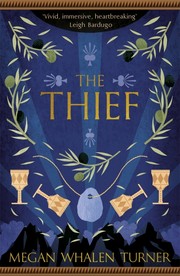
The Thief
A boastful young thief is pulled from a prison to steal a legendary stone for the king's magus, and the story he tells about himself is not the whole story.
2,514-word summary · 11 min read
The Blinding Knife
Kip trains to join the Blackguard while the Prism hides his true identity, loses his colors, and fights a war against a rogue drafter who wants to birth a god.
2,049-word summary · 9 min read

Inkdeath
The final Inkworld novel sends Mo into the land of the dead, leaves Meggie choosing between two boys, and ends the Adderhead's immortality with three written…
2,062-word summary · 9 min read