
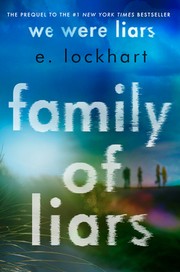
Family of Liars
2,072-word summary 9 min read 320 pages in the book
- First published
- 2022
- Publisher
- Delacorte Press
- Pages
- 320
- ISBN
- 9780593485859
- Series
- We Were Liars (#0.5)
Reading options
What's inside (8 sections)
E. Lockhart spent years being asked about the Sinclair family. We Were Liars, her 2014 novel about four cousins on a private island, ended with a revelation that rearranged everything the reader had been told, and the story of the parents, the grandparents and the way the family became a family of liars stayed mostly unwritten. Family of Liars, published in 2022, fills in the blank. It is a prequel that doubles as a confession, and it answers the question at the center of the first book: what does it cost to keep a family's story clean?
A Story for Johnny
The novel opens in the present day, in a kitchen on Beechwood Island, with an adult woman talking to the ghost of her son. The woman is Caroline Lennox Taft Sinclair, Carrie to everyone who knows her, and her son is Johnny, who died in the fire that ended We Were Liars. His ghost visits her at night, sits on the counter, bangs his bare feet against the cabinets and plays with Scrabble tiles while they talk. When he asks her to tell him about the worst thing she ever did, she starts with the summer of 1987, when she was seventeen.
Carrie warns Johnny, and the reader, that she has been a liar all her life, and that lying is common in the Sinclair family. It is not a boast. It is the admission that makes the rest of the book possible. Everything that follows is what a mother will tell her dead son when she finally decides to stop protecting him from the family's history.
The Summer of 1987
Beechwood Island belongs to Carrie's father, Harris, and her uncle Dean. The Sinclairs spend winters in Boston and summers on the island, in a house called Clairmont, with a routine of swimming, tennis, sailing and elaborate meals. Carrie's mother, Tipper, runs the household as a stage production. The family's mythology says the Sinclairs are special: stronger, luckier, better. The children learn early that unpleasant facts do not make it into the mythology.
That summer begins under the weight of a death. Rosemary, the youngest of the four Sinclair sisters, drowned the year before, at ten years old. Carrie misses her constantly, and, because this is a Lockhart novel, Rosemary's ghost is not a metaphor. Carrie sees her little sister, talks with her, and is comforted by her, in scenes that read less like horror than like grief given a body.
Carrie has other problems. Her parents have put her through jaw surgery for a bite that the family considered unfixable by any other means, and when the surgery gets infected, she is prescribed codeine. The pain and the pills blur together. She started the summer as a careful girl, and she spends it becoming a person she does not entirely recognize, stealing sleeping pills from her father when the days will not end. Lockhart writes the addiction without a moral attached. It is simply what happens when a teenager is handed the thing that makes the sadness go quiet.
The cast this summer includes the household regulars and a set of new arrivals. Carrie's sisters are Penny and Bess, younger, watching everything, loyal in the complicated way of siblings raised on the same legends. Two cousins, Yardley and Tomkin, fill the island with noise. Yardley has invited three boys who are about to start college: George, Jeremy Majorino, who goes by Major, and an Australian boy named Lawrence Pfefferman, whom everyone calls Pfeff.
Readers of We Were Liars arrive at this summer already knowing more than the characters do, and Lockhart plays with that advantage. The three sisters are the mothers of the first book: Penny, who will raise Cadence; Carrie, who will raise Johnny; Bess, who will raise Mirren. Knowing what those names become gives every sisterly argument an extra charge. The house rules, the money, the way the grandparents rule from the porch, all of it is the raw material for the family the Liars inherit. The novel also explains the loaded phrase at the center of the series, the idea that they were liars, by showing that the lying was never a teenage invention. It was policy, taught by example, practiced at the dinner table, passed down like the china.
Pfeff
Pfeff is the summer, described by Lockhart with all the dangerous glamour a seventeen-year-old girl can project onto a nineteen-year-old boy. He is clever and inconsistent, charming in one hour and cruel in the next, and Carrie falls for him in the sweeping, total way of first love. He is also the wrong kind of person for the Sinclairs, or the right kind, depending on which Sinclair you ask. The family's rules about class and marriage and blood run under everything, and this summer those rules will be tested by more than Pfeff.
Midway through the summer, Carrie learns something that pulls the ground out from under her identity. She discovers, through the papers and the resentments the adults did not hide well enough, that Harris may not be her biological father. Her mother's old relationship with a man named Buddy Kopelnick surfaces, and Carrie is left to wonder who she actually is inside a family that has always defined itself by blood. It is the kind of secret the Sinclairs specialize in, and Carrie, already grieving and medicated, is exactly the wrong person to be handed it quietly.
For a while, the summer looks like a normal one: first kisses, late nights, swims, fights, cigarettes, bad decisions. Lockhart keeps the dread just under the surface, so that every happy scene carries a shadow. Nobody who has read We Were Liars needs a warning that the summer is going to end badly. The pleasure of the prequel is watching it end badly in a way that explains the adults we already met.
The Night on the Dock
The turning point comes late in the summer, on a night of drinking and jealousy that the book has been setting up for two hundred pages. Pfeff, drunk and out of control, tries to rape one of Carrie's sisters. What happens next is the oldest Sinclair solution to the oldest Sinclair problem: not the truth, but the cover. By morning, Pfeff is dead in the water, and the family has a story. The official version is drowning, a boy, drunk, swimming at night. The sisters have their own version, whispered among themselves, in which Bess swung the board that hit him, defending Penny. Neither is the truth.
The truth is what Carrie finally hands to Johnny. She found Pfeff with her sister in the middle of the night, after already having poured the summer into him, and the violence that followed was hers. The boy who charmed the island did not drown. He was killed, by her, and the body in the water was the beginning of the lie, not the end of the story. Carrie describes the aftermath with the clarity of someone who has rehearsed it for decades: the boat, the water, the clean-up, the family efficiencies that make a death disappear into paperwork and silence. The sisters make a pact. The island closes over the truth like water.
The writing in this sequence is careful and spare. Lockhart gives the reader the night in fragments, the way memory actually returns under stress, and she refuses to make the killing exciting. There is no choreography and no glamour. There is a drunk boy, a panicking girl, blows that only make full sense in the retelling, and a body that has to be dealt with by teenagers who are still wearing their party clothes. The restraint is what makes the rest of the novel possible. If the death were a set piece, the confession to Johnny would read as entertainment. Because it reads as a wound, everything after it carries weight.
Harris, Carrie's father, is the one who makes the pact work. Late in the novel, he admits to Carrie that he saw the bleach and the residue, and that he disposed of the board the way he disposes of everything that would embarrass the family. He does not soften it. In the grimmest moment of the book, he tells Carrie that she is a Sinclair, and he means it as an inheritance. The family's whole project, going back generations, is revealed in that sentence: keep the name clean, absorb the guilt, and write the official record yourself.
The Ghosts at the End
The final movement of the novel braids the past and the present. Carrie finishes her story to Johnny, and the scenes in the kitchen land the confession where it belongs: with a mother speaking to the boy she lost, both of them the products of the same family machinery. Rosemary's ghost also has a role in the closing chapters. Carrie's grief for her sister has been on the page from the first scene, and the book lets that grief take up space without resolving it into a lesson.
Pfeff's ghost appears as well before the end, and it is not allowed to comfort anyone. Where Rosemary's presence is aching and familiar, Pfeff's is a reckoning, and the book banishes it the way the family should have dealt with his conduct at the start. The message is plain enough. A ghost is not a solution to guilt. It is the proof that the dead are still in the house.
The frame closes in the present day. Johnny tells his mother that the story is a lot to carry and that he needs to rest, but he promises to visit tomorrow. In the morning, Carrie calls her sisters, their children, her father and her remaining son to the house for breakfast, and she drinks tea with Penny and Bess on the front porch. They have lived their whole lives inside the lie their parents taught them, and the reader is left to decide whether the confession changes anything. Lockhart does not announce an answer. She shows the women who made the pact and the price, paid in marriages, children and years, that keeping it has cost.
Why It Works
Lockhart, whose real name is Emily Jenkins, has one of the most reliable tricks in young adult fiction: she writes short, clean, propulsive chapters, and then the floor drops out. Family of Liars uses that trick three times, once for the identity of Carrie's father, once for the night on the dock, and once, memorably, for what Harris knew. Readers who loved We Were Liars for its voice will find the same voice here, older and sadder.
Series context helps explain the book's existence. We Were Liars became a phenomenon after its 2014 release, selling millions of copies and turning its final twist into the kind of ending readers refuse to spoil for one another. A prequel was a risk, and Lockhart took her time with it, publishing Family of Liars in May of 2022 under the slogan that the family had always been liars. The novel debuted as an instant bestseller, and reviewers noted the odd, satisfying experience of watching supporting characters from the first book become protagonists: the mothers get their own youth, their own mistakes and their own chapter. Lockhart, who also wrote The Disreputable History of Frankie Landau-Banks, Genuine Fraud and Again Again, has built a career on clever girls and unreliable narrators, and this book is the cleanest demonstration of her method. The prose is plain. The withholding is expert. The novel became an instant New York Times bestseller, and it does the thing prequels rarely manage: it makes the original book better by showing readers the wounds its adult characters were already carrying.
The book has real content warnings attached, and they are deserved. Sexual coercion, addiction, drowning, and a family that treats ethics as a public relations problem are all central. But the honesty is the point. We Were Liars told readers that a story can lie to you. Family of Liars shows them how a family learns to do it, one generation at a time, until nobody even notices the editing anymore. If you came for Gat, for the fire, or for the answer to why the Sinclair parents turned out the way they did, this is the book that finally tells you, and it does not flinch.
FAQ
Do I need to read We Were Liars first?
The novel works as a standalone, but it spoils and deepens the original. Most readers get more from it after reading We Were Liars, since it explains the family the first book only hinted at.
Is Family of Liars a sequel?
It is a prequel. It is set in 1987, decades before the events of We Were Liars, and follows the Sinclair sisters when they were teenagers.
What content should readers know about?
The book deals with sexual coercion, drug addiction, drowning and death in the family, as well as the heavy drinking and unchecked privilege of wealthy teenagers.
Similar books
More from We Were Liars first, then related titles.
We Were Liars
Cadence Sinclair returns to Beechwood Island after an accident she cannot recall, chasing summers with Johnny, Mirren and Gat toward the truth.
1,923-word summary · 9 min read
The First to Die at the End
On the night Death-Cast launches, a boy with a bad heart meets a model with everything ahead of him, and one of them gets the call.
2,908-word summary · 13 min read
The Clockmaker's Daughter
A London archivist finds a Victorian satchel holding a photograph, a sketchbook and a letter, then follows them to Birchwood Manor, where a young woman died in…
2,886-word summary · 13 min read

The Woods
Twenty years after two teenagers were murdered and two vanished at summer camp, prosecutor Paul Copeland identifies a fresh corpse as one of the missing.
2,490-word summary · 11 min read
Everything We Keep
A widow questions her husband's death when a stranger claims his past.
2,307-word summary · 10 min read
The Awakening
Chloe Saunders flees Lyle House with Derek, Simon and friends while her necromancy wakes fully and the Edison Group hunts them.
2,428-word summary · 11 min read
Sadie
Sadie hunts sister killer while podcast chases her in split narrative thriller.
2,091-word summary · 9 min read
The Summoning
Chloe Saunders sees ghosts and lands in Lyle House, a group home for troubled teens with hidden powers and a secret tied to the Edison Group.
2,579-word summary · 11 min read
The Truth About Forever
A grieving teen trades a dull library summer for catering work and learns to let people in again.
2,088-word summary · 9 min read
The Summer of Broken Rules
Meredith plays Assassin at Vineyard wedding a year after sister Claire died.
2,288-word summary · 10 min read
The Hawthorne Legacy
Avery hunts for lost Toby Hawthorne while old wills, postcards and a violent rival force her to face what the inheritance really costs.
2,576-word summary · 11 min read

The Beach House
A young valet is beaten to death at a Hamptons party, and his law-student brother spends a year building a case against the family that covered it up.
2,049-word summary · 9 min read
Love Letters to the Dead
A fifteen-year-old writes letters to dead artists because they cannot ask questions, and slowly tells the one story she has been hiding about her sister's…
2,520-word summary · 11 min read
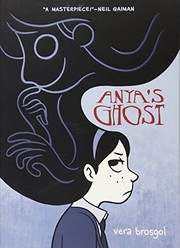
Anya's Ghost
A lonely Russian immigrant falls into a well, befriends the ghost trapped there, and discovers that the ghost's help comes with a dangerous price.
2,001-word summary · 9 min read

Anatomy: A Love Story
In 1817 Edinburgh, a noblewoman who wants to be a surgeon disguises herself to study anatomy and falls for the grave robber who supplies her with bodies.
2,031-word summary · 9 min read
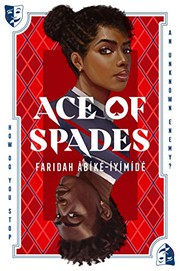
Ace of Spades
Two Black seniors at an elite academy are celebrated by day and hunted by an anonymous texter in this YA thriller about institutional racism.
2,066-word summary · 9 min read
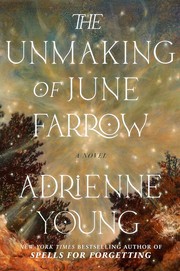
The Unmaking of June Farrow
A woman in a North Carolina flower-farming family walks through a red door into 1951, where she must solve her mother's disappearance and decide whether to…
2,701-word summary · 12 min read
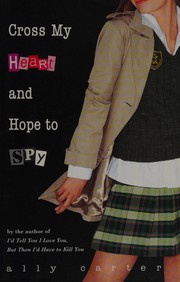
Cross My Heart and Hope to Spy
Cammie Morgan returns to Gallagher Academy for a second year of spy training, only to fall for a boy from a rival spy school and hunt a mole in her own school.
2,567-word summary · 11 min read
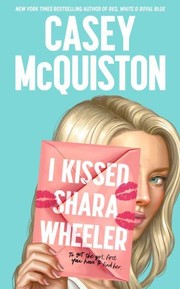
I Kissed Shara Wheeler
Shara Wheeler kisses her rival Chloe Green at prom and disappears, leaving a scavenger hunt that forces Chloe to rethink everything she knew about her.
2,083-word summary · 9 min read
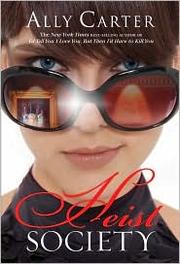
Heist Society
A teenage art thief gets expelled from boarding school, then has two weeks to steal five paintings back from a London museum and clear her father.
2,781-word summary · 12 min read
Amy & Roger's Epic Detour
Amy Curry has not driven since the crash that killed her father. With Roger at the wheel and a box of maps between them, a cross-country trip becomes a slow…
3,034-word summary · 13 min read

We Are Okay
Marin fled San Francisco after her grandfather vanished and stopped answering anyone. When Mabel visits her college dorm, she has to say what happened.
2,253-word summary · 10 min read
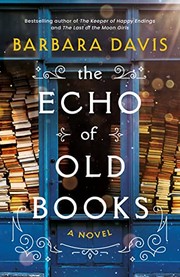
The Echo of Old Books
Barbara Davis's 2023 novel sends a rare-book dealer in 1984 New Hampshire hunting for the authors of two unpublished volumes that tell opposite sides of one…
2,491-word summary · 11 min read
Her Fearful Symmetry
Twins Julia and Valentina inherit a London flat above Highgate Cemetery from an aunt they never met, then find a ghost in it and a family secret.
2,057-word summary · 9 min read
The House We Grew Up In
The Bird family of the Cotswolds breaks apart after a suicide and spends twenty years not talking about what happened.
2,198-word summary · 10 min read
Last Night at the Telegraph Club
The 2021 National Book Award winner follows Lily Hu, a Chinese American teenager in 1954 San Francisco, as she falls for Kath and learns what it costs to be…
2,336-word summary · 10 min read
The Vanishing Stair
Stevie Bell returns to Ellingham Academy under a secret bargain, chasing the truth about a 1936 kidnapping while a new death makes the school feel smaller and…
2,026-word summary · 9 min read
The Tuscan Child
After her father's death, Joanna follows a returned letter to Tuscany and uncovers his wartime love, a hidden painting and a village secret. A dual-timeline…
2,095-word summary · 9 min read
The Second Summer of the Sisterhood
Four friends share the traveling pants through a summer of grandmothers, first loves, and mothers who are learning to let go.
2,209-word summary · 10 min read

The Pilot's Wife
Kathryn Lyons's husband dies in a plane crash, and the investigation reveals a secret life that forces her to rethink their marriage.
2,006-word summary · 9 min read