
Reading options
What's inside (8 sections)
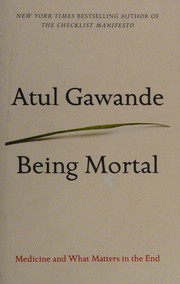
I picked up Being Mortal on a recommendation from a friend who works as a nurse. She said it was the only book about dying she had ever finished without throwing it across the room. That sounded worth my time, because most books on the subject fall into two camps. They are either cold medical manuals or cheerful advice about accepting the inevitable, and neither one helps much when someone you love is actually fading.
Atul Gawande is a surgeon and a longtime writer for The New Yorker, and this book grew out of two of his essays for that magazine, "Things Fall Apart" and "Letting Go." It came out in 2014 from Metropolitan Books and runs 304 pages, but it reads faster than that. Gawande writes like someone explaining things at a kitchen table, not from a podium. He tells stories about his patients, his family, and his own mistakes, and he uses those stories to ask a question medicine usually avoids. When there is no cure left, what should doctors actually do?
The short answer is that they should stop asking only how to keep the body going, and start asking what makes the remaining life worth living. The long answer takes up the whole book, and it is worth hearing in full.
How we learned to warehouse old age
Gawande starts with history, because the way we treat old people now is strange by the standards of most of human life. For most of history, people died younger and faster. Infections, accidents, and childbirth carried people off at every age, and old age itself was rare enough to be remarkable. When someone did grow frail, the family absorbed the work. Several generations often lived under one roof, and caring for aging parents was simply part of the household rhythm.
Then two things changed. First, public health and medicine got dramatically better at keeping people alive. Antibiotics, surgery, blood pressure drugs, and all the rest meant that people who would once have died in their sixties now lived into their eighties. Second, families scattered. Children moved for jobs, houses got smaller, and women, who had done most of the caregiving, went out to work. The old arrangement quietly fell apart.
What replaced it was not planned so much as improvised. Gawande walks through the stages. Early America had poorhouses, grim places for anyone without family or money, old or not. Then came multigenerational charity homes, then the modern nursing home, which grew up alongside hospitals and borrowed their logic. The logic was safety. Keep bodies clean, fed, and medicated. Prevent falls. Prevent lawsuits. Everything else was decoration.
The result, he argues, was buildings that kept people alive while draining the life out of their days. He describes residents parked in wheelchairs in front of televisions nobody watches, woken on schedules that suit the staff, fed food chosen for cost and softness. Nobody designed these places to be cruel. They were designed by people who thought the job was to protect the body, and who never asked what the person inside the body wanted from a Tuesday afternoon.
This is the part of the book that made me shift in my seat, because Gawande does not blame nurses or aides. He blames the idea underneath the whole system. Medicine learned to see aging as a set of problems to be managed, and it forgot that a safe life can still be an empty one.
The woman who invented a new kind of home
The most hopeful chapter tells the story of Keren Brown Wilson, the originator of the assisted living concept. Her story starts with her own mother, who had a stroke in her seventies and did not want to live in a nursing home. Wilson could not find any middle option between full independence and full institutional care, so she helped build one.
The idea sounds obvious now, which shows how good it was. Give older people their own apartments with locks on the doors. Let them decide when to eat, when to sleep, and who visits. Provide help with the specific things they cannot do alone, like bathing or managing pills, and leave the rest of their freedom intact. The building she co-founded in Portland in the 1980s filled up fast, and the model spread across the country.
But Gawande is honest about what happened next. Assisted living worked so well as a business that big companies copied it, and many copies kept the private rooms while dropping the freedom. He visited places where residents technically had apartments but still needed permission for the smallest choices, and where staff quotas quietly pushed the frailest people out when they became too much trouble. A good idea, turned into a real estate product, started to rot from the inside.
I liked that he did not hide this. A lesser book would have presented assisted living as the happy answer and moved on. Gawande treats it as one experiment in a longer search, valuable but incomplete. Freedom helps, he says, but it does not solve everything, because some people decline past the point where any apartment, however private, is enough.
That sets up the harder question. What do you do for people who need round-the-clock care but still deserve a life with flavor in it, rather than mere supervision?
Dogs, plants, and a rebellion in the nursing home
My favorite section of the book is about the revolt against the traditional nursing home, led by people who decided these places were failing at something deeper than medicine. The central figure is a doctor who looked at a typical facility and saw residents suffering from what he called the three plagues: boredom, loneliness, and helplessness. His prescription was strange enough to sound like a joke. He brought in dogs and cats, cages of parakeets for every room, and hundreds of plants. He invited schoolchildren to visit and set up a garden the residents could tend.
The staff thought he had lost his mind. Then things started to change. Residents who had not spoken in months began talking to the birds. People who needed help getting dressed started getting up early to feed the animals. The number of prescriptions dropped. Deaths dropped too, and Gawande is careful here. He does not claim a miracle or quote a number he cannot defend. He simply reports that researchers who studied the change found real improvements in health and mood, and that the idea spread to hundreds of homes under the name the Eden Alternative.
From there he moves to an even bolder experiment, the Green House model: small homes built for about ten residents each, with private bedrooms around a shared kitchen and living room, cooked meals, no nurses station, no overhead paging. The same aides cook, clean, and care, so residents see familiar faces instead of rotating strangers. These homes cost more to build, and Gawande admits the evidence on costs is mixed. But the residents report something the big facilities rarely deliver. They feel like they live somewhere, not like they are stored somewhere.
There is a catch, and he does not dodge it. Small homes and lively nursing homes are still institutions. They are better institutions, warmer and saner, but they cannot give a person with advanced dementia their memory back or give a dying person more time. They can only make the time that remains richer. Gawande thinks that is a great deal, and by this point in the book I agreed with him. A richer Tuesday matters when Tuesdays are all you have left.
When fixing becomes the disease
The middle of the book turns from where old people live to how medicine treats them, and the tone gets darker. This material comes largely from his essay "Things Fall Apart," and it is the part drawn most directly from his work as a surgeon.
The problem, as he frames it, is that doctors are trained to fix things, and they carry that training into situations where nothing can be fixed. An eighty-five-year-old with a broken hip, a failing heart, and early dementia gets offered the same menu as a fifty-year-old: operate, medicate, scan, repeat. Each intervention makes sense on its own. Together they can add up to months of pain, confusion, and hospital corridors, purchased at the cost of the person's last good season at home.
He tells the story of a young patient, Sara Thomas Monopoli, a new mother with an aggressive and incurable cancer, to show that this trap is not only about the very old. She chose every available treatment, including punishing rounds of chemotherapy, because every doctor she met offered the next option and nobody sat down to explain what the full sequence would cost her. She spent much of her remaining time sick from treatment rather than from the disease, and she died in intensive care, the exact place she had hoped to avoid. Gawande writes about her with unusual tenderness, and with anger at a system that let momentum make her choices for her.
He is unsparing about his own part in stories like this. He describes times he offered operations he knew were unlikely to help, because offering felt kinder than saying the truth out loud. Doctors fear taking away hope, he says, and patients hear what they want to hear, so both sides agree to pretend a little longer. The result is suffering that nobody chose and everybody enabled.
Reading this as someone with aging parents, I found it the most useful and the most upsetting part of the book. Useful, because it names a pattern I had watched without understanding. Upsetting, because there is no villain to blame, only decent people following a script that no longer fits the situation.
His father, and learning to ask a different question
The final chapters, drawn from "Letting Go," are about conversations, and they contain the book's most practical wisdom. Gawande argues that when time is short, doctors should stop leading with treatments and start with questions. What is your understanding of where you are with your illness? What are your fears if your health gets worse? What trade-offs are you willing to make, and which ones are not acceptable? What would a good day look like, given the time you likely have?
These sound simple. In practice they are rare, because they take time, they invite tears, and medical training rewards action over talk. He describes learning to have these talks himself, badly at first, and watching palliative care specialists do them well. The specialists do not rush to reassure. They listen, they write down what matters to the person, and only then do they match the medical plan to those goals. Sometimes the plan still means surgery. More often it means less treatment, earlier hospice care, and more attention to pain, fear, and family.
On hospice, he makes a claim that surprised me the first time I read it. People who choose hospice, giving up on curative treatment, often live as long as those who keep fighting, and sometimes longer, while suffering less and leaving their families in better shape. He points to research behind this, and he is careful not to oversell it. His point is not that hospice cures anyone. It is that relentless treatment has real costs, and that stepping off the treadmill can give people back their final months instead of spending them in waiting rooms.
Then he turns the lens on himself. His father, also a surgeon, developed a tumor that threatened his spine and his life. Gawande describes the family meetings, the risky operation his father chose with open eyes, the slow decline afterward, and finally the decision to die at home with hospice support, surrounded by family, eating the foods he liked, visited by the people he loved. It is the gentlest passage in the book, and the saddest. He does not present his father's death as a victory. He presents it as a death shaped by the person's own values instead of by default, which is all the book ever promises.
I cried a little reading it, which I mention only because so few nonfiction books earn that. It lands because by then you understand exactly what a shaped ending costs, and how rarely people get one.
What holds up, and what does not
A word of fair criticism, because the book is not perfect. The focus is heavily American. The nursing homes, the insurance rules, the hospice system, even the architecture are all from the United States, and readers elsewhere will need to translate. The middle chapters also circle the same point a few times. Yes, institutions deaden people; yes, doctors overtreat. After the third example I started skimming, and an editor might have cut twenty pages without losing anything.
There are gaps too. Dementia, which is the fear that haunts most families I know, gets less space than it deserves. Money gets treated lightly for a book about American health care. Who pays for the small homes and the long conversations is mostly left blurry, and the answer matters, because the warmest models in the book are not cheap.
But these are complaints about a very good book, not reasons to skip it. Being Mortal changed the way I talk to my own family. It gave me questions to ask and permission to ask them early, before a crisis makes every choice feel rushed. If you have parents getting older, if you work anywhere near health care, or if you simply want to think clearly about the one appointment nobody gets out of, read it. Then lend it to someone you love, and have the conversation while there is still time to choose.
That, in the end, is all Gawande asks. Not that we defeat aging or accept it gracefully, but that we stay in charge of the story for as long as we can, and that the people caring for us help with that instead of only treating the body. Endings matter. We should get to shape ours.
FAQ
When was Being Mortal published?
Metropolitan Books published it on October 7, 2014. The hardcover runs 304 pages and the ISBN is 9780805095159.
Is Being Mortal based on real cases?
Yes, Gawande draws on his surgical practice, his own family, and pioneers like assisted living originator Keren Brown Wilson. Two chapters grew from his New Yorker essays.
Who should read Being Mortal?
Anyone with aging parents, anyone working in health care, and anyone who wants clearer conversations about end of life care.
Similar books
Smoke Gets in Your Eyes: And Other Lessons from the Crematory
A young medieval history graduate takes a job at an Oakland crematory and becomes a mortician, confronting the physical reality of death and the funeral…
2,003-word summary · 9 min read
Stiff: The Curious Lives of Human Cadavers
What happens to donated bodies, from crash labs and decay farms to composting and space tests.
2,051-word summary · 9 min read
Brain on Fire: My Month of Madness
A young reporter loses her mind to a rare brain illness and must rebuild from notes and video she hates to watch.
2,080-word summary · 9 min read
Sybil
A 1973 case study of a woman treated for multiple personalities, and the book that made dissociative identity disorder a household phrase.
2,054-word summary · 9 min read
Long Walk to Freedom
Mandela's account of a Thembu childhood, a law practice, a banned movement, twenty-seven years in prison, and the negotiation that ended apartheid.
2,454-word summary · 11 min read
In Order to Live: A North Korean Girl's Journey to Freedom
A young North Korean girl crosses the Yalu, survives trafficking in China, and rebuilds her life in Seoul in this unsparing memoir.
2,027-word summary · 9 min read
Too Much and Never Enough: How My Family Created the World's Most Dangerous Man
Mary L. Trump's 2020 memoir traces how a cold, zero-sum Queens household shaped her uncle, and uses family tax documents to challenge his self-made story.
2,059-word summary · 9 min read
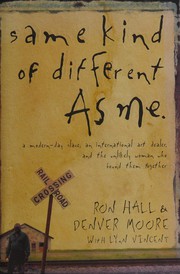
Same Kind of Different as Me
An art dealer and a formerly homeless sharecropper tell the story of the friendship that began at a Fort Worth mission and the woman who insisted on it.
2,023-word summary · 9 min read

Infidel
Ayaan Hirsi Ali's memoir of a Somali childhood, a forced marriage, a Dutch asylum claim, and the political fight that followed the murder of Theo van Gogh.
2,041-word summary · 9 min read
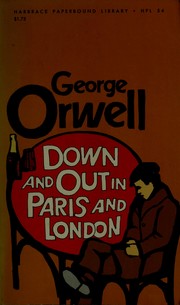
Down and Out in Paris and London
Orwell's account of washing dishes in Paris hotels and tramping through London does not ask for pity, only for a clear look at how poverty actually works.
2,282-word summary · 10 min read
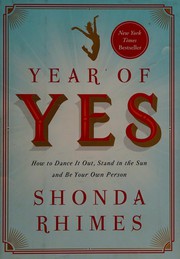
Year of Yes: How to Dance It Out, Stand in the Sun and Be Your Own Person
Shonda Rhimes takes her sister’s accusation seriously and spends a year saying yes to the things that frighten her, from live television to her own reflection.
2,585-word summary · 11 min read
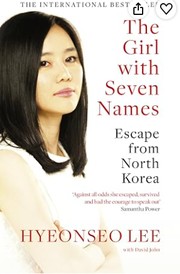
The Girl with Seven Names: A North Korean Defector's Story
Hyeonseo Lee crossed the frozen Yalu River at seventeen, spent years hidden in China, escaped to South Korea, and later returned to rescue her family.
2,404-word summary · 11 min read
Love Does
A lawyer and activist tells stories of saying yes, showing up, and loving people through ordinary, often ridiculous actions.
2,411-word summary · 11 min read
Breath: The New Science of a Lost Art
Journalist James Nestor investigates how modern humans learned to breathe badly, and what researchers, athletes, and breathwork practitioners have found about…
2,011-word summary · 9 min read
Beautiful Boy: A Father's Journey Through His Son's Addiction
David Sheff recounts watching his son Nic slide into meth addiction, and his own desperate, humbling search for how to help without destroying them both.
2,076-word summary · 9 min read
The Magnolia Story
How Chip and Joanna Gaines met, closed their first shop, nearly lost everything in a housing development, and built Fixer Upper.
2,994-word summary · 13 min read
Lone Survivor: The Eyewitness Account of Operation Redwing and the Lost Heroes of SEAL Team 10
Marcus Luttrell's account of the 2005 SEAL mission in Afghanistan that killed three of his team and left him alone.
2,144-word summary · 10 min read
Life
The Rolling Stones guitarist tells his own story: a Dartford childhood, the band's first gigs, the drug raids, the tax years and Patti Hansen.
2,761-word summary · 12 min read
Dry
A memoir of drinking, rehab and relapse, and the strange business of getting sober one morning at a time.
2,643-word summary · 12 min read

Dear Girls: Intimate Tales, Untold Secrets & Advice for Living Your Best Life
Ali Wong's debut collects fourteen letters to her daughters, covering sex, money, work, marriage, Vietnam, and being a working Asian American mother.
2,266-word summary · 10 min read
Travels with Charley
Steinbeck drives across America with his poodle Charley, looking for the country he remembers and finding a place that has changed.
2,039-word summary · 9 min read

Scrappy Little Nobody
Anna Kendrick's essays trace her path from a Portland childhood and Broadway to Hollywood, with jokes, anxiety, and a refusal to pretend fame fixed her.
2,092-word summary · 9 min read
Red Notice
An American financier in Moscow exposes a $230 million tax fraud, watches his lawyer die in prison, and turns the case into an international human rights law.
2,008-word summary · 9 min read
The Letters of Vincent van Gogh
Vincent van Gogh's letters to his brother Theo, in a Penguin Classics selection edited by Ronald de Leeuw, trace a decade of work, faith, and obsession.
2,611-word summary · 12 min read
Lucky
Alice Sebold's memoir of the 1981 rape she survived as a college freshman, the courtroom that followed, and a conviction later proven to be a case of mistaken…
2,091-word summary · 9 min read
Between Two Kingdoms: A Memoir of a Life Interrupted
Diagnosed with leukemia at twenty-two, Suleika Jaouad survives treatment and then takes a 100-day road trip to meet the strangers who wrote to her.
2,311-word summary · 10 min read
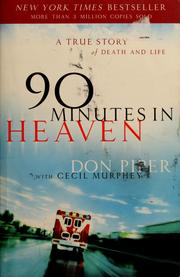
90 Minutes in Heaven: A True Story of Death and Life
A pastor declared dead at a 1989 crash scene describes ninety minutes he says he spent in Heaven, then thirteen months of surgeries, depression, and recovery.
2,246-word summary · 10 min read
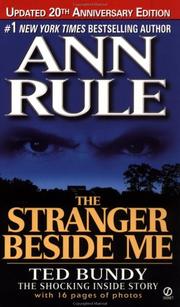
The Stranger Beside Me
Ann Rule's classic memoir of her friendship with Ted Bundy, written by the true-crime author who knew him long before the world learned what he had done.
2,481-word summary · 11 min read
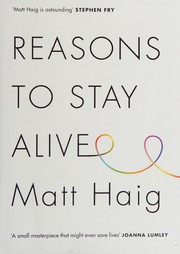
Reasons to Stay Alive
Matt Haig's memoir of the breakdown that nearly killed him at twenty four and the three years of unglamorous recovery that followed.
2,065-word summary · 9 min read
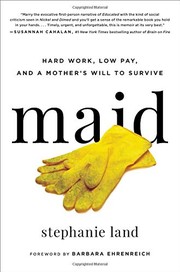
Maid: Hard Work, Low Pay, and a Mother's Will to Survive
Stephanie Land's memoir of cleaning houses as a single mother on the poverty line, and of the paperwork that made every step forward cost something else.
2,039-word summary · 9 min read