
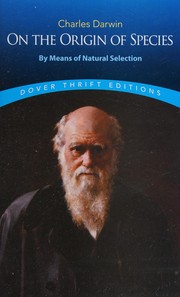
On the Origin of Species
2,589-word summary 12 min read
- First published
- 1859
- Publisher
- John Murray
- ISBN
- 9780486450063
Reading options
What's inside (8 sections)
I picked up On the Origin of Species expecting a dry Victorian treatise, the kind of book people cite more than they read. What I found instead was a long, stubborn argument by a man who had spent twenty years worrying he might be wrong. Charles Darwin published it in 1859 with John Murray in London, and the first printing sold out on the first day. Reading it now, you can feel why. He writes like someone laying out evidence in a courtroom, piece by piece, and asking you to stay with him until the pattern becomes hard to deny.
The full title is longer than most people remember: On the Origin of Species by Means of Natural Selection, or the Preservation of Favoured Races in the Struggle for Life. That mouthful tells you his plan. He wants to explain how new species come into being, and his answer is a process acting over vast stretches of time on small, everyday differences between individuals.
The Voyage of the Beagle
Darwin was twenty-two when HMS Beagle sailed from Plymouth in December 1831. He went as a gentleman companion to Captain Robert FitzRoy, unpaid, seasick, and hired mostly to collect beetles and shoot birds. The voyage lasted nearly five years, around South America and across to Australia and back, and Darwin filled notebook after notebook with geology, shells, bones, and birds.
Two stops mattered most. In Argentina he found fossils of giant ground sloths and armadillo-like creatures called glyptodonts, huge extinct animals that looked like scaled-up versions of the small armadillos still living nearby. That pairing stuck in his mind. Why would extinct giants resemble the living animals of the same region, unless they were related by descent?
Then came the Galapagos Islands in September 1835, a cluster of volcanic islands six hundred miles off Ecuador. The famous story says Darwin saw finches and cried out about evolution on the spot. The truth is slower and more interesting. He noticed that mockingbirds differed from island to island, and that giant tortoises varied in shell shape. He collected finches but labeled some of them badly, mixing up which island they came from. It was only back in London, when the ornithologist John Gould sorted the specimens and told him they were thirteen distinct but closely related species of finches, all likely descended from one mainland ancestor, that the point sank in. Different beaks for different foods: heavy crushing beaks for seeds, sharp probing beaks for insects, long curved beaks for cactus flowers.
Geology shaped him just as much. He read Charles Lyell on board, who argued that valleys and cliffs were carved by slow causes still at work, rain and rivers and earthquakes, given enough time. In Chile Darwin felt an earthquake himself and watched the land rise. He saw seashells embedded in rock high in the Andes. If the earth itself could change that slowly and that completely, perhaps living things could too.
He came home in 1836 with crates of specimens and a secret notebook labeled with a question mark. Within a year he was sketching the first little tree of descent in the margins, with the words "I think" written above the branches.
Variation Under Domestication
Darwin opens the book with pigeons, which seems odd until you see his logic. His readers knew farm animals. They had watched breeders reshape dogs, cattle, and cabbages within a lifetime. So Darwin starts with what everyone accepts, artificial selection, and uses it to make the harder case.
He joined two London pigeon clubs and bred the birds himself in his garden at Down House in Kent. He describes fantails with forty tail feathers instead of fourteen, pouters with inflatable crops, tumblers that somersault in flight, carriers with long beaks and bare skin around the eyes. The differences between breeds look larger than the differences between wild species of birds. Yet all of them descend, he argues with pages of skull and feather detail, from the common rock pigeon. Cross two distinct breeds and the offspring sometimes throw back to the slaty blue color and barred wings of the wild ancestor, a flash of the old form reappearing.
The point is plain. If human breeders can do this much in a few generations by picking which birds get to breed, what could nature do given thousands or millions of generations?
He extends the same care to plants and farm stock. He talks about strawberries, roses, racehorses, and the way seedlings from the same parent differ in tiny ways. No two individuals are exactly alike. Breeders seize on those small differences and preserve them. Nature, he will argue, does something parallel without intending anything at all.
It helps to know how much time he gave this. He spent eight years dissecting barnacles before he dared publish, four volumes on living and fossil forms, peering at mouthparts and shells until his eyes ached. Friends joked that barnacles were his obsession. But the work taught him how variable a single so-called species could be, how hard the line between variety and species was to draw, and how classification often hides real kinship. A barnacle looks like a mollusk in its shell, yet its larvae swim like tiny shrimp. Appearances mislead. Development tells the truth.
Natural Selection and the Malthus Insight
The center of the book is one simple mechanism with enormous consequences.
Every species produces far more offspring than can survive. Darwin had read Thomas Malthus, whose essay on population argued that humans multiply faster than food supplies, so checks like famine and disease must hold numbers down. Darwin saw that the same pressure applies to every plant and animal. A single pair of rabbits, or a patch of chickweed, could cover a county in a few seasons if nothing stopped them. Something always stops them.
Now add two facts. First, individuals vary. One finch has a slightly deeper beak, one moth is a shade darker, one plant flowers a day earlier. Second, at least some of that variation passes from parent to offspring. Darwin did not know why, and he admits it. He had no theory of genes. He just saw from breeding that likeness runs in families.
Put those facts together under shortage, and the result follows. The individuals whose small differences fit the local conditions tend to live a little longer and leave a few more young. Those young carry the same traits. Over many generations the trait spreads. Darwin calls this natural selection. He also calls it descent with modification, a phrase he prefers in places because it stresses kinship rather than competition.
He knew the phrase "selection" might mislead, as though nature chooses with a mind. He says plainly that he means it as a shorthand. What happens is preservation: useful variations are preserved and injurious ones removed, with no intention behind it.
One passage I kept returning to concerns wolves and deer. He imagines wolves hunting deer in a district where the swiftest deer escape and the fastest wolves eat. Speed improves on both sides, each pushing the other, purely because the slower animals leave fewer young. No plan is required. The same logic applies to flowers and bees, to camouflage, to the timing of migration. Small edges compound.
He also explains divergence, why one lineage splits into forms that differ more and more. If two variants of a plant use slightly different soil patches or bloom at different weeks, they compete less with each other than with their own kin. The middle forms get squeezed out. Over time the gap widens until what was once a variety counts as a species. He draws his famous branching diagram, the only illustration in the book, showing lines splitting and some ending in extinction. Most branches die. A few spread.
The Struggle for Existence
Darwin uses the phrase struggle for existence in a wide sense. He means the whole press of life against limits: one seedling shading another, a thrush eating snails, frost killing buds, a parasite draining a host. He warns the reader not to picture only fangs and claws. A plant at the edge of a desert struggles against drought. That counts.
This chapter is where his field habits show. He counts seedlings in a cleared plot and finds most die. He watches birds, cats, and mice interact in a village food web. He cites a heath where cattle grazing holds back pine trees, and when the cattle are fenced out the pines rush in. Remove one pressure and the whole web shifts.
The moral weight of the chapter surprised me. He never gloats over nature red in tooth and claw. He treats death as the quiet background rate that makes selection possible. Most young die. The few that match their place live. Over centuries the match improves, not because individuals try harder, but because the ill matched leave no line.
There are limits he respects. He admits that habits change slowly, that isolation helps new forms establish, that a trait useful in one place may be useless in another. He spends pages on how crossing between nearby forms can swamp a new difference before it takes hold, and why islands and remote valleys, where newcomers arrive rarely, so often hold distinct species. The Galapagos finches make sense here. So do the flightless birds of oceanic islands, which lose the power of flight where no ground predators punish the loss.
Modern readers sometimes ask whether he denied cooperation or beauty. He did not. He describes orchids shaped to guide moth tongues, and ants tending aphids like cattle. He treats such partnerships as outcomes of the same process. If both sides gain young by the habit, the habit spreads.
Evidence: Fossils, Geography, and Anatomy
Having stated the mechanism, Darwin spends the second half of the book testing it against what naturalists already knew.
The fossil record troubles him, and he says so. If species change gradually, the rocks should hold endless intermediate forms. They often do not. His answer mixes honesty with geology. The record is patchy because fossilization is rare, because seas rise and fall, because whole chapters of rock have eroded away. He points to new finds coming in even as he writes, older birds with teeth, early mammals appearing in sequence, and predicts more will turn up. Later discoveries like Archaeopteryx, found two years after the first edition, fit the gap he described.
Geographical distribution gives him stronger ground. Why do islands resemble the nearest mainland in their inhabitants, even when climates differ? The Galapagos hold finches and tortoises with a South American stamp, not an African one, though both regions have warm zones. Why does Australia hold marsupials found nowhere else? If each species were created for its climate, these patterns make little sense. If species descend from common ancestors and spread or drift from nearby sources, the patterns follow. Oceanic islands lack native mammals and frogs because those animals cannot cross salt water, but they hold bats and birds that can fly there.
Then comes anatomy, the part I found most persuasive. Whales have tiny hip bones buried in muscle. Flightless beetles carry fused wing covers. Humans have an appendix and muscles to wiggle ears we barely use. Darwin groups these as rudimentary organs, leftovers of structures that served ancestors. Embryos tell a similar story. Mammal, bird, and reptile embryos look strikingly alike in early stages, with gill slits and tails that later transform or shrink. On separate creation, why would a calf form structures it never uses? On descent, the embryo replays parts of an older body plan before specializing.
Classification itself becomes evidence. Naturalists had long grouped species into genera, families, and orders by shared characters. Darwin argues this nested pattern is exactly what descent produces. Languages form family trees because they diverge from parent tongues. Species form a great tree of life for the same reason.
He closes this stretch with the eye, the objection everyone raised. How could so perfect an instrument form by slight steps? He answers by pointing to a living series from simple light-sensitive patches in flatworms to cupped eyes in mollusks to camera eyes in octopus and vertebrates, each grade useful to its owner. Given variation and long time, he writes, the passage from patch to camera is conceivable. Later work on the shared genetics of eye development in flies and mice has borne out the hunch that very different eyes draw on common toolkits.
Objections, Gaps, and Legacy
Darwin devotes a full chapter to difficulties, which is one reason scientists trusted him. He lists sterility of hybrids, the absence of endless intermediates, the sudden appearance of groups in old rocks, and instincts like the honeybee comb or ant castes that seem to defy individual advantage. His replies vary in strength. Some hold up well. Some do not.
The weakest point, and he knew it, was heredity. He favored a vague idea of blending inheritance, in which offspring mix parental traits like paint. Blending would dilute new variations out of existence, which undercuts his own mechanism. He also flirted with pangenesis, the notion that every part of the body sheds particles that gather in seeds. Neither was right. The gap stayed open until Gregor Mendel's work on peas was rediscovered around 1900 and joined with Darwin in the modern synthesis of the 1930s and 1940s, when genetics supplied the missing parts. Genes preserve variation rather than blending it away, and mutation plus recombination supply fresh differences each generation.
The prose itself is a fair criticism. Victorian sentences run long, clause piled on clause, with double negatives and polite hedges. He repeats phrases like "I am convinced" and circles back to pigeons when you thought pigeons were done. Certain chapters on hybridism and geological succession drag for a modern reader. I found it helped to read in sittings, twenty pages at a time, letting the examples accumulate instead of rushing for the thesis.
There are moral shadows too. Darwin opposed slavery and wrote with disgust about what he saw in Brazil. Yet later writers twisted selection into excuses for empire and harsh social policy. Darwin did not teach that, and his Descent of Man argues for sympathy as part of human nature, but the history of misuse belongs in any honest account of his legacy. Science does not arrive with its uses labeled.
What lasts is the structure he gave biology. Common descent with branching, variation sifted by survival and reproduction, deep time as the stage. Genetics filled the mechanism he lacked. Field studies of beak size in Galapagos finches during drought years have since watched selection shift averages within a single generation, the very process he described playing out in real time. Fossil whales with shrinking hind limbs, feathered dinosaurs from China, and DNA trees that match the old anatomical trees have added lines of proof he could not have imagined.
When I finished, I thought less about winning an argument than about a habit of attention Darwin teaches. Look closely at pigeons in a market square and ask why no two are quite alike. Notice which weeds own the cracks in a wall. Remember that the living world is not a fixed catalog but a single extended family, still changing while we watch. That shift in sight, from static kinds to flowing lines of descent, is the book in one feeling. It still reads, after more than a century and a half, like news.
FAQ
When was On the Origin of Species published, and by whom?
John Murray published the first edition in London on 24 November 1859, and the full first printing sold out on the first day.
Does Darwin explain genetics in the book?
No. Darwin describes variation, selection, and descent in detail but had no theory of genes; that gap was filled after 1900 when Mendel's work was rediscovered and joined with his ideas.
How should a first-time reader approach this long Victorian book?
Read it in sittings of about twenty pages, following the examples in order. The pigeon, barnacle, and fossil passages carry the argument better than any single chapter.
Similar books
Sapiens: A Brief History of Humankind
Harari's Sapiens from cover to cover: the cognitive revolution, the agricultural bargain, shared fictions like money and nations, and the scientific centuries…
2,145-word summary · 10 min read
The Emperor of All Maladies
A biography of cancer from Galen to chemo through one doctor cases.
2,255-word summary · 10 min read
Hidden Figures
Black women computers at Langley launch rockets past Jim Crow.
2,385-word summary · 11 min read
God Is Not Great
Hitchens argues religion poisons life across history and texts.
2,545-word summary · 11 min read
The Hot Zone
Ebola and Marburg move from African outbreaks to a Virginia monkey house and an Army response in suits.
2,291-word summary · 10 min read
In Defense of Food
Pollan argues we stopped eating food and started eating nutrients, and offers a plain way back.
2,320-word summary · 10 min read
A Beautiful Mind
Mathematician John Nash's brilliant game theory rise, schizophrenia collapse, and Nobel return, with wife Alicia's care.
2,142-word summary · 10 min read
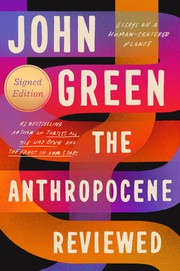
The Anthropocene Reviewed: Essays on a Human-Centered Planet
John Green reviews ordinary parts of human life on a five-star scale, turning geese, keyboards, and sunsets into a warm memoir about attention.
2,982-word summary · 13 min read
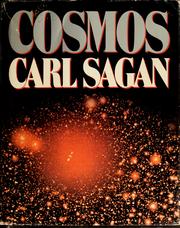
Cosmos
Sagan tours galaxies, evolution, and Alexandria to argue for science.
2,416-word summary · 11 min read
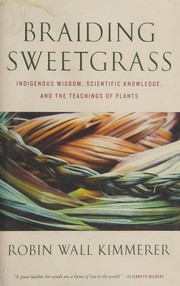
Braiding Sweetgrass
A Potawatomi botanist braids plant science with family stories to argue for gratitude and return gifts to the living world.
2,410-word summary · 11 min read
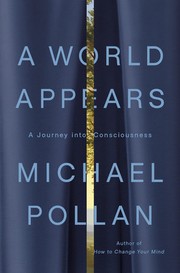
A World Appears
Pollan traces consciousness from plant sentience to AI feeling and the self, with gardens, labs, trips and hard questions along the way.
3,108-word summary · 14 min read
Walden
Thoreau builds a cabin at Walden Pond and spends two years testing what a person really needs to live well.
2,986-word summary · 13 min read
Einstein: His Life and Universe
Isaacson traces Einstein from patent clerk to world fame using newly opened papers, through 1905, relativity, exile, and the long unified theory search.
2,773-word summary · 12 min read
Homo Deus
After ruling the world, humans chase upgrades and delegate feeling to systems that know patterns.
2,013-word summary · 9 min read
The Prince
Machiavelli advises Lorenzo on rule through fear and love, fortune, cruelty and mercy.
2,204-word summary · 10 min read
Guns, Germs, and Steel: The Fates of Human Societies
Diamond argues geography and crops explain why some societies expanded faster than others.
3,432-word summary · 15 min read
The Zookeeper's Wife: A War Story
The directors of the Warsaw Zoo hid roughly three hundred Jews in empty cages and outbuildings after the German invasion, while Jan worked for the resistance.
2,065-word summary · 9 min read

Long Walk to Freedom
Mandela's account of a Thembu childhood, a law practice, a banned movement, twenty-seven years in prison, and the negotiation that ended apartheid.
2,454-word summary · 11 min read
1491: New Revelations of the Americas Before Columbus
Charles C. Mann gathers archaeology, ecology, and demography to argue that the Americas before Columbus were older, fuller, and more deliberately shaped than…
2,712-word summary · 12 min read
The DaVinci Code: A Quest for Answers
A short 2006 dialogue in which three friends test Dan Brown's claims about Jesus, Mary Magdalene, Nicaea, and the canon.
2,088-word summary · 9 min read
The Courage to Be Disliked: The Japanese Phenomenon That Shows You How to Change Your Life and Achieve Real Happiness
A philosopher and an angry young man argue over five nights about Adlerian psychology, trauma, approval, and the freedom to be disliked.
2,054-word summary · 9 min read
Nothing to Envy
Barbara Demick follows six defectors from Chongjin through the North Korean famine, showing how ordinary people lived, believed, and finally left.
2,068-word summary · 9 min read
Moonwalking with Einstein: The Art and Science of Remembering Everything
A journalist spends a year training for the U.S. Memory Championship and discovers that extraordinary memory is mostly technique, attention, and a lot of…
2,027-word summary · 9 min read
Down and Out in Paris and London
Orwell's account of washing dishes in Paris hotels and tramping through London does not ask for pity, only for a clear look at how poverty actually works.
2,282-word summary · 10 min read
The Wright Brothers
David McCullough tells the story of two self-taught Ohio brothers, working largely alone and out of a bicycle shop, who solved the problem of flight before…
2,027-word summary · 9 min read
Four Thousand Weeks: Time Management for Mortals
Oliver Burkeman turns the whole productivity project on its head, arguing that a human lifespan of roughly four thousand weeks is not a problem to optimize…
2,447-word summary · 11 min read
Breath: The New Science of a Lost Art
Journalist James Nestor investigates how modern humans learned to breathe badly, and what researchers, athletes, and breathwork practitioners have found about…
2,011-word summary · 9 min read
Lone Survivor: The Eyewitness Account of Operation Redwing and the Lost Heroes of SEAL Team 10
Marcus Luttrell's account of the 2005 SEAL mission in Afghanistan that killed three of his team and left him alone.
2,144-word summary · 10 min read
Bury My Heart at Wounded Knee: An Indian History of the American West
Dee Brown's 1970 retelling of the American West from the point of view of the people it destroyed.
2,233-word summary · 10 min read
At Home: A Short History of Private Life
Bill Bryson tours his own Norfolk rectory room by room to explain how private life and the modern home got built.
2,334-word summary · 10 min read