
Reading options
What's inside (8 sections)
Why I finally read the book behind the voice
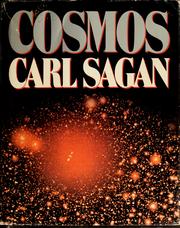
I knew the voice before I knew the book. That slow pilot light of a voice saying billions with a soft b, over starfields on a small TV. Friends quoted it. Teachers played clips. I nodded along without ever opening the thing. Then I found the Random House hardcover, 365 pages, thirteen chapters tied to the 1980 television series, and decided to stop faking it. I read it across two weeks, a chapter a night, mostly on the couch with a window nearby. That turned out to be the right way. This is a bedtime book about the universe that keeps interrupting sleep with questions.
The pitch is simple. Sagan wants you to feel at home in a universe that is very old and very large, and to trust the method that lets us know anything about it. He walks from galaxies to atoms to brains to libraries to spaceships, always circling back to one claim. Science is not a list of facts for experts. It is a way of checking stories against nature, open to anyone willing to look. He makes that case with history, travel writing, biology, and warnings. Some numbers have aged. The stance has not. I finished admiring his patience more than his poetry, though there is plenty of that too.
A note on edition helps. My copy is the 1980 Random House first edition shape of the book, the one that matches the thirteen part show. Later printings add a foreword and touch a few lines, but the spine of the argument stays put. Page count shifts a little by printing, so 365 is the standard to expect rather than a law. The chapters track the episodes in order, which means the book reads like a tour with planned stops instead of a textbook with drills. Come for the planets. Stay for Alexandria. Leave worried about bombs. That arc is deliberate.
An ocean, a calendar, and the planets next door
Sagan opens with the largest views, and he does it by shrinking them. First the cosmic ocean. He asks you to picture the universe as a sea we have only begun to wade into, with Earth as a shore town that just learned boats exist. Then the famous calendar. He squeezes the whole history of the universe into a single year. The Big Bang on January 1. Galaxies form by spring. The solar system in September. Life stirs in the oceans around late September. Dinosaurs rise and fall in late December. All of recorded history fits in the last seconds of December 31. Humans show up so late that Sagan has to slow down and count minutes to find us. It is a trick, but a fair one. You feel small and recent without feeling insulted.
From there he walks the solar system the way a travel writer walks a coast. Mars gets a long stay, because Mars carried our hopes for neighbors. Sagan tells the story of Percival Lowell and the canals, those straight lines people swore they saw through blurry telescopes, then replaces them with real maps from Mariner and Viking. No canals. Craters, dust storms, a dead riverbed here and there. He lingers on the Viking landers of 1976, the scoops that dug soil and ran tests for life. The results were mixed and careful, no clear signal, and Sagan refuses to stretch them. He lets Mars be empty and still wonderful. A world with sunsets, weather, and history, even if nothing walks there now.
Venus and Jupiter get shorter portraits that teach by contrast. Venus as a greenhouse gone wild, hot enough to melt lead, a warning about air gone wrong. Jupiter as a giant with storms wider than Earth and moons like small worlds. Voyager provides the photos, and Sagan writes about those spacecraft the way other writers write about sailors. Two small machines, flung outward in 1977, sending back faint signals across billions of miles. He loves the engineering plainly. Antennas, power cells that decay, computers weaker than a later pocket calculator, all of it aimed with math and patience. When he describes Saturn's rings resolving into braids and spokes, you can tell he has stared at those prints for hours. I had too, by the time I turned the page.
Kepler, Brahe, and the long road to orbits
The history chapters are the best part of the book for me, because Sagan slows down and lets odd people be odd. Johannes Kepler arrives first, a poor German schoolteacher with bad eyes and a strong sense of harmony. He believes, almost musically, that planets must fit neat shapes. He tries spheres inside spheres. He fails. Then he gets hired by Tycho Brahe, the Danish noble with a metal nose and an island observatory full of huge brass instruments. Brahe has the best sky data in Europe and no interest in Kepler's mysticism. Kepler has math and hunger and no data of his own. They need each other and can barely stand each other. Brahe dies. Kepler gets the tables. Out of that awkward partnership come the ellipse laws that finally describe how Mars moves. Sagan tells it like a friendship and a heist at once.
He pairs that story with a harder one about who gets to ask questions. The Pythagoreans, the Ionian Greeks, the idea that nature follows patterns we can test. Then the closing of doors. Sagan is blunt about astrology crowding out astronomy and about priests and princes deciding which books survive. He saves his longest grief for Alexandria in chapter 7, and rightly so. The Library and Museum were more than shelves. They paid salaries to thinkers, kept dissecting rooms and star charts, and held a habit of checking. Eratosthenes measures Earth with sticks and shadows. Hipparchus maps stars. Euclid writes geometry. Then fire, riot, budget cuts, and doctrine pick the place apart across centuries. Hypatia, the mathematician who taught in public and refused to hide, is killed by a mob in 415. Sagan does not soften it. A city that could measure the planet loses the habit of measuring, and the loss lasts a thousand years.
What I liked is that he never turns these people into saints. Kepler chases horoscopes for pay. Brahe is vain. Alexandrian scholars bicker. The point is not that old thinkers were pure. The point is that a few of them kept records, shared tools, and let nature correct them. That habit, more than any single law, is what Sagan wants you to carry. He repeats it in different clothes all book. Watch closely. Write it down. Let others check. Keep the parts that survive contact with the sky.
Brains, genes, and how matter learned to remember
Halfway through, the book turns inward, and the tone shifts from travel to biology. Sagan asks how a universe of hydrogen learned to think about itself. He starts with DNA, the long molecule that copies itself with rare errors, and natural selection, the filter that keeps the errors that work. He uses simple kitchen examples. Recipes copied by hand. Pages smudged. A smudge that makes bread rise better gets kept. Over billions of copies, you get eyes, wings, leaves. He is careful to say chance plus sorting, not a ladder with humans on top. Octopus eyes, bat sonar, and weed seeds all count as wins. Life is what happens when copying meets weather for a very long time.
The brain chapters build on that with a model scientists have since revised, and this is one place to read with updated eyes. Sagan describes layers, from old inner structures that handle hunger and fear up through newer folds that handle memory and planning. The names he uses for those layers have faded from labs, but the core image holds. Brains are history made wet. He walks through neurons, signals, sleep, dreams, and the strange fact that we hallucinate a steady world from broken scraps. He loves the hand. He loves the eye. He keeps returning to how much we process without asking. Reading, he says, is a kind of telepathy across centuries. A Sumerian pressed marks in clay. You press eyes to a page. A mind moves.
He ties this to the search for others without forcing it. If brains grew here through accident and sorting, they could grow elsewhere under different skies. But intelligence may be rare, fragile, and brief. A species that learns to split atoms before it learns to share may not stay long enough to chat. That worry threads straight into the later chapters on war. Biology gives Sagan his gentlest argument for care. We are the part of the universe that can notice it. Memory, language, and love are not extras on top of nature. They are nature doing something new, and they deserve protection the way libraries do.
Nightmares we built and messages we sent
The last third of the book swings between fear and hope, and Sagan lets both breathe. The fear chapter is about nuclear war, written when American and Soviet arsenals held tens of thousands of warheads. He explains blast, fire, fallout, and then the newer idea his group was modeling. Soot and dust from burning cities could dim the sun, chill crops, and starve survivors far from any target. He called it nuclear winter. Later models refined the numbers, and labs still argue about degrees and years, but the shape of the warning stands. A war meant to defend nations could break the sky they share. Reading it now, after decades of cuts and new risks, the chapter feels both dated and current. The counts changed. The logic did not.
Then he turns to the messages. The Voyager record gets a full loving passage, and it earns it. Sagan chaired the group that packed a gold plated disc with greetings in many tongues, whale calls, Bach and blues, a baby laughing, brain waves of a young woman in love, and diagrams for finding us. He admits the oddity. Space is huge. The odds that anyone finds this bottle are tiny. That is not the point. The point is who we tried to be when we packed it. He writes about the Arecibo broadcast too, a short radio shout toward a star cluster, and about Project Ozma and later listening programs that scanned quiet bands for patterns no star makes. He is honest about silence. Years of listening, no confirmed call. He treats that as data, not defeat. The sky is big. We just started knocking.
The final chapter pulls the tour together over images of Earth from deep space. Sagan had not yet seen the famous Pale Blue Dot photo when he wrote most of this, Voyager had not turned its camera back that way, but the idea is already here. A small world, the only home we have yet, floating in a sunbeam of scattered light. He asks for humility without asking for despair. Keep exploring. Send better ships. Teach children to check claims. Protect the planet that taught us to think. It is a sermon, yes, but one built from photos and soil tests rather than wishes. I found myself less annoyed by the preaching than I expected, because he shows his work on nearly every page before he asks anything of you.
What lasts, what creaks, and who should pick it up
Praise first, because much of it holds. The structure works. Each chapter opens with a concrete scene, a ship, a map, a trial, a brain slice, then widens to the idea and narrows back to a human choice. The history is vivid without turning into costume drama. Alexandria aches. Kepler striving amuses and moves. The Mars writing, grounded in Viking and Voyager returns, still reads clean. Sagan explains without talking down. He defines terms as he goes, repeats key moves in fresh words, and trusts pictures to do half the teaching. For a reader new to astronomy, this remains one of the kindest doors in. For a reader who knows the sky, it is a reminder of how the field felt when probes were still new and every downlink could rewrite a chapter.
Criticism belongs here as well, and some of it is more than quibbles. Numbers have moved. Planet counts, moon counts, distances, and mission timelines all shifted after Voyager finished its tour and later telescopes took over. The brain layer model reads old to anyone fresh from a neuroscience class. The nuclear winter pages carry the confidence of early modeling, and later work softened and complicated the curve. Sagan also writes long. At 365 pages the lyric stretches can tire, especially when he stacks rhetorical questions or returns to the same plea to fund science and curb arms. I skimmed a few passages near the end where wonder tipped into lecture. He loves lists of wonders, and sometimes the list keeps going one example past the point.
There is also a question of voice. Sagan writes as a guide who already loves his closing claim, and he rarely dwells on live fights inside science. Debates get smoothed. Rival teams get merged into a single march forward. Readers who want the mess of grants, egos, and failed instruments will find this cleaner than real labs feel. And his faith in contact runs strong. He treats the search for signals as noble patience, which it is, but gives less room to the thought that minds might stay quiet by choice or that our tools might be the wrong ears. None of this breaks the book. It dates it, the way a beloved teacher's favorite examples date him. You hear the 1980 room behind the words.
Who is it for now. If you want current planet data, grab a recent overview or NASA pages and use this as the story around them. If you want the feel of science as a human habit, start here. Read the calendar chapter with a pencil. Read Alexandria slowly. Read the brain chapters knowing terms shifted, then read the war and message chapters back to back and notice how Sagan links them. Curiosity without care is vandalism. Care without curiosity is sleep. His ask is that we stay awake and kind at once. Long in places, lyrical to a fault, and still worth the nights. I closed it thinking less about distant galaxies than about the library down my street, which is probably what he wanted.
FAQ
Is Cosmos the book of the TV series?
Yes. Random House published it in 1980 beside his thirteen part TV series, and the chapters follow the same path from galaxies to the search for life.
Do I need science training to read it?
No. Sagan assumes curiosity only, walks through each idea with stories and pictures, and keeps math to a minimum.
What is out of date?
Planet counts, distances, and some mission details changed after Voyager and later telescopes, so read his claims about method and care as the parts that last.
Similar books
The Elegant Universe: Superstrings, Hidden Dimensions, and the Quest for the Ultimate Theory
Brian Greene explains relativity, quantum mechanics, and the promise of string theory without requiring a physics degree.
2,110-word summary · 9 min read

The Emperor of All Maladies
A biography of cancer from Galen to chemo through one doctor cases.
2,255-word summary · 10 min read
Hidden Figures
Black women computers at Langley launch rockets past Jim Crow.
2,385-word summary · 11 min read

The Hot Zone
Ebola and Marburg move from African outbreaks to a Virginia monkey house and an Army response in suits.
2,291-word summary · 10 min read
On the Origin of Species
Darwin's 1859 case for evolution by natural selection, from Beagle finches and breeding pigeons to fossils and anatomy.
2,589-word summary · 12 min read
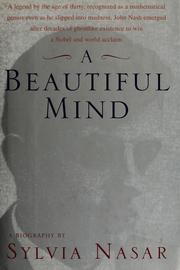
A Beautiful Mind
Mathematician John Nash's brilliant game theory rise, schizophrenia collapse, and Nobel return, with wife Alicia's care.
2,142-word summary · 10 min read
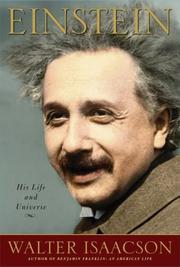
Einstein: His Life and Universe
Isaacson traces Einstein from patent clerk to world fame using newly opened papers, through 1905, relativity, exile, and the long unified theory search.
2,773-word summary · 12 min read
Astrophysics for People in a Hurry
Tyson condenses the Big Bang, dark matter, and exoplanets into twelve short chapters for busy readers.
2,314-word summary · 10 min read
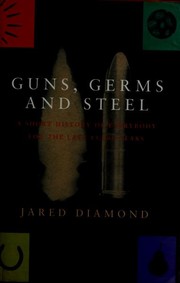
Guns, Germs, and Steel: The Fates of Human Societies
Diamond argues geography and crops explain why some societies expanded faster than others.
3,432-word summary · 15 min read
A Brief History of Time
Hawking walks from ancient spheres to big bang, black holes, and time arrows without equations.
2,210-word summary · 10 min read
Sapiens: A Brief History of Humankind
Harari's Sapiens from cover to cover: the cognitive revolution, the agricultural bargain, shared fictions like money and nations, and the scientific centuries…
2,145-word summary · 10 min read
The Zookeeper's Wife: A War Story
The directors of the Warsaw Zoo hid roughly three hundred Jews in empty cages and outbuildings after the German invasion, while Jan worked for the resistance.
2,065-word summary · 9 min read

Long Walk to Freedom
Mandela's account of a Thembu childhood, a law practice, a banned movement, twenty-seven years in prison, and the negotiation that ended apartheid.
2,454-word summary · 11 min read

1491: New Revelations of the Americas Before Columbus
Charles C. Mann gathers archaeology, ecology, and demography to argue that the Americas before Columbus were older, fuller, and more deliberately shaped than…
2,712-word summary · 12 min read
The DaVinci Code: A Quest for Answers
A short 2006 dialogue in which three friends test Dan Brown's claims about Jesus, Mary Magdalene, Nicaea, and the canon.
2,088-word summary · 9 min read
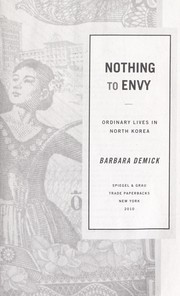
Nothing to Envy
Barbara Demick follows six defectors from Chongjin through the North Korean famine, showing how ordinary people lived, believed, and finally left.
2,068-word summary · 9 min read
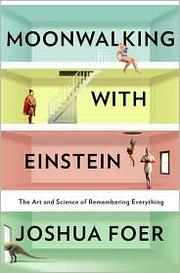
Moonwalking with Einstein: The Art and Science of Remembering Everything
A journalist spends a year training for the U.S. Memory Championship and discovers that extraordinary memory is mostly technique, attention, and a lot of…
2,027-word summary · 9 min read
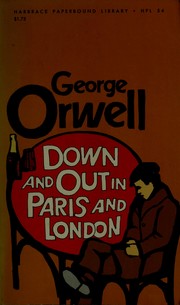
Down and Out in Paris and London
Orwell's account of washing dishes in Paris hotels and tramping through London does not ask for pity, only for a clear look at how poverty actually works.
2,282-word summary · 10 min read
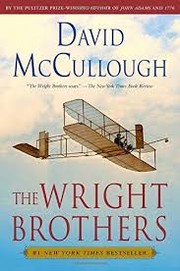
The Wright Brothers
David McCullough tells the story of two self-taught Ohio brothers, working largely alone and out of a bicycle shop, who solved the problem of flight before…
2,027-word summary · 9 min read
Breath: The New Science of a Lost Art
Journalist James Nestor investigates how modern humans learned to breathe badly, and what researchers, athletes, and breathwork practitioners have found about…
2,011-word summary · 9 min read
Lone Survivor: The Eyewitness Account of Operation Redwing and the Lost Heroes of SEAL Team 10
Marcus Luttrell's account of the 2005 SEAL mission in Afghanistan that killed three of his team and left him alone.
2,144-word summary · 10 min read
Bury My Heart at Wounded Knee: An Indian History of the American West
Dee Brown's 1970 retelling of the American West from the point of view of the people it destroyed.
2,233-word summary · 10 min read
At Home: A Short History of Private Life
Bill Bryson tours his own Norfolk rectory room by room to explain how private life and the modern home got built.
2,334-word summary · 10 min read
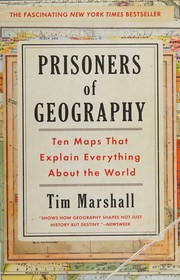
Prisoners of Geography: Ten Maps That Tell You Everything You Need to Know About Global Politics
Tim Marshall explains how mountains, rivers, coasts, and resources shape the choices of nations, from Russia's flat borders to the chokepoints of the South…
2,328-word summary · 10 min read

Attached
A psychiatrist and a psychologist explain adult attachment styles and show how anxious, avoidant, and secure patterns shape dating, conflict, and the search…
2,157-word summary · 10 min read
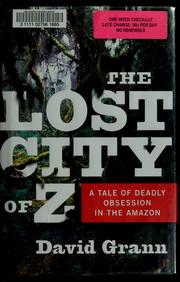
The Lost City of Z: A Tale of Deadly Obsession in the Amazon
David Grann retraces Percy Fawcett's 1925 disappearance in the Amazon and finds that the lost city he sought was not entirely a fantasy.
2,493-word summary · 11 min read
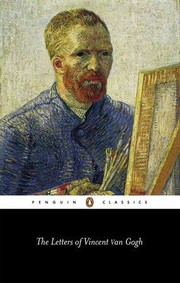
The Letters of Vincent van Gogh
Vincent van Gogh's letters to his brother Theo, in a Penguin Classics selection edited by Ronald de Leeuw, trace a decade of work, faith, and obsession.
2,611-word summary · 12 min read
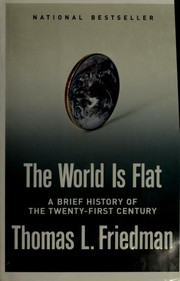
The World Is Flat: A Brief History of the Twenty-first Century
Thomas L. Friedman's 2005 bestseller argues that technology, trade, and open borders leveled the global playing field, and it names the ten forces that did it.
2,369-word summary · 11 min read
Catherine the Great: Portrait of a Woman
A German princess survives a miserable marriage and a coup to rule Russia for thirty-four years, torn between Enlightenment ideas and absolute power.
2,065-word summary · 9 min read
The Warmth of Other Suns
Three migrants ride north out of Jim Crow toward Chicago and LA.
2,561-word summary · 11 min read