
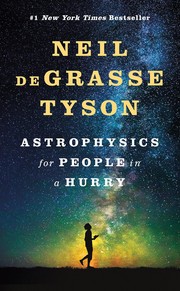
Astrophysics for People in a Hurry
2,314-word summary 10 min read 224 pages in the book
- First published
- 2017
- Publisher
- W. W. Norton & Company
- Pages
- 224
- ISBN
- 9780393609394
Reading options
What's inside (9 sections)
I picked up Astrophysics for People in a Hurry because I kept seeing it on friends' shelves, small and thick, the kind of book people buy at airports and then actually finish. Neil deGrasse Tyson is the astrophysicist from the American Museum of Natural History, the host people know from television and StarTalk, and here he was promising the whole universe in short chapters. The edition I read is the one most stores carry, published May 2, 2017 by W. W. Norton and Company, 224 pages in hardcover (ISBN 9780393609394). It grew out of essays he had written for Natural History magazine, tightened and arranged so they read as one story.
What surprised me was how straight the through line is. Tyson starts with the origin of everything and walks forward to planets, life, and our place in it all. The twelve chapters have plain names like The Greatest Story Ever Told, On Earth as in the Heavens, Let There Be Light, Between the Galaxies, Dark Matter, Dark Energy, The Cosmos on the Table, On Being Round, Invisible Light, Between the Planets, Exoplanet Earth, and Reflections on the Cosmic Perspective. Each one can be read while coffee brews. Together they form a short history that keeps returning to one point. The universe is knowable, and the tools we used to learn it are worth trusting.
Tyson writes like he talks, quick and fond of comparisons from daily life. Sometimes that helps a hard idea land. Sometimes a joke crowds out a fuller explanation. I found myself wishing twice for a diagram or a slower paragraph. Still, as a retelling of modern astrophysics for a curious reader with no math, it holds together well.
The greatest story, told fast
The opening chapter tries to cover the Big Bang and the growth of the universe in a few pages, which sounds impossible until you see how Tyson does it. He begins with the basic claim. The universe was once hot and dense, then it expanded and cooled, and that expansion continues now. From that cooling came the first simple nuclei, then atoms, then stars and galaxies pulling themselves together under gravity.
He likes to put numbers in terms of kitchens and calendars, and here it works. He describes how the early universe made mostly hydrogen and helium, with only a trace of lithium, and how everything heavier had to wait for stars. He moves from particle soup to the first stars without pausing for long detours into competing models. A specialist would want caveats here about inflation and what came before the hot phase. Tyson mentions the open questions briefly and moves on.
What stayed with me was his point about evidence. He does not ask you to take expansion on faith. He points to the leftover heat we can still measure, the way distant galaxies recede, and the mix of light elements that matches what hot early conditions would produce. Three separate lines of observation point the same way, and that agreement is why cosmologists trust the picture even while they argue about details.
The chapter is short. If you have never read about cosmology, you may need to read it twice. The second time the sequence clicks. Hot and dense, expansion, cooling, atoms, gravity, stars.
On Earth as in the heavens, and let there be light
The next two chapters step back and ask how we learned to trust physics everywhere, not only on Earth. Tyson retells the shift from an Earth centered view to one where the same laws apply to planets, stars, and galaxies. He gives Isaac Newton a central role here, not as a statue but as the person who joined earthly falling with heavenly orbiting under one description of gravity.
Then he turns to light, which is really a chapter about how we know what we cannot touch. He explains spectra in plain terms. When light from a star is spread into colors, dark and bright lines reveal which elements are present and whether the source is moving toward us or away. That is how we learned what stars are made of and how fast galaxies recede. He also explains why the speed of light matters so much. Looking far away means looking back in time, because light takes years to cross space.
I liked this part best on first reading. It answers a question I had carried for years without asking. How can anyone claim to know the makeup of a star we will never visit. The answer is patient work with light, checked in labs on Earth and then applied to the sky.
A fair criticism belongs here too. Tyson moves so quickly that a reader new to waves and spectra may feel rushed. He uses familiar comparisons, but he does not linger. If the idea of redshift slips past you, later chapters on expansion get harder. It helped me to slow down and picture one star, one prism, one set of lines, before going on.
Between the galaxies, dark matter, dark energy
The middle of the book is where Tyson gets bolder, because the science itself gets stranger. He describes galaxies as islands grouped in clusters, with vast spaces between them. He explains how we weigh these systems by watching how they move. Visible stars and gas do not provide enough pull to hold fast moving clusters together. Something else must be there.
That something is dark matter. Tyson is clear about what the term means and what it does not. It means matter we have not seen directly that makes its presence felt through gravity. He walks through the reasons astronomers accept it. Stars orbit the outskirts of galaxies too quickly. Clusters bend background light more strongly than visible mass allows. The larger pattern of structure in the universe fits better when this extra gravity is included. He admits no one knows what particle, if any, carries this effect.
Then comes dark energy, stranger still. In the late 1990s, teams studying distant exploding stars found the expansion of the universe is speeding up rather than slowing down. Tyson explains why that result shocked researchers and why the name dark energy is really a label for our ignorance. It stands for whatever pushes expansion faster. He gives the rough modern census that cosmologists quote. Ordinary matter that makes stars and people is a small share. Dark matter is much larger. Dark energy dominates the total.
These two chapters show both strengths and limits of the hurry format. The strength is clarity about ignorance. Tyson says plainly where measurement ends and naming begins. The limit is depth. A reader might finish and think dark matter and dark energy are settled things rather than active puzzles. They are not settled. Tyson knows that, and he says so, but the brisk pace can soften the message.
Still, I came away with a firm picture I trust. Gravity maps more matter than light reveals, and distant light shows expansion accelerating. Those two results rest on many independent checks.
The cosmos on the table and on being round
After the large scale chapters, Tyson turns to chemistry and shape, and the book becomes more playful. The Cosmos on the Table walks through the periodic table from an astrophysical view. Hydrogen and helium came from the Big Bang. Heavier elements were forged in stars and in stellar deaths. He explains how the relative abundance of elements reflects that history, with light elements common and heavier ones rare, shaped by the stability of atomic nuclei.
He enjoys pointing out that people are made of this stardust in a literal sense. The carbon in our bodies, the oxygen we breathe, the iron in our blood, all were built in earlier generations of stars. It is a familiar line in popular science, and Tyson tells it with warmth rather than ceremony.
On Being Round explains why planets and large moons are spheres. Gravity pulls matter toward the center, and above a certain size that pull overcomes the stiffness of rock and ice. Small asteroids keep odd shapes because their gravity is weak. Large bodies settle into round forms because no lump can stand too tall for long. He connects this to spinning, flattening at poles, and tides, all in a few pages.
These chapters benefit from the short form. Each has one clear mechanism and a set of homely examples. I did not feel rushed here. The ideas are concrete enough to survive compression.
If there is a weakness, it is that Tyson sometimes favors the neat story over the messy edge. Element building involves several paths in different kinds of stars and explosions, and the real accounting is detailed. He sketches rather than fills the ledger. For an introduction that is fair. Readers who want the full ledger will need a chemistry or stellar evolution text next.
Invisible light, between the planets
The chapter on invisible light widens the view beyond what eyes catch. Tyson reminds us that visible colors are a narrow slice. Radio waves, microwaves, infrared, ultraviolet, X rays, and gamma rays each open a different window. He describes how the universe looks changed in each band. Cool dust glows in infrared. Hot gas around black holes shines in X rays. The afterglow of the Big Bang appears in microwaves.
This is also a quiet argument for instruments. Much of what we know came after we placed telescopes above the blurring air or built receivers for wavelengths eyes miss. He mentions how Earth's atmosphere blocks much of this light, which is why space telescopes matter. The history of astronomy becomes a history of new senses.
Between the Planets brings the focus home to our solar neighborhood. Tyson tours the Sun's family with brisk portraits. The rocky inner worlds, the gas and ice giants outside, the belt of asteroids, the Kuiper Belt, comets falling inward. He notes how each world keeps a record of early conditions and later battering. He writes with clear affection for Pluto's story without making the book about that debate.
What I valued here was proportion. Earth gets attention, but not flattery. Our planet sits in a system shaped by impacts, migrations, and near misses. Habitability looks less like a guarantee and more like a run of conditions that held long enough for complex life.
A small complaint. The pace means some worlds get only a paragraph. A reader meeting Uranus or Neptune for the first time may not retain much. Tyson seems to accept that trade. He wants the shape of the system, not a field guide.
Distant Earths and the search for life
Exoplanet Earth covers planets around other stars, a field that moved from speculation to catalog in Tyson's working lifetime. He explains the main detection tricks in simple terms. Stars wobble when planets tug them. Starlight dips when a planet crosses in front. Each method favors certain kinds of planets, so our early lists were tilted toward large worlds close to their stars. As instruments improved, smaller and farther planets appeared, including rocky ones in the temperate zone where liquid water is possible.
He is careful about the word Earthlike. Size and distance are not enough. Atmosphere, history, magnetic fields, and chance all matter. Still, the sheer count of planets changes the question. With so many stars hosting planets, including many small ones, the search for life looks more reasonable than it once did.
He also touches on how we might look. Studying thin atmospheres as starlight filters through them, listening for signals, sending probes on long paths. He does not promise contact. He frames the search as a natural next step after learning how common planets are.
Reading this in 2026, after more years of discoveries, the chapter feels durable rather than dated. Names and counts have grown, but the methods and cautions still match what researchers report. That is a good test for a short book. It teaches ways of finding that survive new totals.
Reflections and who should read it
The closing chapter steps back to the cosmic perspective, Tyson's term for what astronomy does to human self regard. Seen against deep time and large space, our disputes look small and our shared home looks rare. He argues this view should encourage humility, curiosity, and care for the planet and for evidence.
I respond to that call, with one reservation. Tyson presents science as a steady corrective to bias, which it often is, and he can sound as if wider cosmic knowledge would by itself settle human quarrels. I do not think quarrels yield that easily. People can accept the size of the universe and still disagree about taxes, schools, and borders. The perspective helps. It does not replace politics or ethics.
Who should read the book. Anyone curious who has an evening or a set of commutes and wants the main plot of modern astrophysics. Students who feel lost in a textbook may find it a useful map before returning to harder material. Parents who field questions about black holes and the Big Bang will find plain answers here.
Who should skip it or pair it. Readers who already know the basics may find little new, though they may enjoy Tyson's phrasing. Readers who want proofs, math, or full histories of debate should choose a longer work. This book explains conclusions more than it replays the arguments that earned them.
I closed it thinking of libraries and night skies. The universe Tyson describes is larger and older than daily life suggests, built by simple rules working over immense time. Twelve short chapters cannot hold all of it. They hold enough to orient a busy person, and they invite slower reading after. For a book written for people in a hurry, that invitation to slow down may be its best trick.
FAQ
Do I need a science background to read Astrophysics for People in a Hurry?
No. Tyson wrote it for general readers with no math background, and each chapter can be read on its own in a short sitting.
When was Astrophysics for People in a Hurry published?
W. W. Norton and Company published the hardcover on May 2, 2017. It runs 224 pages in that edition.
Does the book replace a full astronomy course?
It gives the main ideas and stories clearly, but readers who want equations or full arguments should follow up with a textbook or a longer popular account.
Similar books
The Elegant Universe: Superstrings, Hidden Dimensions, and the Quest for the Ultimate Theory
Brian Greene explains relativity, quantum mechanics, and the promise of string theory without requiring a physics degree.
2,110-word summary · 9 min read
A Brief History of Time
Hawking walks from ancient spheres to big bang, black holes, and time arrows without equations.
2,210-word summary · 10 min read
Cosmos
Sagan tours galaxies, evolution, and Alexandria to argue for science.
2,416-word summary · 11 min read
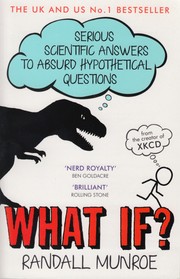
What If?: Serious Scientific Answers to Absurd Hypothetical Questions
Randall Munroe of xkcd answers absurd science questions with real physics, rough math and stick figures, from relativistic baseball to draining the oceans.…
2,932-word summary · 13 min read
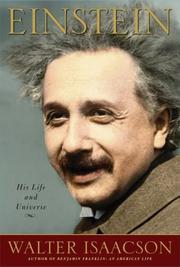
Einstein: His Life and Universe
Isaacson traces Einstein from patent clerk to world fame using newly opened papers, through 1905, relativity, exile, and the long unified theory search.
2,773-word summary · 12 min read
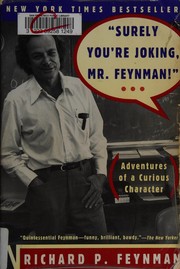
Surely You're Joking, Mr. Feynman!
Feynman drums, cracks safes, and learns by doing from Los Alamos to Caltech classrooms.
1,946-word summary · 9 min read

Moonwalking with Einstein: The Art and Science of Remembering Everything
A journalist spends a year training for the U.S. Memory Championship and discovers that extraordinary memory is mostly technique, attention, and a lot of…
2,027-word summary · 9 min read
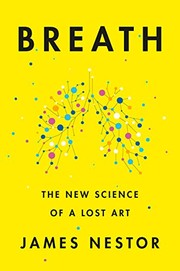
Breath: The New Science of a Lost Art
Journalist James Nestor investigates how modern humans learned to breathe badly, and what researchers, athletes, and breathwork practitioners have found about…
2,011-word summary · 9 min read

Attached
A psychiatrist and a psychologist explain adult attachment styles and show how anxious, avoidant, and secure patterns shape dating, conflict, and the search…
2,157-word summary · 10 min read

The Emperor of All Maladies
A biography of cancer from Galen to chemo through one doctor cases.
2,255-word summary · 10 min read
Hidden Figures
Black women computers at Langley launch rockets past Jim Crow.
2,385-word summary · 11 min read
God Is Not Great
Hitchens argues religion poisons life across history and texts.
2,545-word summary · 11 min read
The Hot Zone
Ebola and Marburg move from African outbreaks to a Virginia monkey house and an Army response in suits.
2,291-word summary · 10 min read
On the Origin of Species
Darwin's 1859 case for evolution by natural selection, from Beagle finches and breeding pigeons to fossils and anatomy.
2,589-word summary · 12 min read
In Defense of Food
Pollan argues we stopped eating food and started eating nutrients, and offers a plain way back.
2,320-word summary · 10 min read
Predictably Irrational
Behavioral economist Dan Ariely shows why we overpay, procrastinate, and misjudge through simple experiments.
2,183-word summary · 10 min read
Invisible Women: Data Bias in a World Designed for Men
Data treating men as default harms women in medicine, work, transit, and design, with fixes from studies worldwide.
2,316-word summary · 10 min read
Emotional Intelligence
Goleman argues self awareness and empathy shape success more than IQ alone.
2,026-word summary · 9 min read
A Beautiful Mind
Mathematician John Nash's brilliant game theory rise, schizophrenia collapse, and Nobel return, with wife Alicia's care.
2,142-word summary · 10 min read
The Anthropocene Reviewed: Essays on a Human-Centered Planet
John Green reviews ordinary parts of human life on a five-star scale, turning geese, keyboards, and sunsets into a warm memoir about attention.
2,982-word summary · 13 min read
Braiding Sweetgrass
A Potawatomi botanist braids plant science with family stories to argue for gratitude and return gifts to the living world.
2,410-word summary · 11 min read
A World Appears
Pollan traces consciousness from plant sentience to AI feeling and the self, with gardens, labs, trips and hard questions along the way.
3,108-word summary · 14 min read
The Selfish Gene
Dawkins argues genes are the units of selection, recasting kinship, conflict and altruism through replicators, game theory and memes.
2,439-word summary · 11 min read
Why We Sleep: Unlocking the Power of Sleep and Dreams
A Berkeley sleep scientist explains how sleep shapes memory, mood, and health, and what happens when we miss it.
2,755-word summary · 12 min read
Factfulness
A doctor shows why we misread global trends and offers ten habits for seeing progress clearly.
2,247-word summary · 10 min read
The Omnivore's Dilemma
Four meals traced from corn fields to foraging show what industrial food costs and what else is possible.
1,918-word summary · 9 min read
Stiff: The Curious Lives of Human Cadavers
What happens to donated bodies, from crash labs and decay farms to composting and space tests.
2,051-word summary · 9 min read
A Short History of Nearly Everything
Bryson asks how we know what we know, from atoms to continents, with humor and awe.
2,134-word summary · 9 min read
Guns, Germs, and Steel: The Fates of Human Societies
Diamond argues geography and crops explain why some societies expanded faster than others.
3,432-word summary · 15 min read
Blink: The Power of Thinking Without Thinking
Fast judgments can beat analysis, and fail hard, in Gladwell's 2005 book on snap thinking.
2,008-word summary · 9 min read