
Reading options
What's inside (8 sections)
I came to Walden the way most people do, which is to say I had already heard all of it before I read any of it. Live deliberately. Simplify, simplify. Quiet desperation. The phrases were on posters and mugs, and I assumed the book behind them would feel like a lecture from a man who was sure he was smarter than everyone in the room. That version of Thoreau does show up, more than once. But the actual book surprised me. It is funnier than its reputation, stranger than its reputation, and much more specific. He tells you what his beans cost. He describes a war between red and black ants with the seriousness of a battlefield reporter. He spends pages on the color of pond water. I read it slowly, a chapter or two at a time, and by the end I had argued with him in the margins so much that the book felt like a correspondence. This is an account of what he did, what he claimed it meant, and where I think he was wrong.
A little context first, because the legend needs trimming. In 1845, at twenty-seven, Thoreau built a small cabin on land owned by his friend Ralph Waldo Emerson near Walden Pond in Concord, Massachusetts. He moved in on July 4 and stayed two years and two months, leaving in September 1847. He was not dropped into wilderness. The pond was a short walk from town. His mother and sister brought food and took his laundry. He had visitors constantly. He went into Concord regularly. The book compresses those two-plus years into a single year, spring to spring, so it reads as one cycle of seasons. It first appeared in 1854, published by Ticknor and Fields in Boston, after nearly a decade of drafting. It sold modestly. Thoreau died in 1862, and the book grew into its fame slowly, carried by later generations of readers who found in it whatever they needed: nature writing, self-reliance, protest, or just a very detailed record of one man's attempt to pay attention.
A cabin that cost less than a month of rent
The book opens with Economy, the longest chapter and the one most likely to make you put the book down or keep going. Thoreau's claim is blunt. Most people, he says, work themselves sick to pay for things they do not need, then call the sickness a life. His famous sentence about the mass of men leading lives of quiet desperation lands in the first pages, and it still stings because he aims it at respectable, hardworking people, not villains. Farmers, shopkeepers, professionals. He argues they inherit farms and houses and debts the way they inherit coats, then spend their best hours maintaining them. He is twenty-seven and certain. You can feel the certainty coming off the page like heat.
Then he does something that saves the chapter. He shows his receipts. He lists what his cabin cost, board by board and nail by nail, down to the half cent: twenty-eight dollars and twelve and a half cents. He lists his food expenses for eight months. Rice, molasses, rye meal, Indian meal, pork, flour, sugar, lard, apples, dried apple, sweet potatoes, one pumpkin, one watermelon, salt. The total for food comes to under nine dollars, and he notes what he grew besides. He is making an argument with arithmetic, not just attitude. A person needs food, shelter, clothing, and fuel, he says, and nearly everything beyond that is negotiable. If you keep your wants small, you can buy your time back, and time is the only wealth that matters to him.
This is also where his blind spots start showing, and they are worth naming early because they run through the whole book. He counts his costs but not his advantages. The land was borrowed. The tools were borrowed. He had no children, no debts, no one depending on him, and a family nearby to catch him. He scolds the Irish laborers and indebted farmers of Concord for their choices while standing on ground his friend owned. Some of this he knows and admits in passing. Much of it he sails past. I found myself nodding at the paragraphs about manufactured wants and frowning at the paragraphs where he treats other people's obligations as failures of imagination. Both reactions kept happening, sometimes on the same page, for the entire book. That tension is really what Economy is about, even if Thoreau would not have put it that way. His math is honest. His framing is not always fair.
The sounds outside the door
After Economy comes the chapter I love most, Where I Lived, and What I Lived For. Thoreau describes the site: a slope above the pond, pines around, the water below. He claims every morning was an invitation to make his life as simple as the day itself, and somehow the sentence works even though it should sound ridiculous. He tells the reader to wake up, to stop sleepwalking through routine, to front the essential facts of life. This is where the request to simplify appears, doubled for emphasis, and where he explains that life is frittered away by detail. His remedy is attention. Watch one thing closely and it opens.
Sounds follows, and it is the most alive chapter in the book. The Fitchburg Railroad ran past the pond, and Thoreau loved the trains. He listens to the whistle the way other men listen to music, and he admits it freely. He hears the church bells of Concord and Acton on Sundays, the owls at night, a rooster miles off that he adopts as his own neighbor. He describes mice and phoebes around the cabin. What struck me is how little of this is silent wilderness. His solitude has a soundtrack of other people's business rolling through it, and he likes it. He is alone but not lonely, and he distinguishes the two carefully. Loneliness, he says, is a crowded town full of company you do not want. Solitude is company you choose, including the company of yourself.
Reading, the next chapter, is where Thoreau the snob steps forward. He divides books into the rare great ones, which must be read standing on tiptoe and studied as deliberately as they were written, and everything else. He read the classics in Greek and Latin at the pond, he says, and he means for you to feel the gap between that and the newspaper. A modern reader will either enjoy the nerve of it or throw the book across the room. I did a bit of both. He is right that most reading is distraction and wrong that his taste settles the matter. The Village chapter balances it a little. He walked into Concord every day or two, he admits, to hear the gossip, and the town comes off as a place he both needs and looks down on. He mentions, almost in passing, the afternoon he was arrested and jailed overnight for refusing the poll tax. He treats it as a small anecdote about what happens when you stop cooperating. The full argument about that night became a separate essay. In Walden it is just a stone dropped in the water, with the ripples left for you to notice.
Beans, ants, and the price of dinner
The Bean-Field is Thoreau's strangest boast and his most honest chapter at the same time. He planted about two and a half acres of beans, hoeing from five in the morning until noon through the summer, and he turns the whole operation into both a ledger and a parable. The ledger part is exact: costs for the hoeing, the seed, the harvest carted to town, and the final tally showing a small profit of under nine dollars for the season. The parable part is larger. The beans connect him to the earth, he says, and teach him patience. He also admits, in asides, that the weeds fought back, that woodchucks ate his share, and that farming attaches a man to the soil in ways that can trap him. He wonders whether he should have planted something else, or nothing, and lets the question stand.
Then Brute Neighbors arrives like a change of weather. Thoreau watches a partridge lead him away from her chicks, puffing and dragging a wing in a performance he respects enormously. He stages, or witnesses and then stages, a full battle between red ants and black ants on his woodpile, and narrates it as war reporting, complete with single combats, severed heads, and a lone red warrior holding on past hope. Scholars argue about how much he embroidered. It hardly matters. The chapter is really about his claim that he is not separate from these creatures but ranked among them, another neighbor with appetites. He follows it with the loon episode, a long game of hide and seek on the pond where he tries to guess where the bird will surface and keeps losing. The loon laughs at him, or so he hears it, and he prints the laugh. These pages are joyful in a way the preaching chapters are not. You can tell he likes animals better than arguments.
Visitors get their own chapter, and it corrects the hermit image for good. Thoreau had company constantly: farmers, hunters, poets, children, runaways, and one memorable French-Canadian woodchopper whose practical wisdom he clearly admired more than any philosopher's. He describes making the visitor welcome with conversation rather than food, claiming that three people can dine off one meal's worth of talk if the talk is good. It is a lovely idea and, like many of his lovely ideas, easier to state from a cabin with a full cellar. Still, the chapter shows his real gift, which was paying attention to people when he chose to. The woodchopper, the fishermen, the former slaves and poor families in later chapters: Thoreau draws them with more warmth than his doctrines allow.
Winter at the pond
House-Warming covers the turn of the year, and the writing gets physical. October brings frost, wasps crowding into the cabin for warmth, and Thoreau plastering and chinking the walls with his own hands. November mornings show ice on the pond's edges. He studies the first snow the way he studied the beans, as an event with something to teach. There is a fine passage about watching geese go over and feeling both kinship and distance, the wild passing above the tame. By December he is settled into winter quarters, and the book settles with him into its middle rhythm: short excursions, long thoughts, careful observations of small things.
Former Inhabitants is one of the short chapters and one of the best. Thoreau walks to the old cellar holes near the pond where people lived before him: a freed slave, a poor white family, a woman who spun linen for a living, a tavern keeper. He tries to summon them back with half-remembered stories and a famous, mournful joke about having long ago lost a hound, a bay horse, and a turtle dove, and still looking for their tracks. The joke is really about how thoroughly the past vanishes. Houses rot, names fade, and the woods take the lots back. It is Thoreau at his most humble, aware that his own cabin will be another cellar hole someday. Given how certain he sounds elsewhere, the modesty here feels earned.
Winter Animals extends the neighbor theme into the cold months. Mice nibble his crumbs, chickadees land on his woodpile, hares leave tracks he learns to read, foxes bark in the night, owls call back and forth. He notes which squirrels are out and what the jays are arguing about. None of this is dramatic. That is the point. Thoreau's attention does not switch off when nothing is happening, and the chapters work like proof that his method functions in February as well as June. Then The Pond in Winter shows the method at full stretch. He sounds the pond through the ice, taking depth measurements across a grid, and maps the bottom. He finds the depth greatest in a way that mirrors the surrounding hills, and he is delighted by the symmetry, reading it as evidence that nature rhymes. A skeptic will say he found what he wanted. A friendlier reader will say he measured carefully and then allowed himself to wonder. Both are true, which is true of most of this book.
The thaw and the higher laws
Two chapters carry the moral weight of the back half. Baker Farm tells of John Field, an Irishman living in a damp shack near the pond with his wife and children, trying to make it as a day laborer. Thoreau visits, talks about simplicity, and urges Field to live cheaper and freer. Field listens politely and keeps digging. Thoreau walks home aware, barely, that advice is cheap and wages are not. I found this chapter painful in a useful way. Thoreau's economics work for a single man with a borrowed field and fail completely for a father of small children renting bad land. He half sees it. The reader sees all of it. The chapter stays with you longer than the chapters where he wins the argument.
Higher Laws is Thoreau arguing with himself, and it is the most human chapter in the book. He confesses two pulls: one toward the spiritual and refined, one toward the animal. He loves fishing at night, alone on the pond, and writes about it beautifully. He also feels the kill as a falling off, a coarsening. He eats meat sometimes and leans toward giving it up, not from health fashion but from a sense that a cleaner life would suit his aims. He will not quite commit, and the chapter ends without a rule. For a writer so fond of telling others how to live, the honesty here is striking. He wants to be better than his appetites and knows he is made of them. Anyone who has tried to change a habit will recognize the stalemate.
Spring is the payoff the whole structure has been saving. The ice breaks up with noise like artillery, and Thoreau watches the pond come apart day by day. Then comes the famous passage about the thawing sandbank beside the railroad cut: the sand flows in the sun like lava, forming lobes and leaves and strange organs, and Thoreau reads it as the earth laboring outward, the planet showing its insides. Biologists can explain the physics in a sentence. Thoreau takes pages, and the pages are worth it, because he is describing what it feels like to watch dead ground turn live. The chapter ends with the pond full, the birds back, and the sense that the year has proved something. Thoreau never quite says what. He lets the season make the argument, which is wiser than most of his sentences.
What I kept and what I argued with
He left, he says, for as good a reason as he went. The line is dry and perfect. The experiment was over, and staying would have turned a choice into a rut. The Conclusion chapter gathers the lessons: morning is the best time to wake to your life, the universe is wider than our views of it, and a man who marches to a different drummer should step to the music he hears. That last image is the one everyone knows. In context it is less about rebellion than about timing. Your life has its own tempo. Find it and keep it, even if the town band is playing something else.
Now the fair criticism, because this book needs it. Thoreau preaches. He generalizes from one man's two years to everyone's whole life, and the generalizations crack under pressure. His scorn for commerce sits oddly beside his careful bean profits. His praise of self-reliance sits oddly beside the laundry going home to his mother. Women barely exist in the book except as helpers or symbols, which is a real lack in a work about how to live. Some chapters repeat the same move: observe keenly, then inflate the observation into a law. And his tone can curdle, especially in Economy, into contempt for ordinary people doing their best under constraints he never faced.
Here is what I kept anyway. His attention is real and transferable. After reading him, I watched birds longer, wasted less, and questioned a few purchases I would have made on autopilot. His arithmetic about wants holds up: most of what I chase would cost me hours I would rather keep. His line about morning made me get up earlier for a month. And his failure is instructive too. Walden works best not as a manual but as a provocation from a brilliant, limited, funny, exasperating young man who tried something and wrote it all down, receipts included. Read it the way you would listen to a gifted friend who is sometimes insufferable: take the questions seriously, forgive the answers selectively, and go outside when he tells you to look. The pond is still there, in a sense. The invitation is too.
For readers new to it, a note on editions. The book is long out of copyright, so countless versions exist. I worked from the standard modern text of the 1854 Ticknor and Fields edition, the kind of complete paperback that runs a little over three hundred pages, and matched the facts here to that lineage. Any complete edition will do. The chapters are the same in all of them. Start with Where I Lived if Economy stalls you, then circle back. Thoreau would approve of skipping ahead. He was always telling people to read actively rather than dutifully, and this is one book where the advice suits the object.
FAQ
What did Thoreau actually do at Walden Pond?
In 1845 he built a small cabin on Emerson's land near Walden Pond in Concord and stayed two years and two months, compressing the time into one year in the book.
When was Walden published?
It was published in 1854 by Ticknor and Fields in Boston. The summary follows that text and keeps its facts aligned.
Which parts of Walden hold up best today?
His itemized accounts, the wildlife chapters, and the winter pond survey hold up best. The blanket judgments about how others should live deserve the most pushback.
Similar books

Beyond Good and Evil: Prelude to a Philosophy of the Future
A guide to Friedrich Nietzsche's Beyond Good and Evil: its attack on moral prejudice, the will to power, master and slave morality, and the philosopher of the…
2,597-word summary · 12 min read
Leaves of Grass
Free verse songs of self, America, bodies and democracy.
2,240-word summary · 10 min read

Animal, Vegetable, Miracle: A Year of Food Life
A family eats only local for a year from their Virginia farm.
2,270-word summary · 10 min read
On the Origin of Species
Darwin's 1859 case for evolution by natural selection, from Beagle finches and breeding pigeons to fossils and anatomy.
2,589-word summary · 12 min read

Twelve Years a Slave
Free violinist Solomon Northup tells how Brown and Hamilton lured him south into twelve years of Louisiana bondage until Bass letters brought rescue in January…
2,931-word summary · 13 min read
The Anthropocene Reviewed: Essays on a Human-Centered Planet
John Green reviews ordinary parts of human life on a five-star scale, turning geese, keyboards, and sunsets into a warm memoir about attention.
2,982-word summary · 13 min read
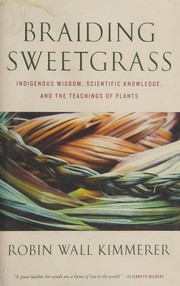
Braiding Sweetgrass
A Potawatomi botanist braids plant science with family stories to argue for gratitude and return gifts to the living world.
2,410-word summary · 11 min read
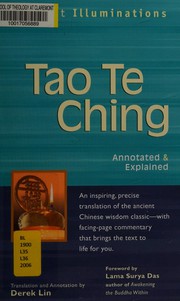
Tao Te Ching: Annotated & Explained
Eighty one brief verses on the Way and effortless action, with Lin's translation and facing notes.
2,140-word summary · 10 min read
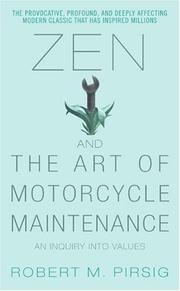
Zen and the Art of Motorcycle Maintenance
Father and son ride west while lectures on Quality and past madness intrude.
2,180-word summary · 10 min read

The Prince
Machiavelli advises Lorenzo on rule through fear and love, fortune, cruelty and mercy.
2,204-word summary · 10 min read
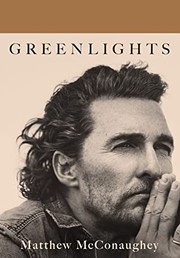
Greenlights
McConaughey shares outlaw stories and greenlight catching from Texas to Hollywood.
2,577-word summary · 11 min read

The Art of War
Sun Tzu's thirteen chapters on winning without fighting: laying plans, knowing ground, using spies, and why the best victory costs least, in the classic Giles…
2,029-word summary · 9 min read

Long Walk to Freedom
Mandela's account of a Thembu childhood, a law practice, a banned movement, twenty-seven years in prison, and the negotiation that ended apartheid.
2,454-word summary · 11 min read

The Courage to Be Disliked: The Japanese Phenomenon That Shows You How to Change Your Life and Achieve Real Happiness
A philosopher and an angry young man argue over five nights about Adlerian psychology, trauma, approval, and the freedom to be disliked.
2,054-word summary · 9 min read
Rosencrantz and Guildenstern Are Dead
Stoppard's 1966 play retells Hamlet from the wings, where two minor courtiers wait, joke, and walk toward a death they cannot see.
2,021-word summary · 9 min read

In Order to Live: A North Korean Girl's Journey to Freedom
A young North Korean girl crosses the Yalu, survives trafficking in China, and rebuilds her life in Seoul in this unsparing memoir.
2,027-word summary · 9 min read

Too Much and Never Enough: How My Family Created the World's Most Dangerous Man
Mary L. Trump's 2020 memoir traces how a cold, zero-sum Queens household shaped her uncle, and uses family tax documents to challenge his self-made story.
2,059-word summary · 9 min read
Same Kind of Different as Me
An art dealer and a formerly homeless sharecropper tell the story of the friendship that began at a Fort Worth mission and the woman who insisted on it.
2,023-word summary · 9 min read

Infidel
Ayaan Hirsi Ali's memoir of a Somali childhood, a forced marriage, a Dutch asylum claim, and the political fight that followed the murder of Theo van Gogh.
2,041-word summary · 9 min read

Fathers and Sons
Arkady brings the nihilist Bazarov home to his father's estate, and a generational argument turns into love, a duel, and an early death.
2,192-word summary · 10 min read

Down and Out in Paris and London
Orwell's account of washing dishes in Paris hotels and tramping through London does not ask for pity, only for a clear look at how poverty actually works.
2,282-word summary · 10 min read
Year of Yes: How to Dance It Out, Stand in the Sun and Be Your Own Person
Shonda Rhimes takes her sister’s accusation seriously and spends a year saying yes to the things that frighten her, from live television to her own reflection.
2,585-word summary · 11 min read

The Girl with Seven Names: A North Korean Defector's Story
Hyeonseo Lee crossed the frozen Yalu River at seventeen, spent years hidden in China, escaped to South Korea, and later returned to rescue her family.
2,404-word summary · 11 min read

Love Does
A lawyer and activist tells stories of saying yes, showing up, and loving people through ordinary, often ridiculous actions.
2,411-word summary · 11 min read

Four Thousand Weeks: Time Management for Mortals
Oliver Burkeman turns the whole productivity project on its head, arguing that a human lifespan of roughly four thousand weeks is not a problem to optimize…
2,447-word summary · 11 min read

Beautiful Boy: A Father's Journey Through His Son's Addiction
David Sheff recounts watching his son Nic slide into meth addiction, and his own desperate, humbling search for how to help without destroying them both.
2,076-word summary · 9 min read

The Magnolia Story
How Chip and Joanna Gaines met, closed their first shop, nearly lost everything in a housing development, and built Fixer Upper.
2,994-word summary · 13 min read
The Dharma Bums
Ray Smith rides freight trains, climbs Matterhorn Peak and argues about Zen with the poet Japhy Ryder in Kerouac's 1958 road novel.
2,729-word summary · 12 min read

Lone Survivor: The Eyewitness Account of Operation Redwing and the Lost Heroes of SEAL Team 10
Marcus Luttrell's account of the 2005 SEAL mission in Afghanistan that killed three of his team and left him alone.
2,144-word summary · 10 min read
Life
The Rolling Stones guitarist tells his own story: a Dartford childhood, the band's first gigs, the drug raids, the tax years and Patti Hansen.
2,761-word summary · 12 min read