
Reading options
What's inside (10 sections)
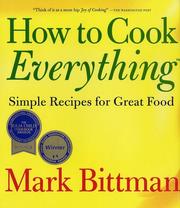
The copy I learned from was a wedding gift that spent two years holding up a wobbly table before anyone opened it. When we finally did, the first thing we cooked was a roast chicken, and the second was a vinaigrette, and somewhere in between the table stopped mattering. Mark Bittman's 1998 doorstop, 944 pages from Macmillan, is not a book you read cover to cover. It is a book you argue with at the stove, thumb through while the onions soften, and eventually stain beyond resale. That is the highest compliment I can pay a cookbook.
What Macmillan Actually Asked For
The origin story matters because it explains the book's shape. Macmillan wanted a new Joy of Cooking, a big household reference to replace the battered standards. Bittman, then a columnist and author with strong opinions about home food, said yes to the size and no to the model. Where Joy of Cooking had accumulated recipes from generations of home cooks, a kind of quilt of voices, Bittman wanted one teacher talking to one reader. He cut the fancy material that usually opens big cookbooks, the terrines and the wild boar stews, and put grilled cheese, tuna sandwiches, popcorn, and hamburgers in their place. Publishers Weekly noted the gamble at the time, and the first printing of 85,000 copies sold out by Christmas of 1998.
The title makes a promise the book mostly keeps, as long as you read "everything" the way Bittman does. He is not teaching you to cook every cuisine at restaurant level. He is teaching you that there is a technique behind almost every ordinary dish, and that once you own the technique, the dish belongs to you.
The Master Recipe Idea
This is the engine of the book, and it is worth slowing down for. Each section gives you a master recipe with variations branching off it. Learn how to roast a chicken, and the next dozen pages show you what changes when you swap the bird for a pork loin, add forty cloves of garlic, change the pan sauce from lemon to mustard, or slide the whole thing under the broiler at the end. Learn a basic vinaigrette and you have a template for dressings, marinades, and sauces that will outlast the recipe's page.
The method sounds obvious until you try to use most cookbooks, which hand you a fish and expect you to come back with a different fish next week without knowing why anything worked. Bittman's variations are short, often two or three sentences, and they accumulate into fluency. I have made his kale soup with soy and lime more times than any restaurant dish I can name, and the reason is that after the first time the recipe stopped being instructions and became knowledge.
He put more than 1,500 recipes and variations into the 1998 edition, and a large share of them are weeknight food, done in under half an hour. The proportions tell you what kind of kitchen this book assumes: not a chef's kitchen, not a project kitchen, but the kitchen of someone who gets home at seven and wants to eat at eight.
The Twenty-Plus Sections
Open the book and you find equipment and techniques first, drawn in Alan Witschonke's practical line illustrations rather than photographed food. Bittman is telling you before you cook anything that the gear matters less than knowing what heat does, and the technique primer backs that up.
After that the march is familiar but thorough: appetizers, soups, salads, pasta, grains, breads, then a section on pizza, bruschetta, sandwiches, pitas, and burritos, which tells you plenty about the book's loyalties, then fish, poultry, meat, beans, vegetables, fruits, desserts, pies and tarts and pastries, cookies and cakes, eggs and breakfast, sauces and salsas and spice mixtures, beverages. Back matter includes menus, a quick recipe list, a glossary, an essay called "Fifty Cookbooks I'd Rather Not Live Without," mail-order sources, and an index.
What separates this from reference books of similar girth is the tone of the instruction. The recipes are built on fresh ingredients, basic equipment, and short ingredient lists. Bittman treats long lists as a confession that the writer does not trust the cook. He would rather give you a slightly loose recipe you can adjust, and tell you out loud how to adjust it, than a precision ritual that collapses when your stove runs hot.
That looseness frustrates a certain kind of reader. I once watched a friend get visibly annoyed because a soup recipe said "a little" rather than a number of grams. She wanted the authority of exactness. Bittman's counter, spread across the introductions to each section, is that exactness learned without understanding evaporates. The pot teaches you if you let it.
Anyone Can Cook, and Most Should
The philosophy sentence under the whole enterprise is that anyone can cook, and most everyone should. Bittman treats daily food as a gift and a right rather than a hobby for people with weekends. That is why the recipes bend toward ingredients that are available anywhere, and why the highest compliment reviewers paid the book was usefulness. The New York Times critic William Grimes said it strode the world of food in seven-league boots, a multicultural feast whose pages were destined to stick together from constant use. Publishers Weekly called it a fundamental kitchen reference while noting the straightforward prose.
I think the politics of the book are quietly radical for a mass-market hardcover from the late nineties. It assumes cooking is a life skill, not a performance, and that the person holding the book deserves the same attention as any restaurant guest. The book won a 1999 IACP award, took a Gourmand World Cookbook Award, and was a finalist for a Julia Child Award, though awards are not why it ended up in half the kitchens I have visited.
The Editions Question
The version you buy changes the page count and some of the contents, so it is worth knowing which one you have. The 1998 first edition from Macmillan is the one this summary is anchored to, 944 pages plus the front matter. In 2008 Wiley published a tenth-anniversary revision with roughly 2,000 recipes, reorganized chapters, and more space for world cuisines. In 2019 Houghton Mifflin Harcourt published a twentieth-anniversary edition, 951 pages by the library records, with color photographs and updates that lean into food politics and sustainability, a subject Bittman's later work became more vocal about.
The core promise survives all three. So do the line-drawing habit and the variations. If you own an older copy and a newer one, you will notice the newer ones are a little more global and a little less lard-forward, which is fair given thirty years of cooking culture. If you are buying today, the twentieth-anniversary edition is the one I would hand a beginner, and the original is the one I would hunt in used shops for its period charm.
Where It Slips
No cookbook this big is uniform, and the book has real weaknesses. The dessert and baking sections suffer from the same loose attitude that makes the savory sections sing. Bakers need ratios, and Bittman's shrug of a spoon is less welcome when a cake is at stake. Pastry people should pair this with a stricter baking book.
The sheer size is another cost. This is not a book you take to the market, and its index, while respectable, cannot save you if you do not roughly know what section you want. Some readers find the tone avuncular to the point of scolding, and the essays between sections, which I enjoy, read as filler to people who want recipes only.
Finally, the 1998 edition reflects its moment. It assumes a fairly standard American pantry and a cook who eats broadly, and while the multicultural reach is real for its time, it is not a thorough guide to any single non-Western cuisine. Treat it as a base camp, not a summit.
The lack of photographs is a deliberate choice and also a real limitation. Witschonke's drawings show technique, not doneness, so a new cook has to learn what a properly browned chicken thigh looks like by burning a few. Bittman would say that is the point. A photograph teaches you to match a picture. A drawing teaches you to pay attention to the pan. Both are true, and the book is better for people who have someone to ask the first few times.
There is also an omission that matters more now than it did in 1998. The book is not built for people cooking for one, and the serving sizes assume a household. The freezing and storage notes are scattered rather than systematic. If you live alone and cook in small batches, you will spend time halving and quartering, and some of the baking recipes do not halve cleanly. It is a small friction, but it is the reason my copy has pencil math in the margins of the dessert pages.
The Everyday Argument
The deepest argument in the book is not about any single cuisine. It is that everyday cooking deserves the same seriousness as restaurant cooking, and that the person doing it deserves to understand what they are doing. Bittman keeps returning to the idea that a recipe is a conversation, not a contract. When he says to cook the onions until they are soft and sweet, he is trusting you to know what soft and sweet mean. When he gives a range for the liquid, he is admitting that your pot and your flour and your tomatoes are not his.
That attitude is why the book has stayed in print through three editions and why it is still recommended to people who ask for one cookbook to own. It is not the most precise book on the shelf. It is not the most beautiful. It is the one most likely to teach you how to cook without it. Bittman's later work, including his Minimalist column at the Times and his books on food politics, kept pushing the same idea from different angles, but this is where a lot of readers met it first.
My favorite page is not a recipe at all. It is the short introduction to the vegetables chapter, where he says, more or less, that anyone who claims to hate vegetables has probably only had them cooked badly. That sentence has been proven true in my kitchen more times than I can count. The book's promise is that the fix is usually heat, salt, and attention, not talent.
How I Actually Use It
The book has four modes in my kitchen. First, the search mode, when I know what I have and want to know what it can become. Second, the ratio mode, when I want a sauce or dressing and just need the skeleton. Third, the technique mode, when I want to understand why my beans are tough or my braise is flat. Fourth, the confidence mode, which is harder to describe: on a tired night, opening it and seeing a recipe that says "cook until it smells right" reminds me that dinner is not a test.
Two warnings for new owners. If you follow the "quick recipes" lists expecting thirty-minute meals for a workweek, be honest that some of them assume your shopping is already done. And if you are cooking for people who take seasoning personally, taste as you go, because Bittman's salt hand and yours will differ, as he is the first to admit.
The stain on my copy's roast chicken page is shaped like Florida. I do not know when it happened, and I no longer care. Some books you keep clean on a shelf. This one you cook out of until the spine gives, which is exactly what it was built for. If you are buying a copy for someone, buy the edition you can afford, because the point is to get it into the kitchen, not onto a coffee table.
FAQ
Who published How to Cook Everything and when?
Macmillan published the first edition in New York in 1998. It runs 944 pages and carries ISBN 9780028610108. A tenth-anniversary revision followed from Wiley in 2008 and a twentieth-anniversary edition from Houghton Mifflin Harcourt in 2019.
How is it different from Joy of Cooking?
It uses one teacher's voice and master recipes with variations, where Joy of Cooking gathered many household recipes. Bittman cut luxuries like foie gras terrine and added everyday food such as grilled cheese, popcorn and hamburgers.
Do I need the newest edition?
No. The core method survives every edition. The 2008 revision expands to about 2,000 recipes and the 2019 edition adds color photographs and updates, so buy whichever you find and cook from it.
Similar books
Better Homes and Gardens New Cook Book
First published in 1930, this red-checked kitchen reference teaches basic skills, clear charts, and tested recipes for daily cooking.
2,986-word summary · 13 min read
The Joy of Cooking
First self-published in 1931, this one-volume kitchen teacher shows how to learn skills, follow its action format, and pick an edition.
2,591-word summary · 12 min read
At Home: A Short History of Private Life
Bill Bryson tours his own Norfolk rectory room by room to explain how private life and the modern home got built.
2,334-word summary · 10 min read
My Life in France
Julia Child's memoir of learning to cook in Paris, testing recipes for nine years, and becoming the teacher who changed how America thought about French food.
2,038-word summary · 9 min read
The Magnolia Story
How Chip and Joanna Gaines met, closed their first shop, nearly lost everything in a housing development, and built Fixer Upper.
2,994-word summary · 13 min read
Eats, Shoots & Leaves
Truss defends commas with jokes about pandas and posters.
2,423-word summary · 11 min read
Animal, Vegetable, Miracle: A Year of Food Life
A family eats only local for a year from their Virginia farm.
2,270-word summary · 10 min read
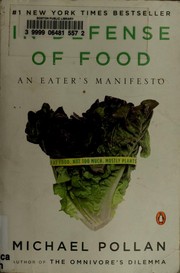
In Defense of Food
Pollan argues we stopped eating food and started eating nutrients, and offers a plain way back.
2,320-word summary · 10 min read
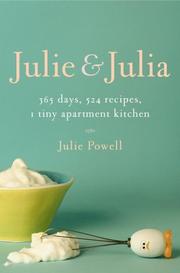
Julie and Julia: 365 Days, 524 Recipes, 1 Tiny Apartment Kitchen
Stuck at thirty in Queens, Julie cooks all 524 Julia Child recipes in a year and blogs it.
2,834-word summary · 13 min read
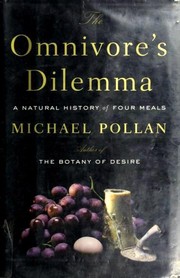
The Omnivore's Dilemma
Four meals traced from corn fields to foraging show what industrial food costs and what else is possible.
1,918-word summary · 9 min read
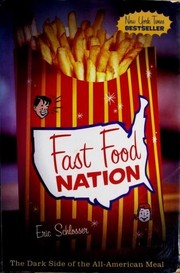
Fast Food Nation
Fries, burgers, and meatpacking traced from stands to slaughterhouses show cheap food true price.
1,938-word summary · 9 min read
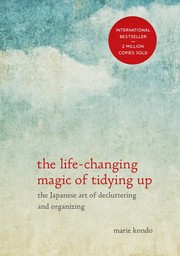
The Life-Changing Magic of Tidying Up: The Japanese Art of Decluttering and Organizing
Marie Kondo teaches the KonMari method: keep only what sparks joy, tidied by category for a lasting home reset.
2,413-word summary · 11 min read
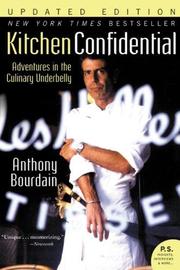
Kitchen Confidential: Adventures in the Culinary Underbelly
Bourdain on rough kitchens, past drug use, Les Halles years, and why you should never order fish on Monday.
2,562-word summary · 11 min read
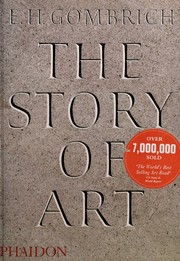
The Story of Art
Gombrich traces art from cave painting to modernism with clear stories and famous images.
2,520-word summary · 11 min read

The Zookeeper's Wife: A War Story
The directors of the Warsaw Zoo hid roughly three hundred Jews in empty cages and outbuildings after the German invasion, while Jan worked for the resistance.
2,065-word summary · 9 min read
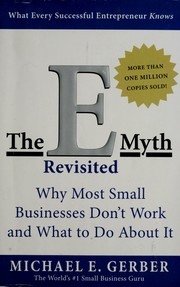
The E-Myth Revisited
Gerber argues that most small businesses are run by technicians who own a job rather than a business, and that the fix is a system that runs without them.
2,169-word summary · 10 min read
Sybil
A 1973 case study of a woman treated for multiple personalities, and the book that made dissociative identity disorder a household phrase.
2,054-word summary · 9 min read
Nudge: Improving Decisions About Health, Wealth, and Happiness
Thaler and Sunstein show how defaults, framing, and social cues steer choices, and argue for choice architecture with an opt-out.
3,146-word summary · 14 min read

Long Walk to Freedom
Mandela's account of a Thembu childhood, a law practice, a banned movement, twenty-seven years in prison, and the negotiation that ended apartheid.
2,454-word summary · 11 min read
1491: New Revelations of the Americas Before Columbus
Charles C. Mann gathers archaeology, ecology, and demography to argue that the Americas before Columbus were older, fuller, and more deliberately shaped than…
2,712-word summary · 12 min read
What Happened to You?
Oprah Winfrey and psychiatrist Bruce Perry explain how early experience shapes the brain, and why asking what happened to someone works better than asking what…
2,238-word summary · 10 min read
The Hunger Games Tribute Guide
The official 2012 companion to the first Hunger Games film profiles all twenty-four tributes and walks through the reaping, training, and interviews.
2,092-word summary · 9 min read
The DaVinci Code: A Quest for Answers
A short 2006 dialogue in which three friends test Dan Brown's claims about Jesus, Mary Magdalene, Nicaea, and the canon.
2,088-word summary · 9 min read
The Courage to Be Disliked: The Japanese Phenomenon That Shows You How to Change Your Life and Achieve Real Happiness
A philosopher and an angry young man argue over five nights about Adlerian psychology, trauma, approval, and the freedom to be disliked.
2,054-word summary · 9 min read

Nothing to Envy
Barbara Demick follows six defectors from Chongjin through the North Korean famine, showing how ordinary people lived, believed, and finally left.
2,068-word summary · 9 min read

In Order to Live: A North Korean Girl's Journey to Freedom
A young North Korean girl crosses the Yalu, survives trafficking in China, and rebuilds her life in Seoul in this unsparing memoir.
2,027-word summary · 9 min read

Too Much and Never Enough: How My Family Created the World's Most Dangerous Man
Mary L. Trump's 2020 memoir traces how a cold, zero-sum Queens household shaped her uncle, and uses family tax documents to challenge his self-made story.
2,059-word summary · 9 min read
Same Kind of Different as Me
An art dealer and a formerly homeless sharecropper tell the story of the friendship that began at a Fort Worth mission and the woman who insisted on it.
2,023-word summary · 9 min read
Moonwalking with Einstein: The Art and Science of Remembering Everything
A journalist spends a year training for the U.S. Memory Championship and discovers that extraordinary memory is mostly technique, attention, and a lot of…
2,027-word summary · 9 min read

Infidel
Ayaan Hirsi Ali's memoir of a Somali childhood, a forced marriage, a Dutch asylum claim, and the political fight that followed the murder of Theo van Gogh.
2,041-word summary · 9 min read