
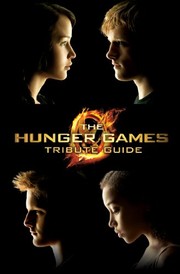
The Hunger Games Tribute Guide
2,092-word summary 9 min read 128 pages in the book
- First published
- 2012
- Publisher
- Scholastic Inc.
- Pages
- 128
- ISBN
- 9780545470070
Reading options
What's inside (9 sections)
I found this book in a used bookstore bin for three dollars, which is probably the right price for it. The Hunger Games Tribute Guide is a slim, glossy companion to the 2012 film, published six weeks before the movie opened. It is not a novel. It is not a secret history. It is a piece of marketing that happens to be well made, and reading it now is a strange experience, because it captures the exact moment when The Hunger Games went from a popular young adult series to a global franchise.
The book was written by Emily Seife and published by Scholastic in February 2012. The film, directed by Gary Ross and starring Jennifer Lawrence, came out in March. The guide was part of a larger tie-in program that included a movie companion, a poster book, and various editions of the novel with film covers. If you were a teenager in 2012, you probably saw it on a display table near the checkout.
What the Book Is
The Tribute Guide is 128 pages long. It is organized around the process that takes a child from the reaping to the arena. The contents page lists an address to the citizens of Panem, an introduction, the reaping, the tributes, the train, the Remake Center, the Gamemakers, the Tribute Parade, the Training Center, private training sessions, the interviews, and the journey to the arena.
That structure is smart. The novel is told from Katniss's point of view, and the film has to move quickly. The guide slows down and explains the machinery. It shows how the tributes are selected, how they are styled, how they are presented to the audience, and how the Games are produced. It is a behind-the-scenes book in the most literal sense: it is about the behind-the-scenes work of the fictional Games, using the behind-the-scenes work of the real film.
The book is full of photographs. Some are portraits of the tributes. Some are stills from the film. Some are production photos that did not appear in the trailers. The design is glossy and dark, with the Capitol's gold and black aesthetic. It looks like a piece of propaganda, which is appropriate, because much of it is written as if the Capitol were the narrator.
The Address and the Reaping
The book opens with an address to the citizens of Panem. This is the voice of the Capitol: confident, paternal, and threatening. It explains the Games as a necessary ritual, a reminder of the rebellion and a celebration of the districts' submission. The address is a good example of what the guide does well. It does not step outside the fiction to say, "This is a dystopia." It lets the dystopia speak for itself.
The reaping section explains how the tributes are chosen. It covers the tesserae system, the age range, and the ceremony. If you have read the novel, none of this is new. If you have only seen the film, it fills in details that the movie rushes past. The guide is careful to present the rules as neutral procedure, which makes them creepier.
The tribute section is the heart of the book. It profiles all twenty-four children, with portraits, district information, and notes on their skills and personalities. The careers from Districts 1 and 2 get the most attention: Cato, Clove, Glimmer, and Marvel. Rue and Thresh from District 11 get sympathetic profiles. Foxface from District 5 is described as clever and elusive. The weaker tributes are given less space, which is both a practical choice and a quiet comment on how the Games work.
One of the odd pleasures of the book is seeing the actors before they were famous. The film cast young performers who were mostly unknown at the time, and the guide treats them as the characters. The portraits are posed like school photographs, which makes the whole thing feel more like a yearbook than a science fiction tie-in. That is either brilliant or accidental. Either way, it works.
The design of the book is worth noticing. The pages are black with gold accents, the fonts are severe, and the captions read like official announcements. The book is pretending to be a Capitol document, and it commits to the bit. That commitment is why it feels more substantial than the average movie tie-in. It has a point of view, even if that point of view belongs to the villains.
The train chapter is about luxury and contrast. The tributes come from poor districts and are suddenly surrounded by velvet, food, and servants. The guide describes the train's compartments, the dining car, and the Capitol attendants. It is a visual chapter, and the photographs do most of the work.
The Remake Center is where the tributes are waxed, plucked, and styled. This is one of the most unsettling parts of the story, and the guide does not soften it. It describes the preparation as a transformation, but the images show children being turned into products. The stylists are presented as artists, and the book is honest about the fact that their art depends on the tributes' bodies.
Katniss's stylist, Cinna, gets special attention. His choice to dress Katniss and Peeta in fire is treated as a stroke of genius, which it is. The guide explains the design of the costumes and the effect they have on the audience. It also notes that the fire is controlled, which is a nice detail. The spectacle is manufactured, and the book knows it.
The Gamemakers and the Parade
The Gamemakers section is short but important. It explains who runs the Games and how the arena is controlled. The guide presents the Gamemakers as bureaucrats and showmen, which is exactly what they are. The head Gamemaker, Seneca Crane, is a functionary who wants a good show. The book does not turn him into a monster. It makes him a middle manager, which is worse.
The Tribute Parade chapter is about the first public appearance of the tributes. The guide describes the chariots, the costumes, and the audience. It explains why the parade matters: the tributes need sponsors, and sponsors need a reason to care. The book is good at showing how the Games turn children into brands.
The District 12 costumes are the centerpiece. The fire motif is explained in detail, from the synthetic flames to the reaction of the crowd. The guide treats the moment as a success, and it is, but it is also a survival tactic. Katniss and Peeta are not being celebrated. They are being marketed.
The Training Center chapter covers the facilities, the other tributes, and the politics of the training sessions. The guide explains the difference between the group training and the private sessions. It describes how the tributes show off their skills and how the Gamemakers score them. The scores are presented as a public relations tool as much as an assessment.
The interview chapter is the best in the book. It explains Caesar Flickerman's role, the importance of a good angle, and the way the tributes are coached. It includes photographs of the set and the costumes. It also captures the tone of the interviews: cheerful, invasive, and slightly cruel. Caesar is a host, not a villain, and that is what makes him disturbing.
The guide does not include full transcripts of the interviews. It gives summaries and highlights. That is a limitation, but it keeps the book moving. The film's interviews are memorable because of the performances, and the guide cannot reproduce them. It can only point at them.
The Arena
The final section is about the journey to the arena. It covers the hovercraft, the launch room, and the first moments of the Games. The guide does not spoil the ending of the film, which is a deliberate choice. It stops at the threshold. The book is a prequel to the movie in the most literal sense: it ends where the story begins.
That choice is frustrating if you want a complete guide, and sensible if you want to sell a book to someone who has not seen the film yet. The guide is designed to be read before the movie, not after. It is a primer, not a commentary. It tells you what to look for, not what it means.
What It Adds
The guide's real value is the district information. The novels give you a sense of the districts, but the film moves fast. The guide slows down and explains what each district produces, how its people live, and what its tributes are expected to be. It also gives the Capitol's official line on the Games, which is useful for understanding the propaganda.
The photographs are the other draw. The production design of the film is excellent, and the book gives you a closer look at the costumes, the sets, and the props. If you are interested in how a dystopian world is built on screen, the book is a decent visual reference. It is not a making-of documentary, but it has enough detail to be useful.
The guide's most interesting choice is its narrator. Most of the text is written as if it comes from the Capitol's publicity department. The tributes are described in terms of marketability. The districts are described in terms of output. The Games are described as a tradition. The book does not step in to say that this is wrong. It lets the reader do that work.
That is a risky strategy for a children's tie-in, and it mostly pays off. A younger reader will understand that the guide is playing a role. An older reader will notice the irony. The only people who might be confused are the ones who want the book to be a straightforward encyclopedia. It is not. It is a prop from the world of the story.
What It Gets Wrong
The book is thin. It is 128 pages, and a lot of those pages are pictures. The text is written in a promotional voice, and it rarely criticizes the Games or the film. It is an official tie-in, so that is expected, but it means the book has no edge. It explains the world without questioning it.
The canon is also slippery. The guide mixes information from the novels, the film, and the marketing. Some details are invented for the book, and some are simplified. If you are a strict canon person, you will find things to argue about. If you are not, you probably will not notice.
The price was high for what it is. At release, it was marketed as a must-have for fans, and it is not a must-have. It is a nice object. It is not essential reading. The novel is essential. The film is essential if you care about the adaptation. The guide is for the shelf.
The Tribute Guide is for collectors, for fans who want every piece of the franchise, and for readers who like visual companions. It is also useful for teachers who are using The Hunger Games in a classroom and want a quick way to explain the world. It is not for someone who wants a new story or a deeper analysis.
I would recommend it to a teenager who has just finished the novel and is hungry for more. I would not recommend it to an adult who is looking for a serious book about the series. It is a time capsule, and like most time capsules, it is more interesting for what it says about the moment than for what it contains.
Why It Still Matters
The book matters because it shows how The Hunger Games became a franchise. The series is about the way media turns suffering into entertainment. The tie-in guide is a small example of the same process. It takes a story about exploited children and turns it into a product with glossy photos and a tribute profile section. That is not a criticism of the book's makers. It is the nature of the business.
Reading it now, I am struck by how earnest it is. The guide believes in the world. It wants you to be impressed by the costumes and moved by the tributes. It does not wink at the audience. That sincerity is what makes it work, and what makes it a little sad. The Capitol would have published something very similar.
FAQ
Is The Hunger Games Tribute Guide canon?
It is an official tie-in, but it mixes material from the novels, the film, and the marketing campaign. Treat it as secondary to the novels.
Does the Tribute Guide contain spoilers?
It stops at the journey to the arena and does not cover the ending of the film or the Games, so it is light on plot spoilers.
Who wrote The Hunger Games Tribute Guide?
It was written by Emily Seife and published by Scholastic Inc. in February 2012, shortly before the first film was released.
Similar books
Divergent: Official Illustrated Movie Companion
An oversize behind-the-scenes guide to the 2014 Divergent film, with casting stories, costume and set design, and scores of photos.
2,524-word summary · 11 min read
The Hunger Games: Official Illustrated Movie Companion
Behind the scenes guide to the 2012 film, from casting and sets to costumes and arena effects.
2,892-word summary · 13 min read
Iron Widow
Wu Zetian enlists to avenge her sister, kills her pilot, and becomes an Iron Widow in a mecha Huaxia where the machines are built to kill women.
2,444-word summary · 11 min read
The House of the Scorpion
A clone raised in a drug lord's poppy fields learns what he was made for and chooses what to do with the life he was given.
2,527-word summary · 11 min read
Reveal Me
A Shatter Me novella told by Kenji, set between Defy Me and Imagine Me, as the rebels learn Anderson has taken hostages and Juliette faces Emmaline.
2,098-word summary · 9 min read

Wither
In a future where women die at twenty, sixteen-year-old Rhine is sold as a bride to a wealthy stranger and plots an escape from a beautiful prison.
2,395-word summary · 11 min read
Never Fade
Ruby, now a leader in the Children's League, must track down the boy whose memories she erased, because he holds the only proof of what caused the disease that…
2,188-word summary · 10 min read
World After
Penryn wakes from near-death to find her altered sister Paige hunted as a monster, and follows her into the angels' scorpion factory and Uriel's coup.
2,213-word summary · 10 min read
Firefight
David hunts Firefight in flooded Babylon Restored while Prof slips.
2,462-word summary · 11 min read
Under the Never Sky
Exiled from her Pod, Aria crosses a storm-scarred wilderness with Outsider Perry to find family and the fabled Still Blue.
2,572-word summary · 11 min read
Twilight Director's Notebook
Director Catherine Hardwicke shares photos, storyboards, and notes on casting, looks, sets, and key scenes from Twilight.
2,863-word summary · 13 min read
Shadow Me
Kenji Kishimoto narrates for the first time as he joins Nazeera on a quiet mission after Restore Me, carrying painful secrets into Defy Me.
2,512-word summary · 11 min read

Life As We Knew It
Sixteen-year-old Miranda keeps a diary while an asteroid strike on the moon brings tsunamis, blackouts, and a frozen year of hunger to her Pennsylvania town.
2,485-word summary · 11 min read
Believe Me
Warner narrates life after Imagine Me as he and Juliette try to marry amid Sanctuary repairs.
2,217-word summary · 10 min read
Among the Hidden
Twelve-year-old Luke, an illegal third child, befriends Jen and faces the cost of stepping out of hiding.
2,923-word summary · 13 min read
The Young Elites
Adelina survives fever and execution to join a secret group of gifted malfettos plotting against the queen of Kenettra.
3,310-word summary · 15 min read
The Infinite Sea
Cassie and Squad 53 wait out winter in a hotel while Ringer is retaken and learns the truth behind the 5th Wave.
2,985-word summary · 13 min read

Requiem
Lena fights in the Wilds while cured Hana marries into Portland power.
2,232-word summary · 10 min read
Messenger
Matty carries messages through a living Forest for Village until Trade Mart greed, a closing border, and his hidden gift force a final run.
2,363-word summary · 11 min read
The Grace Year
In Garner County, Tierney James faces her grace year exile, where girls are blamed for magic and must survive a year outside the fence before they can return…
2,817-word summary · 13 min read
Reached
Cassia, Ky, and Xander serve the Rising undercover as plague spreads, then chase a cure that tests love, loyalty, and who should lead after the Society.
2,690-word summary · 12 min read
New Moon: The Complete Illustrated Movie Companion
Behind the scenes guide to the New Moon film: Weitz, the wolves, and the Volterra shoot, with cast interviews.
2,602-word summary · 12 min read
Fracture Me
Adam Kent narrates this short bridge story after Omega Point falls, hiding with his little brother James while facing his fading place beside Juliette. Best…
3,004-word summary · 13 min read
The Darkest Minds
A teen with mind powers escapes a government camp and joins three runaways in Bracken's 2012 dystopia, first in The Darkest Minds series.
2,038-word summary · 9 min read
Steelheart
In steel-covered Newcago, David Charleston joins the Reckoners to kill the invincible Epic Steelheart, the tyrant who murdered his father.
2,190-word summary · 10 min read

Angelfall
After angels destroy the world, Penryn trades help with a wingless angel to rescue her sister from their stronghold.
2,420-word summary · 11 min read
Imagine Me
Juliette remembers who she was and storms the capital to end the Reestablishment for good.
2,090-word summary · 9 min read