
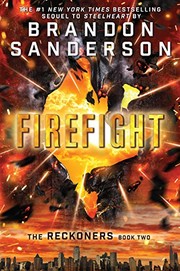
Firefight
2,462-word summary 11 min read 432 pages in the book
- First published
- 2015
- Publisher
- Delacorte Press
- Pages
- 432
- ISBN
- 9780385743587
- Series
- The Reckoners (#2)
Reading options
What's inside (8 sections)
I came to Firefight straight off Steelheart, mostly because that first book ended on a hook I could not drop. It was published in 2015 by Delacorte Press, runs 432 pages, and is the second book in The Reckoners series. Newcago is free, Steelheart is dead by David Charleston's hand, and David has finally admitted that killing one tyrant did not answer the bigger questions. What makes an Epic, why powers rot the people who hold them, and whether anyone can hold power without turning cruel. I read it over a long weekend, and it kept me up late twice.
David is still David. Eighteen, earnest, obsessed with Epics, famous now in Newcago and uncomfortable with it. He keeps notebooks, he studies weaknesses the way other kids study ball scores, and he narrates with those awful metaphors that other characters openly mock. The joke still works for me, at least in small doses. He is also lovesick in a way that makes him sloppy. Megan Tarash, the Reckoner who turned out to be the Epic called Firefight, vanished after Steelheart fell. She can throw fire and illusion, and she can return from death, though coming back scrambles her memory. David is sure she fought the rot longer than most. He wants to find her and prove she can be saved.
That search pulls him out of Newcago. Prof, whose real name is Jonathan Phaedrus, decides the crew has to deal with Regalia, the High Epic who rules Babylon Restored. That is what remains of Manhattan. Regalia raised the water and flooded the streets, so people live high up and travel by boat between rooftops. She sees through water, she moves it like a limb, and she has been sending lesser Epics to poke at Newcago since Steelheart died. Prof takes only a small party. Himself, Tia the researcher, and David. Abraham and Cody stay behind to hold Newcago, with Edmund, the friendly Epic who powers the city, under guard. I missed Abraham and Cody more than I expected. Their absence leaves the traveling group tight and tense.
Drowned Manhattan
Babylon Restored, which locals shorten to Babilar, is a strong setting. Sanderson does flooded cities well because he thinks about logistics. How food moves, where power comes from, which bridges still hold, what happens to basements and subways. Skyscrapers poke out of gray water. Gardens grow on roofs. Boats thread between buildings. At night parts of the city glow because of Dawnslight, a strange Epic who feeds plants and light into the streets and whom ordinary people half worship. It feels very different from steel covered Newcago, damp and bright and tired, and the change keeps the series from repeating itself.
The local Reckoners meet them with a submarine and a hidden base inside a sunken building. Val leads them, competent and blunt, a sniper who does not trust outsiders at first. Exel drives and cooks and carries gear, big and steady. Mizzy is young and eager and talks fast, the team's tech hand. Sam, Val's partner, rounds them out. They have been fighting Regalia with almost no wins. Their hideout is cramped and practical, full of pumps and charts and rifles wrapped against rust. I liked them quickly, though the book gives them less room than they deserve.
Regalia herself stays offstage for a long stretch, which is smart. We feel her through what others do. Water rising in a stairwell at the wrong hour. A patrol boat turning where it should not turn. A rumor that she can watch any room where water stands in a glass. David, who cannot swim and hates deep water, is miserable here. That fear pays off in small scenes. Getting into a boat, dropping into a tunnel, waiting out a flood pulse in the dark. Sanderson keeps reminding us the city itself can kill.
Chasing Megan
David spots Megan early, and the book handles it better than a straight reunion. She is in a crowd, wet and thin, gone before he can reach her. Later he finds traces. A safe flat, a text thread, a job she pulled for money. She does not want contact because she thinks contact makes her dangerous. Every time she uses her gifts, the pull toward cruelty grows stronger. So she tries to live small, take ordinary work, stay cold in the emotional sense. David reads that as rejection. It is closer to quarantine.
Their scenes together have a push and pull I recognized from real fights. He wants a plan and a promise. She wants space and proof that being near him will not end with someone burned. He follows her when he should not, he risks missions to warn her, and Prof notices and warns him off. Prof is right on tactics and wrong on tone, which makes David dig in harder. One short paragraph stuck with me. David admits he filled the hole left by revenge with another obsession, and he knows it, and he keeps going anyway.
Mizzy adds a complication. She blames the Epic called Firefight for Sam's death and wants that Epic dead. She does not know Firefight is Megan, the girl sharing their boats and tables. David knows and says nothing, which poisons his new friendship with Mizzy from the start. When the truth starts leaking, the fallout feels earned. It also shows the book's view of secrets. Every hidden identity here charges interest, and someone always pays.
The middle has a spy stretch I enjoyed. David trails a lesser Epic named Newton through markets and rooftops to learn Regalia's habits. Newton can deflect certain attacks and likes to show off, which makes her careless. David poses as an Epic groupie, bumbles through slang, nearly gets caught twice. These chapters show David at his best and worst. Clever about powers, clumsy about people. A party scene on a rooftop, with music and stolen fruit and patrols passing below, gives Megan and David ten honest minutes. Then work intrudes, as it always does.
Regalia and Obliteration
Regalia's move is to invite Obliteration to Babilar. He is the Epic who destroyed Houston and left San Diego and Albuquerque in ruins. He absorbs heat from around him and releases it in blasts that level blocks, and when he is near death he vanishes and appears elsewhere, which makes him almost impossible to pin down. He does not want to rule. He wants to end things. He talks about Calamity, the red star that gave Epics their gifts, the way a convert talks about scripture. Regalia points him at the city and lets him preach.
Obliteration is scary in person and thin on the page, both at once. His power set forces the Reckoners to think in terms of evacuation and timing rather than guns, which I liked. His scenes crackle. He thanks David for killing Steelheart, almost politely, because Steelheart was in his way. He walks into fire. He waits. But as a person he stays a sermon with legs. We learn habits and appetites, not history. Compared with Steelheart, who had a city and a face, Obliteration feels like weather that quotes holy text.
Regalia is the opposite. Patient, administrative, cruel in memos. She was once Abigail Reed, a judge, and she still thinks like one. She keeps files on Prof and Tia from before Calamity, she trades favors, she sets rivals against each other and bills them for the help. Her water gifts let her watch and strike across distance, so the Reckoners have to plan like they are always overheard. The book suggests she may be fighting her own corruption in odd ways, funding gardens and clinics while drowning informers. I am not sure that thread fully lands. It reads more as calculation than conflict. Still, as a schemer she is fun to watch.
The plan to stop her turns on weaknesses. Every Epic shuts down under some condition, often tied to an old fear or memory. David collects stories, tests small exposures, argues with Tia over what counts as proof. The team tries to isolate Regalia from water, to catch Obliteration cold, to force mistakes. Some of this is classic Sanderson puzzle fighting, with clear rules and clever use of gear. Some of it stalls because the sample size is tiny and the cost of a wrong guess is death. That uncertainty is the point, and the book is honest about it.
Prof starts to slip
The strongest thread is Prof coming apart. In Steelheart we learned his secret. He is an Epic. His gifts let him shape force and hand out devices that cut steel or heal wounds, and he has held the rot back by giving power away instead of holding it. In Babilar he starts holding it. He throws up shields in fights, he walks through gunfire, he makes calls alone and tells Tia after. At first it looks like leadership. Then it looks like appetite.
Sanderson shows the change in behavior, not lectures. Prof stops asking for votes. He keeps David's contact with Megan as pressure over him rather than treating it as a problem to solve together. He pushes for faster hits. He sleeps less. Tia, who has known him longest, watches with growing alarm and tries to slow him down with research and procedure. Their old friendship frays in meetings where every sentence is polite and every decision goes Prof's way. I found these scenes more tense than most shootouts.
David is caught between loyalty and evidence. Prof saved his life, trained him, gave him a place when no one else would. Saying Prof is compromised feels like betrayal. So David files doubts away and focuses on Megan and Regalia, until missions start bending around Prof's temper. A raid goes ahead before the weakness work is done. A retreat turns into a stand because Prof will not yield ground. People get hurt. Exel patches them up without comment, which somehow makes it worse.
There is a drowning sequence near the midpoint that matters here. David goes into the water with weight on him and no way up, and someone pulls him out. He does not see who. He guesses. The book lets the guess sit. Rescue creates debt, and debt bends judgment. David owes Megan his life twice over by now, and he owes Prof everything else. When those debts point in different directions, he freezes at the worst hour. I have seen that freeze in real teams. It felt true.
Fire and water at the end
The last third moves fast and gets bloody. I will keep the turns broad to leave some surprise intact, but the shape is this. Regalia forces a confrontation on ground she chose, with water on every side and Obliteration primed to burn Babilar down as a lesson. The Reckoners split between stopping the blast and cutting Regalia off from her strength. Val runs the guns, Exel runs the boat, Mizzy runs the tech, Tia runs the timing, David runs toward the part of the plan most likely to kill him. It is messy in a good way. Radios cut out. Boats stall. A support Epic flips. The water rises while the air heats up.
Megan's choice is the emotional center. She has spent the book trying not to be Firefight. In the crisis she decides how and when to burn, on her terms, to shield people she loves. Using power costs her. It also saves lives that guns could not save. The book does not pretend this resolves her problem. It treats control as practice, not cure. Her scenes with David during the fight are short and plain, which suits them. Less vow, more work.
What Prof does in the same stretch is the gut punch the third book inherits. Regalia has been steering him toward open use all along, feeding his pride and his fear for the team. He meets Obliteration head on and holds nothing back, and the man who walks out of that light is harder and colder than the teacher who walked in. The team sees it. Tia sees it first and pays for seeing it. I will not spell out the final casualty list, but the cost is real, and Newcago's future looks less safe than its past. The closing pages leave David with answers about weaknesses and fear that feel useful and incomplete at once, which is honest setup for Calamity.
What flies and what creaks
The action flies when rules are clear. Underwater base entries, boat chases between towers, shield work against heat blasts, tests of weakness with improvised gear. Sanderson stages space so well I could sketch most fights from memory. Babilar itself is a win. Flooded streets, roof farms, glowing fruit from Dawnslight, sermons from Obliteration echoing over water. The spy chapters give David room to be funny without a gun in his hand. And the Prof decline is patient and painful, the best long arc in the series so far.
It creaks in familiar places. David's metaphors were a gag in book one. Here they keep coming after the joke wore out, and a few land with a thud. The romance loops. David chases, Megan retreats, David promises, Megan doubts, repeat. The feelings are real, but the cycle eats pages that could have gone to Val and Exel, who stay sketches. Mizzy gets more color, Sam gets sympathy, yet both serve David's lesson more than their own stories. Readers who want the whole team to matter may feel the pinch.
Regalia's scheme is clever and a little too neat. She anticipates Prof's pride, David's pursuit of Megan, Obliteration's hunger for an ending, all at once, across weeks, through intermediaries. One thread too many relies on a message arriving late or a camera missing the right corner. Obliteration, for all his menace, never quite becomes a person. And the weakness lore expands in ways that raise questions the book postpones. If fear shapes immunity, why do some Epics resist longer with less reason. The book gestures at answers and saves them for later. Fair enough for book two, but it leaves a few fights feeling argued rather than solved.
I still closed it eager for the next one. Firefight deepens the moral question Steelheart posed. If power always corrupts, what does restraint cost, and who pays it. Megan pays daily by refusing herself. Prof pays by spending himself. David pays by learning that courage without study gets friends hurt. For a 432 page YA sequel, that is a solid weight to carry while boats race and towers burn. If you liked the puzzle fights and the crew banter of book one, come for Babilar and stay for Prof. The last fifty pages reframe everything before them.
FAQ
When was Firefight published?
It was published in 2015 by Delacorte Press. The edition runs 432 pages and the ISBN is 9780385743587.
Is Firefight part of a series?
Yes. It is book two of The Reckoners, after Steelheart and before Calamity, and it follows David to Babylon Restored.
Who are the main Epics in this book?
Regalia rules Babylon Restored with water powers and invites Obliteration to burn the city, while Prof relies on his own Epic gifts more openly.
Similar books
More from The Reckoners first, then related titles.

Steelheart
In steel-covered Newcago, David Charleston joins the Reckoners to kill the invincible Epic Steelheart, the tyrant who murdered his father.
2,190-word summary · 10 min read

Iron Widow
Wu Zetian enlists to avenge her sister, kills her pilot, and becomes an Iron Widow in a mecha Huaxia where the machines are built to kill women.
2,444-word summary · 11 min read

Archenemies
Nova steals for the Anarchists while Adrian hides his Sentinel identity, and a serum that erases prodigy powers puts them both at risk.
2,485-word summary · 11 min read
World After
Penryn wakes from near-death to find her altered sister Paige hunted as a monster, and follows her into the angels' scorpion factory and Uriel's coup.
2,213-word summary · 10 min read
Shadow Me
Kenji Kishimoto narrates for the first time as he joins Nazeera on a quiet mission after Restore Me, carrying painful secrets into Defy Me.
2,512-word summary · 11 min read
The Young Elites
Adelina survives fever and execution to join a secret group of gifted malfettos plotting against the queen of Kenettra.
3,310-word summary · 15 min read

Angelfall
After angels destroy the world, Penryn trades help with a wingless angel to rescue her sister from their stronghold.
2,420-word summary · 11 min read
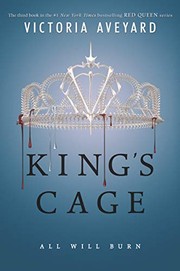
King's Cage
Chained by Maven with Silent Stone, Mare endures while Cal and the Guard gamble on rescue and alliance.
2,001-word summary · 9 min read
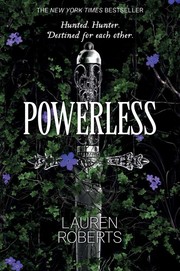
Powerless
Ordinary Paedyn hides in Ilya, saves Kai, and enters the Purging Trials while pretending an ability.
3,079-word summary · 14 min read
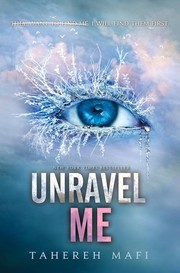
Unravel Me
Juliette trains at Omega Point while Warner hunts her and Adam's touch starts to hurt them both.
2,262-word summary · 10 min read
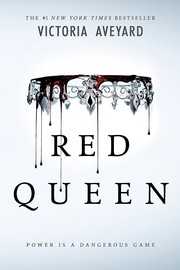
Red Queen
In a world split by red and silver blood, a Red girl with impossible powers is forced into palace lies, a royal engagement, and a rebellion she cannot trust.
2,522-word summary · 11 min read

The Hunger Games
Suzanne Collins's The Hunger Games explained: the reaping, Rue, the tracker jackers, the nightlock berry standoff, and what the arena is really for.
2,295-word summary · 10 min read
Mockingjay
Suzanne Collins's Mockingjay explained: Katniss as the symbol, District 13, Coin and Snow, and the speech that ruins victory for her.
2,474-word summary · 11 min read
Divergent
Veronica Roth's Divergent explained: the five factions, Tris's choice of Dauntless, the aptitude test, and where the trilogy's premise starts to crack under…
2,494-word summary · 11 min read
Catching Fire
Suzanne Collins's Catching Fire explained: the Quarter Quell, the arena's secret, Finnick and Johanna, and the moment the Games turn into a rescue.
2,459-word summary · 11 min read

Starsight
Spensa Nightshade goes undercover aboard the Superiority space station Starsight to steal a hyperdrive, and finds a frightened bureaucracy where she expected…
2,568-word summary · 11 min read
Edgedancer
Hungry street thief Lift and her vine-like friend Wyndle cross the Herald Nale in Tashikk when a child emperor shows Radiant signs and she refuses to step…
2,328-word summary · 10 min read

The Thief
A boastful young thief is pulled from a prison to steal a legendary stone for the king's magus, and the story he tells about himself is not the whole story.
2,514-word summary · 11 min read

Inkdeath
The final Inkworld novel sends Mo into the land of the dead, leaves Meggie choosing between two boys, and ends the Adderhead's immortality with three written…
2,062-word summary · 9 min read

Vow of Thieves
Kazi and Jase return to Tor's Watch to find it occupied, and their marriage is tested by captivity, betrayal, and a war for the town of Hell's Mouth.
2,059-word summary · 9 min read

The Lost Sisters
Taryn Duarte writes a letter to her twin, Jude, explaining how she fell for Locke and why she stayed silent while he used them both.
1,914-word summary · 9 min read
The Icebound Land
Captured and enslaved in Skandia, Will fights a drug that erases him while Halt and Horace cut a bloody road through Gallica to bring him home.
2,088-word summary · 9 min read

The Hunger Games Tribute Guide
The official 2012 companion to the first Hunger Games film profiles all twenty-four tributes and walks through the reaping, training, and interviews.
2,092-word summary · 9 min read

Magic Burns
A magic flare hits Atlanta, and mercenary Kate Daniels must recover stolen maps, find a missing witch, and keep a teenage girl alive while Celtic gods try to…
2,021-word summary · 9 min read
Year One
A plague released in Scotland kills most of humanity, and the survivors discover magic, build a town, and wait for a child who may save them.
2,029-word summary · 9 min read

Lioness Rampant
Alanna searches for the Dominion Jewel with the Shang Dragon, then returns to Tortall to face Duke Roger at Jonathan's coronation.
2,478-word summary · 11 min read

The Siren
Saved from a shipwreck in 1930, Kahlen becomes a siren who sings men to their deaths for the Ocean, until a boy in a college library makes her want a life she…
2,369-word summary · 11 min read
Dealing with Dragons
A princess who hates embroidery runs away to become the cook and librarian for a dragon, then has to outthink wizards, knights, and a plot against the dragon…
2,563-word summary · 11 min read

Cruel Beauty
A girl raised to kill the demon prince who rules her cursed land instead falls in love with him, in a retelling that mixes Beauty and the Beast with Bluebeard…
2,669-word summary · 12 min read
Chainsaw Man, Vol. 1: Dog and Chainsaw
A broke teenage devil hunter and his chainsaw dog get a second life, a government leash, and a fight that stops mid-swing in Fujimoto's horror comedy.
2,584-word summary · 11 min read