
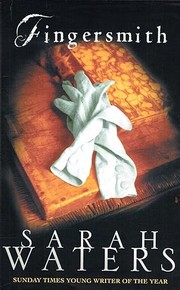
Fingersmith
2,532-word summary 11 min read 548 pages in the book
- First published
- 2002
- Publisher
- Virago Press
- Pages
- 548
- ISBN
- 9781860498824
Reading options
What's inside (8 sections)
I came to Fingersmith late, after hearing it described as a Victorian crime story with two big turns. That kind of praise usually makes me wary. Books built around shocks often sag between them. This one did not sag for me, though it did make me uneasy in places. It is a 2002 Virago Press novel, 548 pages in the standard edition, set among thieves in London and in a country house with a locked library. The unease comes from how close Waters keeps you to Sue Trinder, the narrator for the first long stretch, while letting you see that Sue does not grasp her own plan.
Sue is a fingersmith, a thief trained from childhood to handle stolen goods and talk her way past marks. She was raised at Lant Street by Mrs Sucksby, who takes in farmed babies alongside thieves, fences, and petty schemers. Sue loves Mrs Sucksby with a loyalty that shapes every bad choice she makes. When a man called Gentleman, real name Richard Rivers, brings a scheme to rob an heiress, Sue agrees to play maid and helper. She thinks she knows who is fooling whom.
What kept me reading was not the mechanics of the trick but the daily texture. Laundry, gloves, keys, bells, medicine bottles, library dust. Waters spends time on routine so that when the scheme flips, the flip rests on small things: who signs a paper, who knows a name, who is believed when two women claim one identity.
Lant Street and the plan
Sue grows up in Mrs Sucksby's house off Lant Street, Borough, among people who live by theft. Babies cry upstairs. Men bring watches and silk. Mrs Sucksby rules with a mix of warmth and threat. Dainty, Sue's close friend, stays near the house. John does rough work. Mr Ibbs, the locksmith tied to the house, handles goods.
Gentleman arrives with polish that stands out in that kitchen. He is handsome, well spoken, and clearly a fraud, living as a gentleman while working as a swindler. He has met Maud Lilly, a niece kept at Briar near Marlow, heiress to a fortune left by her mother Marianne Lilly. Maud lives with her uncle, Christopher Lilly, a scholar of a strange kind, who keeps her to work in his library. Gentleman's plan is simple to state. Sue will take a place as Maud's maid. She will encourage Maud to trust Gentleman, to marry him in secret, to leave Briar. Once married, Gentleman will have doctors declare his wife mad and shut her in an asylum, then claim her money. Sue will get a share, enough to lift Mrs Sucksby and herself out of Lant Street.
Sue agrees. She tells herself Mrs Sucksby needs the money and that Maud, a lady who has never wanted for food, can spare it. This is the moral math of Lant Street, and Waters does not dress it up. Sue also likes Gentleman's attention. He treats her as clever and pretty, and she is seventeen and hungry for regard outside the house.
Training follows. Sue learns how a lady's maid speaks, dresses hair, manages clothes, pours tea without spilling. She practices curtsying and silence. Mrs Sucksby warns her to keep her heart out of it. It is the kind of warning that tells you what will happen next.
The trip to Briar reads as a removal from noise to quiet. London streets give way to lanes, a river, a large brick house with barred windows in parts. Sue arrives with a false character and a racing pulse, expecting Maud to be proud and sharp. Maud is something else, pale, odd in manner, quick to blush, unused to company.
Briar and the library
Briar is run around Mr Lilly's library. He is compiling and indexing a vast collection of pornographic books and prints, with Maud serving as reader and secretary since childhood. Maud reads aloud passages she was too young to grasp, copies indexes, keeps lists, wears gloves to handle plates. Her uncle corrects her pronunciation as if this were Latin or scripture. Servants keep distance. The housekeeper watches routine. The hall boy Charles runs errands and stares.
Waters writes these chapters through Sue's eyes, so we learn Briar as Sue learns it. Bells for rising and meals. Keys for the library. Maud keeps strange habits, like caring for her gloves, and she asks Sue plain questions about London life that show how narrow Briar has been. She barely knows how shops work. She knows a great deal about the history of dirty books and almost nothing about ordinary affection.
Sue's job is to make Maud trust her, then to praise Gentleman. The first part happens too well. Sue brushes Maud's hair, sits with her during reading sessions that leave them both shaken. Maud asks Sue to stay near because the material turns her cold and she dreads her uncle's temper. Pity mixes with the plan and makes Sue clumsy.
Gentleman visits as a painter of book plates, a cover that lets him enter the library and court Maud under Mr Lilly's nose. He charms the uncle with talk of art and bindings. He charms Maud with talk of London and freedom. Sue passes notes, arranges walks, tells Maud that marriage is escape. She believes she is acting. Maud seems to believe her.
The two women grow close in the night hours. They share a bed for warmth during a storm, then again by choice. Sue has had no gentle teaching about desire. Maud has had teaching of the wrong kind entirely. Their affair is tender and confused, full of pauses and fear of being heard. For Sue it creates guilt that she pushes aside by telling herself the asylum stay will be short.
This middle stretch is long and I was glad it was. Without the slow build of gloves and keys and reading lists, the later turns would play as tricks. With it, they play as breaks in lives we have watched closely.
The first turn
Gentleman's courtship reaches its point. Maud agrees to run away and marry him in London. Sue helps pack, lies to the housekeeper, keeps Mr Lilly calm with routine while Maud slips out. The house feels loud that day though nothing much happens aloud, if that image carries. Sue expects triumph. She gets speed instead: a cab, a train, streets she knows, a church or registry arrangement handled fast by Gentleman's contacts.
Then the plan moves to the asylum. In Sue's telling, this is where Gentleman keeps his promise in reverse. They arrive at a private asylum with Maud weeping and Sue playing the maid who confirms the sad story. Papers are signed. A doctor asks questions. Only the names on the answers do not match what Sue expects. The woman claimed as the mad wife is called Sue, and the proof points to Sue, not Maud. Gentleman and Maud stand together while Sue protests. Staff hold her arms. She screams that she is the maid, that Maud is the lady. The staff hear this as proof of madness, since they have just been told the new patient believes she is a servant.
Waters handles this without turning it into farce. Sue's knowledge of Lant Street cant and thieves marks her as low and strange in a place that expects ladylike speech. Her anger reads as symptom. Her true details, Mrs Sucksby, Lant Street, Gentleman, sound like delusion to a doctor who has been paid to hear delusion. Maud leaves with Gentleman. Sue stays behind in a grey dress with a new name on the record.
I read these pages fast the first time and had to go back. Clues were there. Maud's odd calm during the escape. Gentleman's care with papers. Small remarks about who would be believed. Sue missed them because she wanted the plan to hold. I missed some too because Sue won my sympathy early and I wanted her cruel scheme to at least pay.
Maud tells it again
The second large part rewinds and gives Maud's life from childhood. This is the section that lifts the book from clever to serious, for me. Maud was brought to Briar after her mother Marianne Lilly died. Mr Lilly raised her not as a daughter but as an instrument for his library. He beat her for mistakes in reading. He kept her from other children. He taught her to keep her hands still and her voice even. The housekeeper enforced rules. Maud learned to survive by being useful and blank.
Gentleman entered Maud's life earlier than he entered Sue's. He offered Maud the same plot with roles reversed. Maud would bring a maid, really Sue, to Briar, marry Gentleman, then have the maid certified as the mad wife Maud. Maud would be free of Briar and her uncle, with money to share. To Maud, who had never been outside a small circle, this sounded like rescue. She agreed and learned the maid's part cold: how to speak, how to lean on Sue, how to seem fragile.
Reading the same months again changes small scenes. A look from Maud that Sue read as trust was fear. A question about London that Sue read as innocence was rehearsal. The night closeness that Sue read as love breaking through was love mixed with dread, because Maud knew she would soon send this girl to a locked ward. Waters does not excuse Maud. She shows the pressure that made betrayal seem like the only door.
Maud's account also fills the London side. Gentleman is rougher here, more threatening, quick to remind Maud that without him she has no money and no name that will hold. The housekeeper and Charles look less like background and more like watchers. Escape seems urgent rather than romantic.
By the end of this part, sympathy shifts but does not settle. Sue planned to lock Maud away. Maud planned to lock Sue away. Gentleman planned to profit either way. Mrs Sucksby, seen from Maud's angle through old letters and visits, knows more than she told Sue. The question becomes not who tricked whom first but what the older women set in motion years before.
Sucksby and the last turn
The last part returns to Sue in the asylum and follows her out. Life inside is damp, boring, and frightening by turns. Sue learns to obey outwardly while holding to names and addresses inwardly. She befriends some patients and fears the staff. Doctors note her talk of Lant Street as fantasy. Time passes without clear marks. Waters writes this stretch shorter than Briar, which seems right. The asylum is meant to blur days.
Sue gets out through a mix of luck, bribery contacts from Lant Street, and her own stubborn memory of streets and names. She goes back to Mrs Sucksby expecting shelter and praise for keeping silent. What she gets is the last turn, told in Mrs Sucksby's kitchen with Gentleman pressing for his share.
Mrs Sucksby had been nurse to Marianne Lilly. Years earlier, Marianne died bearing a child at Briar while Mrs Sucksby's own newborn lay nearby. Mrs Sucksby swapped the infants. She took Marianne's daughter to Lant Street to raise as Sue, and left her own daughter at Briar to be raised as Maud Lilly, heiress in name. She did it, in her account, to give her own child a better life.
This means Sue is by blood the heiress and Maud is by blood Mrs Sucksby's daughter. It also means the two plots to lock the other away were built on false identities. Gentleman sees money either way and tries to force payment. A struggle follows in which knives and threats come out. Gentleman dies, by mischance and violence rather than plan, and Mrs Sucksby takes blame that leads her to the gallows. I will keep the exact sequence light here because the tension rests on who enters the room when, and a summary can flatten it. The key point stands: the older generation's swap makes both girls victims of a choice they did not make.
Mrs Sucksby's arrest and trial move fast. Sue cannot save her by telling the truth about births, because Mrs Sucksby chooses to protect Maud's chance at the money. The hanging chapter is stark. Sue watches from outside, unable to reach her.
What works and what strains
The structure works because Waters earns the rewind. Maud's half does not merely repeat. It shows labor: indexing, reading aloud, beatings for errors, gloves, locked doors. It shows why Maud would agree to a cruel plan. It also shows Gentleman plainly as a user of both women, not a charming rogue. By the time Sue returns to London streets, both girls have done wrong and both have been wronged, and the story can move past who fooled whom to whether they can live without the men who arranged it.
Sue and Maud meet again at the close, first through letters and errands, then at Briar, where Maud has returned to face the library and her uncle's papers. Mr Lilly is broken by exposure and age, less a monster in these pages than a man whose work has left him hollow. The house that was a prison becomes a place where Maud can burn or keep what she chooses. Sue arrives wary, expecting rejection. What follows is tentative rather than grand. They talk, they quarrel, they stay. Waters ends on closeness without claiming the past is mended.
Fair criticism belongs here. The asylum escape leans on chance and on contacts that arrive when needed. Gentleman's end comes fast after so much careful plotting, and readers who want every paper trail closed may want more about the money and the law. Some library passages test patience by design, since cataloguing pornography is repetitive work, and Waters repeats it to make Maud's boredom and shame land. I understood the choice and still skimmed a few lists.
Length is fair at 548 pages. The first hundred build Lant Street, the next two hundred build Briar, the rest turns and resolves. Dialogue rings true without stretched slang. London speech is present but readable, country house speech is stiff in the right way.
What stayed with me was not the twists, though they are well built, but Mrs Sucksby's kitchen early on: steam, gin, babies crying, Sue proud of her quick fingers. That room explains Sue better than any later reveal. She was taught to take, to lie for her own, to trust one woman absolutely. Briar taught Maud to endure, to read what she hated, to trust no one. Put those two trainings together under Gentleman's plan and betrayal was almost sure. That they find a way to stand in one room at the end without a scheme between them gives the book its weight.
If you read it, watch the papers. Signatures, admission forms, marriage lines, library indexes. Waters plants them early and uses them late. And allow Maud's half its slow start. It looks like repetition for fifty pages, then it turns and shows you a different girl in the same dress. That shift is the point of the whole novel.
FAQ
Is Fingersmith a mystery or a love story?
It works as both. The first half reads as a crime plot, the second half reframes it, and the close centers on Sue and Maud.
How explicit is the book?
There are frank passages between Sue and Maud, plus cold descriptions of pornography cataloguing at Briar. It suits adult readers comfortable with that material.
Do I need to know Victorian history?
No. Waters explains thieves cant, servants routine, and asylum admission through scenes. A general sense of 1860s London is enough.
Similar books
The Art Forger
A disgraced Boston painter agrees to copy a Degas stolen from the Gardner Museum, then begins to suspect the original she is copying is itself a forgery.
2,117-word summary · 9 min read
The Black Dahlia
James Ellroy builds a fiction around the real Black Dahlia murder, following two Los Angeles cops whose partnership and obsessions destroy them.
2,533-word summary · 11 min read
Last Night at the Telegraph Club
The 2021 National Book Award winner follows Lily Hu, a Chinese American teenager in 1954 San Francisco, as she falls for Kath and learns what it costs to be…
2,336-word summary · 10 min read
The Memoirs of Sherlock Holmes
Doyle's second Holmes collection gathers twelve Strand stories, including the early case of the Gloria Scott and the confrontation with Moriarty at Reichenbach…
2,390-word summary · 11 min read
The Clockmaker's Daughter
A London archivist finds a Victorian satchel holding a photograph, a sketchbook and a letter, then follows them to Birchwood Manor, where a young woman died in…
2,886-word summary · 13 min read
Death Comes to Pemberley
P.D. James drops a murder onto the Pemberley estate and sends Wickham to trial, reading Austen's most famous marriage through the machinery of Georgian justice.
2,318-word summary · 10 min read

The Redbreast
Harry Hole chases an ageing sniper through modern Oslo while two Norwegian volunteers on the Eastern Front carry a fifty-year-old betrayal toward a royal…
2,453-word summary · 11 min read
Bleak House
Jarndyce and Jarndyce grinds through Chancery while Esther finds her family.
2,480-word summary · 11 min read

Maisie Dobbs
A maid turned war nurse opens a London inquiry agency in 1929 and traces a quiet case to a refuge for shattered soldiers.
2,382-word summary · 11 min read
Shutter Island
A U.S. marshal hunts a missing patient on a locked asylum island in 1954, where every clue turns back on him.
2,761-word summary · 12 min read

What She Knew
Rachel lets her eight-year-old son run ahead in a Bristol park, and the nine-day search turns her into a suspect in the public eye.
2,952-word summary · 13 min read

The Beach House
A young valet is beaten to death at a Hamptons party, and his law-student brother spends a year building a case against the family that covered it up.
2,049-word summary · 9 min read

Six Years
A professor who promised to forget the woman he loved sees her husband's obituary and discovers that the wedding, the marriage, and the woman herself may never…
2,076-word summary · 9 min read

How the Light Gets In
Gamache investigates the murder of the last Ouellet quintuplet while the Sûreté he served is dismantled from inside by the man who took his protégé.
2,279-word summary · 10 min read

Bury Your Dead
Recovering from a failed raid that killed his officers, Gamache investigates a murder in a Quebec City library while Beauvoir reopens a case in Three Pines.
2,022-word summary · 9 min read

Anatomy: A Love Story
In 1817 Edinburgh, a noblewoman who wants to be a surgeon disguises herself to study anatomy and falls for the grave robber who supplies her with bodies.
2,031-word summary · 9 min read

The Trespasser
A Dublin Murder Squad detective investigates a staged dinner-party killing and finds a cover-up that reaches into her own department.
2,051-word summary · 9 min read

Rules of Prey
Minneapolis detective Lucas Davenport hunts a killer who leaves a new rule at every scene and treats murder as a game of wits.
1,914-word summary · 9 min read

Ace of Spades
Two Black seniors at an elite academy are celebrated by day and hunted by an anonymous texter in this YA thriller about institutional racism.
2,066-word summary · 9 min read
Mrs. Everything
Two Jewish sisters in Detroit grow up, apart and together, across seven decades of American life, from the 1950s to the 2016 election.
2,362-word summary · 10 min read

The Late Show
Exiled to the LAPD night shift after accusing her supervisor, Renée Ballard keeps two cases that were meant to be handed off at dawn: a brutal assault and a…
2,563-word summary · 11 min read
Only Time Will Tell
A Bristol dockworker's son wins a scholarship, falls in love with the daughter of the family that owns the shipyard, and learns that his father's death was not…
2,082-word summary · 9 min read
Finger Lickin' Fifteen
Lula sees a celebrity chef decapitated and talks Stephanie into entering a barbecue contest to lure the killers, while Ranger hires her to find a security leak…
2,248-word summary · 10 min read

4th of July
Lindsay Boxer shoots two armed teenagers in self-defense, faces a wrongful-death trial, and spends her leave chasing a string of throat-slashing murders in…
2,192-word summary · 10 min read
The Camel Club
Four Washington misfits witness a murder on Roosevelt Island and stumble into a conspiracy that reaches the Oval Office, with a hostage president and a nuclear…
2,354-word summary · 10 min read
I Kissed Shara Wheeler
Shara Wheeler kisses her rival Chloe Green at prom and disappears, leaving a scavenger hunt that forces Chloe to rethink everything she knew about her.
2,083-word summary · 9 min read

61 Hours
A bus crash strands Jack Reacher in a snowbound South Dakota town where a drug gang, a corrupt police force, and a single witness are on a collision course.
2,227-word summary · 10 min read
Once Upon a River
A wounded man stumbles into a riverside inn carrying what appears to be a drowned child who is not quite dead, and the story braids the guesses of everyone who…
2,173-word summary · 10 min read
The Moonstone
A cursed yellow diamond vanishes on the night of a birthday party, and eight witnesses tell what they saw.
2,603-word summary · 12 min read

The Echo of Old Books
Barbara Davis's 2023 novel sends a rare-book dealer in 1984 New Hampshire hunting for the authors of two unpublished volumes that tell opposite sides of one…
2,491-word summary · 11 min read