
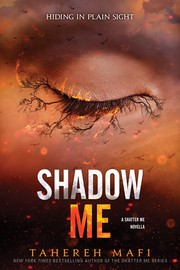
Shadow Me
2,512-word summary 11 min read 112 pages in the book
- First published
- 2019
- Publisher
- HarperCollins
- Pages
- 112
- ISBN
- 9780062906267
- Series
- Shatter Me (#4.5)
Reading options
What's inside (8 sections)
I picked up Shadow Me because Kenji finally talks. I have read the Shatter Me books on and off since high school, and Kenji Kishimoto was always the friend I wanted more of, funny in the mess hall, steady in a fight, gone too often while Juliette narrated her storms. When I learned that this slim book, first published in 2019 by HarperCollins with 112 pages in the standard hardcover, is novella 4.5 in the Shatter Me series after Restore Me and told entirely from Kenji's point of view, I ordered it right away. I read it in one sitting on a rainy afternoon, tea going cold, and I finished wanting both more Kenji and more story.
That tension runs through the whole book. It is short on purpose. It fills a gap between big novels, shifts the camera, and sets up Defy Me. If you come expecting a full arc with training, battles, and a solved mystery, you will feel hungry after. If you come to hear how Kenji sounds inside his own head and to watch Juliette and Warner from the side, there is real pleasure here. I will walk through what happens, keep the surprises light where I can, and say plainly where it feels thin.
Finally hearing Kenji in first person
The biggest event in Shadow Me is not a battle. It is the voice. Until now Juliette has carried most of the narration with her crossed out thoughts and raw feeling, and Warner has had his turn with cold control cracking open. Kenji has been the joke and the glue, the one who says what everyone else is too scared or too proud to say. Here Mafi hands him the mic for the first time, and the change is instant.
His sentences are shorter. His humor is faster. He notices bodies in a room, who is scared, who is faking calm, where the exits are. Where Juliette might spend a page turning a feeling over, Kenji names it and moves. I laughed in the first ten pages at the way he talks about command meetings, the way he copies Warner's stiff phrasing in his head and then answers back in slang. It feels like sitting next to the class clown who is actually paying closer attention than anyone.
That shift does honest work for the series. Kenji can say things about Juliette that Juliette cannot say about herself. He loves her, but he is not in love with the idea of her. He sees when she performs strength for the troops and when she goes quiet because the weight of leading scares her. He can also needle Warner in a way no one else dares, calling out the polished boots and clipped orders while admitting, in quieter lines, that Warner has earned some of that authority.
I did notice the voice wobbles. Sometimes Kenji sounds exactly like himself from the main books, warm and sharp and tired. Sometimes he sounds like Juliette doing Kenji, lyrical in a way that does not fit a soldier trying to file a report in his head. Mafi's style is poetic even at its plainest, and you can feel her pulling toward image and repeat when Kenji would probably shrug and swear. I did not mind much because the charm carries, but if you read closely you will catch lines that feel borrowed from another narrator.
Where we are after Restore Me
To place this novella, you need the situation at the end of Restore Me without me spoiling every turn. Juliette, who once believed her touch was only a curse, has taken power as a leader among the fractured forces resisting the Reestablishment. She is with Warner, who has his own brutal training and his own claim to command. They hold a base, they have allies with strange and strong abilities, and they face a larger enemy that keeps changing shape. The Supreme, the distant head of the Reestablishment, hangs over everything. Old lies about Juliette's family and childhood keep surfacing.
Restore Me ended with fragile hope and fresh fear. The group won room to breathe, but trust was thin. Soldiers follow Juliette because she survived the worst and keeps standing up. Some follow because they have nowhere else to go. Warner tries to hold discipline together while letting Juliette lead in her own way, which is not his way. Kenji sits between them, loyal to Juliette since the early days at Omega Point, respectful of Warner's skill, sick of speeches.
Shadow Me starts in that tired after. People train, argue over supplies, sleep badly. Juliette calls meetings and tries to sound like a commander when she still feels like a girl who was locked up for killing by accident. Warner stands beside her, corrects details, takes the blame for hard calls. Kenji watches and jokes because joking keeps him from shouting. The base feels crowded and cold. I liked how Mafi lets small details carry the mood. Wet socks. Cold rice. A door that will not latch. A kid who cries in the night and pretends he was coughing.
This is bridge material, and Mafi does not pretend otherwise. No one states a grand goal in chapter one. The talk is about intel, about who can be trusted, about what the Supreme wants and where the next blow might land. If you have not read Restore Me, you will feel lost for twenty pages. The book assumes you know who Omega Point was, what Sector 45 meant, why Juliette's touch matters, why Warner's past makes people flinch. I think that is fair for a 4.5 novella, but it means this is not an entry point. Read it in order or skip it until you catch up.
Juliette and Warner seen from the side
One pleasure of a side point of view is seeing the main couple as other people see them, and Shadow Me uses that well. From Kenji's eyes, Juliette looks younger and older at once. Younger because she still asks him if she did okay after a speech, the way a friend asks after a test. Older because she has learned to walk into rooms where people want to hate her and stand still until they listen. Kenji notes the way she touches Warner's sleeve for courage and then steps forward alone. He notes the way she remembers names of low rank soldiers, which Warner sometimes forgets in his focus on tactics.
Warner, from this angle, is less the tortured lover and more the officer. Kenji respects his aim, his planning, his willingness to take night watch when others sleep. He also finds him exhausting. Warner irons his shirts in a war zone. He corrects grammar during arguments. He says please in a tone that means now. Kenji imitates him mercilessly in his head, then admits he would rather have Warner on his side in a corridor fight than almost anyone. That mix felt true to how teams work. You can love a leader and want to throw a boot at him.
There is a strong scene early where Juliette asks Kenji for honesty, not comfort. She wants to know if the troops believe her. Kenji wants to protect her, so he softens at first. She calls him on it. He tells her part of the truth, that some do, some pretend, some wait to see if she bleeds. She takes it quietly. Warner listens from the doorway and later thanks Kenji in his stiff way, which Kenji pretends annoyed him. I liked that Mafi lets leadership look lonely here rather than grand. No speech fixes supply lines or nightmares.
The romance itself stays in the background, which I appreciated. Juliette and Warner hold hands, exchange looks, argue about risk. Kenji gives them space and teases them to break tension. He is not jealous. He is protective in the way an older brother is protective, worried they will get each other killed by refusing to rest. That distance lets the book breathe. After the intensity of Restore Me, a cooler eye helps.
The mission with Nazeera
The plot, such as it is, centers on a quiet assignment. Command needs eyes somewhere risky, and Kenji is sent out with Nazeera, Warner's fellow soldier with her own cool skill set and colder manners. I will keep the where and how general to avoid ruining the few surprises, but the shape is familiar to series readers. Travel under cover. Watch and listen. Do not engage unless forced. Report back.
What makes it worth reading is the pairing. Nazeera is controlled where Kenji is loose. She follows orders to the letter. She does not laugh at his jokes, or she laughs once and then denies it. She knows things about the Supreme and about Warner's family history that Kenji does not, and she rations information like medicine. Kenji, who hates being managed, pushes her buttons on purpose to get a real reaction. Their banter covers nerves. Both of them are scared and too trained to say so plainly.
Mafi writes the infiltration with steady craft. False names. Borrowed coats. A checkpoint where a wrong answer would end them. A room where they have to smile while memorizing faces. Kenji's invisibility, his ability to fade from sight, gets used in smart small ways rather than big saves. He slips to listen at doors. He stands in corners and counts guards. He learns that being unseen does not mean being unfelt. His heart pounds so loud he fears it gives him away. I liked those physical touches because they keep powers grounded.
There is action, but not much. A chase. A close call. A moment where Kenji has to choose between covering Nazeera and keeping himself hidden. He chooses her, which tells you what you already knew about him but feels good to see confirmed under pressure. The mission does not end with a captured base or a rescued prisoner. It ends with information, uneasy and incomplete, the kind that makes command meetings longer rather than shorter. If you wanted a self contained adventure, this will frustrate you. If you accept that novellas often gather rather than spend, it reads fine.
Secrets, family ghosts and the Supreme
What the mission brings back is knowledge, and knowledge in Shatter Me is always personal. The Reestablishment is not just an army. It is a system built on lies about children, about powers, about who Juliette was before she learned her name. Shadow Me leans into that without dumping files of exposition. Kenji hears names he half knows. He sees a photo or a record that does not match the story he was told. Nazeera says less than she knows, and what she withholds worries him more than what she shares.
I will stay general here because the reveals point straight into Defy Me. They concern Juliette's sister and her childhood, the way the Supreme shaped girls with abilities, and the experiments and separations that made Juliette who she is. Kenji already knew some of it in outline. Hearing detail makes it heavier. He thinks about Ella, the name tied to Juliette's past, and about what it means to be remade by people who claimed to protect you. He thinks about his own family too, briefly, the parents and past he rarely mentions, and how little room war leaves for grief.
The strongest pages for me were not the reveals themselves but Kenji's reaction to carrying them. He has to decide what to tell Juliette and when. Tell her now and risk breaking her focus before the next move. Hold it and risk her learning she was managed like an asset. He talks it over with Nazeera in clipped night talk, both of them tired, both aware that Warner will want control of the timing. Kenji hates secrets on principle because he grew up watching lies rot teams from inside. Yet he keeps this one for a little while, and hating himself for it makes him more human.
Mafi also uses the Supreme as weather rather than a person. No long speech from the villain. Just orders, rumors, movements of troops, a sense of a mind watching. That restraint works in a short book. A big confrontation would have felt rushed. Dread fits the page count better. I did wish for one concrete new fact about how the Reestablishment ranks its commanders, something tactical to hold. Instead the secrets stay emotional, about identity and kin. That is on brand for Mafi, but readers who love map and maneuver may feel shorted.
A bridge into Defy Me and what I thought
The ending does what bridges do. Kenji returns, reports, argues about next steps, watches Juliette absorb another blow about her past and straighten anyway. Warner tightens plans. Nazeera watches them all with an expression Kenji cannot read. The last lines point clearly toward Defy Me, promising that the truths glimpsed here will break open there. I closed the book in under two hours and sat quiet, fond and a little annoyed.
Fond because Kenji's heart is all over this. His loyalty to Juliette, his respect for the young soldiers, his jokes that cover fear, his refusal to leave Nazeera even when orders would allow it. There is a late scene where he sits with Juliette after a hard talk and just stays, no advice, no teasing, and it moved me more than any speech in Restore Me. Mafi understands that friendship can be as steadying as romance, and giving Kenji space to show that was the right call.
Annoyed because, honestly, not much happens. You can summarize the plot in three sentences. Two people go to listen, they learn something painful, they bring it home. The rest is voice and waiting. That is thin even for a novella, and the price for 112 pages stung a bit when I bought the hardcover. I also felt the Kenji voice slip in places into generic Mafi lyricism, pretty but wrong for him, and Nazeera stays more function than person. She guards secrets, she fights clean, she leaves. I wanted one memory from her childhood, one habit, one crack.
Should you read it. If you love the series, yes, and read it between Restore Me and Defy Me where it belongs as book 4.5. It will make Defy Me hit harder because you will know what Kenji knows and why he worries. It will also make you like Kenji more, which I did not think possible. If you are new, skip it for now and start with Shatter Me. If you only read doorstoppers and hate connective tissue, borrow it rather than buy it. For me, despite the thinness, hearing Kenji say I got you to Juliette in his own words was worth the afternoon. It reminded me why I stayed with these books past the early love triangle noise. Under the powers and palaces, they are about kids trying to keep each other human, and Kenji is the one who says that out loud.
FAQ
Who narrates Shadow Me?
Kenji Kishimoto narrates Shadow Me. It is his first time as the series narrator after Juliette and Warner carried earlier books.
Where does Shadow Me fit in the Shatter Me series?
Yes. It is novella 4.5, set after Restore Me and before Defy Me. It was first published in 2019 by HarperCollins.
Do I need to read Shadow Me before Defy Me?
You can follow Defy Me without it, but the secrets Kenji learns here land harder if you read this 112 page bridge first.
Similar books
More from Shatter Me first, then related titles.

Shatter Me
Juliette Ferrars, whose touch kills, is locked up by the Reestablishment until Adam and Warner pull her into war.
2,115-word summary · 9 min read
Destroy Me
Shot by Juliette, Warner holds his base together while his father arrives with harsher plans for her.
2,556-word summary · 11 min read

Unravel Me
Juliette trains at Omega Point while Warner hunts her and Adam's touch starts to hurt them both.
2,262-word summary · 10 min read
Fracture Me
Adam Kent narrates this short bridge story after Omega Point falls, hiding with his little brother James while facing his fading place beside Juliette. Best…
3,004-word summary · 13 min read

Ignite Me
Juliette must rebuild after Omega Point falls, face Anderson, and choose between Adam and Warner as war closes in.
2,253-word summary · 10 min read

Restore Me
Juliette, now Supreme Commander, faces rule, the truth about Ella and Emmaline, and a summit that ends in blood.
2,963-word summary · 13 min read

Defy Me
Kidnapped to Oceania, Ella faces her cruel parents and dying sister while Warner and Kenji fight to reach her.
2,833-word summary · 13 min read

Reveal Me
A Shatter Me novella told by Kenji, set between Defy Me and Imagine Me, as the rebels learn Anderson has taken hostages and Juliette faces Emmaline.
2,098-word summary · 9 min read
Imagine Me
Juliette remembers who she was and storms the capital to end the Reestablishment for good.
2,090-word summary · 9 min read

Believe Me
Warner narrates life after Imagine Me as he and Juliette try to marry amid Sanctuary repairs.
2,217-word summary · 10 min read

Iron Widow
Wu Zetian enlists to avenge her sister, kills her pilot, and becomes an Iron Widow in a mecha Huaxia where the machines are built to kill women.
2,444-word summary · 11 min read

Archenemies
Nova steals for the Anarchists while Adrian hides his Sentinel identity, and a serum that erases prodigy powers puts them both at risk.
2,485-word summary · 11 min read

Stars Above: A Lunar Chronicles Collection
Nine Lunar Chronicles stories fill in the histories of Cinder, Wolf, Thorne, Cress, Winter, and Jacin, and end with a wedding after the war.
2,230-word summary · 10 min read

Wither
In a future where women die at twenty, sixteen-year-old Rhine is sold as a bride to a wealthy stranger and plots an escape from a beautiful prison.
2,395-word summary · 11 min read
World After
Penryn wakes from near-death to find her altered sister Paige hunted as a monster, and follows her into the angels' scorpion factory and Uriel's coup.
2,213-word summary · 10 min read

Under the Never Sky
Exiled from her Pod, Aria crosses a storm-scarred wilderness with Outsider Perry to find family and the fabled Still Blue.
2,572-word summary · 11 min read


The Young Elites
Adelina survives fever and execution to join a secret group of gifted malfettos plotting against the queen of Kenettra.
3,310-word summary · 15 min read

Requiem
Lena fights in the Wilds while cured Hana marries into Portland power.
2,232-word summary · 10 min read

Angelfall
After angels destroy the world, Penryn trades help with a wingless angel to rescue her sister from their stronghold.
2,420-word summary · 11 min read



King's Cage
Chained by Maven with Silent Stone, Mare endures while Cal and the Guard gamble on rescue and alliance.
2,001-word summary · 9 min read
Powerless
Ordinary Paedyn hides in Ilya, saves Kai, and enters the Purging Trials while pretending an ability.
3,079-word summary · 14 min read
Delirium
In a America where love is treated as disease, Lena Haloway counts down to her Cure until she meets Alex in Portland.
2,425-word summary · 11 min read

Insurgent
Insurgent retold: Tris guilty after war, Erudite hunts Divergent, Amity talks, Candor serum.
1,951-word summary · 9 min read

Divergent
Veronica Roth's Divergent explained: the five factions, Tris's choice of Dauntless, the aptitude test, and where the trilogy's premise starts to crack under…
2,494-word summary · 11 min read

Vow of Thieves
Kazi and Jase return to Tor's Watch to find it occupied, and their marriage is tested by captivity, betrayal, and a war for the town of Hell's Mouth.
2,059-word summary · 9 min read

The Lost Sisters
Taryn Duarte writes a letter to her twin, Jude, explaining how she fell for Locke and why she stayed silent while he used them both.
1,914-word summary · 9 min read