
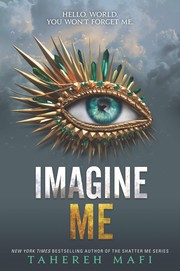
Imagine Me
2,090-word summary 9 min read 464 pages in the book
- First published
- 2020
- Publisher
- HarperCollins
- Pages
- 464
- ISBN
- 9780062676429
- Series
- Shatter Me (#6)
Reading options
What's inside (13 sections)
I finished Imagine Me late at night with the house quiet, which suited a finale about remembering who you are. Tahereh Mafi published it with HarperCollins in 2020, a 464 page closing volume of the Shatter Me series with ISBN 9780062676429. Juliette Ferrars, who learned her real name is Ella Sommers, must unite fractured rebels to stop the Reestablishment supreme command while deciding what mercy means after torture. Warner stands beside her. Kenji jokes through terror. Nazeera defects. The book is long, lush, and at times overwrought in the way finales are. It pays off six books of longing and power with a battle that is personal before it is global.
Juliette opens shattered in the way only Mafi writes. Broken into fragments, voices arguing in italics, memories of Ella childhood mixing with Juliette prison years. Supreme Commander Anderson holds her friends. Her sister Emmaline, whose power steals energy, is dying from overuse. Juliette must accept both names to use both strengths. Ella the child who was loved. Juliette the weapon who survived. Mafi writes the integration through touch and choice rather than exposition. She lets Warner hold her hand while she shakes. She lets Kenji tease her back into a body that feels borrowed. Power here is not a level up. It is permission to be whole.
Warner and the cost of holding
Aaron Warner gets his fullest book here and fans will be satisfied. Once the cold captain who wanted Juliette as a pet, now the general who loves her as an equal, Warner holds the rebel coalition together through discipline that costs him sleep and softness. He writes lists. He checks perimeters. He visits wounded soldiers by name. His chapters, in Mafi rotating POV, show a man terrified of becoming his father while using his father tactics to win. The tension breaks in small scenes. Warner reading to a child in a bunker. Warner asking Kenji for advice about Juliette and actually listening. His love language is logistics, and Mafi lets that be romantic without apology. Barricades checked. Blankets found. A war run on care.
Kenji Kishimoto carries the humor and much of the grief. Invisible when still, loud always, Kenji runs spy missions into the capital that require him to be nobody while feeling like everybody brother. His banter with Nazeera, the defector daughter of a supreme, starts as sparring and becomes the book second romance. Both have been weapons for bad men. Both want out. Their flirtation through danger feels age appropriate and unforced. Teasing over comms. A hand held too long after a rescue. When Kenji is captured late, the jokes stop. Mafi writes his torture plainly without lingering. What breaks him is not pain but the thought that his friends will trade the war to save him. They do and they do not. Rescue without surrender. That line holds because the team refuses the binary Anderson offers.
Nazeera and the inside
Nazeera switch is the plot engine. Raised as a supreme daughter, trained to kill, she defects after seeing Anderson murder without purpose. Her knowledge of capital shields, patrols, and codes lets the rebels plan an assault that is not suicide. Mafi handles her with care. Nazeera does not become good through speeches. She becomes useful through choices that cost her family, safety, and identity. Her chapters with Warner are prickly with mutual distrust that eases into respect. Both were raised as instruments. Both chose people over orders. That shared past makes them effective partners and wary friends. Young readers who loved villain redemption arcs will find this one earned through work rather than charm.
Emmaline, Juliette sister, is the book quiet tragedy. A child weapon whose touch drains life, kept in tanks and labs, she has weeks to live at most. Juliette wants to save her through love and power combined. Emmaline wants ice cream, stories, and one day outside. Their scenes together are short and devastating. Two sisters who share a face and a file number, meeting as people for the first time while one dies. Mafi does not miracle her well. Some damage holds. That restraint gives the finale weight. Not everyone survives revolution, even when the right side wins.
The capital assault
The last third is siege and storm. Rebels from former sectors converge on the capital with stolen ships and homemade bombs. Anderson welcomes them with suprema children soldiers and a broadcast calling Juliette a fraud. Mafi stages set pieces clearly. Shield walls that fail. Tunnels that flood. A courtyard where Juliette must choose between killing Anderson in rage and capturing him for trial. She chooses capture, barely, while Warner holds the line against troops who want execution now. That choice defines the series thesis. Power that kills its makers becomes them. Juliette breaks the cycle by refusing the final shot, then lives with soldiers who think she was weak. Leadership after mercy is harder than vengeance. Mafi lets that difficulty sit.
Anderson end is fitting. Exposed as a father who experimented on daughters, abandoned by his suprema, killed not by Juliette but by the system he built when it turns. No duel to glorify him. Just a small man out of rooms. The Reestablishment falls into regions that must negotiate rather than obey. Mafi skips nation building details in favor of personal reckonings. Who apologizes to whom. Who buries whom. Who leaves to find quiet. That focus suits a romance rooted series. The war was always about whether damaged teens could trust each other enough to share power. They can. They do. The cost is named on a memorial wall with too many names.
What works and what strains
What works is voice. Mafi prose, once mocked for purple repetition, matured into lush control. Strikethroughs are gone. Metaphors land more often. Juliette touch as language, Warner lists as love, Kenji jokes as armor. The romance earns its heat through six books of slow consent. Touches are negotiated. Power imbalances named. Warner asks. Juliette answers. That care matters in young adult. Fans also get payoff for side couples without derailing plot. Winston and Alia. Brendan and Lily. Each gets a beat that rewards attention.
The strain is length and lore. At 464 pages with rotating narrators, the middle repeats. Training. Arguing. Dreaming of Ella childhood. Anderson monologues twice too often. New readers cannot start here. Even returning readers may need a recap of Defy Me. Supremas, trackers, and compound politics blur. Mafi assumes devotion and rewards it unevenly. Readers who loved the early asylum intensity may find war logistics less intimate. The series grew from a girl in a cell to an army on a plain. Something delicate was lost in scale even as something grand was gained.
Who it is for
Read it only after books one through five, in order. It completes Juliette and Warner arc and sets up An Emotion of Great Delight universe echoes without requiring them. Content notes include torture and medical experimentation, war violence with deaths of teens, suicidal ideation discussed, and sexual content with clear consent kept at young adult level. Suitable for teens and up who followed the series.
I closed it satisfied and a little wrung out, the way finales should leave you. Juliette chooses her name, her love, and her mercy in that order. Warner learns to lead without cruelty. Kenji keeps joking because someone must. The supreme age ends not with a speech but with a girl holding her sister hand while machines stop humming. Imagine a world after weapons, Mafi suggests. Then build it with lists, jokes, and boundaries. For six books of yearning, that is a worthy last image. Touch carefully. Mean it.
Series note
Shatter Me order runs Shatter Me, Unravel Me, Ignite Me, Restore Me, Defy Me, Imagine Me, with novellas Fracture Me, Destroy Me, Shadow Me, Reveal Me between. Read novels in order. Novellas enrich but are optional. Imagine Me closes the main arc. Later books follow new characters in the same world.
Ella and Emmaline
Ella Sommers truth needs a straight telling because the name swap confuses even fans. Born Ella to the Sommers family, stolen young and renamed Juliette by Anderson, raised as a weapon with suppressed memories, she is both girls at once by this book. Ella the child who played with Emmaline. Juliette the teen who survived the asylum and Sector 45. Integration does not erase either. She answers to both. Signs both. Mafi writes the acceptance through small choices. Calling her parents Mom and Dad again. Letting Warner use Ella in private and Juliette in command. That fluidity models identity after trauma better than any speech. You are all the names you survived. Choose which to answer at each door.
Emmaline bond with Juliette carries the finale heart. Emmaline, dying from power overuse, wants only time outside tanks. Juliette breaks her out for ice cream, stories, and one night under real sky. They talk about parents they barely remember. They argue about whether Anderson can be forgiven. Emmaline forgives no one and loves her sister fully, a combination children of bad men understand. Her death mid book, quiet and held, motivates the assault more than any strategy talk. Mafi resists resurrection tricks. Dead stays dead. That finality gives Juliette mercy choice weight. Killing Anderson would not bring Emmaline back. Capturing him might save other Emmalines. She chooses the living over the dead. It is the only victory that matters.
Anderson as father
Supreme Commander Anderson gets his clearest portrait here and it is banal in the frightening way. Not a roaring tyrant but a tired administrator who experimented on daughters and calls it necessity. He believes his own posters. Order requires sacrifice. Sacrifice requires his children first. Mafi lets him explain without sympathy. He kept files on Ella bedtime. He ordered her torture to test limits. He mourns nothing. His end, killed by his own system when suprema turn, denies him martyrdom. No duel with Juliette to prove equal. Just a small man out of rooms while younger people decide better. Readers who wanted a big boss fight may feel cheated. The cheat is the point. Tyrants rarely fall to heroes. They fall to clerks who stop filing.
Castle and Brendan
Castle role as rebel founder gets closure here worth naming. Old, tired, idealistic, he built the uprising on secrets that cost children. His files hid Ella truth. His plans sacrificed teams. In Imagine Me he admits those costs without self pity and steps back so younger leaders can decide. That stepping back is his growth. Founders often grip harder when wars end. Castle loosens. Brendan and Winston, the joking pair who carried humor through torture, get a quiet wedding beat that rewards long fans. Their banter, which once deflected fear, becomes celebration. Mafi lets side love exist without trauma tax. Not every couple must bleed to earn pages. Some just feed each other during sieges and marry after. That normality amid suprema and sectors keeps the series human at scale. Wars end. Kitchens reopen. Jokes return.
The memorial wall
The memorial wall scene closes the book with appropriate weight. Names of dead teens etched where rebels gather. Juliette reads each one aloud while Warner stands beside her in silence. No speeches about glory. Just names and the lives they stood for. Civilians add flowers. Children ask who they were. Survivors answer with stories rather than ranks. That wall is Mafi answer to dystopia body counts that pile without cost. Every name cost someone dinner conversations, shared blankets, inside jokes. Reading them takes chapters? No, pages, but time slows anyway. The series that began with a girl alone in a cell ends with a community naming its dead together. Touch carefully, the wall implies. Remember loudly. Build gently after.
Warner lists
Warner habit of making lists gets a final note because it characterizes his love. Supply lists before battles. Names of wounded to visit. Reasons Juliette smiled that day. Those notes, glimpsed in his POV chapters, show a mind managing fear through order. Where Juliette feels in fragments, Warner contains in columns. His lists include small mercies. Extra blankets for Kenji. Tea Nazeera likes. A book Emmaline wanted. That attention is romantic without flowers. He cannot stop war, but he can stock its shelves kindly. When Juliette reads one list late in the book, she cries because care looks like handwriting. Mafi lets logistics carry feeling here better than anywhere else in the series. Love as inventory. Checked twice. Delivered under fire.
FAQ
When was Imagine Me published?
HarperCollins published it in 2020. The hardcover runs 464 pages and the ISBN is 9780062676429.
Who are the main characters in Imagine Me?
Juliette Ferrars, Aaron Warner, Kenji, Nazeera, and Ella Sommers.
Is Imagine Me part of a series?
Yes. It is book six in the Shatter Me series, closing Juliette arc.
Similar books
More from Shatter Me first, then related titles.

Shatter Me
Juliette Ferrars, whose touch kills, is locked up by the Reestablishment until Adam and Warner pull her into war.
2,115-word summary · 9 min read

Destroy Me
Shot by Juliette, Warner holds his base together while his father arrives with harsher plans for her.
2,556-word summary · 11 min read

Unravel Me
Juliette trains at Omega Point while Warner hunts her and Adam's touch starts to hurt them both.
2,262-word summary · 10 min read
Fracture Me
Adam Kent narrates this short bridge story after Omega Point falls, hiding with his little brother James while facing his fading place beside Juliette. Best…
3,004-word summary · 13 min read

Ignite Me
Juliette must rebuild after Omega Point falls, face Anderson, and choose between Adam and Warner as war closes in.
2,253-word summary · 10 min read

Restore Me
Juliette, now Supreme Commander, faces rule, the truth about Ella and Emmaline, and a summit that ends in blood.
2,963-word summary · 13 min read

Shadow Me
Kenji Kishimoto narrates for the first time as he joins Nazeera on a quiet mission after Restore Me, carrying painful secrets into Defy Me.
2,512-word summary · 11 min read

Defy Me
Kidnapped to Oceania, Ella faces her cruel parents and dying sister while Warner and Kenji fight to reach her.
2,833-word summary · 13 min read

Reveal Me
A Shatter Me novella told by Kenji, set between Defy Me and Imagine Me, as the rebels learn Anderson has taken hostages and Juliette faces Emmaline.
2,098-word summary · 9 min read

Believe Me
Warner narrates life after Imagine Me as he and Juliette try to marry amid Sanctuary repairs.
2,217-word summary · 10 min read

Wither
In a future where women die at twenty, sixteen-year-old Rhine is sold as a bride to a wealthy stranger and plots an escape from a beautiful prison.
2,395-word summary · 11 min read

Never Fade
Ruby, now a leader in the Children's League, must track down the boy whose memories she erased, because he holds the only proof of what caused the disease that…
2,188-word summary · 10 min read

Under the Never Sky
Exiled from her Pod, Aria crosses a storm-scarred wilderness with Outsider Perry to find family and the fabled Still Blue.
2,572-word summary · 11 min read

Requiem
Lena fights in the Wilds while cured Hana marries into Portland power.
2,232-word summary · 10 min read

The Darkest Minds
A teen with mind powers escapes a government camp and joins three runaways in Bracken's 2012 dystopia, first in The Darkest Minds series.
2,038-word summary · 9 min read



Delirium
In a America where love is treated as disease, Lena Haloway counts down to her Cure until she meets Alex in Portland.
2,425-word summary · 11 min read


Insurgent
Insurgent retold: Tris guilty after war, Erudite hunts Divergent, Amity talks, Candor serum.
1,951-word summary · 9 min read

Divergent
Veronica Roth's Divergent explained: the five factions, Tris's choice of Dauntless, the aptitude test, and where the trilogy's premise starts to crack under…
2,494-word summary · 11 min read

Iron Widow
Wu Zetian enlists to avenge her sister, kills her pilot, and becomes an Iron Widow in a mecha Huaxia where the machines are built to kill women.
2,444-word summary · 11 min read

Archenemies
Nova steals for the Anarchists while Adrian hides his Sentinel identity, and a serum that erases prodigy powers puts them both at risk.
2,485-word summary · 11 min read

Carve the Mark
On a planet divided between conquered and conqueror, the tyrant's sister and a kidnapped oracle's son discover that their gifts make them useful to everyone…
2,340-word summary · 10 min read

The House of the Scorpion
A clone raised in a drug lord's poppy fields learns what he was made for and chooses what to do with the life he was given.
2,527-word summary · 11 min read

Divergent: Official Illustrated Movie Companion
An oversize behind-the-scenes guide to the 2014 Divergent film, with casting stories, costume and set design, and scores of photos.
2,524-word summary · 11 min read

Stars Above: A Lunar Chronicles Collection
Nine Lunar Chronicles stories fill in the histories of Cinder, Wolf, Thorne, Cress, Winter, and Jacin, and end with a wedding after the war.
2,230-word summary · 10 min read
World After
Penryn wakes from near-death to find her altered sister Paige hunted as a monster, and follows her into the angels' scorpion factory and Uriel's coup.
2,213-word summary · 10 min read
The Rise of Nine
John, Six and Nine race to India to find Eight before the Mogs strike.
2,321-word summary · 10 min read