
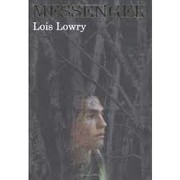
Messenger
2,363-word summary 11 min read 169 pages in the book
- First published
- 2004
- Publisher
- Houghton Mifflin
- Pages
- 169
- ISBN
- 9780618404414
- Series
- The Giver (#3)
Reading options
What's inside (8 sections)
I came to Messenger because the end of The Giver would not leave me alone. I kept wondering if Jonas survived, and I kept thinking about Kira and her loom in Gathering Blue. A friend told me the third book joins them. I found the first Houghton Mifflin hardcover from 2004, 169 pages, third in The Giver series, and I read it in two sittings. It is shorter than I expected. It is also stranger, and that strangeness stayed with me.
You can follow it without rereading the first two, but the links help. Jonas is grown. Kira is grown. Matt, the wild boy who trailed Kira in Gathering Blue, is older and calls himself Matty. He lives in Village. Almost all of this story happens there.
Village was built as a refuge. Anyone who arrives, hurt or poor or tired, is taken in and given work. Houses are plain and close. There is a schoolhouse. There are Gatherings for talk and song and settling quarrels. People earn true names as they grow into their roles. At the start it feels like the kind of place where neighbors leave food and watch each other's children.
Matty is our way in. He is restless and funny and still rough at the edges. He lives with Seer, a blind man who is patient and strict in turn. Seer carves and listens and tells stories in pieces. Matty fetches and runs. He has a small dog named Frolic who sleeps against his leg. He feeds it scraps and scolds it and loves it without saying so. School bores him. Sitting still feels like punishment.
His job gives the book its title. Matty carries messages between Village and the settlements beyond, walking through Forest. Lowry writes Forest as a living pressure around Village, thick and watchful. Most people pass only with care. They learn paths and listen for warnings, a shift in sound or cold air or roots tugging at the feet. Matty is the exception. He knows the turns and moves through without harm. He respects the place without fearing it, or so he tells himself.
Two older figures steady him. Seer is Christopher, Kira's father, believed dead in her book after an attack took his sight. He survived and found Village. He cannot see, but he hears what others miss and plays a stringed instrument in the evening. He loves Kira from a distance. Leader is Jonas. Lowry does not hide it long. He is a young man now, with pale eyes that still see beyond surfaces. He remembers hunger and cold and war from his training as Receiver, and he uses that memory to keep Village open. He can sense trouble at a distance. That gift will matter later.
Village And The People In It
The early chapters feel ordinary on purpose. Lowry gives you chores and meals and jokes. Matty trades insults with classmates. He likes a girl named Jean, who is sharp and unimpressed by his showing off. Mentor runs the schoolhouse with warmth. He has a marked face and a gentle way with slow pupils. People mend roofs. They take in newcomers without fuss.
Seer and Matty have a rhythm I believed. Seer wakes early. Matty sleeps late when he can. Seer corrects his manners. Matty rolls his eyes and obeys. Their home smells of wood shavings and soup. In the evening Seer plays while Matty whittles or dozes with Frolic at his feet. Nothing grand happens. That plainness makes the later trouble land, because you know what is at risk.
Kira is absent and present at once. She lives far off, lame and weaving, caring for Thomas the carver and a small boy named Jo. At Seer's house her name comes up daily. Matty remembers her from childhood. Seer remembers her as a baby he never raised. Matty promises, the way boys promise large things, that he will fetch her so father and daughter can meet by touch and voice. Seer does not press. He waits.
Leader sees a wider trouble forming. New arrivals keep coming through Forest with hard stories. Village takes them in. That is the point of the place. Yet grumbling grows. Some say Village is too full. Some say newcomers bring theft and sickness. Some say food costs more and the schoolhouse is crowded. Lowry lets these complaints pile quietly. No one sounds cruel at first. They sound tired.
The Forest Starts Pushing Back
Forest changes before the people admit they changed. Matty notices on his runs. Paths feel longer. Branches catch his sleeves. Roots rise where ground was smooth. He tells himself he is growing or tired. Then others report worse.
A woman feels vines tighten at her ankles. A man hears a low hum that follows him until he turns back. A supply party has to rest twice as often, as if the air pushes against them. Forest always demanded respect. Now it seems to demand distance.
Lowry offers no manual for this. There is no lesson about machines or old wars. Forest reacts to the temper of Village. When Village is generous, passage is hard but fair. When Village turns inward, Forest turns hostile. You can read that as magic or as mirror. I read it both ways and the book allows it.
Matty starts to feel it too. His runs take more effort. He gets scratched. He loses the path and must stand still to find it again. Frolic whines at the tree line and will not always follow. That frightened me more than talk of danger. The dog knows before the boy does.
Seer asks careful questions. Matty shrugs them off. He wants his true name. He wants to be seen as grown. Admitting fear feels like failure at his age, so he keeps running and tells himself Forest is testing him.
Trade Mart Changes Everything
The human trouble has a center. Trade Mart. It starts as a fair for goods and stories. Then a man called Trademaster takes charge. He is tall and gaunt, with odd markings and a smooth voice. He offers trades that sound neat. Give up something hidden, he says, and take what you most want.
The trades are sad in plain language. A woman gives honesty for beauty. A man gives patience for a Gaming Machine that flashes and eats his evenings. Mentor trades his birthmark for clear skin and comes back harder. He snaps at slow pupils. He talks about guarding Village rather than sharing it. Neighbors grow heavier with things and lighter in spirit. Talk at Gatherings turns from welcome to warning. People speak of building a wall and closing the border to newcomers.
Leader and Seer oppose the closing. Both remember being taken in with nothing. Both say Village stays itself only by staying open. The vote still passes. Leader wins one delay. The wall cannot rise for three weeks, so messages can go out and travelers on the road can arrive. That window drives the rest of the plot.
I found these chapters the strongest and the hardest to sit with. No one declares themselves cruel. They talk about limits and fairness and tired feet. Trade Mart names wants people had hidden even from themselves, and once named, those wants make sharing feel like loss. I have heard real meetings turn on that hinge, where fear dresses as common sense.
The Gift Matty Tries To Hide
Under the public trouble runs a private one. Matty can heal by touch, and healing drains him.
He learns it on small creatures first. A hurt frog. A torn ear. A stunned bird. He puts his hands on and feels heat move out of him. The animal steadies. Afterward he feels thin and sick, the way hunger feels after missed meals. He hides it because he wants to be the runner and joker, not the boy who falls down after helping.
Seer guesses before he is told. Leader guesses too. Both carry their own sight. Seer hears across distance. Leader sees beyond the present. They warn Matty not to spend himself on every scrape. He listens partly, as teenagers do.
Lowry keeps the cost in the body. Nosebleeds. Shaking hands. Tiredness that sleep does not lift at once. Healing here is transfer, not trick. Something leaves him and enters the other. That rule is clear even when the source of the gift is not, and I wished for a little more about why Matty holds it. Trademaster also stays thin, all smile and marking, with no past and no plain motive. Readers who liked the firm rules of The Giver may miss that firmness here. The book runs on feeling more than system. It works for Forest. It works less well for Trade Mart, where I wanted one full scene of an exchange, the words said and what the trader feels after.
Matty still volunteers for the hard job. He will carry closure notices through Forest to outlying towns, which should prove him grown. Leader agrees with worry. Seer adds a second task. Go to Kira's town. Bring her back before the border shuts. She will not leave Thomas and Jo unless Matty comes himself and tells her Seer waits. Matty takes both jobs with pride that barely covers fear.
Into The Forest For Kira
The last third moves fast. Matty posts notices and walks on to Kira's town, which feels worn and fearful. Kira is older, still lame, still weaving, still putting others first. She resists leaving. She worries about the robe work and the boys. Matty tells her about Seer, her father alive, and about the closing border. Come now or lose the chance. She agrees at last.
Forest meets them with full force on the way back.
Paths vanish. Cold rain falls. Branches cross. Sounds mislead. Kira's leg turns slick ground dangerous, so Matty half carries her. They ration food and sleep badly. Frolic is gone from these miles, and the absence feels cold. Leader reaches toward them with his own sense but Forest holds him too. Seer waits at home in listening stillness. The three weeks narrow to days, then hours.
Matty understands at last what his gift is for. Small healings taught him the cost. Forest is sick with the selfishness Village chose at Trade Mart, and that sickness now threatens everyone, voters and newcomers alike. He can mend it, but mending on this scale will take all of him.
He does it. He stops fighting with his legs and gives with his hands, touching bark and earth and letting heat leave him in a steady flow. Tight growth loosens. Air clears. Pain lifts from Kira and from Leader where they are caught. Village feels the break like fever passing. Matty, emptied, lies down in the quiet he made.
He dies. Lowry does not reverse it. Leader and Kira carry him home. Village gives him Healer as his true name, spoken with grief and pride. There is a Gathering and a burial. No return.
I saw it coming and still felt it. A healing boy in a sick forest can end only one way. Yet the plainness felt right for this series. Jonas once left home to save a baby. Now Matty gives himself to save two settlements at once, the one he loves and the one Kira left. The shape rhymes without copying.
What I Kept Turning Over Afterward
Messenger is slight next to its mates, and you feel it. At 169 pages it has less room than The Giver for rules and less room than Gathering Blue for craft. Kira's dye work and Thomas's carving in book two have no equal here. Trade Mart corrupts fast. The vote to close takes few scenes. I wanted more time with Jean and Mentor before they changed, so the change would cut deeper. I wanted one more debate where decent people said kind things and still voted wrong, because closures often happen just that way.
The book also leans more on unseen powers. The Giver had memory by touch, strange but bounded. Gathering Blue had art that seemed to look forward, kept low and doubted. Here Forest thinks, Leader senses across miles, Seer hears truth, Matty heals by touch, and the trader may be more than human. That is much wonder for a small story. Some critics said evil shifts here from human choice to outside force, and I take the point. A gaunt trader is easier to hate and harder to learn from than a council voting for Sameness.
Still, the choice stays human if you look closely. Trademaster offers. People accept. No one is forced to swap honesty for looks or patience for a machine. The wall vote is free. Forest reacts, but Village decides. Matty cannot heal selfishness itself. He heals the wound it made and leaves people to choose again with clearer eyes. Whether they will choose better stays open, as Lowry likes to leave things.
Who should read it? Young readers who finished the first two will find it readable and moving, though the death needs talk after. Adults may find it thinner than The Giver and less textured than Gathering Blue. Read it third in published order as intended. Watch small links. See how Jonas leads by memory without control. See how Seer parents without owning. See how Kira leaves home from love rather than fear, the reverse of her choice to stay at the end of book two.
One practical note. I cite the Houghton Mifflin hardcover from 2004. Later prints repaginate, so your copy may show 176 or 192 pages. The story does not change. If Forest frightens a young reader, try the journey chapters by day and talk through what Forest reflects. If Trade Mart starts talk about ads and games and wanting, let it run. That talk is part of what the book is for.
I finished thinking less about magic than about upkeep. Village stayed kind only while people did kind things on purpose. When they stopped, trees noticed before children did. I am glad Lowry wrote this bridge even if it creaks. It carries you across.
FAQ
Is Messenger a direct sequel to The Giver?
No. It is third in The Giver series and follows Matty, the boy from Gathering Blue. Jonas returns as Leader of Village and Kira returns late in the story.
What is Trade Mart in Messenger?
A market gathering run by Trademaster where residents swap deep traits for looks, ease, or goods like a Gaming Machine. The trades leave Village harder and willing to close its border.
Why does Matty die at the end of Messenger?
He pours his healing gift into Forest to mend the sickness caused by Village selfishness. The effort empties him, and Village gives him Healer as his true name after his death.
Similar books
More from The Giver first, then related titles.
The Giver
Lois Lowry's The Giver retold: Jonas's Assignment, the memories, release, and the sled ride out.
2,510-word summary · 11 min read
Gathering Blue
Orphaned weaver Kira is kept in the Council Edifice to mend the Singer robe, learning dyes and control until lasting blue thread opens choice.
2,954-word summary · 13 min read


Iron Widow
Wu Zetian enlists to avenge her sister, kills her pilot, and becomes an Iron Widow in a mecha Huaxia where the machines are built to kill women.
2,444-word summary · 11 min read

The House of the Scorpion
A clone raised in a drug lord's poppy fields learns what he was made for and chooses what to do with the life he was given.
2,527-word summary · 11 min read

Divergent: Official Illustrated Movie Companion
An oversize behind-the-scenes guide to the 2014 Divergent film, with casting stories, costume and set design, and scores of photos.
2,524-word summary · 11 min read

Reveal Me
A Shatter Me novella told by Kenji, set between Defy Me and Imagine Me, as the rebels learn Anderson has taken hostages and Juliette faces Emmaline.
2,098-word summary · 9 min read

Wither
In a future where women die at twenty, sixteen-year-old Rhine is sold as a bride to a wealthy stranger and plots an escape from a beautiful prison.
2,395-word summary · 11 min read

Never Fade
Ruby, now a leader in the Children's League, must track down the boy whose memories she erased, because he holds the only proof of what caused the disease that…
2,188-word summary · 10 min read

Under the Never Sky
Exiled from her Pod, Aria crosses a storm-scarred wilderness with Outsider Perry to find family and the fabled Still Blue.
2,572-word summary · 11 min read

Shadow Me
Kenji Kishimoto narrates for the first time as he joins Nazeera on a quiet mission after Restore Me, carrying painful secrets into Defy Me.
2,512-word summary · 11 min read


Life As We Knew It
Sixteen-year-old Miranda keeps a diary while an asteroid strike on the moon brings tsunamis, blackouts, and a frozen year of hunger to her Pennsylvania town.
2,485-word summary · 11 min read
Among the Hidden
Twelve-year-old Luke, an illegal third child, befriends Jen and faces the cost of stepping out of hiding.
2,923-word summary · 13 min read
The Infinite Sea
Cassie and Squad 53 wait out winter in a hotel while Ringer is retaken and learns the truth behind the 5th Wave.
2,985-word summary · 13 min read

Requiem
Lena fights in the Wilds while cured Hana marries into Portland power.
2,232-word summary · 10 min read

The Darkest Minds
A teen with mind powers escapes a government camp and joins three runaways in Bracken's 2012 dystopia, first in The Darkest Minds series.
2,038-word summary · 9 min read

Imagine Me
Juliette remembers who she was and storms the capital to end the Reestablishment for good.
2,090-word summary · 9 min read

The Kill Order
Mark survives flares and Flare virus as WICKED forms thirteen years before maze.
2,129-word summary · 9 min read


The City of Ember
Two twelve-year-olds trade jobs and chase a chewed-up note to save their fading underground city before its lights fail.
2,998-word summary · 13 min read

Destroy Me
Shot by Juliette, Warner holds his base together while his father arrives with harsher plans for her.
2,556-word summary · 11 min read
The Death Cure
Thomas refuses WICKED's final test, remembers too much, and runs with the Gladers toward a last cure and a ship north.
2,955-word summary · 13 min read
The 5th Wave
Cassie Sullivan crosses ruined Ohio to save Sammy after four alien waves, trusting Evan Walker while doubting him.
3,063-word summary · 14 min read
Delirium
In a America where love is treated as disease, Lena Haloway counts down to her Cure until she meets Alex in Portland.
2,425-word summary · 11 min read